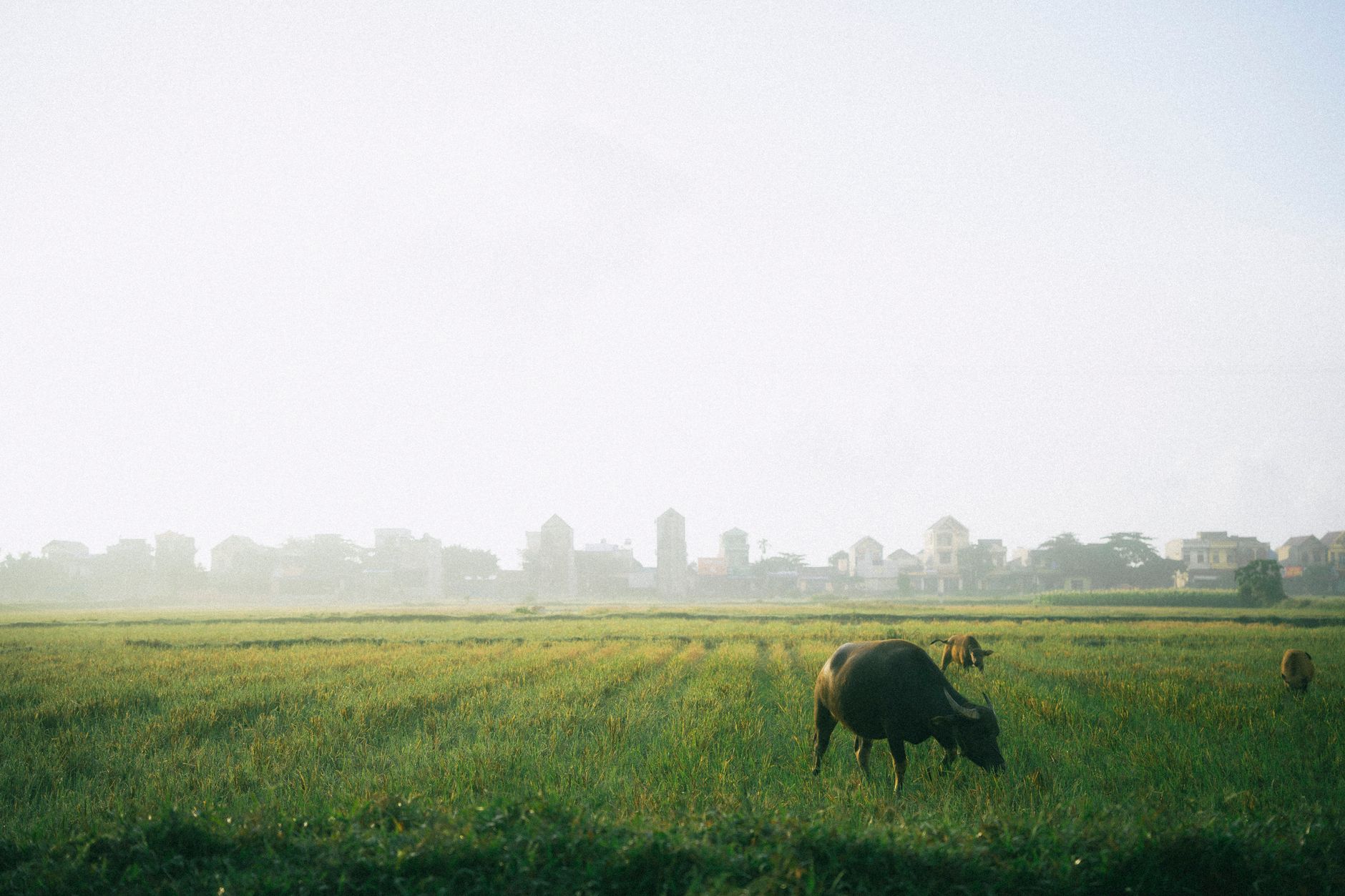
Soc Trang sits about 60 km south of Can Tho in the Mekong Delta (메콩 델타 / 湄公河三角洲 / メコンデルタ), and if you've only been moving between the obvious tourist stops, you've probably skipped it. That's a mistake. The province is home to roughly 400,000 Khmer Krom people — the largest Khmer community in Vietnam — and their fingerprints are on almost everything here: the architecture, the calendar, the food. Three pagodas form the core of any serious visit, and together they take less than a day to cover.
Why Soc Trang Is Different
Most of the Mekong Delta feels Vietnamese in a fairly uniform way: Catholic churches from the French colonial period, Buddhist temples with Chinese influences, flat rice paddies. Soc Trang layers Khmer Buddhism over all of that. The pagodas here aren't tourist reconstructions — they're active religious sites used by communities that have been here for centuries. Come respectfully dressed (shoulders and knees covered), speak quietly, and you'll likely be welcomed.
Doi Pagoda (Bat Pagoda)
Doi Pagoda — formally Chua Doi, though everyone calls it the Bat Pagoda — is the easiest place to start. It's about 2 km from Soc Trang's town center, on Nguyen Chi Thanh street. The name comes from the colony of large fruit bats that roost in the trees on the pagoda grounds. They're hard to miss: thousands of them hang upside down in the canopy during the day, occasionally shifting and squeaking. At dusk they take flight in a slow, spreading mass that's quietly spectacular.
The bats are considered sacred by the local Khmer community and are not harmed. The pagoda itself — orange-painted walls, steep multi-tiered roofline, intricate carved facades typical of Khmer Buddhist architecture — dates back several centuries in its original form, though the current structure has been rebuilt and renovated multiple times. Inside, monks in saffron robes go about their routines. There's no entry fee, though a small donation to the temple fund is appropriate.
Earth Pagoda (Chua Dat Set)
About 1.5 km from Doi Pagoda, Chua Dat Set — the Clay Pagoda, sometimes called the Earth Pagoda — is genuinely unlike anything else in the Delta. A monk named Ngo Kim Tong spent decades hand-sculpting massive clay figures that fill the interior: life-size elephants, enormous candles that took years to build up layer by layer from melted wax, elaborate Buddhist tableaux, and figurines covering nearly every surface. The result feels less like a religious site and more like the interior of someone's obsessive, decades-long art project — which is essentially what it is.
The craftsmanship is dense and a little overwhelming. Budget 30-45 minutes here to actually look at things properly. Photography is allowed inside. Entry is free.

Photo by Nguyen Truong Khang on Pexels
Clay Pagoda (Chua Khleang)
Chua Khleang, one of the oldest Khmer pagodas in Soc Trang province, sits closer to the town center on Mau Than street. It's less famous than the other two but more architecturally refined — the main sanctuary is a strong example of traditional Khmer Buddhist temple design, with carved nagas (serpent figures) along the staircase balustrades, pointed spires, and bold color work in ochre and red. This is a functioning monastic community; monks study Pali scriptures here, and the grounds include a school.
Khleang is quieter than Doi Pagoda and less visually chaotic than Dat Set, which makes it a good place to sit for a few minutes and take the whole day in context.
Ok Om Bok Festival Timing
If you can arrange your visit in October or November (by the Khmer lunar calendar, the full moon of the tenth month), the "Ok Om Bok" festival is worth planning around. It's a Khmer harvest ritual that thanks the moon for the rice crop — celebrated with offerings of young rice, coconut, and other foods placed on bamboo altars, followed by boat races on the Soc Trang River. The boat races are the visual centerpiece: long, narrow Khmer boats with up to 40 rowers, painted in the colors of different pagodas, racing in heats over two or three days.
The festival isn't a tourist production. It's local, loud, and genuinely festive. Hotels fill up fast in Soc Trang town during this period, so book ahead.
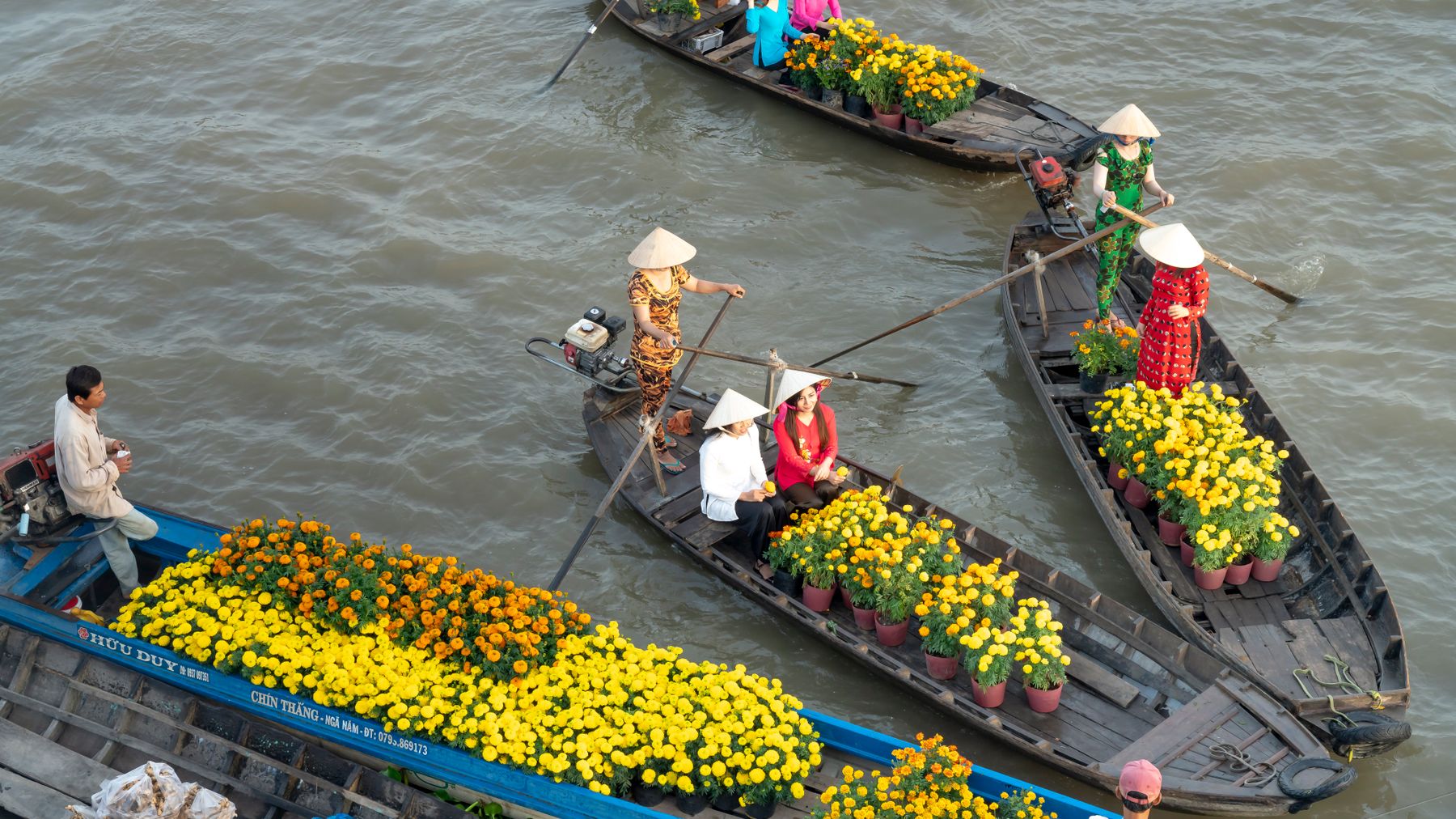
Photo by Quang Nguyen Vinh on Pexels
Khmer Food in Soc Trang
The food here diverges from standard Vietnamese Delta cooking in ways worth exploring. Look for "bun nuoc leo", a Khmer-origin noodle soup made with fermented fish paste (prahok), pork, and dried shrimp — thick, funky, and deeply savory. It's a staple at morning markets and small local shops around town, usually under 40,000 VND a bowl.
"Banh phu the" (husband-and-wife cake) shows up at Khmer celebrations — small steamed cakes made from tapioca and coconut. "Num bo chok", thin rice noodles in a green herb-based fish gravy, is another Khmer dish that appears here in a form closer to its Cambodian origins than anything you'd find farther north.
The central market area near Le Duan street has the best concentration of street food in the evening. The province also produces some of the best "bun" (rice vermicelli) in the Delta — several local factories do small-batch production if you want to see the process.
Getting There and Around
Soc Trang is about 2.5 hours by bus from Can Tho (껀터 / 芹苴 / カントー) (around 80,000-100,000 VND on a sleeper bus). From Saigon it's roughly 4.5-5 hours. Within town, the three pagodas are close enough to reach by xe om (motorbike taxi) or a rented bicycle — a bike for the day runs about 60,000-80,000 VND from guesthouses near the market.
Frequently Asked Questions
How far is Soc Trang from Can Tho and how long do the pagodas take?
Soc Trang sits about 60 km south of Can Tho in the Mekong Delta. The three main pagodas — Doi Pagoda (Bat Pagoda), Chua Dat Set (Clay Pagoda), and Chua Khleang — are all within a few kilometers of the town center and can be covered together in less than a day. Budget 30-45 minutes for Chua Dat Set alone to properly take in the clay sculptures inside.
What is the entry fee for the Khmer pagodas in Soc Trang?
All three pagodas are free to enter. At Doi Pagoda, a small donation to the temple fund is considered appropriate. Photography is permitted inside Chua Dat Set. Since these are active religious sites used by the local Khmer Krom community — roughly 400,000 people, the largest Khmer community in Vietnam — visitors are expected to arrive with shoulders and knees covered.
When is the best time to visit Soc Trang for the Khmer festival?
Visiting in October or November aligns with the Ok Om Bok festival, a Khmer harvest ritual timed to the full moon of the tenth month of the Khmer lunar calendar. Separately, arriving at Doi Pagoda near dusk is worth timing into your day — the colony of fruit bats roosting in the pagoda grounds takes flight in a slow, spreading mass at that hour.
Practical Notes
Most visitors combine Soc Trang with Can Tho or treat it as a day trip, but one night in town is enough to do it properly. The pagodas are free to enter; dress modestly. If your timing lines up with Ok Om Bok, plan at least two nights and book accommodation at least a week in advance.
Last updated · Apr 23, 2026 · independently researched, never sponsored.