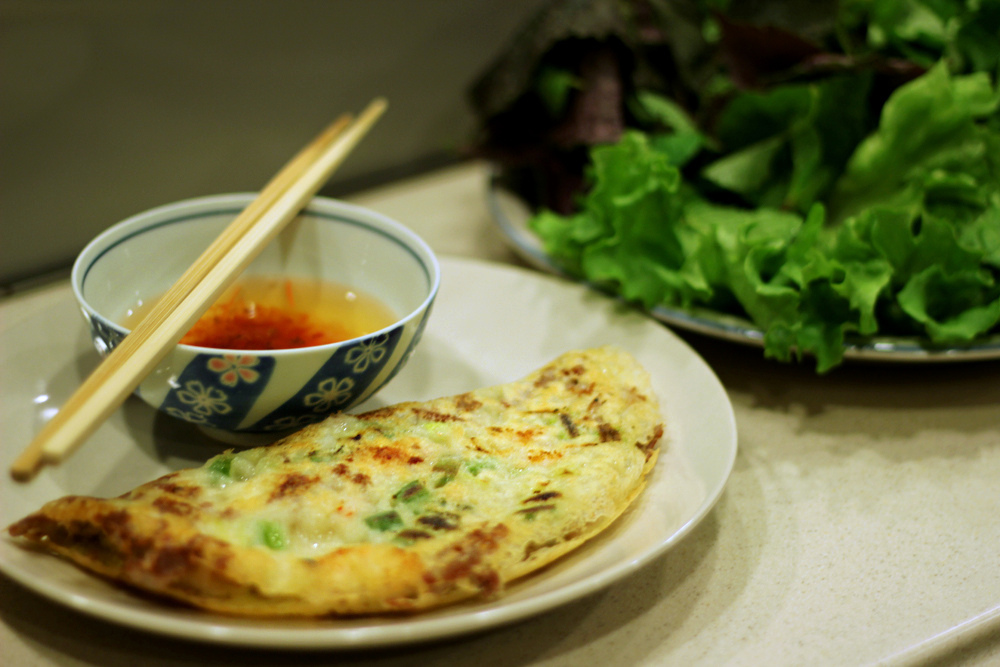
Bac Lieu sits at the bottom of the Mekong Delta (메콩 델타 / 湄公河三角洲 / メコンデルタ), 280 km south of Saigon, and most travelers skip it entirely. That's a mistake. The town is small and unhurried, but it punches above its weight: it's the birthplace of "Don Ca Tai Tu", the southern chamber music tradition that UNESCO recognized in 2013, home to one of the Delta's most eccentric colonial-era mansions, and surrounded by salt flats that turn silver-white under the dry-season sun.
Don Ca Tai Tu — The Sound That Started Here
"Don Ca Tai Tu" (literally "music of talented amateurs") emerged in the late 19th century among southern Vietnamese communities as an intimate, improvisational form performed at home gatherings, not on formal stages. It uses a set of traditional instruments — the dan tranh zither, dan co fiddle, dan kim lute, and wooden percussion — to interpret a repertoire of around 20 core melodies, each carrying a distinct emotional register.
Bac Lieu is credited as one of the genre's cradles, and the town takes that seriously. The Bac Lieu Don Ca Tai Tu Music Club holds regular sessions at the provincial cultural center on Tran Phu street — show up on a Friday or Saturday evening and you'll likely find a live performance, informal and genuinely warm. This isn't a tourist show with a ticket window; it's local musicians who have been playing these pieces for decades. If you're traveling through the Delta and care at all about Vietnamese traditional music, Bac Lieu is worth the detour.
The Prince's House
The "Nha Cong Tu Bac Lieu" — the House of the Bac Lieu Prince — is a two-story French colonial villa built in the early 20th century by the Tran family, one of the wealthiest Chinese-Vietnamese landowner dynasties in the south. The third son, Tran Trinh Huy, became a folk legend: stories of his extravagance circulated for generations — gold-plating his wife's shoes, lighting cigarettes with banknotes, ordering suits from Paris.
Whether all of it is literally true matters less than what it says about the era. The house itself is the real draw: wide verandas, tiled floors in geometric patterns, heavy wooden furniture, and a small but well-curated display of period photographs. Admission is around 20,000 VND. The ground floor now operates as a restaurant — the "banh xeo" here is reliably good, made with generous shrimp and pork, served with a full plate of local herbs. Go for lunch before or after touring the rooms.
Salt Fields and the Wind Farm
Bac Lieu province produces a significant share of Vietnam's sea salt, and the salt flats on the coast road heading south from town are worth an early morning visit. Between roughly November and April, workers rake the crystallized salt into low white mounds that stretch toward the horizon. The light between 6:00 and 8:00 AM is genuinely good — low and golden, with the mounds casting long shadows across the pans.
A few kilometers further along the same coastal road, you'll reach the Bac Lieu wind farm, one of the first large offshore wind installations in Vietnam. The turbines stand in shallow tidal water, visible from the shore embankment. It's not a ticketed attraction — you just pull over and look. Combined with the salt fields, it makes for an interesting 2–3 hour morning loop by motorbike before the heat sets in.
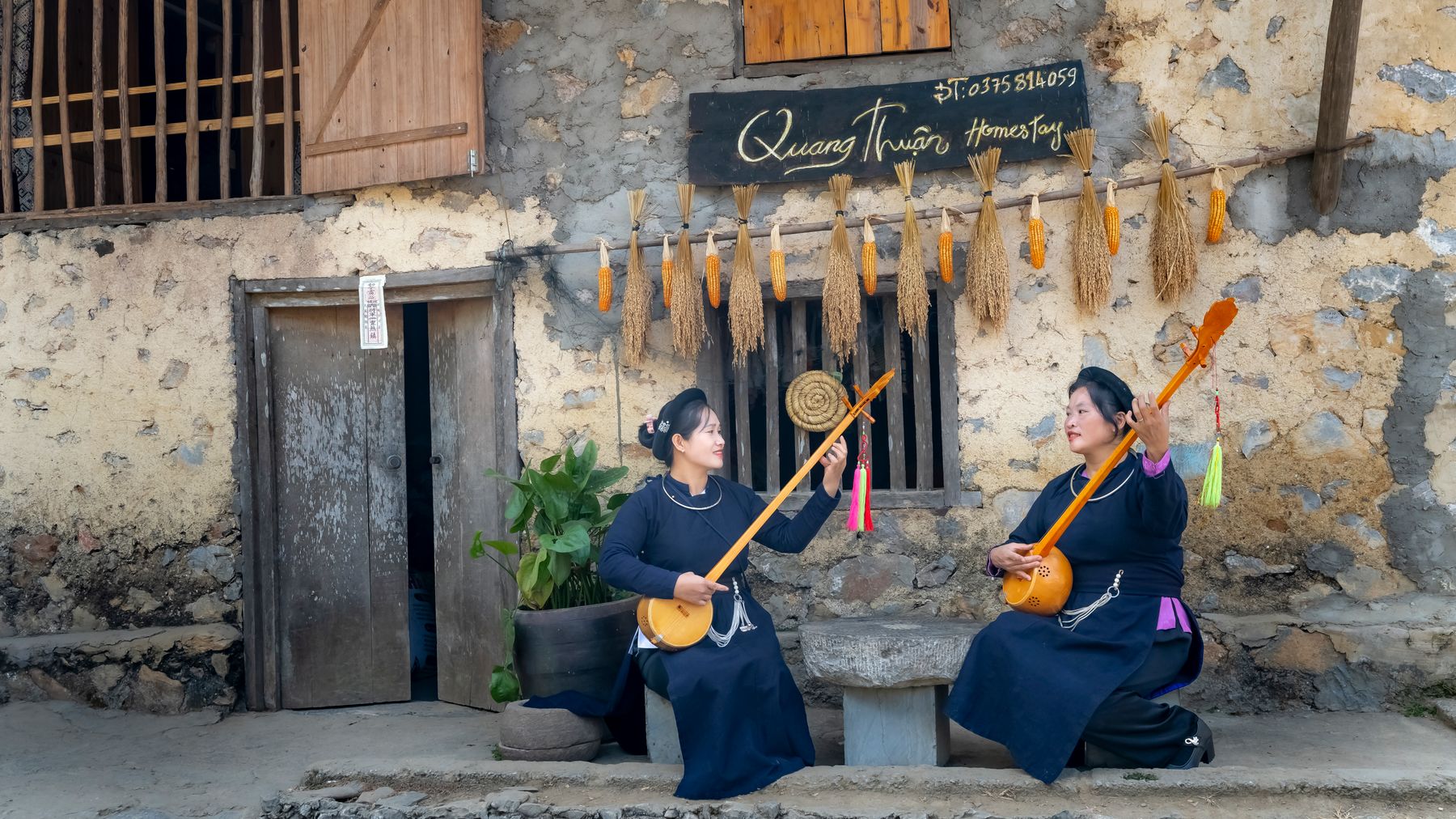
Photo by Quang Nguyen Vinh on Pexels
Best Season
The dry season, roughly November through April, is the right time to come. Salt harvesting is active, the coastal road is passable, and the daily afternoon downpours that characterize the wet season (May–October) are absent. Temperatures sit around 28–32°C year-round, so there's no dramatic "cool season" — but dry roads and clear skies make a real practical difference.
Getting Here from Can Tho
Bac Lieu is about 110 km south of Can Tho, roughly 2 hours by bus or hired car. The Phuong Trang (FUTA) bus runs this route several times daily from Can Tho's main bus terminal; tickets run around 80,000–100,000 VND. Grab buses also operate on this corridor. There's no train.
If you're building a longer Delta loop, Bac Lieu slots naturally between Can Tho (껀터 / 芹苴 / カントー) and Ca Mau (another 70 km south), the southernmost provincial capital on the mainland. A two-night stay in Bac Lieu is enough to cover the main sites without rushing.

Photo by VINVIVU ® on Pexels
Where to Eat
Beyond the banh xeo at the Prince's House restaurant, the town's main market area near the central roundabout has a cluster of street stalls open from early morning. Look for "bun rieu", the crab and tomato noodle soup that's a staple across the south — Bac Lieu's version leans briny and rich, reflecting the coastal pantry. A bowl runs 35,000–45,000 VND. For "ca phe sua da", the handful of old-school cafes along Hai Ba Trung street open before 7 AM and run on slow drip filters, not machines.
Practical Notes
Bac Lieu has a handful of mid-range hotels near the town center in the 300,000–600,000 VND per night range — nothing fancy, but clean and well-located. Renting a motorbike for the day (around 150,000 VND) is the most practical way to cover the salt fields and wind farm in a single morning. Cash only at most local spots; bring VND from Can Tho.
Last updated · May 29, 2026 · independently researched, never sponsored.