What Suoi Mo actually is
Suoi Mo is a narrow valley cut into the western slopes of the Yen Tu mountain range in Luc Nam district — historically part of Bac Giang province, now under the expanded Bac Ninh province following the 2025 merger. The site covers roughly 1,000 hectares of secondary forest, anchored by a series of tiered waterfalls fed by mountain streams, plus a cluster of Buddhist pagodas that date back several centuries.
The name translates loosely to "Dream Stream," which sounds like something a tourism board invented, but it's genuinely old — tied to local legends about a Ly dynasty princess who bathed here. The pagoda complex, including Thuong, Trung, and Ha pagodas arranged at different elevations along the valley, has been a pilgrimage site since at least the 17th century. Today, Suoi Mo functions as both a spiritual destination for Vietnamese visitors and a low-key nature escape for anyone who wants moving water and forest canopy without a long trek.
Why travelers go
Suoi Mo isn't on the standard tourist circuit, and that's the draw. You won't find tour buses or souvenir gauntlets. The waterfalls aren't massive — the largest drops maybe 15 meters — but they're layered across the hillside in a way that makes walking between them feel like a slow reveal. The forest is dense enough to drop the temperature several degrees, which matters when the Red River Delta is cooking in summer.
For anyone based in Hanoi looking for a day trip or overnight that doesn't involve Ha Long Bay traffic or Ninh Binh (닌빈 / 宁平 / ニンビン) crowds, Suoi Mo fills that gap. It pairs well with the broader Yen Tu area if you're interested in Vietnamese Buddhist history, since the mountain range was the seat of the Truc Lam Zen school.
Best time to visit
The sweet spot is April through June and again in September through October. The waterfalls need rain to be worth the walk, so going in the dry months (November through February) means you'll find reduced flow and some upper cascades barely trickling.
July and August bring the heaviest rain. The falls are at full power, but trails get slippery and leeches come out in force — tuck your pants into your socks if you go. Weekends in summer also bring domestic crowds, especially families from Hanoi (하노이 / 河内 / ハノイ). A weekday visit in May or early June is close to ideal: warm, green, waterfalls running, and relatively quiet.
How to get there from Hanoi
Suoi Mo is about 110 km northeast of Hanoi, in Luc Nam district. Budget around 2 to 2.5 hours by road depending on traffic getting out of the city.
By motorbike: The most flexible option. Take QL1A north toward Bac Ninh city, then cut east on DT293/QL37 through Luc Nam town. The last 10 km from Luc Nam to Suoi Mo is a two-lane road through rice paddies — easy riding. Fuel and "com binh dan" (cheap rice plate) stops are frequent along QL1A.
By bus: Catch a bus from My Dinh or Gia Lam station to Bac Giang city (40,000-60,000 VND, about 1.5 hours), then transfer to a local bus or hire a "xe om" (motorbike taxi) for the remaining 40 km to Suoi Mo. The second leg is where it gets inconvenient — local buses to Luc Nam run infrequently. A Grab car from Bac Giang city to Suoi Mo costs roughly 250,000-350,000 VND one way.
By car: Hire a private driver from Hanoi for the round trip. Expect to pay 1,200,000-1,500,000 VND for the day, which makes sense if you're splitting costs or want to combine Suoi Mo with a stop in Bac Ninh city.

Photo by Kirandeep Singh Walia on Pexels
What to do
Walk the waterfall trail
The main path climbs from the lower entrance through three tiers of falls. It's not a hike — more of a paved-and-stepped walkway with some rougher sections higher up. Allow 1.5 to 2 hours to go up and back at a relaxed pace. The middle falls have natural pools deep enough to wade in during high-water months. Bring sandals with grip; the rocks are algae-covered.
Visit the three pagodas
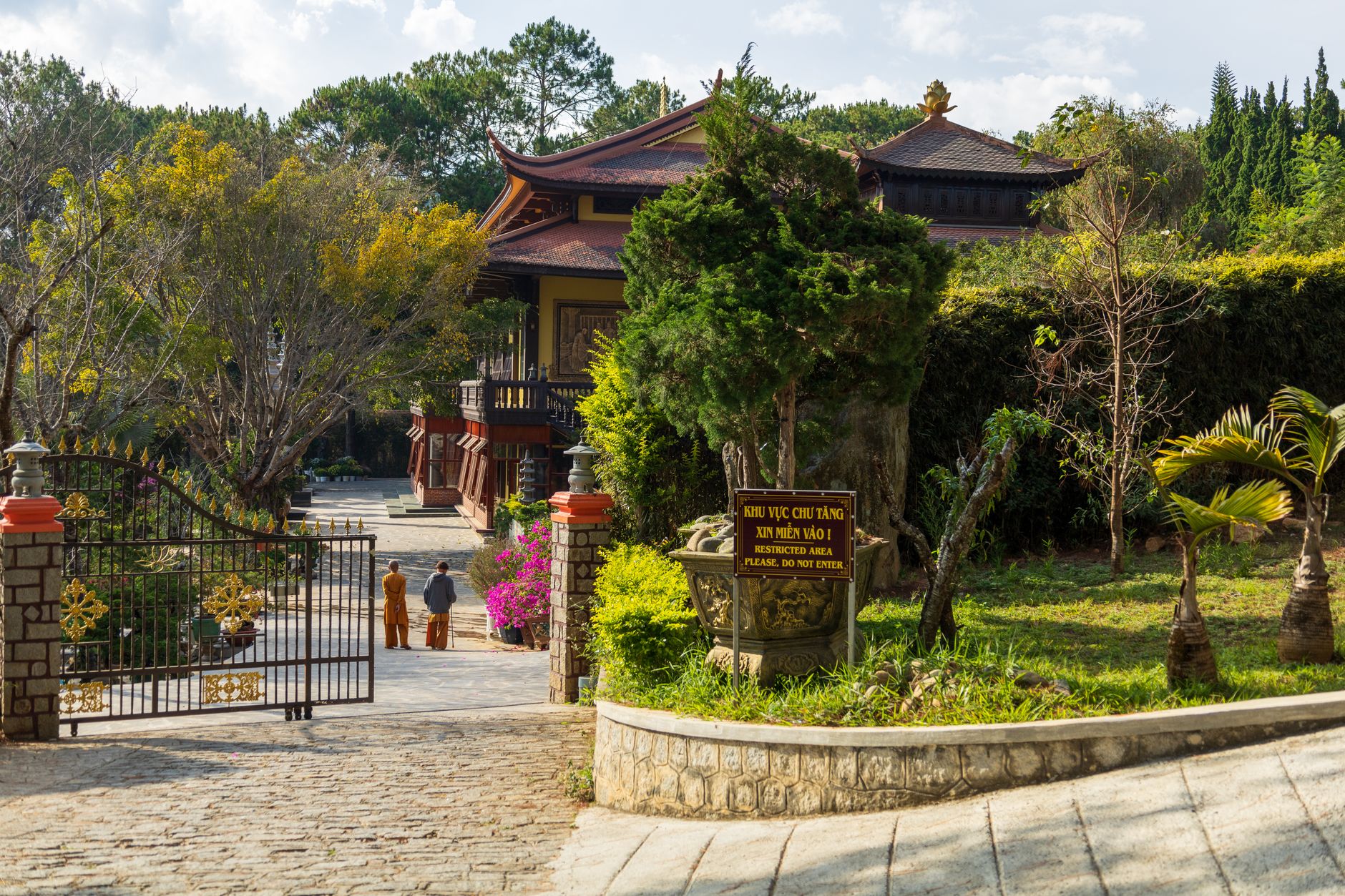
Ha (lower), Trung (middle), and Thuong (upper) pagodas sit at ascending elevations along the valley. Thuong Pagoda is the most atmospheric — small, old, tucked into the tree line with incense smoke drifting through the canopy. It's a working religious site, so dress modestly. The walk between all three takes about 40 minutes.
Swim in the natural pools
Below the lower falls, shallow pools collect in rock formations. Vietnamese families spread out here on weekends with picnic mats and snacks. The water is cool and clean enough, though it's a stream, not a swimming pool — manage expectations. Best after a few days of rain when the flow is up.
Explore the forest loop
A less-traveled trail loops through the secondary forest above the upper pagoda. It's not well-marked, so ask at the entrance gate or follow other hikers. The canopy is thick — good birdwatching if you're quiet and patient. The loop adds about an hour to the visit.
Where to eat nearby
Don't expect a restaurant scene. Luc Nam town, 10 km back toward the main road, has basic "com binh dan" spots serving rice with grilled pork, tofu, and greens for 35,000-50,000 VND.
The local dish worth seeking is "banh cuon" — Bac Ninh province is one of the best regions for these thin, steamed rice rolls filled with minced pork and wood ear mushroom. Look for shops in Luc Nam market area in the morning; by noon they're usually sold out. A plate runs 20,000-30,000 VND.
If you're driving back through Bac Ninh city, the "bun cha" there holds its own against Hanoi versions — slightly sweeter broth, served with heaps of fresh herbs.
Where to stay
Suoi Mo itself has a guesthouse complex near the entrance gate. Rooms are basic but clean — air conditioning, hot water, firm beds. Expect 300,000-500,000 VND per night. Booking ahead on weekends in summer is smart; weekdays you can usually walk in.
For more comfort, stay in Bac Giang city (now also under the Bac Ninh umbrella), where budget hotels on the main strip run 400,000-600,000 VND. There's nothing boutique or upmarket — this isn't Da Lat or Hoi An.

Photo by Anh Tuấn Lê on Pexels
Practical tips locals would tell you
- Bring cash. There's no ATM at Suoi Mo. The entrance fee is 40,000 VND per person.
- Wear proper shoes for the upper trail sections. Flip-flops are fine for the lower pools but not for the pagoda climb.
- Start early. Arrive by 8 AM to get the falls and forest to yourself before day-trippers from Hanoi roll in around 10.
- Bring water and snacks. There are a few drink vendors near the entrance, but nothing once you're on the trail.
- Mosquito repellent — the forest is damp and shaded, which means mosquitoes year-round.
Common mistakes to avoid
Coming in December or January expecting waterfalls. You'll find a pleasant forest walk, but the cascades will disappoint.
Trying to do it as a rushed Hanoi day trip without leaving early. The 2+ hour drive each way means a 9 AM departure gets you there at lunch, and you're rushing to get back before dark.
Skipping the upper pagoda. Most visitors cluster around the lower falls and turn back. Thuong Pagoda is the quietest and most interesting part of the site, and it's only 20 more minutes of walking.
Practical notes
Suoi Mo works best as part of a broader northeast Vietnam loop — combine it with the Yen Tu pilgrimage complex or a swing through the countryside around Luc Nam. It's not a destination you fly across the country for, but if you're in Hanoi and tired of the usual suspects, the drive is worth it.
Last updated · May 26, 2026 · independently researched, never sponsored.