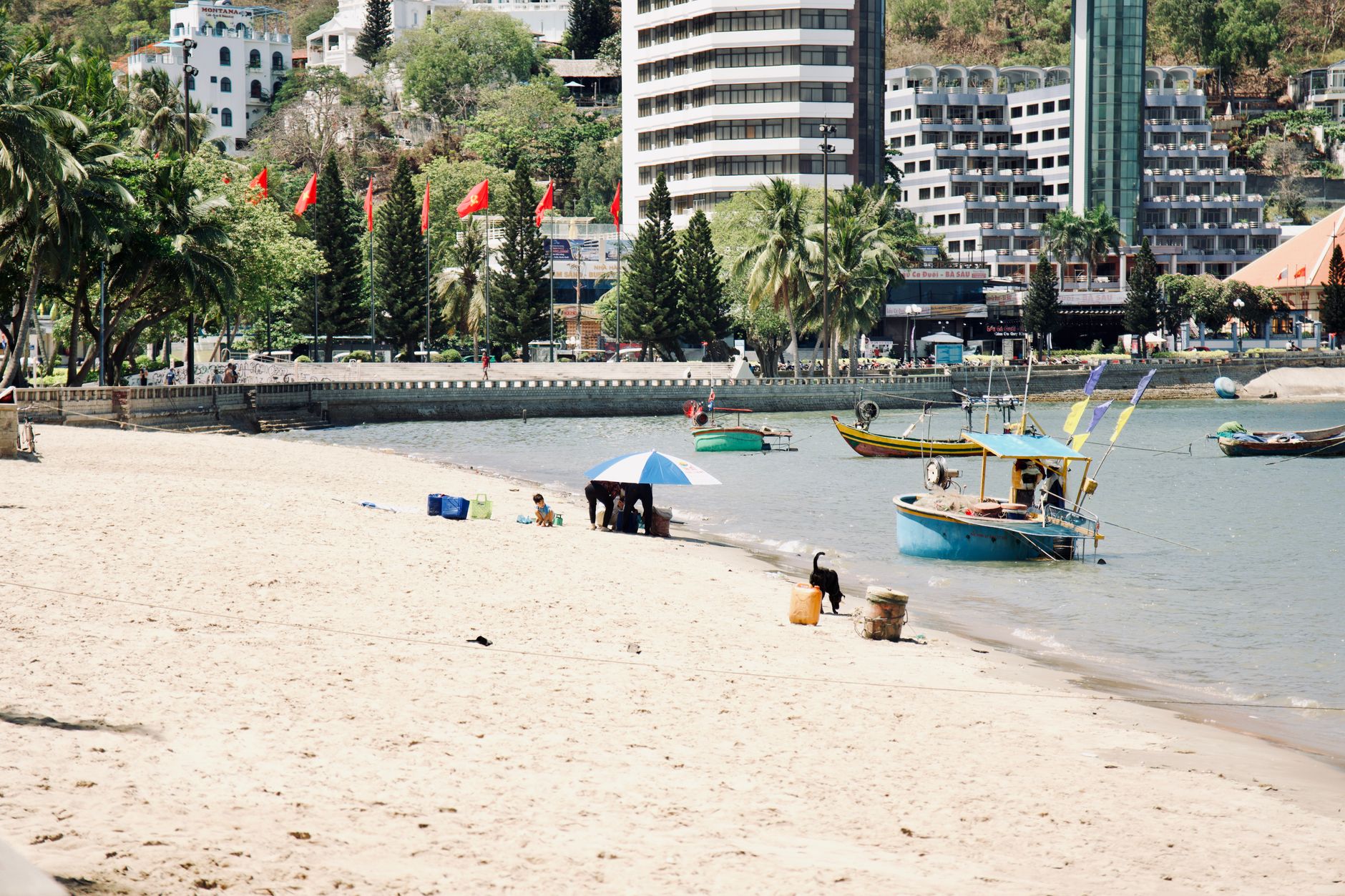
Thich Ca Phat Dai sits on the lower slopes of Nui Lon (Big Mountain) in Vung Tau, about 95 km southeast of central Saigon (사이공 / 西贡 / サイゴン). It's one of the largest Buddhist statue parks in the south, and it's been drawing Vietnamese pilgrims and curious travelers since 1961. Following the recent administrative merger of Ba Ria - Vung Tau province into the expanded Ho Chi Minh City, Vung Tau is now technically part of the city — but it still feels like a coastal escape, and visiting Thich Ca Phat Dai remains a proper day trip or weekend outing.
What it is
Thich Ca Phat Dai — literally "Shakyamuni Buddha Platform" — is a 6-hectare hillside park built between 1957 and 1963 by the local Buddhist community. The centrepiece is a white seated Buddha statue standing about 11.5 metres tall on a lotus throne, visible from much of the city below. The grounds include smaller statues depicting scenes from the life of Siddhartha Gautama, a reclining Buddha, pagoda halls, ornamental gardens, and a network of shaded paths winding up the hillside.
It's not an ancient site, but the mid-century construction has aged into something that feels settled and organic — mature frangipani trees, moss on the stone steps, bonsai collections that have had decades to develop. The park was recognized as a national cultural-historical relic in 1989.
Why travelers go
Most visitors come for three reasons. First, the statue itself and the surrounding Buddhist iconography — it's genuinely impressive in scale, especially when you're standing at its base looking up. Second, the views: from the upper terraces you get a wide panorama over Vung Tau (붕따우 / 头顿 / ブンタウ)'s coastline, the port, and the South China Sea. Third, it's quiet. Compared to the beach strip below, Thich Ca Phat Dai has a calm that makes it worth the short detour even if you're not particularly interested in Buddhist art.
For anyone spending time in Vung Tau — which is the closest beach town to Saigon — it's the most interesting cultural site in town.
Best time to visit
The dry season (November through April) is ideal. Vung Tau gets hammered by rain from May to October, and climbing the park's stone paths in a downpour isn't fun. Mornings are best — arrive before 9 AM to beat the heat and the tour groups. On weekends and Vietnamese holidays (especially around Tet and the Vu Lan festival in the seventh lunar month), the park fills with local families and pilgrims. Weekday mornings are the quietest.
How to get there from Saigon
Hydrofoil (fastest): Greenlines DP operates fast ferries from Bach Dang Wharf in District 1 to Vung Tau. About 90 minutes, tickets run 250,000–350,000 VND one way depending on seat class. From Vung Tau ferry terminal, Thich Ca Phat Dai is roughly 4 km — a 30,000–40,000 VND taxi ride.
Bus: Phuong Trang (FUTA) and Kumho Samco run buses from Mien Dong bus station to Vung Tau. Takes about 2–2.5 hours depending on traffic. Tickets around 80,000–120,000 VND.
Motorbike/car: Take the HCMC–Long Thanh–Dau Giay expressway, then Highway 51 south to Vung Tau. About 95 km, roughly 2 hours by car outside rush hour. Tolls run about 50,000 VND each way.
Once in Vung Tau, the park entrance is at 608 Tran Phu, on the lower slope of Nui Lon. You can't miss the large gate.

Photo by Costa Karabelas on Pexels
What to do
Walk the statue circuit
The park is laid out as a walking path that takes you through key scenes from the Buddha's life — birth, enlightenment, first sermon, death. Each station has detailed statues and relief carvings. Give yourself at least 45 minutes to walk the full circuit without rushing. The path climbs steadily, so wear decent shoes.
Sit with the main Buddha
The 11.5-metre seated Shakyamuni statue sits on the upper terrace. There's a large open platform around it where locals come to pray or just sit. Early morning, with fog still clinging to the hillside, it's a genuinely peaceful spot. The lotus throne base contains a small meditation hall.
Visit the reclining Buddha
Lower on the grounds, a 12-metre reclining Buddha (depicting the moment of passing into nirvana) stretches across a shaded area. It's less photographed than the main statue but arguably more striking up close.
Check the bonsai garden
The park maintains a collection of mature bonsai trees, some several decades old. It's a small area but worth ten minutes, especially if you've never seen Vietnamese bonsai work — the styles differ from Japanese traditions.
Combine with Nui Lon hike
If you have energy, the trail up Nui Lon continues beyond the park grounds toward the Jesus statue (Tuong Dai Chua Kito Vua) at the summit. The full hike takes another 30–40 minutes and gives you Vung Tau's best viewpoint.
Where to eat nearby
Vung Tau is known for seafood, but two dishes are worth seeking out specifically.
"Banh khot" — small crispy turmeric pancakes topped with shrimp — are a Vung Tau specialty. Banh Khot Goc Vu Sua on Nguyen Truong To street is a reliable local spot; a plate of 10–12 runs about 50,000–70,000 VND.
For something more filling, Vung Tau does excellent "hu tieu" — the southern-style pork and seafood noodle soup. There are good bowls at the cluster of street stalls near the Vung Tau market on Truong Cong Dinh, usually 40,000–55,000 VND.
If you want Vietnamese coffee before or after the visit, look for any local "ca phe" shop along Tran Phu street rather than chains — iced "ca phe sua da" here costs 18,000–25,000 VND.
Where to stay
If you're making it a day trip from Saigon, you don't need accommodation. But if you want to stay overnight:
- Budget: Guesthouses along Thuy Van street and near Back Beach start at 250,000–400,000 VND/night for a clean double room with AC.
- Mid-range: 3-star hotels along the beachfront go for 600,000–1,200,000 VND/night. Decent pools, breakfast included.
- Upper: A handful of 4-star resorts sit along the coast at 1,500,000–3,000,000 VND/night.
Photo by Ty Nguyễn on Pexels
Practical tips locals would tell you
- Dress modestly. This is an active place of worship. Cover shoulders and knees. You'll see signs at the entrance, and monks will politely redirect you if you're in beachwear.
- Bring water. There's limited shade on the upper terraces, and the climb is steeper than it looks. A bottle from the vendors near the gate costs about 10,000 VND.
- Entry is free. There's no ticket — Thich Ca Phat Dai is maintained by donations. You'll find donation boxes inside the main halls.
- Remove shoes before entering any prayer hall or the meditation room beneath the main statue.
Common mistakes to avoid
- Coming midday. Between 11 AM and 2 PM the exposed stone paths radiate heat. Early morning or late afternoon are far more comfortable.
- Skipping the lower levels. Most visitors head straight for the big statue and miss the detailed relief carvings and smaller shrines along the lower path. Start at the bottom gate and work your way up.
- Not combining it with other Vung Tau sights. The park takes 1–2 hours. Pair it with the lighthouse walk, the Ho May cable car, or an afternoon on Back Beach to fill a proper day trip.
- Wearing flip-flops. The stone steps get slippery, especially after rain. Sandals with grip or trainers are better.
Practical notes
Thich Ca Phat Dai is open daily from roughly 7 AM to 5 PM. The hydrofoil from Saigon makes this an easy day trip — catch the early boat out, spend the morning at the park, eat "banh khot" for lunch, hit the beach in the afternoon, and ferry back by evening. It's one of the more rewarding half-day diversions you can make from Saigon without committing to an overnight.
Last updated · May 29, 2026 · independently researched, never sponsored.