What it is
Thuy Dien Hoa Binh (Hoa Binh Hydropower Plant) is Vietnam (베트남 / 越南 / ベトナム)'s largest hydroelectric dam, a Soviet-Vietnamese joint project built between 1979 and 1994 on the Da River. The concrete gravity dam stands 128 meters tall and stretches over 700 meters across — when you're standing on the crest road looking down at the turbine hall, the scale genuinely registers. The reservoir behind it, Hoa Binh Lake, sprawls across roughly 200 square kilometers of flooded valleys, creating a landscape of submerged karst peaks and quiet inlets that now serves as a weekend escape for Hanoians.
This isn't a theme park. It's a working power station that happens to sit in scenery worth the drive.
Why travelers go
Most visitors come for one of three reasons: the reservoir itself (boating, fishing, lake views), the engineering curiosity of standing atop a major dam, or as a stopover en route to Mai Chau or the northwest loop. Hoa Binh Lake has a calmer, less touristic feel than Ha Long Bay — no ticket booths every 50 meters, no loudspeakers. The Muong ethnic minority villages along the lakeshore add a cultural layer if you're interested in traditional stilt houses and "ruou can" (rice wine drunk through bamboo straws).
Best time to visit
October through March gives you the clearest skies and most comfortable temperatures (18-25°C). The reservoir is fullest in September-October after monsoon season, which means better boating conditions and greener hillsides. April and May get hot (35°C+) and hazy. June through August brings afternoon storms — not a dealbreaker, but boat trips can get cancelled on short notice.
Weekdays are noticeably quieter. Weekends from October to December bring Hanoi day-trippers.
How to get there from Hanoi
Hoa Binh city is roughly 75 km southwest of Hanoi (하노이 / 河内 / ハノイ) — about 1.5 to 2 hours by car or motorbike depending on traffic through the outer districts.
- Motorbike: Take QL6 (National Highway 6) from Ha Dong. Straightforward road, mostly flat until the final stretch into Hoa Binh city. Gas up before leaving Hanoi; fuel stations thin out past Xuan Mai.
- Bus: Buses leave from My Dinh bus station every 20-30 minutes. Ticket price is around 70,000-90,000 VND one way. The ride takes about 2 hours. Ask for "Ben xe Hoa Binh" — from there, the dam is 2 km north of the city center (a 30,000 VND xe om ride).
- Private car/Grab: A Grab car from central Hanoi runs 400,000-550,000 VND one way. Book a round trip if you're day-tripping; finding a return Grab in Hoa Binh city isn't always easy.
The dam site sits on the northern edge of Hoa Binh city, close to the Phu Tho provincial border — some travelers combine this with a visit to the Hung Kings Temple in Phu Tho, about 50 km further north.
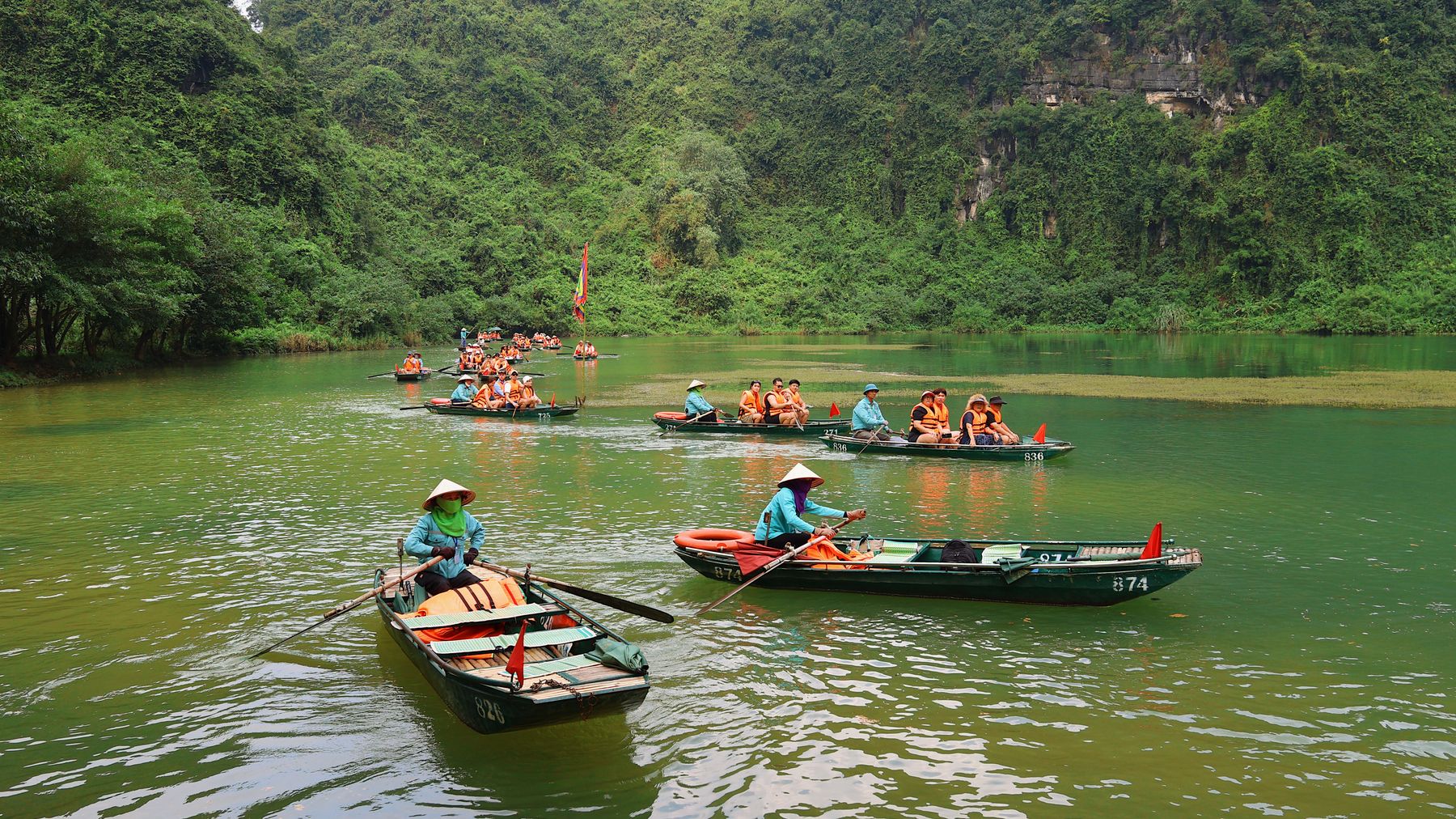
Photo by Haneul Trac on Pexels
What to do
Walk the dam crest
The road across the top of the dam is open to motorbikes and pedestrians. The view downriver toward Hoa Binh city and upstream across the reservoir is the main draw. Early morning light (6:30-7:30 AM) is best for photos. There's no entrance fee for crossing the dam road itself.
Boat trip on Hoa Binh Lake
Local boat operators at the reservoir's edge offer trips ranging from 1-hour loops (300,000-500,000 VND for a small boat) to half-day excursions visiting Muong villages and fishing spots. Negotiate before boarding. The longer trips reach quieter inlets where the karst formations jut out of the water — reminiscent of Ha Long Bay minus the cruise ship crowds.
Visit a Muong village
Several Muong communities dot the lakeshore — Giang Mo and Da Bac are the most accessible. You'll find traditional stilt houses, rice terraces on the hillsides, and if you time it right, locals preparing "com lam" (sticky rice cooked in bamboo tubes). No ticket, no tour guide needed — just show up respectfully.
Hoa Binh Museum
Small but worthwhile if you're interested in Muong culture and the dam's construction history. Located in Hoa Binh city center, about 2 km from the dam. Free entry. Displays include Muong bronze drums and black-and-white photos from the Soviet construction era.
Cycling the lake road
The road hugging the southern shore of the reservoir (toward Da Bac) is quiet, shaded, and surprisingly well-paved for the first 20 km. Rent a bicycle in Hoa Binh city (100,000-150,000 VND/day) or ride your own.
Where to eat nearby
Hoa Binh city isn't a food destination, but two local specialties are worth seeking:
- "Com lam" with grilled mountain chicken — available at small restaurants along the road to Da Bac. Expect to pay 150,000-200,000 VND for a full spread for two.
- "Ca song Da" (Da River fish) — grilled or steamed freshwater fish from the reservoir. Several riverside restaurants near the dam's base serve this. A whole grilled fish runs 200,000-350,000 VND depending on size.
For Vietnamese coffee, there are a handful of cafes on Tran Hung Dao street in Hoa Binh city — nothing special, but serviceable.
Where to stay
- Budget: Nha nghi (guesthouses) in Hoa Binh city center: 200,000-350,000 VND/night. Basic but clean. Try the cluster near the bus station.
- Mid-range: A few hotels along QL6 entering Hoa Binh: 500,000-800,000 VND/night. Air conditioning, hot water, Wi-Fi.
- Lakeside homestays: Muong-style stilt house stays in Da Bac or Giang Mo: 300,000-600,000 VND/night including dinner. Book ahead on weekends — they fill up.

Photo by Quang Nguyen Vinh on Pexels
Practical tips locals would tell you
- Bring sunscreen and a hat if you're doing the boat trip — there's no shade on the water.
- The dam crest road occasionally closes for maintenance with no advance notice. If you see a barrier, don't try to talk your way past — security takes it seriously.
- Phone signal (Viettel, Mobifone) is strong at the dam and in town but drops in the more remote lake inlets.
- If combining with Mai Chau, head there after the dam rather than backtracking to Hanoi — it's only 60 km further southwest on QL6.
Common mistakes to avoid
- Expecting a tourist attraction with facilities. There's no visitor center, no audio guide, no gift shop at the dam itself. It's infrastructure with a view.
- Coming on a rainy day for the boat trip. Operators won't go out in heavy rain, and visibility drops to nothing. Check the forecast.
- Trying to do Hoa Binh Lake and Hung Kings Temple in Phu Tho in one rushed day trip from Hanoi. It's technically possible but exhausting — better to overnight in Hoa Binh and do the temple the next morning.
- Skipping the lake for just the dam. The dam itself takes 20 minutes to appreciate. The lake is where the real time goes.
Practical notes
Thuy Dien Hoa Binh works best as an overnight trip from Hanoi or a stopover en route to Mai Chau and the northwest. It's not a full-day destination on its own — pair it with a lake trip and a village visit to justify the drive. Budget 500,000-800,000 VND per person for a comfortable day including transport, food, and a boat ride.
Last updated · May 29, 2026 · independently researched, never sponsored.