What Den Gieng is and why it matters
Den Gieng — the "Well Temple" — sits at the base of Nghia Linh Mountain in Viet Tri, Phu Tho province, about 80 km northwest of Hanoi. It's part of the larger Hung Kings Temple complex, the spiritual anchor of Vietnamese identity, where the nation's mythical founders are honored. While the upper temples on the mountain draw the biggest crowds, Den Gieng occupies its own quiet space at the foot of the hill.
The temple is dedicated to the princesses Tien Dung and Ngoc Hoa, daughters of the 18th Hung King. According to tradition, the two princesses used a well here — "gieng" means well — to comb their hair and look at their reflections before court audiences. The well still exists inside the temple grounds, ringed by old trees and covered in moss. The current structure dates from a 2004 restoration, but the site has been venerated for centuries.
Den Gieng is where many Vietnamese come not for spectacle but for a kind of quiet reckoning with origin stories. It's less theatrical than the hilltop temples and more intimate — a place locals actually pray at rather than just photograph.
Why travelers go
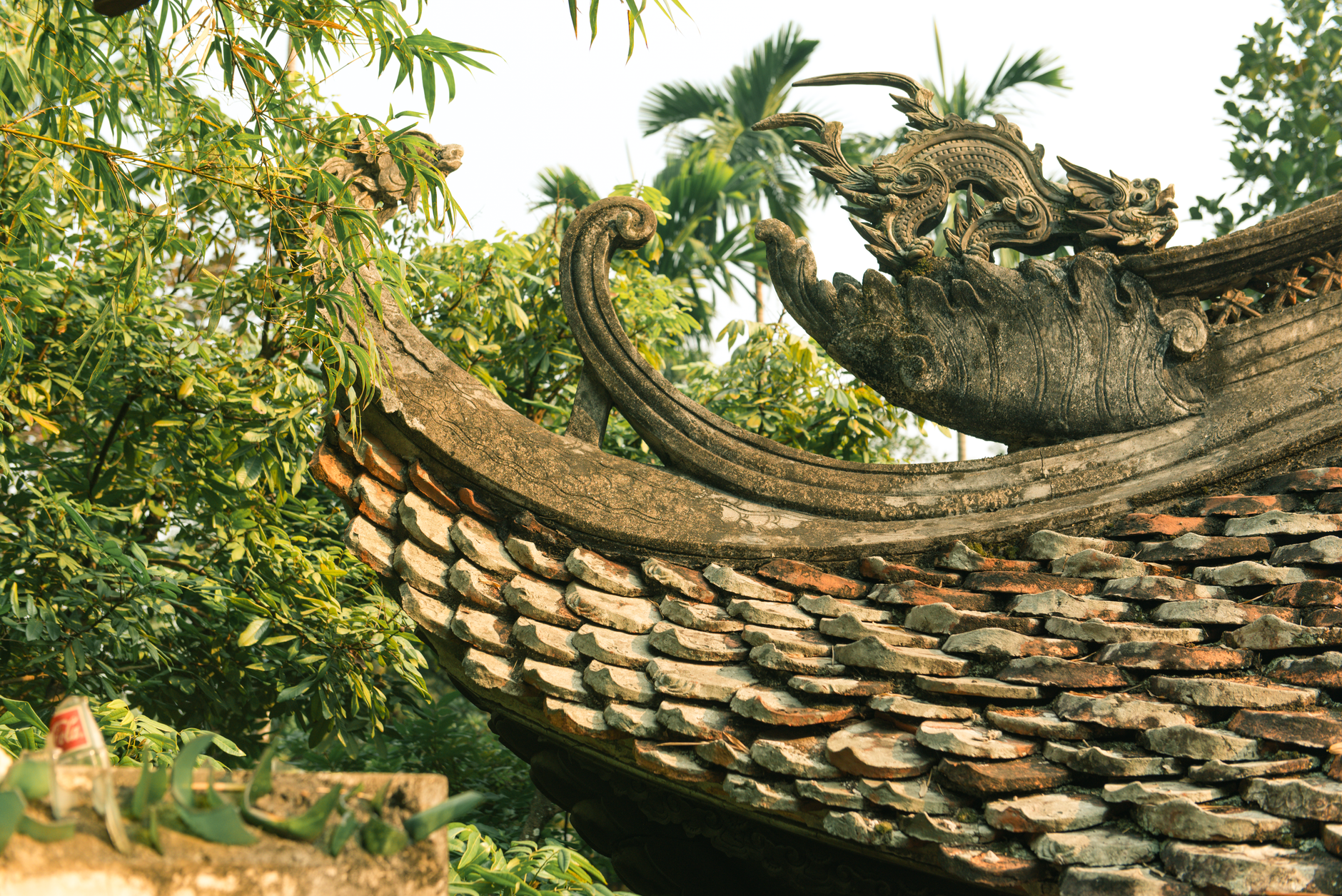
Most foreign visitors to the Hung Kings Temple area head straight up the mountain and skip Den Gieng entirely. That's a missed opportunity. The temple grounds are calm, heavily shaded, and almost empty on weekdays. The architecture is a good example of northern Vietnamese temple design — low tile roofs, laterite pathways, carved dragon banisters — without the over-restoration that plagues some heritage sites closer to Hanoi (하노이 / 河内 / ハノイ).
If you have any interest in the Hung Kings Festival, which falls on the 10th day of the third lunar month (usually March or April), Den Gieng is where some of the most meaningful ceremonies happen. Processions pass through here, incense offerings pile up, and you can watch "ca tru" and folk singing performances staged in front of the temple.
Even outside festival season, the walk from the parking area through the forest to Den Gieng is genuinely pleasant — a paved stone path under a canopy of old-growth trees, with birdsong replacing traffic noise.
Best time to visit
The Hung Kings Festival period (March-April, check the lunar calendar each year) is the most culturally rich time, but also the most crowded — expect thousands of domestic visitors. If you want the atmosphere without the crush, go the week before or after the main festival day.
For quiet visits, October through December is ideal. The weather in Phu Tho cools down, humidity drops, and you'll often have the temple grounds nearly to yourself. Avoid July and August — the heat is heavy and afternoon rainstorms turn the stone paths slippery.
How to get there from Hanoi
From Hanoi, you have a few options:
- Bus: Catch a bus from My Dinh bus station to Viet Tri. Departures run every 20-30 minutes, the ride takes about 1.5-2 hours, and tickets cost 70,000-90,000 VND. From Viet Tri bus station, grab a taxi or "xe om" (motorbike taxi) to the Hung Kings Temple complex entrance — roughly 7 km, around 50,000-70,000 VND by taxi.
- Motorbike: Take the Noi Bai-Lao Cai expressway (QL2) toward Viet Tri, then follow signs to Khu Di Tich Lich Su Den Hung. About 80 km, doable in under two hours if traffic cooperates. Parking at the complex costs 10,000 VND for a motorbike.
- Car/private driver: A round-trip private car from Hanoi runs about 1,200,000-1,500,000 VND for the day. Worth it if you want to combine Den Gieng with a stop at the Hung Kings hilltop temples and the surrounding area.
The entrance ticket to the entire Hung Kings Temple complex is 40,000 VND per person. Den Gieng is included — no separate fee.
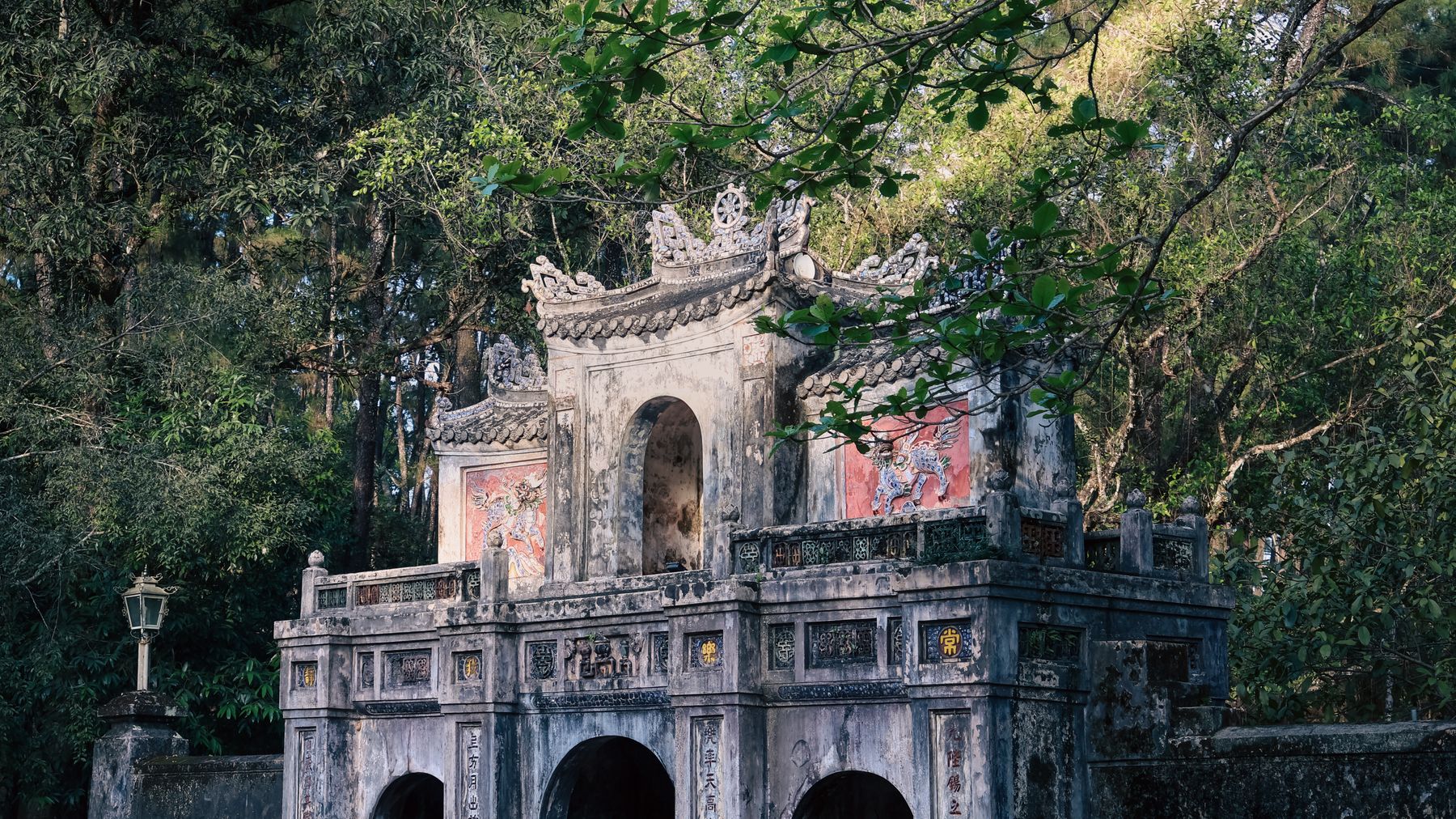
Photo by Minh Lê on Pexels
What to do at Den Gieng and nearby
Walk the temple grounds and see the ancient well
The well itself is behind the main altar hall, enclosed by a low stone wall. It's small and unassuming — don't expect a dramatic ruin. What makes it worthwhile is the setting: banyan roots creeping over the stonework, a thick layer of fallen leaves, and the smell of incense from the altar drifting back. Spend 20 minutes here, not five.
Climb to the upper Hung Kings Temples
Den Gieng is at the bottom of the complex. From here, a stone stairway leads up Nghia Linh Mountain through three more temple tiers — Den Ha, Den Trung, and Den Thuong at the summit. The full climb takes 30-40 minutes at a moderate pace. The views from Den Thuong stretch across the Red River plain — flat green paddies broken by limestone hills.
Visit the Hung Kings Museum
Located within the complex grounds, about a 10-minute walk from Den Gieng. The museum covers Dong Son bronze drum culture, the Lac Viet founding mythology, and early Vietnamese wet-rice civilization. Labels are in Vietnamese and English. Allow 45 minutes.
Catch a folk performance (festival season only)
During the Hung Kings Festival, "hat xoan" (spring singing, a UNESCO-recognized tradition from Phu Tho) is performed near Den Gieng's courtyard. These aren't tourist shows — they're community performances with real local troupes. If you're here during the festival window, ask at the entrance gate for the performance schedule.
Where to eat nearby
The area around the temple complex has a row of small restaurants along the access road. The local dish to look for is "banh cuon" Phu Tho-style — thinner and chewier than the Hanoi version, served with a lighter dipping sauce and fried shallots. A plate runs 25,000-35,000 VND.
Also worth trying: "thit chua" (sour fermented pork), a Muong-influenced specialty common in Phu Tho. It's tangy, slightly funky, wrapped in banana leaf, and pairs well with sticky rice. You'll find it at most of the roadside places near the complex entrance.
For something more substantial, head into Viet Tri city center (15 minutes by taxi) where you'll find "pho" shops and rice-plate joints along Tran Phu street.
Where to stay
Phu Tho isn't a major tourist hub, so accommodation options are limited but adequate:
- Budget: Guesthouses ("nha nghi") along the road to the temple complex charge 200,000-350,000 VND per night. Basic but clean. Don't expect English-speaking staff.
- Mid-range: Muong Thanh hotel in Viet Tri city is the most reliable option — around 500,000-700,000 VND per night. Decent rooms, air conditioning, breakfast included.
- Day trip: Most travelers visit Den Gieng as a day trip from Hanoi and head back the same evening. This is the most practical option unless you want to explore the wider Phu Tho countryside.

Photo by Quang Nguyen Vinh on Pexels
Practical tips locals would tell you
- Dress modestly. Den Gieng is an active place of worship — cover your shoulders and knees. Shorts and tank tops will draw disapproval.
- Bring cash. There are no ATMs inside the temple complex. The nearest bank machines are in Viet Tri.
- Wear shoes with grip. The stone paths get slick after rain, and the climb to the upper temples is steep in sections.
- If you want to make an offering, buy incense and votive items from the small vendors outside the complex entrance — 10,000-20,000 VND for a bundle. Don't take photos directly at the altars while people are praying.
Common mistakes to avoid
- Rushing through. Many visitors treat the Hung Kings complex as a checkbox — up the mountain, snap a photo, back down. Den Gieng rewards slowing down. Sit on one of the stone benches, watch the light filter through the trees, let the place register.
- Visiting only on the main festival day. The 10th of the third lunar month is packed to the point of being unpleasant — tens of thousands of people on narrow paths. The days flanking the main holiday still have ceremonies and atmosphere without the gridlock.
- Skipping the museum. It's easy to overlook, but the Hung Kings Museum gives context that makes the temples more meaningful. Without it, you're just looking at buildings.
Practical notes
Den Gieng works best as part of a half-day or full-day trip from Hanoi that includes the entire Hung Kings complex. Combine it with the hilltop temples and the museum for a complete visit. If you're heading further north toward Sapa (사파 / 沙坝 / サパ) or Ha Giang, Phu Tho is a natural first stop to break the drive.
Last updated · May 26, 2026 · independently researched, never sponsored.