Tra Vinh sits about 200 km south of Saigon, tucked between the Co Chien and Hau rivers, and it doesn't get nearly as much attention as Can Tho or the more tourist-worn corners of the Mekong Delta (메콩 델타 / 湄公河三角洲 / メコンデルタ). That's exactly why the food here is worth the detour. The Khmer community accounts for roughly 30 percent of the province's population, and centuries of Buddhist practice have shaped a culinary tradition that runs parallel to — and often quite different from — the Vietnamese food most travelers know.
What Buddhist Temple Food Actually Looks Like
On lunar observance days — the 1st and 15th of each lunar month — the wats (Theravada Buddhist temples) of Tra Vinh become the best places to eat in the province. Volunteers arrive before dawn to cook communal meals for monks and laypeople alike. The food is strictly vegetarian on these days: braised tofu in coconut milk, stir-fried morning glory with fermented soybean paste, glutinous rice steamed inside banana leaves, and a rotating cast of dishes built around whatever grows close to the temple grounds.
Wat Ang Pagoda, a few kilometers outside Tra Vinh town, is one of the most accessible temples for visitors. The kitchen operates openly, and if you show up respectfully dressed and willing to sit on a mat, you're unlikely to be turned away from a bowl of something. Nobody charges you. You leave a donation if you feel moved to. The food is simple in the best sense — underseasoned by restaurant standards, which is the point. It isn't designed to impress; it's designed to nourish without excess.
The monks' daily alms rounds happen at sunrise, and watching the community bring rice, fruit, and prepared dishes to the robed figures walking barefoot along the temple paths is as much a part of understanding this food culture as eating it.
Bun Nuoc Leo — the Khmer Version
"Bun nuoc leo" is the dish that most clearly separates Khmer-Vietnamese cooking from the broader Southern Vietnamese canon. While the name translates roughly to "broth noodle," the preparation here bears little resemblance to a standard Vietnamese noodle soup. The broth is built on fermented fish paste — "mam ca loc" — combined with lemongrass, galangal, and crushed roasted peanuts. The result is thick, funky, deeply savory, and faintly sweet all at once.
The noodles are round fresh rice noodles, served in a wide bowl with slices of pork, whole prawns, and sometimes chunks of taro. The garnish plate typically includes shredded banana blossom, bean sprouts, water spinach, and fresh herbs. You dress the bowl yourself at the table.
In Tra Vinh town, look for "bun nuoc leo" shops clustered near the markets on Nguyen Thi Minh Khai street, open from around 6 a.m. until they sell out — usually by 10. A bowl runs 30,000–45,000 VND. If you've already eaten "bun bo Hue" and thought you understood fermented-paste-forward broths, this will recalibrate your expectations. It's richer, more opaque, and considerably more funky.

Photo by Trần Phan Phạm Lê on Pexels
Palm Sugar and the Sweetness of Khmer Sweets
The sugar palms that line Tra Vinh's roads aren't decorative. They're the source of "thot not" — palm sugar — which underpins almost every Khmer dessert in the region. The sap is collected daily, boiled down, and sold in compressed rounds at local markets for around 15,000–20,000 VND each. The flavor sits somewhere between dark brown sugar and mild caramel, with a slight earthiness that refined cane sugar doesn't have.
The simplest application is "nuoc thot not" — fresh palm juice served chilled over ice at roadside stalls for 10,000 VND a glass. It's barely sweet, slightly floral, and one of the better things to drink in the Delta heat.
From that base, Khmer sweets multiply: "che thot not" is a dessert soup of palm sugar syrup with coconut milk and tapioca pearls. "Banh thot not" are small steamed cakes made from palm sugar and rice flour, sold in clusters and eaten warm. Near Ang Pagoda and at the Tra Vinh central market, vendors sell these from flat baskets throughout the morning. Budget 5,000–10,000 VND per piece.
The candy form — solid palm sugar molded into small discs or animal shapes — travels well and makes a more interesting souvenir than anything sold in an airport shop.
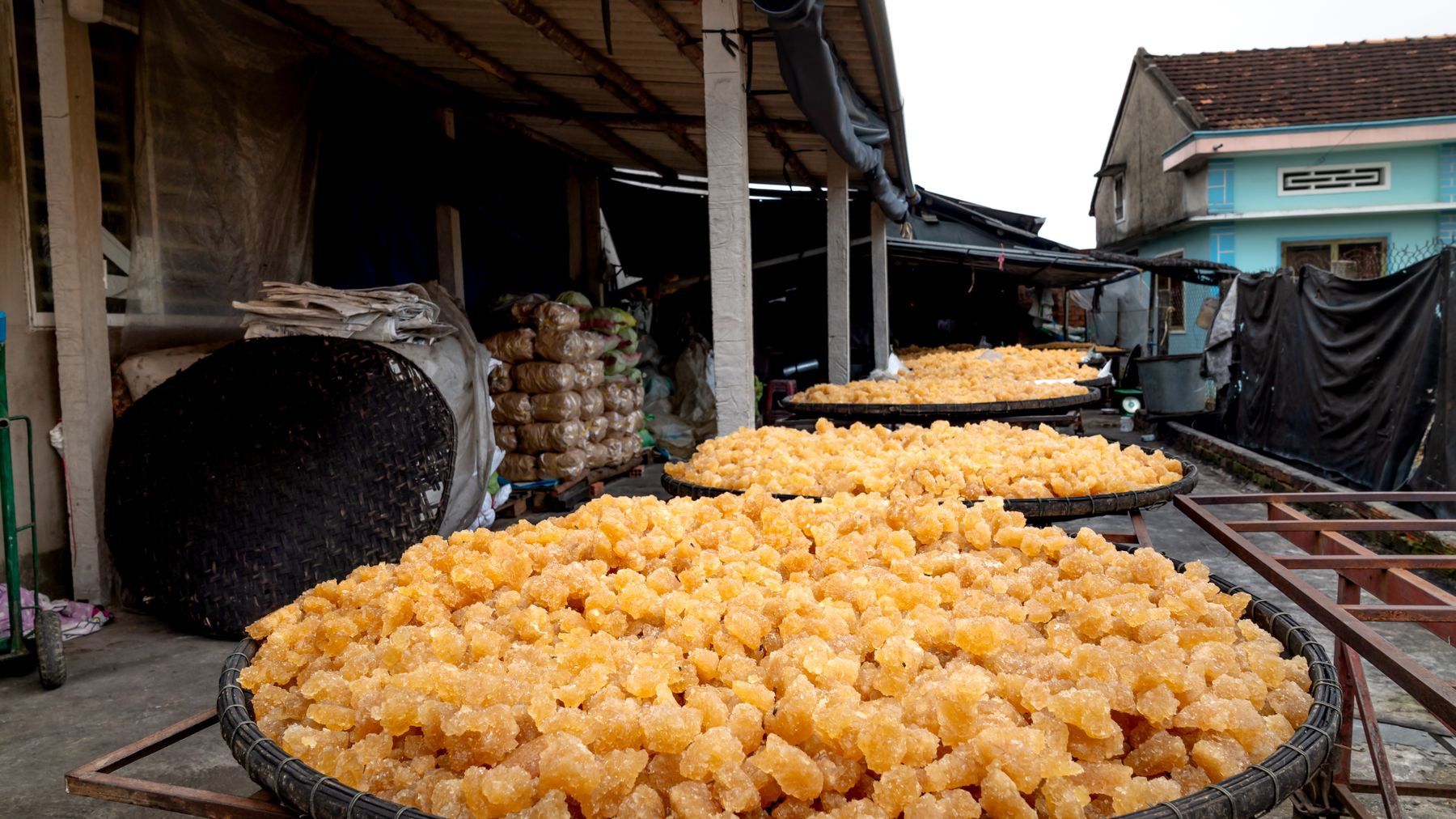
Photo by Quang Nguyen Vinh on Pexels
Eating Around the Temples
Tra Vinh province has over 140 Khmer temples, and many of the best food finds are in their immediate vicinity rather than in town. The area around Hang Pagoda (Chua Hang), which sits inside a bat-inhabited grove about 5 km from the provincial capital, has a cluster of informal food stalls selling "banh trang nuong" (grilled rice paper) and coconut-based snacks to locals who come to visit in the late afternoon.
If you're planning a longer loop through the Delta, Tra Vinh works well as a stop between Can Tho (껀터 / 芹苴 / カントー) and the coast toward Ha Tien. The drive through the province on back roads takes you past sugar palm groves, stilted Khmer houses, and small wats with colorful murals — all worth slowing down for.
Practical Notes
Tra Vinh town has limited tourist infrastructure — a few guesthouses in the 250,000–400,000 VND per night range, no international hotel brands. Most visitors come as a day trip from Can Tho (about 90 km) or as part of a longer Mekong loop. The best time to visit a temple for communal food is on a lunar observance day; check a Vietnamese lunar calendar before you go, and dress conservatively.
Last updated · May 26, 2026 · independently researched, never sponsored.