Quang Ngai sits about 130 km south of Da Nang and 175 km north of Quy Nhon — close enough to both that most travelers blow straight through on the train. That's a mistake, specifically a culinary one. The province has two dishes that locals will argue about with genuine heat: "don" soup and "com ga" (chicken rice). Neither is flashy. Both are worth the detour.
Don: The Clam So Small It Has Its Own Name
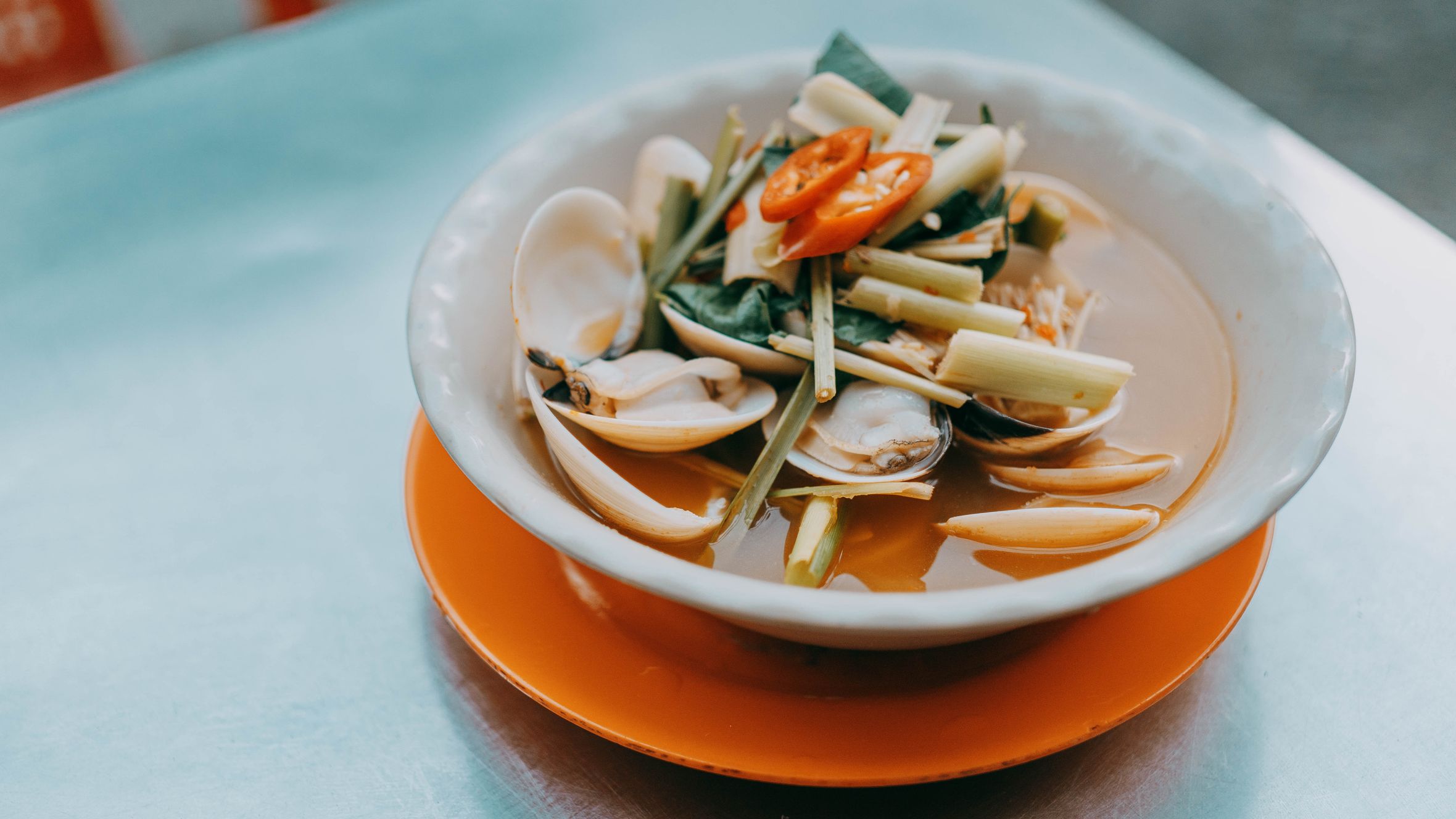
"Don" refers to a species of tiny freshwater clam, barely the size of a thumbnail, harvested from the Tra Khuc River that runs through the province. The clams are so small that eating them whole is the point — you spoon them up broth and all. This is not the same creature as the larger clam you'd find in a banh mi or a stir-fry in Saigon. Don is specific to this stretch of central coast, and the dish built around it is essentially a river-bowl: a shallow earthenware vessel filled with pale, slightly milky broth, the tiny clams in clusters, topped with crushed peanuts, shredded rau ram (Vietnamese coriander), a spoonful of mam tom (fermented shrimp paste) dissolved into the liquid, and a few slices of fresh chili.
The flavors are subtle by design. Don broth doesn't hit you — it accumulates. The clams have a faint mineral sweetness, the peanuts add texture, the rau ram cuts through any heaviness. Most bowls run 20,000–30,000 VND. You eat it fast, while it's hot, ideally with a side of banh trang nuong (grilled rice paper) for scooping.
The best don stalls in Quang Ngai town cluster around the Tra Khuc riverbank and in the market area near Hung Vuong Street. Look for places that open at 5:30 or 6 a.m. — don is a breakfast food. By 9 a.m., the good stalls are out.
Why It Hasn't Spread Further
Don doesn't travel well. The clams are harvested locally, are highly perishable, and the dish relies on broth made the same morning. You won't find it in Hanoi or Saigon (사이공 / 西贡 / サイゴン) in any form that resembles the real thing. This is partly what keeps it interesting — it's one of the more genuinely local eating experiences left on the central coast.
Com Ga: Quang Ngai's Answer to the Region's Chicken Rice
"Com ga" — chicken rice — is a dish that appears across central Vietnam, from Hoi An's famous version to smaller variations in Hue and Da Nang (다낭 / 岘港 / ダナン). Quang Ngai's version sits closer to the Hoi An style than to anything further north, but it has its own character.
The rice is cooked in chicken stock and turmeric, giving it a yellow tint and a faint savory depth. The chicken — usually free-range, raised in the hills outside town — is poached, then hand-shredded (never sliced with a knife, which matters for texture). It's piled on top of the rice with a tangle of shredded green papaya or banana flower, a scatter of fried shallots, and fresh herbs. The dipping sauce is the variable: some com ga shops use a straight nuoc cham, others blend in ginger, others go heavier on garlic. The quality of the chicken and the quality of the sauce are the two things that separate a good plate from a forgettable one.
A standard plate costs 40,000–65,000 VND depending on the portion size and whether you add extra chicken. Most com ga restaurants in Quang Ngai town are lunch-only, opening around 10 a.m. and closing when the chicken runs out — typically by 1 or 2 p.m.
The area around Le Trung Dinh Street and the central market (Cho Quang Ngai) has the highest concentration of com ga spots. Locals have strong opinions about which one is best; the honest answer is that three or four of them are excellent and the differences are marginal.

Photo by Thu Huynh on Pexels
Quang Ngai Town as a Food Stop
The town itself is a working provincial capital — not a tourist destination in the way Hoi An or Hue is. There are no heritage walking streets, no tailors, no lanterns. What it has is a food culture that hasn't been adjusted for outside palates. The don you eat here is the same don a Quang Ngai resident eats for breakfast before work. That's the appeal.
If you're traveling the central coast by train, Quang Ngai has a proper train station with connections north to Da Nang (roughly 2.5 hours) and south toward Quy Nhon and beyond. An overnight stop — or even a 4-hour layover if your schedule allows — is enough time to eat both don and com ga in the same day.
For coffee between meals, the central Vietnamese habit of strong iced drip coffee ("ca phe sua da") is well-represented here, and a few older cafes near the market pour it slowly over condensed milk the way it should be done.

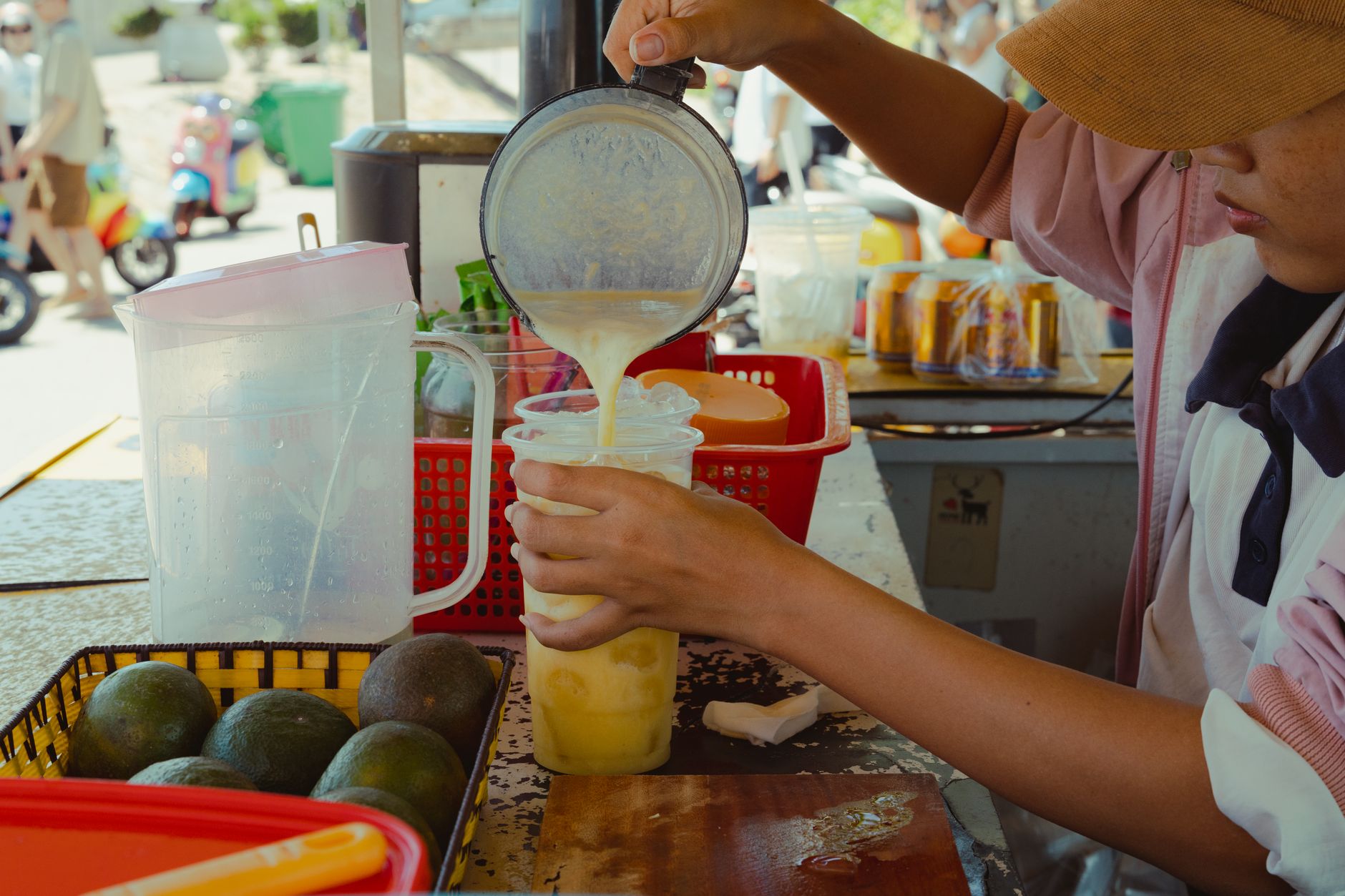
Photo by AN Nhol on Pexels
Practical Notes
Don is a morning dish; com ga is lunch. If you're only passing through for a few hours, plan your arrival accordingly — aim to arrive by 7 a.m. for don, then move to com ga around 11 a.m. before the best spots sell out. Most stalls are cash only; 200,000–300,000 VND covers a full morning of eating for one person with change left over.
Last updated · May 29, 2026 · independently researched, never sponsored.