What Tu Le is and why it matters
Tu Le sits in a narrow valley along National Road 32, roughly 180 km northwest of Hanoi as the crow flies but a solid 5-6 hours by road given the mountain passes. The town belongs to the expanded Lao Cai province (following the 2025 merger of the former Yen Bai province) and serves as a gateway between Sapa and the Mu Cang Chai rice terraces.
The Thai ethnic minority has farmed this valley for generations. Their "nep Tu Le" — a fragrant sticky rice variety grown only here — is considered some of the best in northern Vietnam (베트남 / 越南 / ベトナム). The town itself is small, maybe 15 minutes end to end on a motorbike, but the surrounding landscape of layered paddies backed by forested karst hills makes it worth more than a fuel stop.
Why travelers go
Most people pass through Tu Le on the Hanoi (하노이 / 河内 / ハノイ)–Mu Cang Chai–Sapa loop. But the town deserves a night or two on its own merits:
- Rice terraces without crowds. Mu Cang Chai gets the Instagram traffic. Tu Le's terraces are smaller in scale but you'll often have entire hillsides to yourself.
- Hot springs. Natural springs feed into a couple of basic bathing spots on the edge of town. Not luxurious — think concrete pools with mountain views — but restorative after a day on a motorbike.
- Thai village life. Stilt houses line the valley floor. Mornings start with roosters and the smell of wood smoke. It's one of the more accessible places to see everyday ethnic minority culture without a guided "village tour" setup.
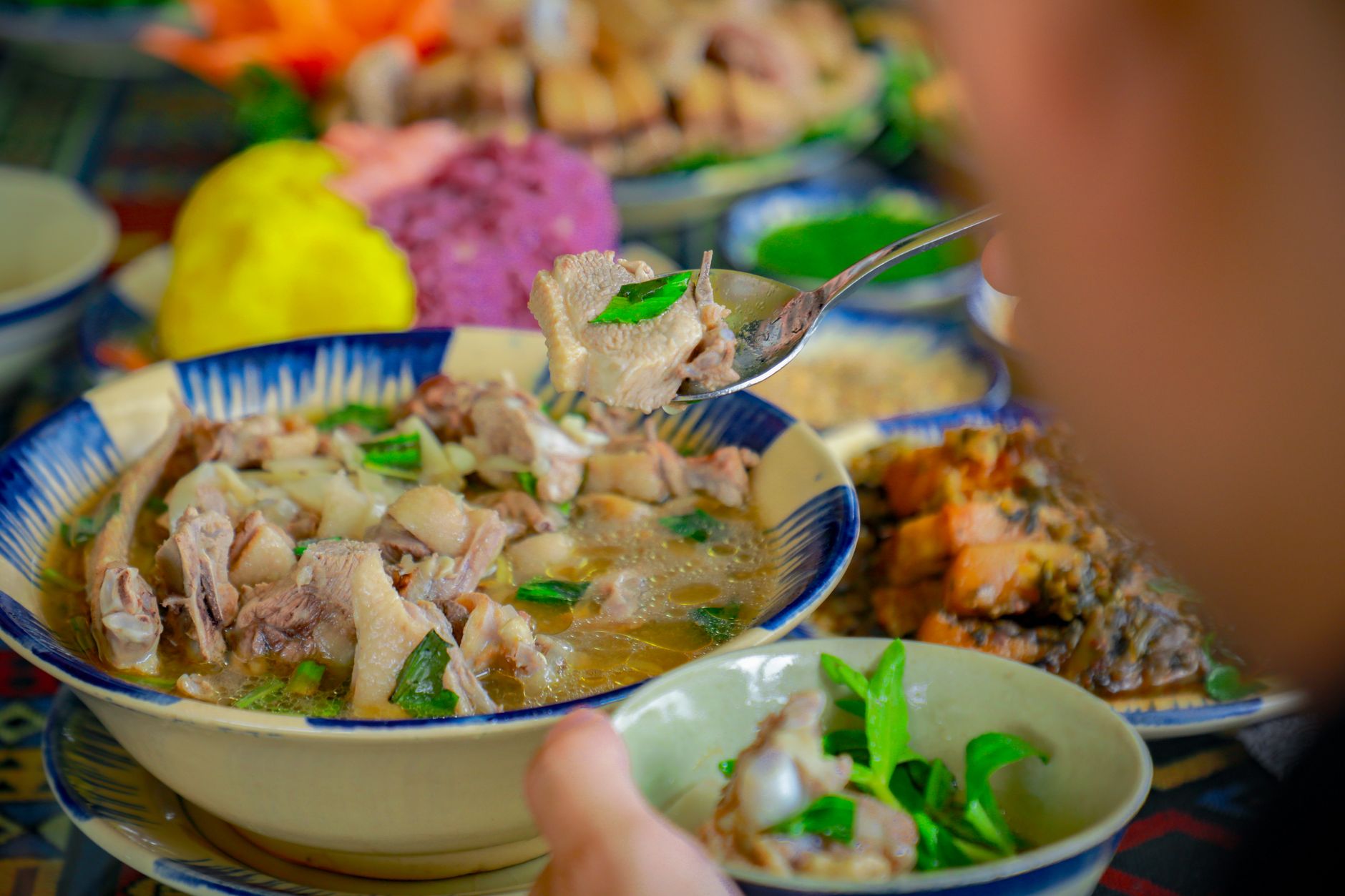
- The food. "Xoi nep Tu Le" (sticky rice steamed in banana leaves), "com lam" (bamboo-tube rice), grilled stream fish, and "thit trau gac bep" (smoked buffalo meat hung above the kitchen fire). Simple but distinct.
Best time to visit
Late September to mid-October is peak season. The rice ripens golden and the terraces look their best. This is also when Mu Cang Chai holds its paragliding festival, so the whole corridor gets busier.
May to June (transplanting season) offers vivid green paddies and fewer travelers. The valley is lush, the air is warm but not brutal, and accommodation is easy to find.
November to March is quiet. Fields are harvested and brown. The town is cooler (down to 10-12°C some nights) and can be foggy. Good for solitude, less good for photography.
Avoid the heaviest rains in July-August — landslides occasionally close Road 32.
How to get there
From Hanoi
Drive or ride northwest on the Noi Bai–Lao Cai expressway to Yen Bai city (about 2 hours), then follow National Road 32 west through Nghia Lo to Tu Le. Total: around 5-6 hours by car, 6-7 by motorbike with stops. No direct bus runs to Tu Le, but buses to Mu Cang Chai pass through — ask to be dropped at the Tu Le junction. Expect around 250,000-300,000 VND for the bus.
From Sapa
Take the road south through Than Uyen to Tu Le. About 130 km, roughly 4 hours by motorbike on winding mountain roads. The scenery on this stretch is extraordinary — you'll cross Khau Pha Pass, one of the most dramatic passes in the northwest.
From Mu Cang Chai
Tu Le is only 20 km east of Mu Cang Chai town along Road 32. A quick 30-minute ride.

Photo by Q. Hưng Phạm on Pexels
What to do
Walk or ride through the terraces
Head south from the town center on any of the dirt paths leading into the valley. The terraces layer up both sides of the stream. No ticket, no gate — just rice fields and farmers. Early morning light is best.
Soak in the hot springs
The main spring area is about 2 km from the town center, signposted. Entry is cheap (20,000-30,000 VND). Bring your own towel. The water is warm rather than scalding — pleasant after a long ride.
Visit a Thai stilt house
Several homestays operate out of traditional stilt houses. Even if you're not staying overnight, some families welcome visitors for a cup of tea or a meal. Be respectful — remove shoes, ask before photographing altars.
Ride Khau Pha Pass
The pass between Tu Le and Mu Cang Chai is about 30 km of switchbacks rising to 1,200 meters. On clear days you can see the entire Tu Le valley below. It's one of the iconic motorcycle stretches in northern Vietnam, up there with the Ha Giang loop for drama.
Where to eat
Tu Le doesn't have a restaurant scene. You eat at your homestay, at small "com pho" shops along Road 32, or at the market.
- Xoi Tu Le — sold by women at the morning market. Sticky rice dyed purple or yellow with natural herbs, served with sesame salt and grilled meat. Around 20,000-30,000 VND per portion.
- Com lam — bamboo rice, often paired with grilled chicken or pork. Available at roadside stalls.
- Stream fish — small freshwater fish grilled over charcoal with herbs. Order at homestays the evening before so they can source it.
- "Ruou can" — communal rice wine drunk through bamboo straws from a ceramic jar. Your homestay host will likely offer this after dinner. Pace yourself.
Where to stay
No hotels in the conventional sense. Options are:
- Thai homestays — the most common choice. Expect a mattress on the floor of a stilt house, mosquito net, shared bathroom. Dinner and breakfast usually included. 200,000-400,000 VND per person per night with meals.
- Guesthouses — a few basic concrete guesthouses sit along Road 32 in the town center. Private rooms, hot water, Wi-Fi. Around 300,000-500,000 VND per room.
- Tu Le Hot Spring Resort — the only mid-range option, with private hot spring pools. Rooms run 600,000-900,000 VND. Book ahead on weekends during rice season.

Photo by Quang Nguyen Vinh on Pexels
Practical tips
- Cash only. There's one ATM in town (Agribank) but it's unreliable. Withdraw in Nghia Lo or Yen Bai before arriving.
- Fuel up. Petrol stations exist in Tu Le but hours vary. Don't arrive on fumes.
- Phone signal. Viettel works best in the valley. Mobifone is spotty outside town.
- Language. Very little English spoken. Basic Vietnamese phrases or a translation app go a long way. Many Thai villagers speak Vietnamese as a second language.
- Road conditions. Road 32 is paved but narrow, with trucks and occasional livestock. The side roads into villages are dirt and can be muddy after rain.
Common mistakes
- Treating Tu Le as a lunch stop. The valley rewards slow time. Stay a night minimum.
- Arriving without cash. You won't find card machines here.
- Skipping Khau Pha Pass in fog. If visibility is zero, wait. The pass is dangerous in low cloud and you'll miss the entire point.
- Expecting Sapa-level infrastructure. This isn't Sapa. No tour desks, no Western cafes, no English menus. That's the appeal.
Practical notes
Tu Le works best as part of a 3-4 day northwest loop: Hanoi to Mu Cang Chai, overnight in Tu Le, continue to Sapa or reverse. If you're riding the Ha Giang loop and have extra days, swinging west through Tu Le adds variety without much backtracking. The town is small enough that one full day covers the sights — but the kind of place where a second day of doing nothing feels earned.
Last updated · May 29, 2026 · independently researched, never sponsored.