Dong Trieu doesn't show up on most Vietnam (베트남 / 越南 / ベトナム) itineraries, which is exactly why it's worth the detour. The Tran Dynasty Historical Site (Khu Di Tich Nha Tran) sprawls across several square kilometers of low hills and rice fields in Quang Ninh province, about 100 km east of Hanoi. If you have any interest in Vietnamese history beyond the standard war-museum circuit, this is one of the more rewarding half-day trips in the north.
What it is
The Tran Dynasty ruled Vietnam from 1225 to 1400 — the era that produced three famous victories against Mongol invasions and shaped much of Vietnamese cultural identity. Dong Trieu was a spiritual and administrative heartland for the Tran clan before they rose to power, and the site preserves temples, pagodas, and royal tombs connected to that period.
The complex centers on An Sinh commune and includes Den An Sinh (the main temple dedicated to Tran kings), Thai Lao (a cluster of royal tombs on a forested hillside), and Ngoa Van Pagoda perched at around 600 meters elevation on Yen Tu mountain's foothills. The Vietnamese government designated the whole area a national historical relic, and restoration work has been ongoing since the early 2000s.
This isn't a single building you walk through in twenty minutes. It's a landscape — temples dotted between villages, narrow roads through longan orchards, stone steps climbing into the hills.
Why travelers go
Most foreign visitors to Quang Ninh head straight for Ha Long Bay. The Tran Dynasty site draws mainly domestic pilgrims and history buffs, which means you'll rarely share the paths with tour groups. The appeal is threefold: genuinely old archaeology (some foundations date to the 13th century), good hiking at Ngoa Van Pagoda, and a window into rural Quang Ninh that feels nothing like the tourist corridor along the coast.
If you've visited the [Temple of Literature](/posts/temple-of-literature-hanoi (하노이 / 河内 / ハノイ)-guide) in Hanoi and want to go deeper into Vietnamese dynastic history without the crowds, Dong Trieu delivers.
Best time to visit
October through March gives you cooler, drier weather — important because the Ngoa Van Pagoda hike is steep and exposed. January through March overlaps with the spring festival season after Tet, when the temples are most active with incense and offerings. Avoid June through August if you dislike humidity and afternoon downpours; the stone steps to Ngoa Van get slippery.
Weekdays year-round are quieter. Weekends in spring can get busy with Vietnamese visitors making pilgrimages.
How to get there from Hanoi
Dong Trieu town is roughly 100 km east of Hanoi, reachable in about two hours by car or motorbike via Highway 18.
- Bus: Buses from Hanoi's Gia Lam or My Dinh stations run to Dong Trieu throughout the day. Expect to pay 80,000–120,000 VND per seat. Travel time is around 2–2.5 hours depending on traffic.
- Motorbike: Highway 18 is straightforward and mostly flat. The ride takes about two hours from central Hanoi without stops.
- Car/taxi: A private car from Hanoi runs 1,200,000–1,500,000 VND one way. If you're combining this with a Ha Long Bay trip, it makes a logical stop on the way — Dong Trieu sits right on the Hanoi–Ha Long corridor.
From Dong Trieu town center, the main temple complex at An Sinh is about 16 km north. You'll need a motorbike, xe om (motorbike taxi), or grab car for this stretch. Local xe om drivers at Dong Trieu market know the site well.

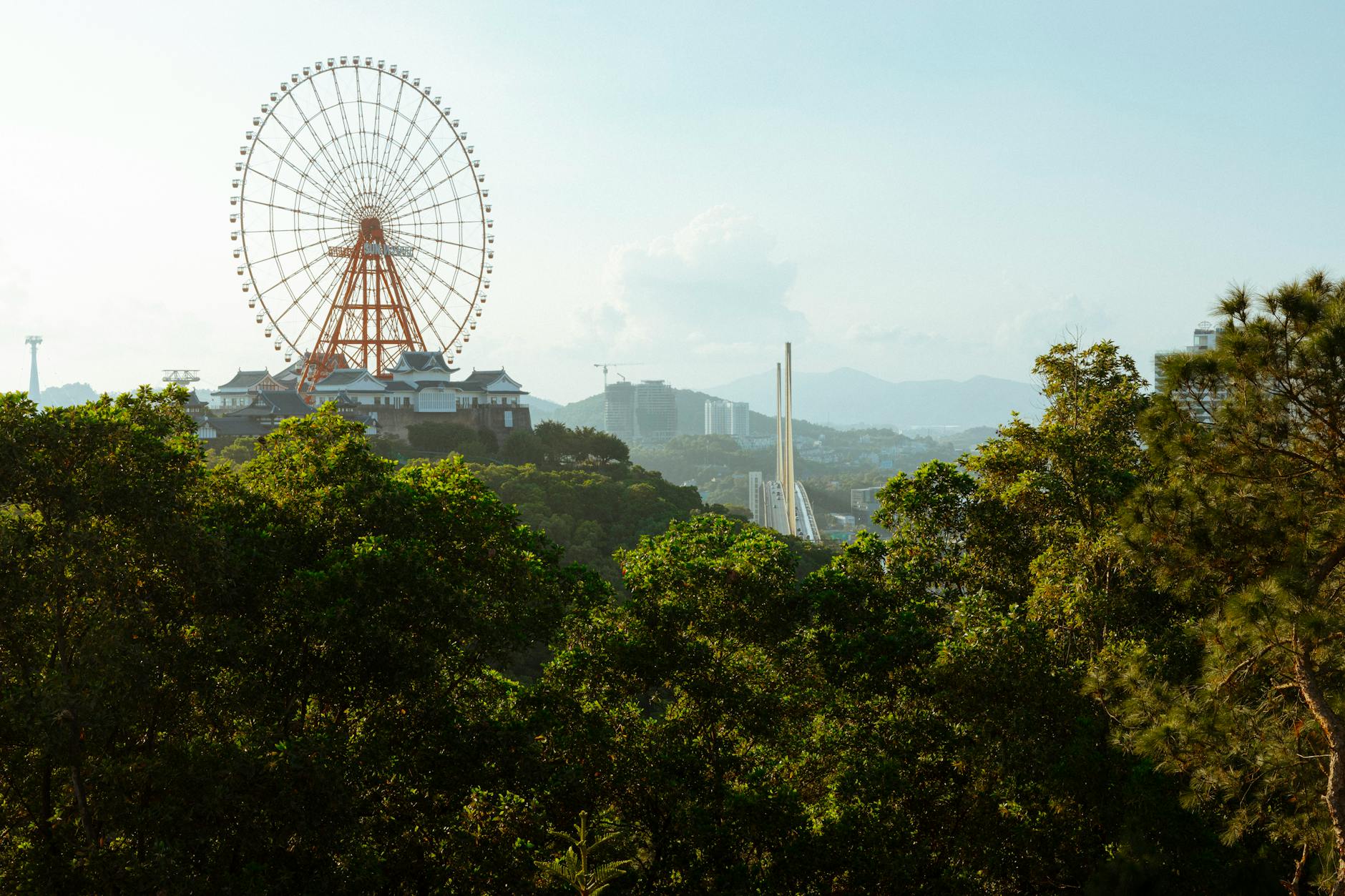
Photo by Anh Tuấn Lê on Pexels
What to do
Den An Sinh
The main temple is dedicated to the 14 kings of the Tran Dynasty. The architecture is recent restoration rather than original, but the setting — backed against low green hills, flanked by lotus ponds — is genuinely peaceful. Look for the stone steles and carved dragon balustrades, some of which are original 13th–14th century pieces. Entry is free.
Thai Lao royal tombs
A cluster of Tran-era royal tombs set on a wooded hillside about 3 km from Den An Sinh. The tombs themselves are modest stone mounds — don't expect the scale of the Tomb of Tu Duc in Hue — but the forest walk is pleasant, and you'll likely have it to yourself. Budget 45 minutes to an hour.
Ngoa Van Pagoda hike
This is the highlight for active travelers. Ngoa Van sits at roughly 600 meters on the Yen Tu range and is where Tran Nhan Tong — the king who became a Buddhist monk and founded the Truc Lam Zen school — spent his final years. The hike from the base takes about 1.5–2 hours up well-maintained stone steps. Bring water and decent shoes. The views over the Dong Trieu valley from the top are worth the climb.
Bat Trang-style ceramics in Dong Trieu
Dong Trieu has its own ceramic tradition, less famous than Bat Trang near Hanoi but still active. Several workshops along the road between town and An Sinh sell locally made pottery at lower prices than tourist markets. Worth a quick stop if you're interested in crafts.
Ho Thien Pagoda
Another hilltop pagoda within the relic complex, smaller and less visited than Ngoa Van. The approach through a narrow valley with bamboo groves feels genuinely remote. Combined with Ngoa Van, it makes a solid full day of walking.
Where to eat nearby
Dong Trieu town has no fine dining, but the local food is honest and cheap. Look for "banh cuon" — the steamed rice rolls here are filled with minced pork and wood ear mushroom, served with a light dipping sauce. Several small shops near Dong Trieu market serve them fresh in the morning for 25,000–40,000 VND a plate.
For lunch, find a com binh dan (daily rice) spot along Highway 18 in town. A plate with grilled pork, greens, and rice runs 35,000–50,000 VND. If you're heading toward Ha Long Bay after, save your seafood appetite for the coast.
Where to stay
Most travelers visit Dong Trieu as a day trip from Hanoi or a stop en route to Ha Long Bay. If you want to overnight:
- Budget: Basic nha nghi (guesthouses) in Dong Trieu town cost 200,000–350,000 VND per night. Clean enough, don't expect much beyond a bed and hot water.
- Mid-range: A few newer hotels near Highway 18 offer air-conditioned rooms with Wi-Fi for 400,000–700,000 VND.
- Upscale: Nothing in Dong Trieu itself. The nearest comfortable hotels are in Uong Bi (20 km east) or Ha Long City (60 km east).

Photo by Kirandeep Singh Walia on Pexels
Practical tips
- Bring cash. There are ATMs in Dong Trieu town, but nothing at the temple sites.
- Wear long pants and cover your shoulders at the temples. This is an active worship site, not just a ruin.
- If you're hiking Ngoa Van, start early. By noon in warmer months the stone steps radiate heat.
- Vietnamese language helps here — very few English speakers. Download offline Vietnamese on Google Translate before you go.
- The whole complex is spread over a wide area. Budget a full day if you want to see Den An Sinh, Thai Lao, and hike Ngoa Van. A rushed half-day covers the temples but not the pagoda.
Common mistakes to avoid
Don't show up expecting a single ticketed attraction with a visitor center. This is a scattered historical landscape — you need your own transport between sites. Don't skip Ngoa Van Pagoda in favor of only the lowland temples; the hike is where the real character of this place reveals itself. And don't plan this trip on the same day as Ha Long Bay — you won't have time for both. Give Dong Trieu its own day.
Practical notes
The Tran Dynasty site pairs naturally with a broader northern Vietnam loop — Hanoi to Dong Trieu to Ha Long Bay to Ninh Binh, for instance. It's the kind of place that rewards travelers willing to go slightly off-script, and it costs almost nothing to visit.
Last updated · May 29, 2026 · independently researched, never sponsored.