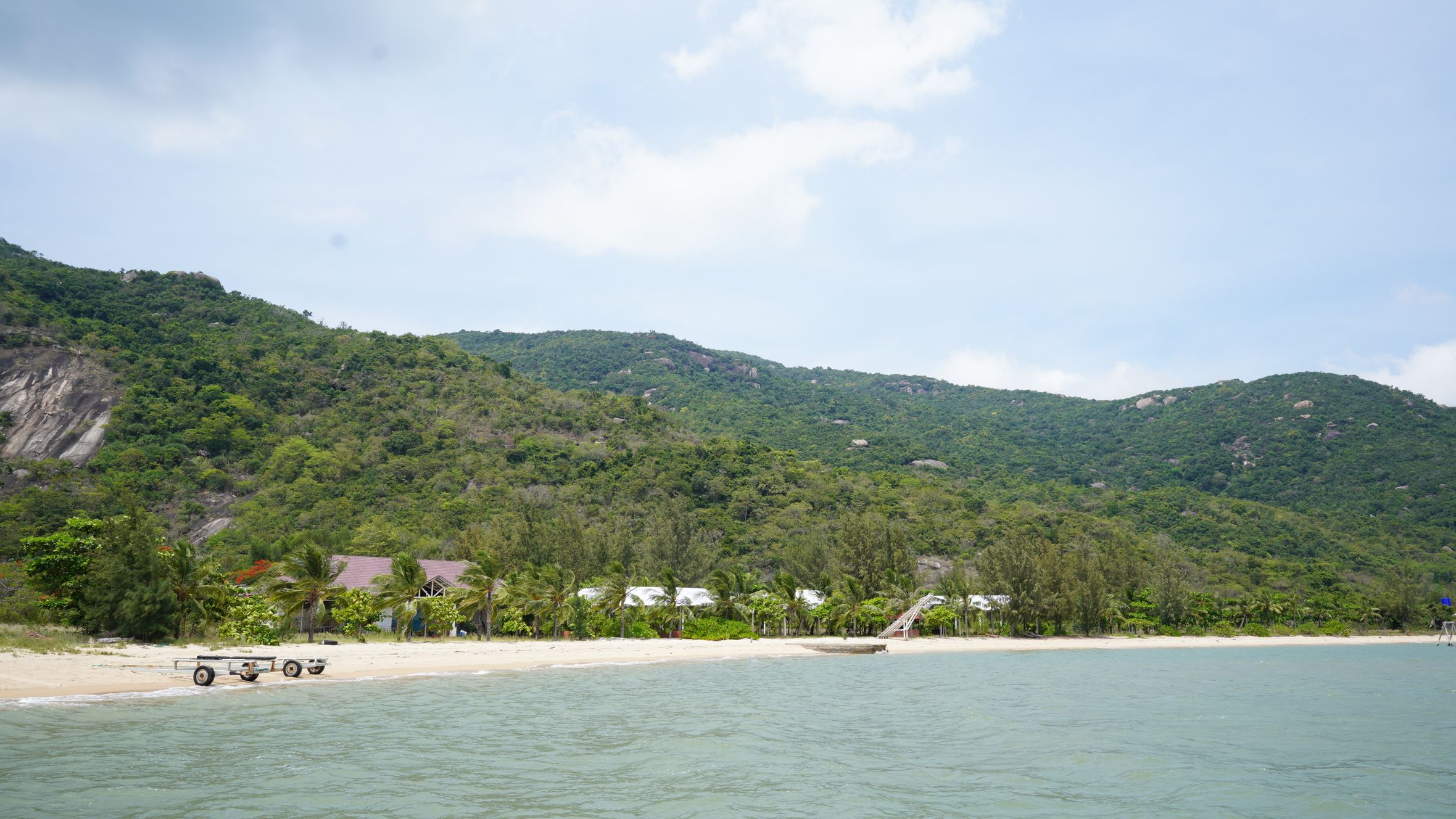
Vinh Long doesn't get the tourist traffic of Can Tho, and that's precisely why the food here still tastes like it belongs to the people who actually live on these islands. Come for the "banh xeo" — come back because of everything else.
What Makes Vinh Long's Banh Xeo Different
"Banh xeo (반세오 / 越南煎饼 / バインセオ)" — the sizzling rice-flour crepe stuffed with pork, shrimp, and bean sprouts — exists across Vietnam's south, but the cu lao (river island) version around Vinh Long has its own logic. The batter here is thinner, crispier, and heavily flavored with coconut milk pressed from trees grown on the islands themselves. The shrimp are freshwater, caught the same morning from the branches of the Mekong distributaries that split An Binh Island from the mainland.
You'll find this style at small family operations near the Phuoc Thuan ferry crossing, roughly 2 km from Vinh Long town. Look for places with a wood-fired clay stove out front and a stack of fresh rice paper beside it — that's the tell. A full plate with a basket of herbs, pickled vegetables, and lettuce costs around 35,000–50,000 VND. You wrap each torn piece in rice paper with mint, perilla, and a sliver of star fruit, then drag it through nuoc cham cut with a little coconut water.
There are no famous named restaurants to drop here. The best banh xeo on An Binh Island tends to come from whoever has the hottest pan that afternoon.
Getting to the Islands
An Binh Island sits about 1.5 km from Vinh Long town across the Co Chien River. The ferry from Phan Boi Chau street runs throughout the day for 5,000 VND per person. From An Binh, a network of narrow bridges and paths connects to Binh Hoa Phuoc and Dong Phu islands — collectively what locals call the cu lao cluster.
Renting a bicycle on the island (around 50,000–70,000 VND per day from most homestays) is the right call. The paths between longan and mango orchards are too narrow and too slow-going for motorbikes to make sense, and half the point is stopping when something smells good.

Photo by Loifotos on Pexels
The Homestay Table
Most visitors to An Binh stay at one of the island's small family homestays, and the meal that comes with the room is often the best one you'll eat in Vinh Long. Families cook what's seasonal and what they've grown or caught — not a fixed menu, not laminated cards with photos.
A typical dinner spread might include:
- Ca loc nuong trui — snakehead fish grilled directly over dried coconut husks until the skin blackens and splits. You peel it at the table and eat it with rice paper, herbs, and fermented shrimp paste.
- Lau mam — a pungent, funky fermented fish hotpot that arrives bubbling. It's an acquired smell but a deeply satisfying eat, especially in the cooler riverside evenings.
- Canh chua ca — sweet-sour tamarind soup with pineapple, tomato, and river fish. The version made with freshwater elephant ear fish (ca tai tuong) is especially good in this region.
- Rau muong xao toi — morning glory stir-fried with garlic, a side dish so simple it barely registers until you realize how good freshly picked water spinach actually tastes.
Homestay meals with full board typically run 150,000–250,000 VND per person depending on how elaborate dinner gets. Some families will cook banh xeo on request for breakfast — worth asking.
Where Else to Eat in Vinh Long Town
If you arrive by bus and have time before catching the ferry, the stretch of market stalls near Vinh Long Market on 1 Thang 5 street does serviceable "hu tieu" — the southern noodle soup with a lighter broth than its Saigon counterparts and a heavier hand with the pork bone base. A bowl runs about 30,000–40,000 VND.
For coffee, the town has the usual ca phe da options at dozens of sidewalk plastic-stool places. Nothing artisan. Just strong, iced, and cheap — around 15,000–20,000 VND. Drink it before the ferry.
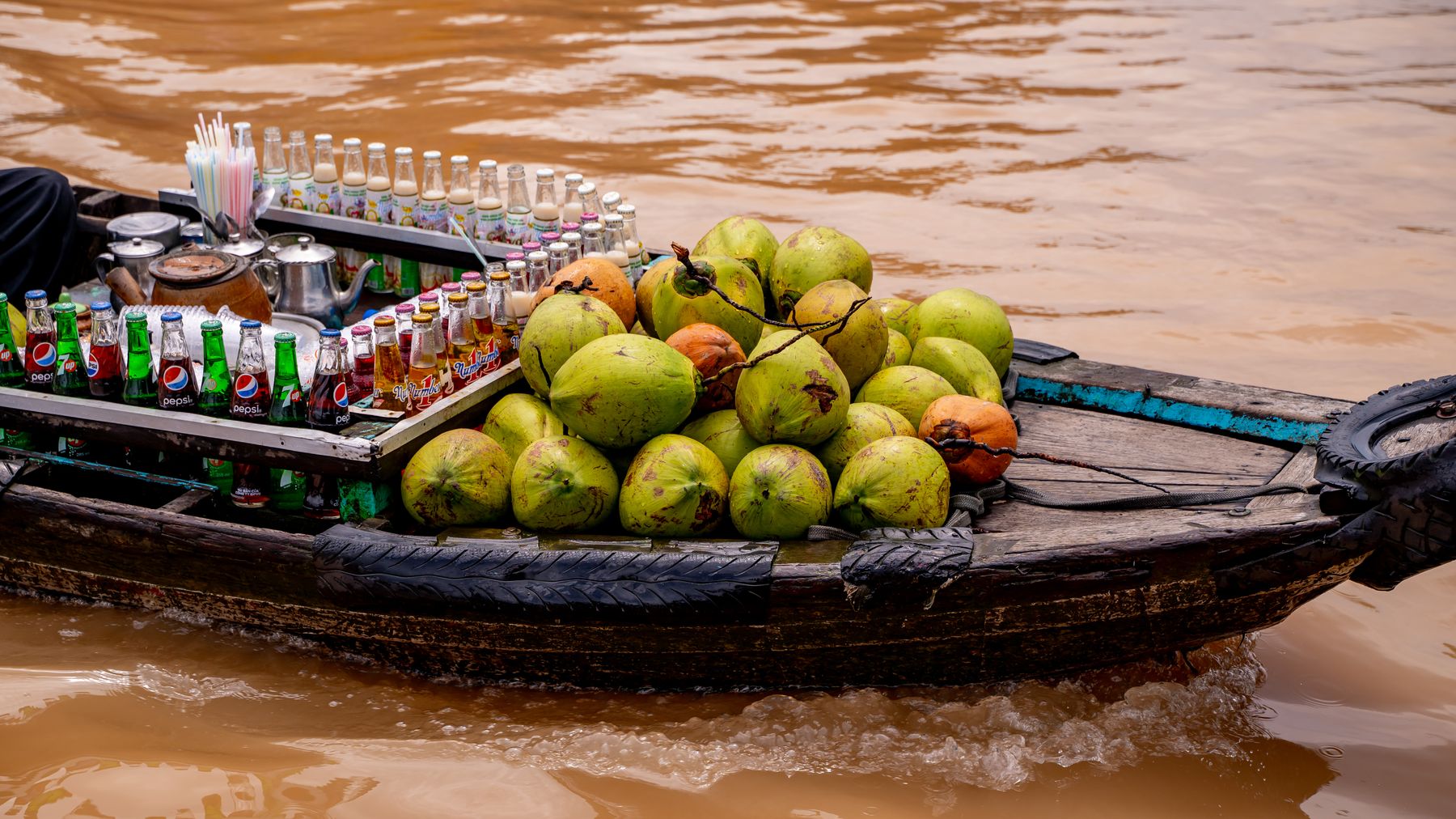
Photo by Vietnam Tri Duong Photographer on Pexels
What to Bring Back
Longan is the crop of An Binh Island, and during harvest season (roughly July–August), you can buy it directly from orchards along the cycling paths at prices significantly below what markets in Saigon or Can Tho (껀터 / 芹苴 / カントー) charge. Dried longan, packed in bags, travels well.
Handmade coconut candy — "keo dua" — is another regional staple. The small workshops on the islands let you watch the process. It's not a performance for tourists; they're just making candy and don't particularly mind if you watch. A bag costs 30,000–60,000 VND depending on flavor.
Practical Notes
Vinh Long is about 65 km from Can Tho and 135 km from Saigon — easy as a two-day detour from either city. Most travelers arriving by bus from Saigon's Mien Tay station can be on An Binh Island within three to four hours of leaving the city. Weekday visits are quieter; weekend day-trippers from Can Tho arrive in numbers and the island paths get congested by late morning.
Last updated · May 29, 2026 · independently researched, never sponsored.







