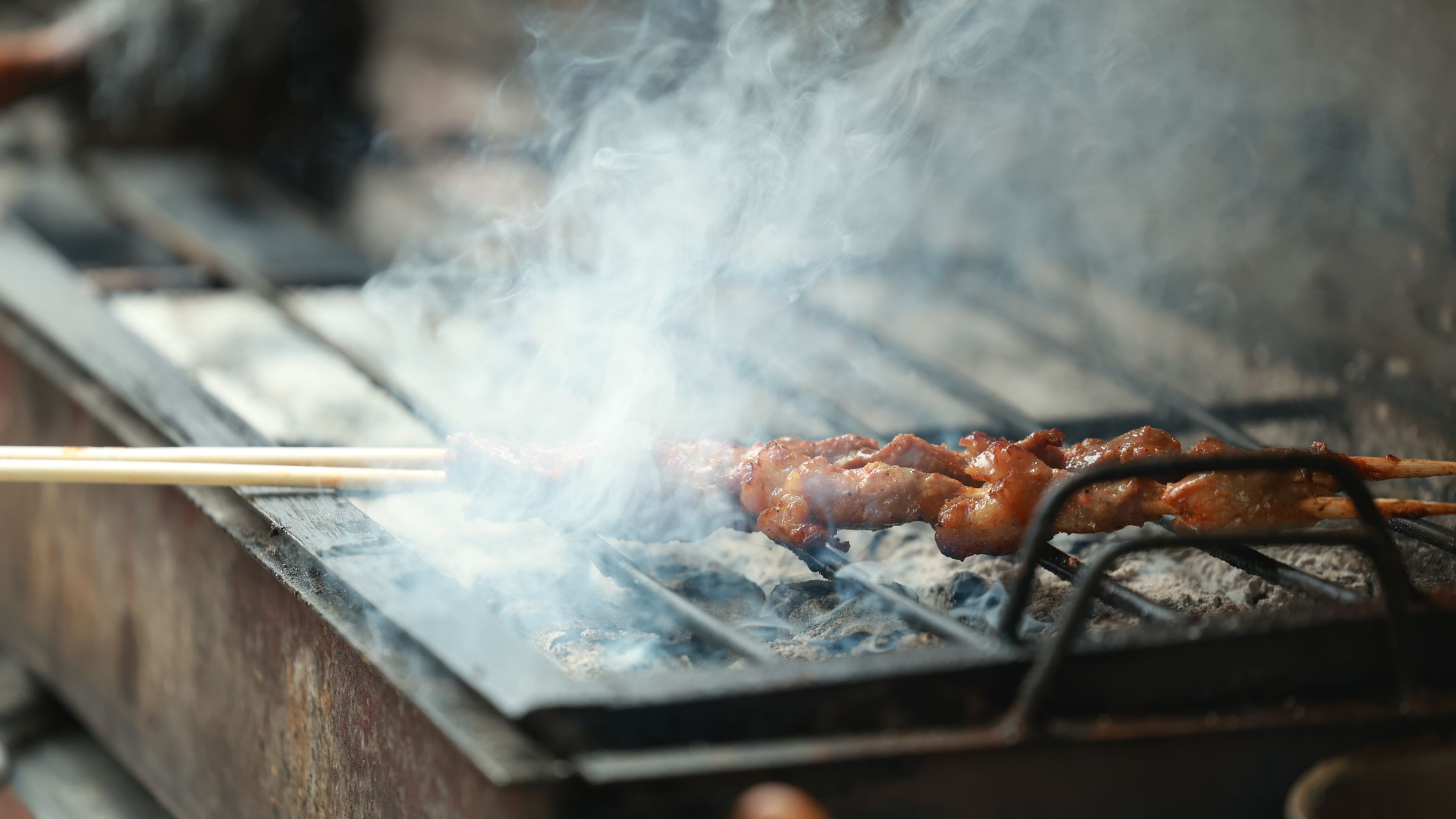
"Vit nuong" — roast duck — is one of those dishes that looks deceptively simple on a menu until you realize the version in Lang Son tastes almost nothing like what lands on your table in Cholon. The marinade, the heat source, the wood, the breed of duck, the dipping sauce: every variable shifts by region, and those shifts matter.
What Vit Nuong Actually Is
At its core, vit nuong is duck marinated and cooked over direct heat — charcoal, wood fire, or occasionally a closed oven in more commercial kitchens. The duck is almost always split open or spatchcocked before cooking, which flattens it for even contact with the grill and helps the skin render properly. What separates a great vit nuong from a forgettable one is the marinade depth and the quality of the char: the skin should crack when you press it, not bend.
Duck itself is fattier than chicken, which means it handles high heat differently. Done right, the fat bastes the meat from the inside as it cooks, keeping the flesh moist while the skin blisters and colors. Done wrong — rushed on a too-cool fire — you get greasy, pale skin and meat that steams rather than roasts.
The Northern Mountain Versions: Lang Son and Cao Bang
If you want to understand vit nuong at its most regional, the border provinces of Lang Son and Cao Bang are where to start. The ducks raised here — often a local breed called vit Co Lua, fed on rice and river snails — are leaner and more deeply flavored than the farmed ducks common further south. They're smaller too, which means faster, hotter cooking without drying out.
The Lang Son marinade typically involves ginger, galangal, lemongrass, and a generous amount of turmeric, which gives the finished bird its distinctive yellow-orange tint under the char. Some cooks add a splash of ruou can (fermented rice wine) to the marinade. The duck is skewered whole and rotated over hardwood embers — not charcoal briquettes — and the smoke becomes part of the flavor profile in a way that's unmistakable.
Cao Bang's approach is similar in structure but leans harder on five-spice and dried chili, with a finish that's slightly more fragrant and noticeably spicier. The dipping sauce in both provinces is almost always a thin ginger-lime mixture with fresh chili — nothing as sweet as the hoisin-plum sauces you'll find further south.
Both versions are served with sticky rice (xoi), often steamed in bamboo, and a plate of fresh herbs. The pairing makes sense: the fatty, smoky duck needs the neutral starch and the green brightness of the herbs to balance it.
The Hanoi Version: Restrained and Leaner
In Hanoi, vit nuong has a lower profile than, say, "bun cha" or "banh cuon", but it exists as a reliable dinner-table dish, particularly in the city's outer districts. The capital's version tends to use a simpler marinade — soy sauce, sesame oil, garlic, a little honey — and the cooking is often done on tabletop grills in restaurants that specialize in grilled meats alongside "bia hoi". The result is cleaner and less smoky than the border versions, with the honey giving the skin a lacquered appearance.
Hanoi (하노이 / 河内 / ハノイ) duck spots often serve the bird pre-sliced rather than whole, with pickled vegetables and a small bowl of diluted fish sauce on the side. It's a more casual, less ceremonial presentation than what you get in Lang Son, which suits the city's after-work dining culture.

Photo by Nathan Reynolds on Pexels
Saigon's Chinatown Version: The Cantonese Influence
In Cholon — Saigon (사이공 / 西贡 / サイゴン)'s Chinatown district, centered around Cho Lon market on the western edge of District 5 — vit nuong takes on a distinctly Cantonese-influenced character that reflects the community that's been roasting ducks here for generations. The technique here is closer to Cantonese siu ngap: the duck is inflated with air to separate the skin from the flesh before blanching and air-drying, then roasted in a closed oven at high heat. This produces the characteristic crackling, mahogany-lacquered skin that shatters when cut.
The marinade is sweeter and more complex — maltose, five-spice, soy, fermented red tofu — and the dipping sauce is almost always a thick, slightly sweet plum sauce or hoisin. It's served with rice or "mi quang"-adjacent egg noodles in some shops, though plain steamed rice is the default.
Cholon's roast duck shops often hang the finished birds in the window on hooks, whole, in the style of Cantonese BBQ houses. You can order by the half or whole duck, or by weight. Prices run roughly 180,000–250,000 VND for a half bird depending on the shop.
How to Order
A few practical notes that apply across regions:
- Specify the cut. In border province restaurants, whole duck is common. In Hanoi and Saigon, asking for nua con (half) is normal.
- Ask about the sauce. Don't assume it comes with ginger sauce — in Cholon, it might be plum, and you may want to request both.
- Timing matters in the north. Lang Son and Cao Bang duck spots often sell out by early evening. Arriving after 7 PM at a busy spot may mean they're down to drumsticks.
- Pair it correctly. Sticky rice in the north, plain steamed rice in the south. Both are right for their context.

Photo by Vietnam Tri Duong Photographer on Pexels
Where to Try It: Three Spots Worth the Trip
Quan Vit Nuong Co Lan — Lang Son
On Tran Dang Ninh street in Lang Son city, this spot has been operating in various forms for decades. The smoke from the hardwood grill is visible from the street. Order the half duck with xoi nep cam (purple sticky rice) — around 150,000 VND for the duck portion.
Vit Quay Lo Nuong Cholon — Saigon, District 5
Look for the roast duck shops clustered around the Phung Hung and Nhi Thuong intersection in Cholon. Several have been family-run since the 1980s. The skin-to-meat ratio here is as good as it gets in the south. Half duck with rice runs 180,000–220,000 VND.
Quan Vit Co Co — Hanoi, Dong Da District
A no-frills grill house near Lang Ha lake that draws a regular local crowd on weeknights. The bird is smaller than the Cholon version but the char is excellent, and the pickled mustard greens on the side are genuinely good. Budget around 130,000–160,000 VND for a half bird.
Practical Notes
Vit nuong is not a year-round certainty at smaller spots in Lang Son and Cao Bang — supply of local-breed ducks fluctuates, and some shops close during the quieter months of February and March. If you're making a specific trip to the border provinces for the duck, call ahead or ask your guesthouse to confirm availability. In Hanoi and Saigon, the dish is consistent year-round.
Last updated · May 29, 2026 · independently researched, never sponsored.




