Vung Tau runs on coffee the way most coastal towns run on salt air and habit. Locals drink it early, drink it often, and have strong opinions about where. If you've only had "ca phe sua da" — iced coffee with condensed milk — at a beachside plastic-stool spot, you've had the introduction. The full picture is more layered.
The Sidewalk Tradition
The oldest and most democratic coffee culture here happens on the pavement. Look for the low plastic stools, the aluminum drip filters sitting on glass tumblers, and the thermos of hot water. These places open around 5:30 or 6 a.m. and are half-empty by 9. A glass of "ca phe den" — black drip coffee, no milk — costs 10,000 to 15,000 VND. Ca phe sua da (연유커피 / 越南冰咖啡 / ベトナムアイスコーヒー) is rarely more than 20,000 VND.
The coffee itself is typically Robusta from the Central Highlands (중부 고원 / 中部高原 / 中部高原), dark-roasted with a slight bitterness that cuts through the condensed milk cleanly. Some older shops still blend in a small amount of butter or salt during roasting — a southern tradition that gives the brew a faintly nutty finish. Don't ask for it by name; just try a few places and you'll notice the difference.
Back Beach (Bai Sau) and the streets behind Front Beach (Bai Truoc) around Tran Phu and Ha Long roads have the highest concentration of these spots. No menus. You sit, someone brings coffee. You watch the street.
Beyond the Basics: What Else to Order
Most Vung Tau cafes serve a wider range than the tourist-facing menus suggest.
Ca phe trung — egg coffee — is less common here than in Hanoi, but a handful of cafes near the central market have started offering it. The version down south tends to be less sweet and slightly more custardy than the Hanoi original. Worth trying if you haven't had it in the north.
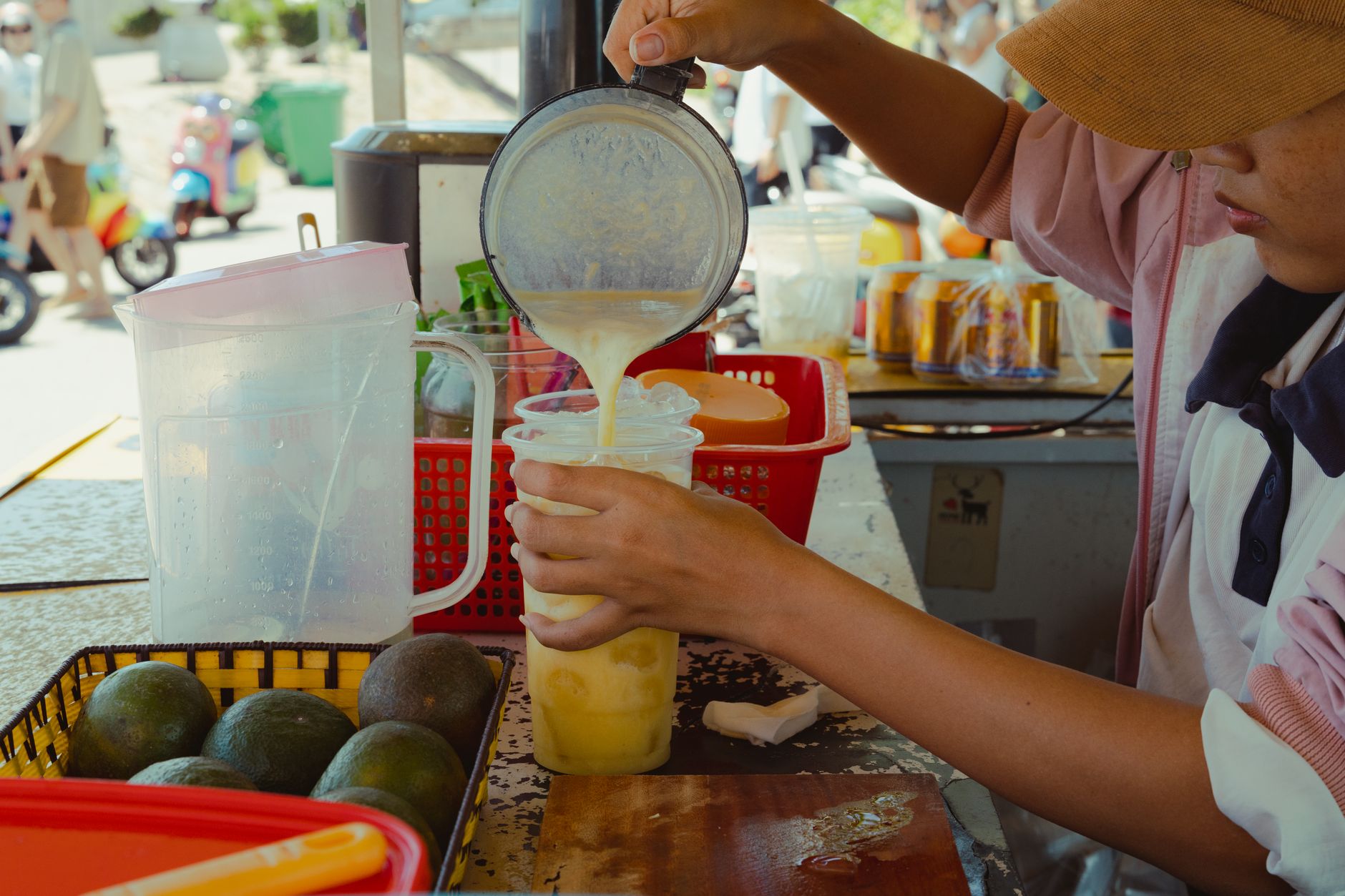
Sinh to ca phe is a blended coffee smoothie, often made with condensed milk, ice, and occasionally banana or avocado. It's a local thing, particularly popular with younger drinkers. Not subtle, but good on a hot afternoon.
Ca phe muoi — salted coffee — originated in Hue but has spread south. Vung Tau has a few shops making their own version: a layer of salted cream floated on top of black coffee. The contrast works better than it sounds.
If you want something without caffeine, ask for tra da (iced tea, often free or 5,000 VND) or look for shops serving "tra tac" — calamansi iced tea, tart and refreshing.

Photo by 🇻🇳🇻🇳Nguyễn Tiến Thịnh 🇻🇳🇻🇳 on Pexels
The Newer Wave
Vung Tau has quietly developed a small but real specialty coffee scene over the past five or six years, driven partly by weekenders from Saigon who expect better beans and partly by a generation of local cafe owners who trained in the city.
A few things to look for:
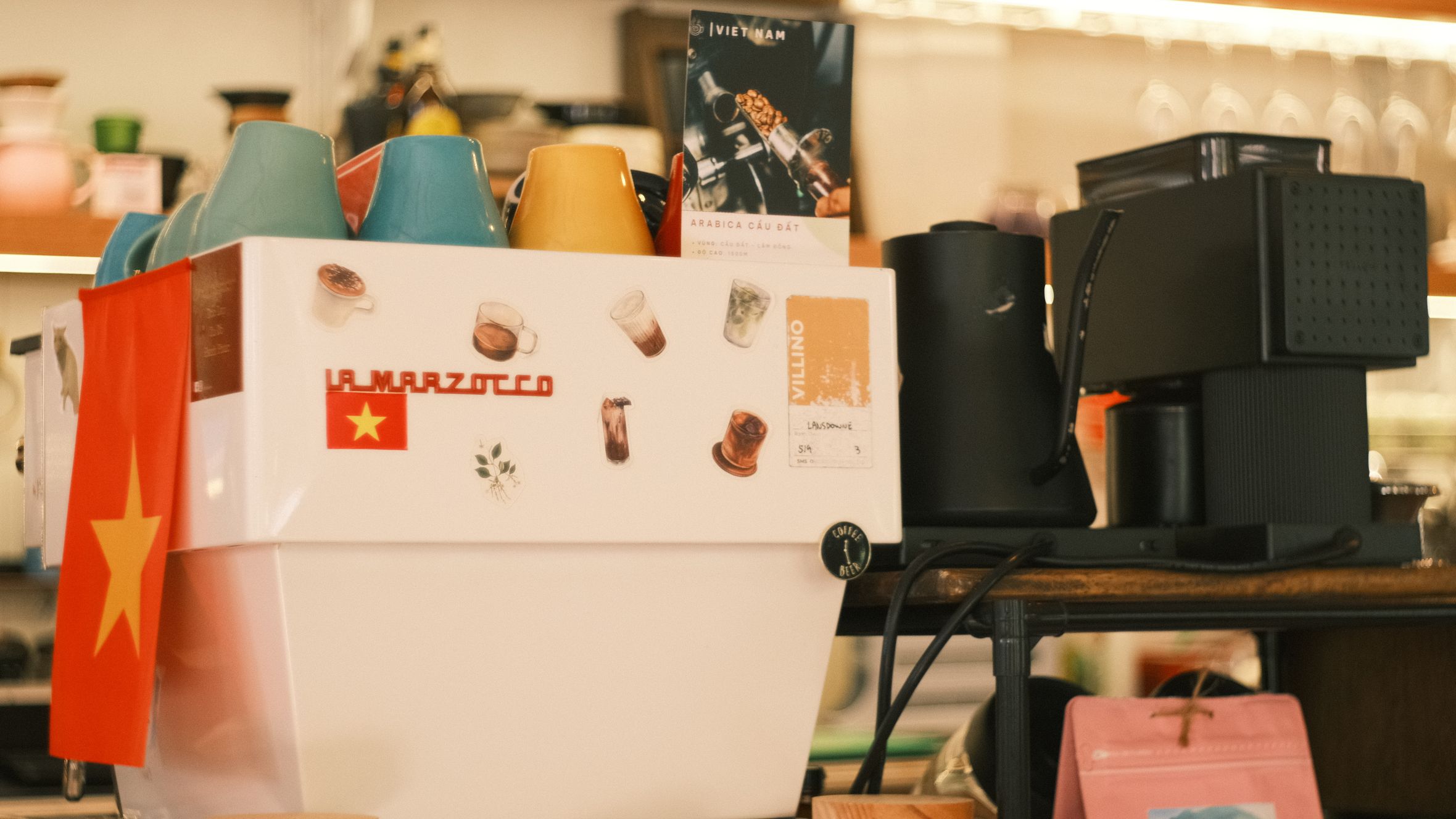
- Single-origin pour-overs using Arabica from Da Lat or Son La. These shops typically charge 45,000 to 65,000 VND per cup — still reasonable — and the baristas will usually tell you about the farm if you ask.
- Cold brew, now common at mid-range cafes, often served with a small side of condensed milk so you can sweeten it yourself.
- Cafes that roast in-house or partner directly with Central Highlands farms. These are still rare, but Vung Tau has at least two or three worth tracking down near the 30/4 Park area and on Nguyen Thai Hoc street.
None of these places have the name recognition of Hanoi or Saigon roasters yet, but that's partly the point — you can sit without noise, without a queue, and without anyone hovering.
Where to Drink Slow
The best cafes in Vung Tau are the ones that understand the town's pace. Vung Tau is a weekend city; people come to decompress. The cafe culture reflects that.
Look for spots with ceiling fans rather than heavy air conditioning, open-front layouts facing a quiet lane, and some version of a garden or courtyard. These tend to cluster in the residential streets between the two beaches — roughly the grid between Phan Chu Trinh, Le Loi, and Nguyen Thi Minh Khai. Wander rather than navigate. If a place has a hand-painted sign, a few potted plants, and someone's grandmother doing the accounts in the corner, sit down.
Mornings are for the sidewalk stalls. Afternoons — especially from 2 to 5 p.m. — are when the garden cafes fill up with locals, not tourists. That's the window to aim for if you want the unhurried version.

Photo by Tuan Vy on Pexels
Pairing Coffee with Food
Vung Tau has its own food culture worth pairing with a long coffee session. The local "banh mi" here has a reputation across the south — the bread is slightly crispier than the Saigon style, and many shops stuff it with "cha lua" (pork sausage) and fresh cucumber more generously than elsewhere. A banh mi and a ca phe sua da from the same pavement cart is 30,000 to 35,000 VND and is as good a breakfast as you'll find.
For something more substantial, "banh canh" — thick udon-like noodle soup — is a Vung Tau specialty, and several noodle shops open early enough to pair with a first coffee of the morning. The fish-based version is the local default.
Practical Notes
Most sidewalk cafes are cash only; newer specialty spots may have QR payment. Vung Tau is about 120 km from Saigon by road, or reachable by high-speed ferry from Bach Dang Wharf in around 80 minutes — day-trippers often arrive by 9 a.m., so get to the good pavement spots before that. The coffee scene shuts down early: most places close by 9 or 10 p.m.
Last updated · May 29, 2026 · independently researched, never sponsored.