The Vuong family mansion sits on a hillside in Sa Phin commune, about 24 km from Dong Van town in the far north of Vietnam (베트남 / 越南 / ベトナム). It's a strange, compelling building — a Hmong clan chief's residence designed by Chinese architects, built with opium money, and now standing as one of the most architecturally unusual sites in the entire Ha Giang loop. If you're already riding through the Dong Van Karst Plateau, this is a stop that actually rewards the detour.
What it is and how it got here
The mansion was built between 1919 and 1928 for Vuong Chinh Duc, the "Hmong King" who controlled much of the opium trade in the region during the French colonial period. He commissioned Chinese craftsmen from Yunnan to design and build it, blending Chinese feng shui principles with French colonial touches — all set against the backdrop of a narrow valley surrounded by limestone karst.
The result is a walled compound of roughly 3,000 square meters with multiple courtyards, carved wooden columns, stone walls, and tiled roofs. The layout follows classical Chinese residential architecture: a central hall for receiving guests, side wings for family quarters, and a rear section that once stored opium. The French granted Vuong Chinh Duc authority over local Hmong communities, and the mansion served as both home and administrative seat.
The house was declared a national monument in 1993 and has been partially restored. It's not a museum in the polished sense — more of a walkable ruin with informational signage in Vietnamese and some English.
Why travelers go
Most people visit Nha Vuong as part of the Ha Giang motorbike loop, and it works well as a half-day stop. The architecture alone justifies it — there's nothing else like it in the Vietnamese highlands. The carved wooden panels, stone courtyard walls, and the contrast between Hmong textile patterns and Chinese decorative motifs make it genuinely interesting even if you're not a history person.
The setting matters too. Sa Phin valley is quieter than Dong Van town, and the approach road passes through Hmong villages where daily life still revolves around corn terraces and livestock. The mansion gives context to the area's complicated colonial history in a way that just riding through the scenery doesn't.
Best time to visit
September through November gives you dry weather and green landscapes without the winter fog that can lock in the plateau from December through February. March and April bring peach and plum blossoms, plus the tail end of the buckwheat flower season, which draws domestic tourists.
Avoid major Vietnamese holidays — especially Tet and the September 2 national holiday weekend — when the Ha Giang (하장 / 河江 / ハーザン) loop gets crowded and accommodation prices spike. Weekday mornings are the quietest time at the mansion itself.
How to get there
The practical starting point is Ha Giang city, which is the gateway to the entire Dong Van Karst Plateau.
Hanoi to Ha Giang: Sleeper buses run nightly from My Dinh bus station (around 250,000–350,000 VND, 6–7 hours). Several limousine van services also operate the route for 300,000–400,000 VND.
Ha Giang to Sa Phin (Nha Vuong): The mansion is roughly 150 km north of Ha Giang city via QL4C through Yen Minh and Dong Van. On a motorbike, expect 5–6 hours of riding with stops. Most travelers visit on day 2 or 3 of the standard 3–4 day loop.
If you're not riding yourself, you can hire an "easy rider" guide with motorbike in Ha Giang for around 700,000–900,000 VND per day including fuel. A few agencies also run jeep tours for 1,500,000–2,500,000 VND per person per day.
Entrance fee: 30,000 VND (as of late 2024). A local guide at the gate may offer a walkthrough for a small tip — worth it if you want the family history explained.
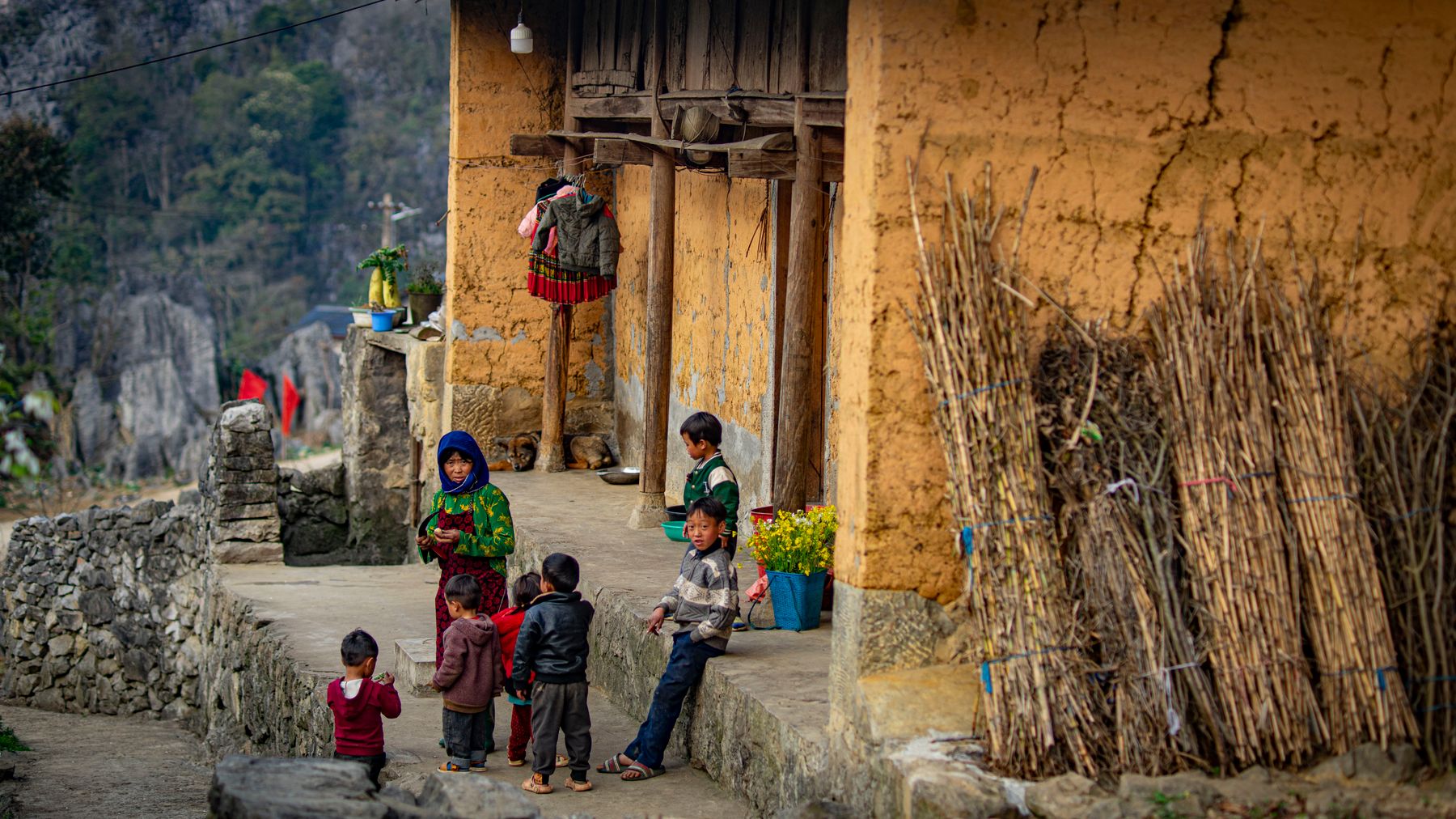
Photo by Vietnam Hidden Light on Pexels
What to do
Walk the full compound
Don't just snap a photo of the front gate and leave. The rear courtyards, the upstairs family quarters, and the small opium storage rooms are the most interesting parts. Budget 60–90 minutes to actually read the signage and look at the construction details — the carved dragon motifs on the wooden beams and the stone-cut drainage channels are easy to miss if you rush.
Visit the Hmong village around Sa Phin
The village surrounding the mansion is still a working Hmong community. Walk the paths between the stone-walled houses and you'll see indigo-dyed fabric drying on fences and corn spread on flat rocks. A respectful 20-minute walk through the village adds more to the visit than the mansion alone.
Ride the Sa Phin to Lung Cu road
From Sa Phin, the road north toward Lung Cu (the northernmost point flag tower) is about 25 km of tight switchbacks through some of the most dramatic karst scenery on the loop. Combine Nha Vuong with a Lung Cu visit in a single morning.
Check the Sunday market at Dong Van
If your timing works out, the Dong Van Sunday market draws Hmong, Lo Lo, and Tay communities from surrounding villages. It's more of a livestock and produce market than a tourist affair — far more interesting than the souvenir stalls in town.
Where to eat nearby
Dong Van town (24 km south) has the nearest real restaurant options. Look for "thang co" — a Hmong-origin hotpot made from horse meat and organs, simmered with cardamom and ginger. It's served at most local restaurants along the main road and runs 50,000–80,000 VND per portion. "Men men," a crumbly steamed corn cake that's a Hmong staple, is worth trying alongside it. For something more familiar, several places in Dong Van serve solid "pho" and "com rang" (fried rice) for 30,000–50,000 VND.
Where to stay
Most travelers base in Dong Van town, where homestays run 150,000–300,000 VND per night and small hotels go for 300,000–500,000 VND. A few homestays have opened closer to Sa Phin, but availability is inconsistent — book ahead if you want to stay in the valley itself. In Dong Van, places along the main strip offer hot water and decent beds; don't expect luxury.
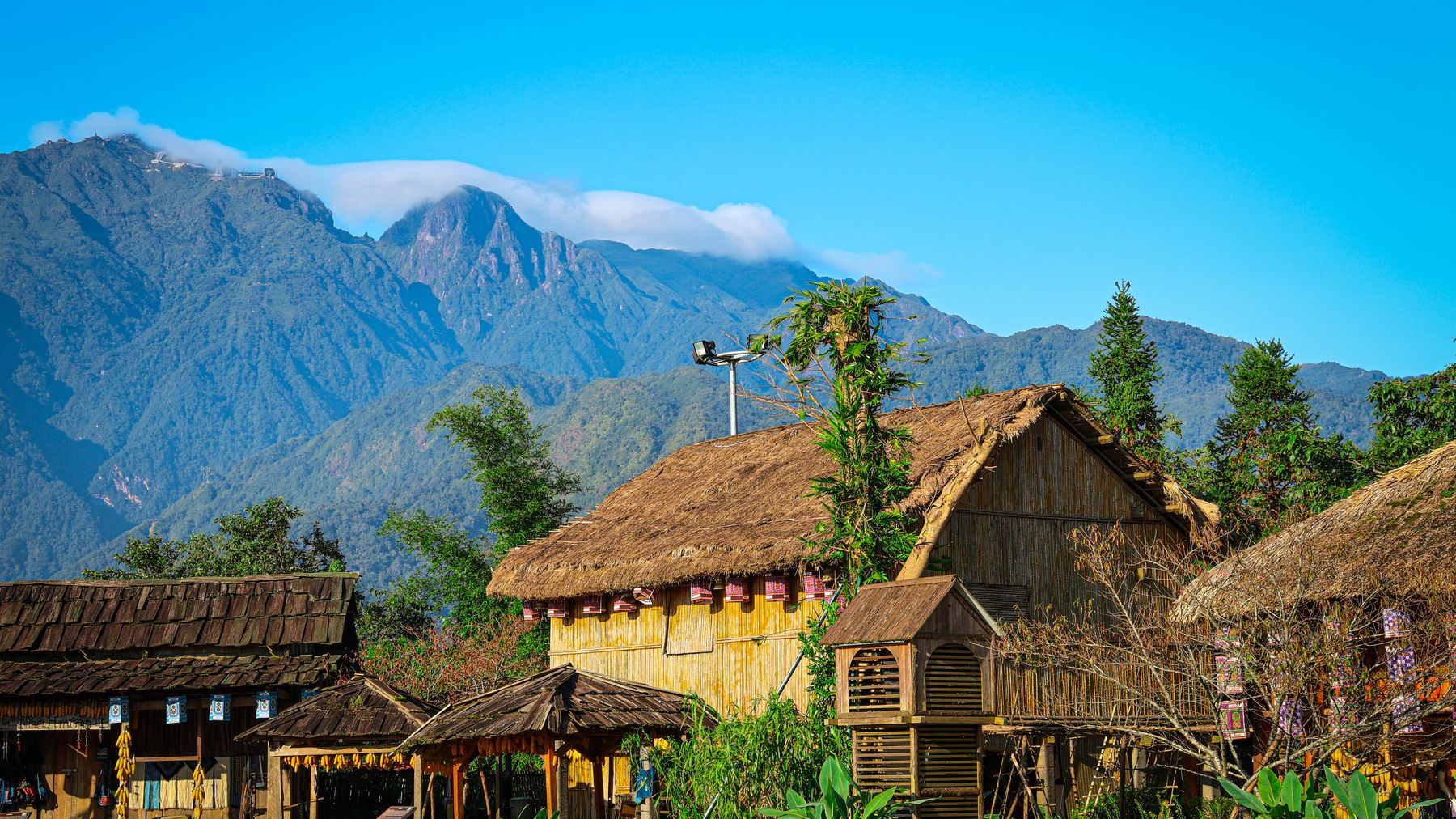
Photo by Haneul Trac on Pexels
Practical tips locals would tell you
- Bring cash. There's one ATM in Dong Van and it's unreliable. Load up in Ha Giang city before you start the loop.
- Dress in layers. Even in summer, mornings in the plateau dip to 15°C, and the mansion's stone corridors are cool.
- Fuel up. Fill your tank in Dong Van. Petrol stations between Dong Van and Sa Phin are scarce.
- Respect the village. Ask before photographing people, especially older Hmong women. A smile and a gesture go further than a telephoto lens.
Mistakes to avoid
- Rushing it as a photo stop. Fifteen minutes doesn't do it justice. The mansion's details take time to absorb.
- Skipping the area because you've "seen enough karst." The Sa Phin valley has a different feel from the Ma Pi Leng pass stretch — quieter, more intimate, less trafficked.
- Trying to do Ha Giang to Dong Van and back in one day. The roads demand time and attention. Build at least three days into your loop.
Practical notes
Nha Vuong fits naturally into any Ha Giang loop itinerary — most riders pass within a few kilometers of it anyway. It's a rare chance to see how colonial economics, ethnic Hmong culture, and Chinese architectural tradition collided in one building. Budget a proper morning for it.
Last updated · May 26, 2026 · independently researched, never sponsored.