Most travelers treat Ha Giang as a race, buzzing through the mountain passes in three days with a GoPro strapped to their chest. If you want to understand the northern highlands, you need to slow down. Ten days allows you to peel back the layers of the Hmong, Tay, and Dao cultures that define this landscape.
Day 1 — Settling into Ha Giang City
Arrive in Ha Giang City and shake off the bus ride. Skip the main hotel strip and head to the village of Thon Tha. It is a quiet Tay village with stilt houses and rice paddies. Spend your afternoon walking the perimeter of the fields. For dinner, find a local spot serving "thang co", a traditional horse meat stew that is a staple of mountain markets. Off-script: Visit the local evening market near the bridge to see what the mountain farmers are actually buying for their week ahead.
Day 2 — The Gateway to the Plateau
Head toward Quan Ba. Instead of just stopping at the Heaven Gate viewpoint, spend time in the village of Nam Dam. This is a Dao village where the architecture is distinct and the community is tightly knit. Ask about their "herbal bath" traditions, which use forest plants to soothe muscle aches after a long day of trekking. Off-script: Look for a local weaver working on traditional hemp fabric; the process is slow and rarely seen by those rushing to Dong Van.
Day 3 — The Limestone Heart
Drive toward Yen Minh. The road here is less about the adrenaline of the curves and more about the changing geology. Stop in the small town of Yen Minh to eat "banh cuon" for breakfast—the version here is served with a bone broth dip, quite different from the Hanoi style. Off-script: Find the local secondary school at dismissal time to see the students in their traditional ethnic clothing.
Day 4 — The History of the Plateau
Continue to Dong Van. The town itself is a mix of old merchant houses and newer concrete structures. Spend your time in the Old Quarter, but look for the houses built with yin-yang roof tiles. Visit the Hmong King Palace in Sa Phin. It is a fortress-like structure that tells the story of the region’s feudal past. Off-script: Skip the main cafes and find a small stall selling "thang den", a sweet glutinous rice ball dish served in ginger syrup.

Photo by Quang Nguyen Vinh on Pexels
Day 5 — Deep into the Borderlands
Take a day trip toward Lung Cu. While the flag tower is the main draw, the villages surrounding it are where the culture lives. Walk through the stone-walled villages where the Hmong people have lived for generations. The stone fences are a feat of manual labor and essential to the local identity. Off-script: Ask a local family if you can watch them prepare "men men", a steamed corn meal that is the traditional daily sustenance here.
Day 6 — The Ma Pi Leng Slowdown
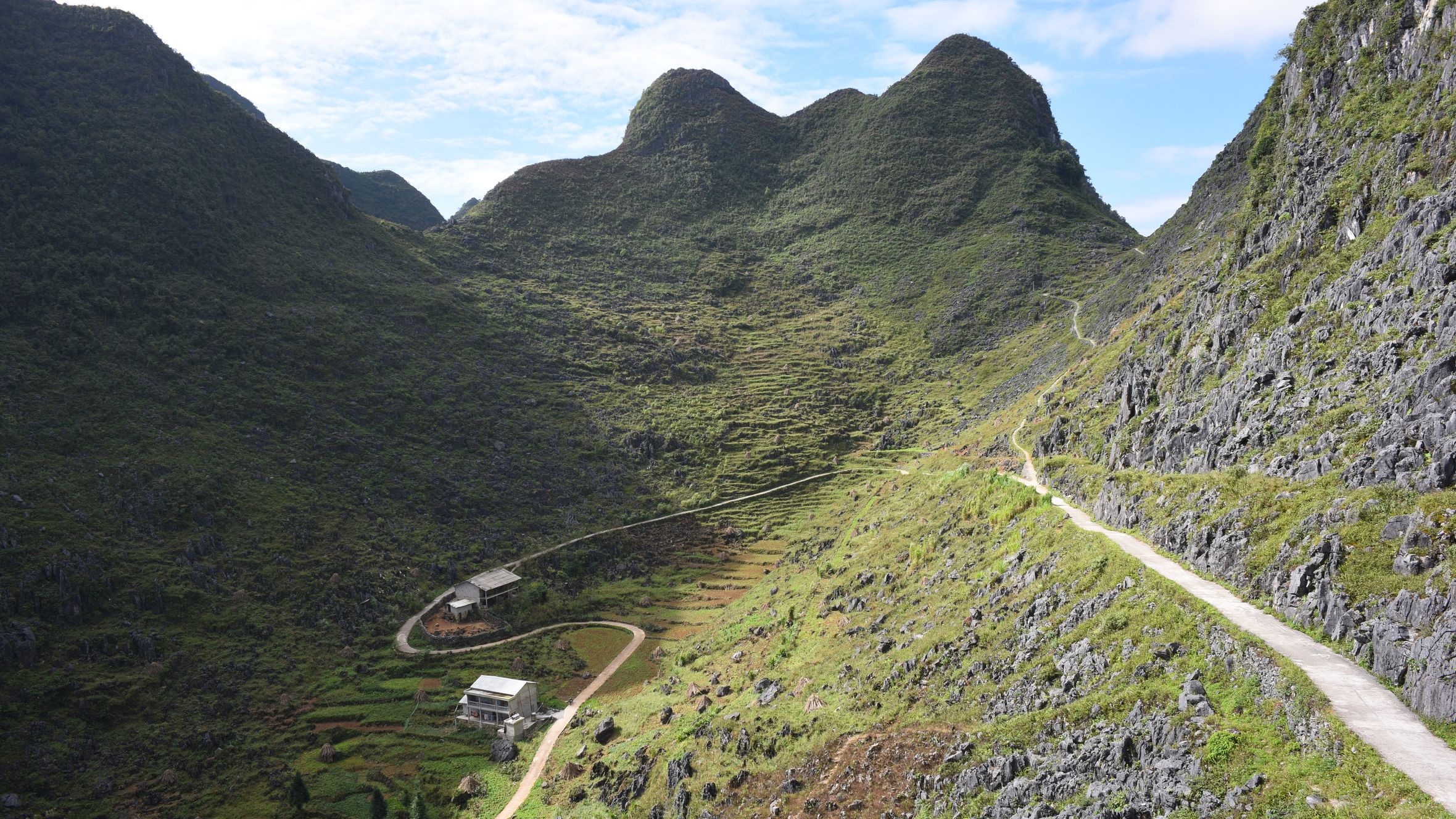
Move toward Meo Vac. The Ma Pi Leng Pass is the most famous stretch of road in Vietnam (베트남 / 越南 / ベトナム), but don't just drive it. Park your bike and hike the Sky Path. It offers a view of the Nho Que River from a height that makes the boats look like toys. Off-script: Spend the afternoon at a local tea house drinking "lotus tea" while watching the mist roll over the karst peaks.
Day 7 — The Meo Vac Market
If your timing aligns, the Sunday market in Meo Vac is a sensory overload. This is not a souvenir market; it is where people trade livestock, farm tools, and fabric. You will see "ao dai" worn by visitors, but here you will see the authentic, daily-wear ethnic garments of the region. Off-script: Buy a small bag of local "nem chua (넴쭈어 / 酸肉肠 / ネムチュア)" from a vendor and find a quiet corner to watch the livestock trading process.
Photo by Quang Nguyen Vinh on Pexels
Day 8 — The Road to Du Gia
Head toward Du Gia. The road is rougher, but the reward is a landscape that feels untouched. Du Gia is a village tucked into a valley with waterfalls and rice terraces. It is significantly quieter than Dong Van or Meo Vac. Off-script: Rent a bicycle and ride to the edge of the village where the road turns into a dirt path—the silence there is profound.
Day 9 — Life in the Valley
Spend the day in Du Gia. This is your time to do nothing. Sit in a cafe, talk to the guesthouse owners, and learn about the seasonal cycles of the rice harvest. The pace of life here is dictated by the sun and the rain, not a tour schedule. Off-script: Help a local host with basic garden chores if they invite you—it is the fastest way to break the ice.
Day 10 — Returning to the City
Make the final push back to Ha Giang City. The ride back feels different after ten days; you will recognize the villages you passed on your way up. Celebrate the end of the trip with a bowl of "bun cha" at a local street stall. Off-script: Before you leave, visit a local print shop or bookstore to see if you can find any books on regional folklore or local history.
Practical notes
Carry cash in small denominations, as many mountain villages do not accept digital payments. Always ask permission before taking photos of people, especially elders or those in traditional dress, and consider buying a small item from them as a gesture of respect.
Last updated · May 30, 2026 · independently researched, never sponsored.