The food of Vietnam (베트남 / 越南 / ベトナム)'s northern highlands doesn't travel well. You won't find Hmong grilled pork or Dao herb soup on menus in Hanoi. The only way to eat it properly is to go there — markets at dawn, village kitchens, roadside fires. This itinerary is a week of exactly that.
Day 1 — Hanoi to Sapa: Arrive and Eat Immediately
Take the overnight train from Hanoi (하노이 / 河内 / ハノイ) to Lao Cai (around 200,000–350,000 VND depending on class), then a 45-minute bus up to Sapa. You'll arrive hungry. Good timing.
Sapa's central market area around Ham Rong Street has stalls running from 6am. Look for "thang co", a Hmong horse-meat stew that has been cooked down for hours with offal, lemongrass, and local spices. It smells aggressively funky from ten meters away, which is exactly right. A bowl costs 30,000–50,000 VND. Order it with a glass of "ruou ngo", corn wine, even if it's 8am — this is highland custom.
For dinner, find a grill stall near the night market. Hmong-style grilled pork skewers rubbed with wild pepper and salt — "thit lon cap nach", the small-breed pigs raised in village yards — run about 15,000 VND per stick. Don't leave without also trying "banh day", glutinous rice cakes pounded by hand and served with pork filling. They're dense and subtly sweet.
Day 2 — Sapa: Village Kitchens and Black Cardamom
Hire a local Hmong guide (about 300,000–400,000 VND for a day; ask at your guesthouse) and walk into Ta Van or Giang Ta Chai village. The food angle here is agriculture-first: you'll pass terraced fields where families grow "tam giac mach" (buckwheat) and black cardamom under forest shade.
Lunch is the point. Guides with village connections can arrange a home meal — usually 6–8 dishes: braised river fish with ginger, stir-fried "rau cai meo" (a bitter highland mustard green), bamboo-tube sticky rice, and whatever protein the family has. Budget 100,000–150,000 VND per person and eat everything that's offered.
Back in Sapa town for dinner, try "pho" at one of the older local spots on Cau May Street. Highland pho uses a slightly different bone broth — heavier on star anise and sometimes with dried buffalo rather than beef. It's not identical to Hanoi's version, and that's the point.
Day 3 — Sapa to Bac Ha: Sunday Market Logic
Bac Ha is 100km northeast of Sapa — roughly 3 hours by motorbike or a hired car (around 500,000–700,000 VND). Time your arrival to catch the Sunday market, the largest ethnic minority market in the north. If you're not arriving on a Sunday, the Can Cau market (about 20km north of Bac Ha) runs on Saturdays.
The market food is the whole reason to come. Flower Hmong women sell "banh troi" (floating rice balls in ginger syrup) from baskets. Men crowd around vats of simmering thang co. Look for stalls selling "men men" — steamed corn flour, the daily staple of Hmong households, served plain or with a spoonful of stew on top. It's starchy and filling and costs almost nothing: 10,000–15,000 VND a portion.
Also worth finding: the woman who sells freshly made corn wine by the cup near the livestock section. You pay about 5,000 VND and drink standing up.

Photo by Anh Tuan on Pexels
Day 4 — Bac Ha to Ha Giang: The Long Road Is Worth It
The drive from Bac Ha to Ha Giang takes around 4–5 hours on a rented motorbike or by bus via Lao Cai. Ha Giang is the northernmost provincial capital accessible by road, and the food here reflects Tay, Nung, and Lo Lo minority influence more than Hmong.
For dinner in Ha Giang town, find "au tau" porridge — a dense, dark congee made from "au tau" roots (a toxic plant that requires hours of preparation to neutralize). It's warming to the point of numbing and traditionally eaten in cold months. A bowl is around 25,000–35,000 VND. Follow it with "chai" — a Tay-style rice wine served warm in a shared bowl.
Day 5 — Dong Van and the Plateau: Buckwheat Everything
The Dong Van Karst Plateau is about 150km from Ha Giang town via the Ma Pi Leng pass. The road is spectacular but secondary to the food mission.
In Dong Van market, look for buckwheat products: buckwheat tea, buckwheat cake, and small bottles of buckwheat flower honey sold by Lo Lo and Nung vendors. The honey is genuinely different — floral and slightly bitter — and costs around 80,000–120,000 VND for a small jar. Buy two.
Lunch at a local com binh dan (rice-plate) spot in Dong Van: grilled "ca suoi" (stream fish), pickled vegetables, and sticky rice. Under 50,000 VND. Dinner back toward Meo Vac might include "kho pia" — a sesame and mung bean sesame cake that Lo Lo families make for festivals but sell year-round in the market.
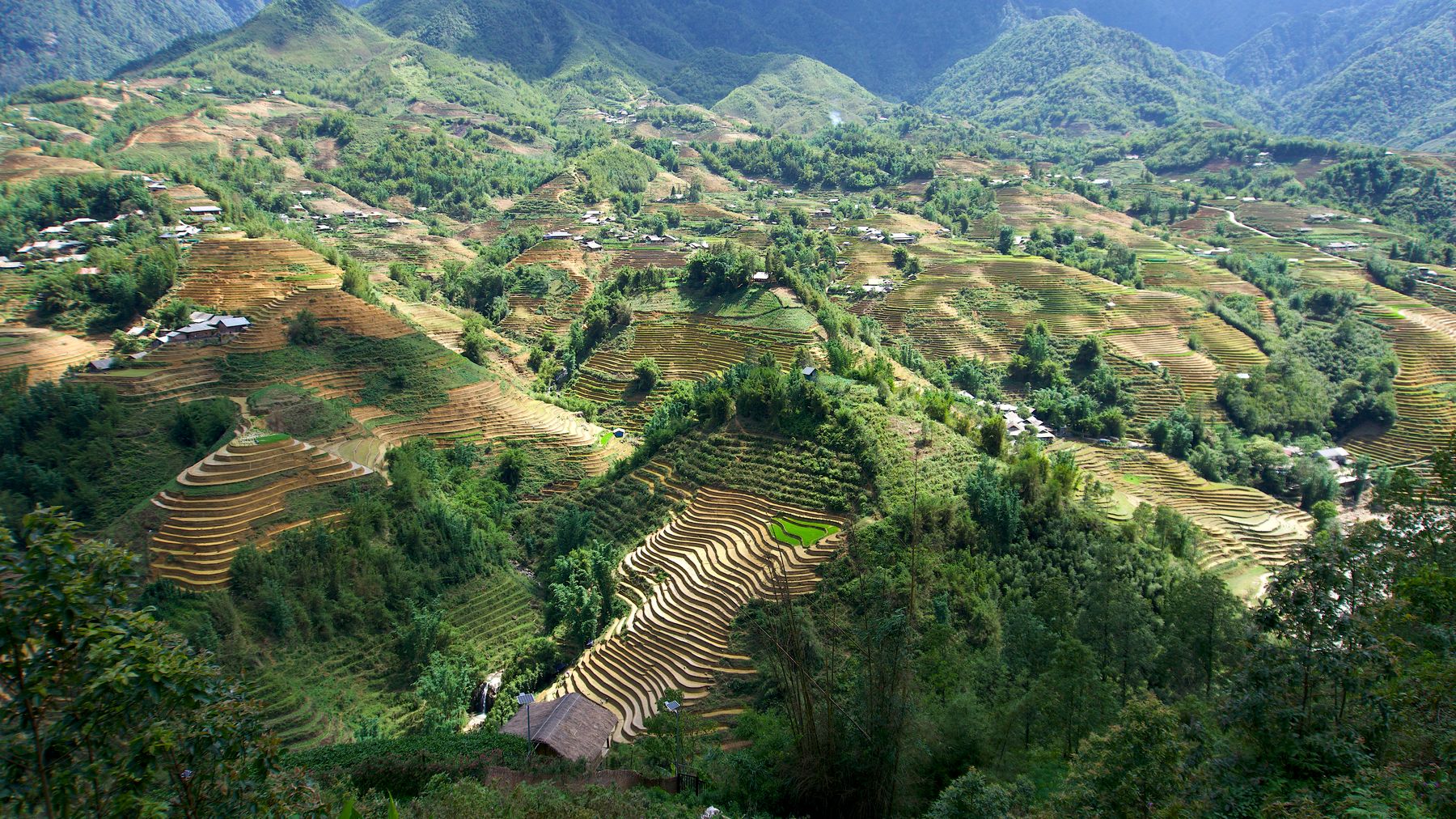
Photo by Duong Nguyen on Pexels
Day 6 — Ha Giang back toward Hanoi: Overnight Stop in Mai Chau
Driving south, break the return journey with a night in Mai Chau, a White Thai valley about 135km west of Hanoi. Mai Chau's food culture is gentler than the far north — rice-heavy, fish-forward, fermented everything.
Stay in a stilt-house guesthouse and eat the communal dinner they prepare: steamed sticky rice served in bamboo tubes, "ca kho" (caramelized braised fish), stir-fried river shrimp with lemongrass, fermented pork wrapped in banana leaf. The meal is usually included in the guesthouse rate (around 200,000–350,000 VND per night) or available separately for 80,000–120,000 VND per person.
The White Thai also brew their own rice wine, served from large clay jars through long bamboo straws. You drink communally. This is non-negotiable.
Day 7 — Mai Chau to Hanoi: Don't Skip the Market
Before the 3-hour drive back to Hanoi, spend an hour at the Mai Chau local market if timing allows. Pick up dried "thit trau" (smoked buffalo meat) — it travels well, keeps for days, and makes a better souvenir than anything sold in a tourist shop. Expect to pay 150,000–250,000 VND for a decent-sized piece.
Back in Hanoi, the contrast hits immediately. The city's food is refined, layered, urban. The highlands food was raw, smoky, fermented, and loud. Both are Vietnamese. They just don't know each other.
Practical Notes
The best window for this trail is October to March — cooler, drier, and buckwheat season in Ha Giang peaks in November. A rented motorbike (150,000–200,000 VND per day) is the most flexible option for the Ha Giang loop, but a hired car with driver works if you'd rather eat than navigate mountain switchbacks. Carry small cash (10,000–50,000 VND notes) everywhere — market vendors rarely have change for 500,000 VND bills.
Last updated · May 29, 2026 · independently researched, never sponsored.