Hoi An is usually marketed as a sleepy riverside town where tourists buy tailor-made suits and watch lanterns float down the river. But if you look past the yellow-walled alleys of the ancient town, the surrounding region offers excellent terrain for active travelers, from river systems and offshore islands to steep mountain passes and jungle trails.
This 10-day itinerary uses Hoi An (호이안 / 会安 / ホイアン) as a base camp for physical exploration, combining water sports, motorcycling, hiking, and climbing.
Day 1 — Kayaking the Thu Bon River & Old Town Orientation
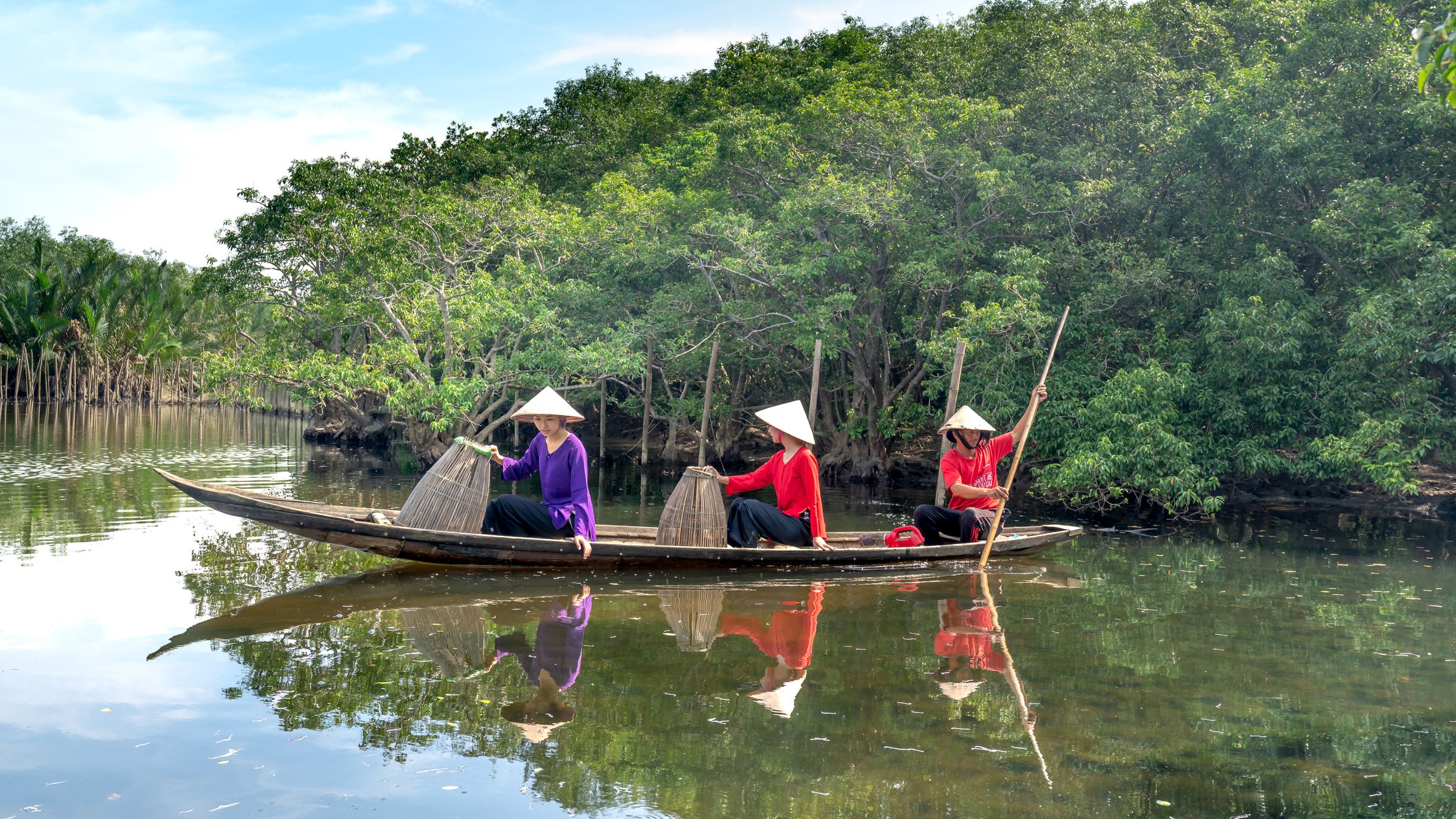
Start by exploring the local waterways before the midday heat sets in. Rent a kayak in Cam Thanh and paddle along the Thu Bon River delta. The river channels here are lined with nipa palms, offering a maze of quiet waterways away from the motorized tour boats.
In the afternoon, walk the Old Town to get your bearings. Skip the souvenir shops and head straight for a bowl of "cao lau"—a regional noodle dish made with thick rice noodles, sliced pork, and fresh herbs, unique to Hoi An because the noodle water is traditionally drawn from the local Ba Le well.
- Off-script suggestion: Launch your kayak at 5:00 AM. You will catch the local fishermen returning with their morning catch near the Cua Dai bridge, completely free of tourist crowds.
Day 2 — Cycling Cam Kim Island
Cross the metal bridge south of the Old Town to Cam Kim Island. The island is a flat expanse of rice paddies, cornfields, and small boat-building workshops. Rent a sturdy hybrid bicycle (around 100,000 VND) and plan a 20 km loop through the rural hamlets.
Stop at a local shack for "mi quang", a central Vietnamese noodle dish served with a rich pork and shrimp broth, quail eggs, toasted sesame rice crackers, and fresh greens.
- Off-script suggestion: Skip the paved roads and follow the narrow dirt tracks running directly along the irrigation canals. They are wide enough for a single bike and lead to quiet river docks where old wooden ferries still operate.
Day 3 — Diving and Hiking in Cu Lao Cham
Take a morning speedboat from Cua Dai pier to Cu Lao Cham (Cham Islands), located 15 km off the coast. The archipelago is a marine protected area with decent coral reefs. Spend the morning scuba diving or snorkeling around Hon Nhon or Hon Tai.
For lunch, try the local grilled squid and wild forest vegetables harvested on the island.
- Off-script suggestion: Instead of staying at the main beach (Bai Huong), rent a semi-automatic scooter from a local homestay and ride the steep, concrete road that loops around the back of Hon Lao island. The road climbs high above the sea, offering views of the rocky coastline with zero traffic.
Day 4 — Riding the Hai Van Pass
Rent a reliable 125cc semi-automatic scooter or manual motorcycle (about 200,000 VND per day) and head north toward Da Nang. Your target is the Hai Van Pass, a 21 km mountain road that climbs to 500 meters above sea level, dividing Da Nang and Thua Thien Hue province.
Ride over the pass to the fishing village of Lang Co for a bowl of spicy "bun bo hue (분보후에 / 顺化牛肉粉 / ブンボーフエ)" (beef noodle soup) at a roadside stall.
- Off-script suggestion: At the crest of the pass, bypass the crowded souvenir stalls and take the steep, paved track leading up to the old French and South Vietnamese military bunkers. The trail continues up toward the radio towers for a much higher vantage point.

Photo by Quang Nguyen Vinh on Pexels
Day 5 — Rock Climbing in Marble Mountains
Head 20 km north of Hoi An to the Marble Mountains in Da Nang. While most tourists take the elevator to the pagodas, you will be heading into the limestone caves for a guided rock climbing and rappelling session. Several local outfitters run trips here, offering routes ranging from 5a to 6b+ on the vertical limestone walls.
After the climb, refuel with "banh xeo"—crispy, savory crepes stuffed with pork, shrimp, and bean sprouts, wrapped in rice paper with fresh herbs.
- Off-script suggestion: Ask your climbing guide to show you the entrance to the lesser-known Am Phu cave, which represents a journey through Buddhist hell, complete with narrow stone passages that require scrambling.
Day 6 — Exploring My Son Sanctuary by Scooter
Ride 40 km inland to My Son Sanctuary, the ancient religious center of the Champa Kingdom. The brick ruins are set in a valley surrounded by hills and overlooked by the cat's-tooth peak of Hon Quap mountain.
On the way back, grab a crispy "banh mi" from a local cart along the highway, loaded with pate, pork char siu, and pickled papaya.
- Off-script suggestion: Avoid the main QL1A highway. Instead, take the rural DT610 route that runs parallel to the Thu Bon River. It adds 30 minutes to the trip but takes you through traditional farming villages and over bamboo bridges.
Day 7 — Stand-Up Paddleboarding in the Nipa Palms
Head to the Cam Thanh water coconut forest for a stand-up paddleboard (SUP) session. Navigating the dense mangrove channels requires tight turns and balance, especially when the tidal currents pull toward the sea.
For a light lunch, stop by a riverside stall for fresh "goi cuon" (summer rolls packed with herbs, shrimp, and pork).
- Off-script suggestion: Go during high tide. The water rises enough to let you paddle deep into the narrowest mangrove tunnels where the round bamboo basket boats cannot physically fit.

Photo by Quang Nguyen Vinh on Pexels
Day 8 — Trekking in Bach Ma National Park
This is a long day trip, located about 90 km north of Hoi An. Hire a driver or join an active tour to Bach Ma National Park. The park features a wet, high-altitude jungle that climbs to 1,450 meters. Hike the Five Lakes trail, which requires scrambling over wet boulders and using installed cables to navigate the wet rock faces.
Pack a simple lunch of sticky rice and grilled pork to eat by the pools.
- Off-script suggestion: Scramble down the steep, wet path of 689 concrete steps to the base of the Do Quyen waterfall. The climb back up is a serious leg burner, but the view from the bottom of the 300-meter drop is worth the effort.
Day 9 — Hiking Son Tra Peninsula
Ride north to Da Nang and continue onto the Son Tra Peninsula (Monkey Mountain). The peninsula features steep, winding roads and dense coastal forest. Hike the trail leading up to the Ban Co peak, or explore the dirt tracks on the northern slopes.
Stop at a seaside shack on the way back to Hoi An for fresh seafood, including clams steamed with lemongrass and grilled oysters.
- Off-script suggestion: Keep your eyes on the canopy along the lesser-traveled northern roads. Son Tra is home to the endangered red-shanked douc langur, one of the most colorful primates in the world. They are best spotted feeding in the early morning or late afternoon.
Day 10 — Rural Dirt Biking & Craft Beer Wind-down
For your final day, rent a light dirt bike and explore the sandy trails and dirt paths of the Duy Xuyen district, south of the Thu Bon River. The terrain here changes from soft sand dunes to muddy riverbanks, providing a fun challenge for experienced riders.
End your trip in the Cam Chau neighborhood of Hoi An with a cold glass of "bia hoi" (fresh draft beer) or a local craft beer at a riverside bar.
- Off-script suggestion: Catch the sunset from the long, wooden bridge connecting Cam Kim to the mainland. It is too narrow for cars, making it a peaceful spot to watch the river traffic go by.
Practical notes
For this itinerary, rent a semi-automatic scooter or manual bike rather than a standard automatic scooter, as the mountain roads of Hai Van and Son Tra require engine braking for safety. Always carry a lightweight rain jacket and dry bag, as coastal weather in central Vietnam can change rapidly, particularly between September and December.
Last updated · May 30, 2026 · independently researched, never sponsored.