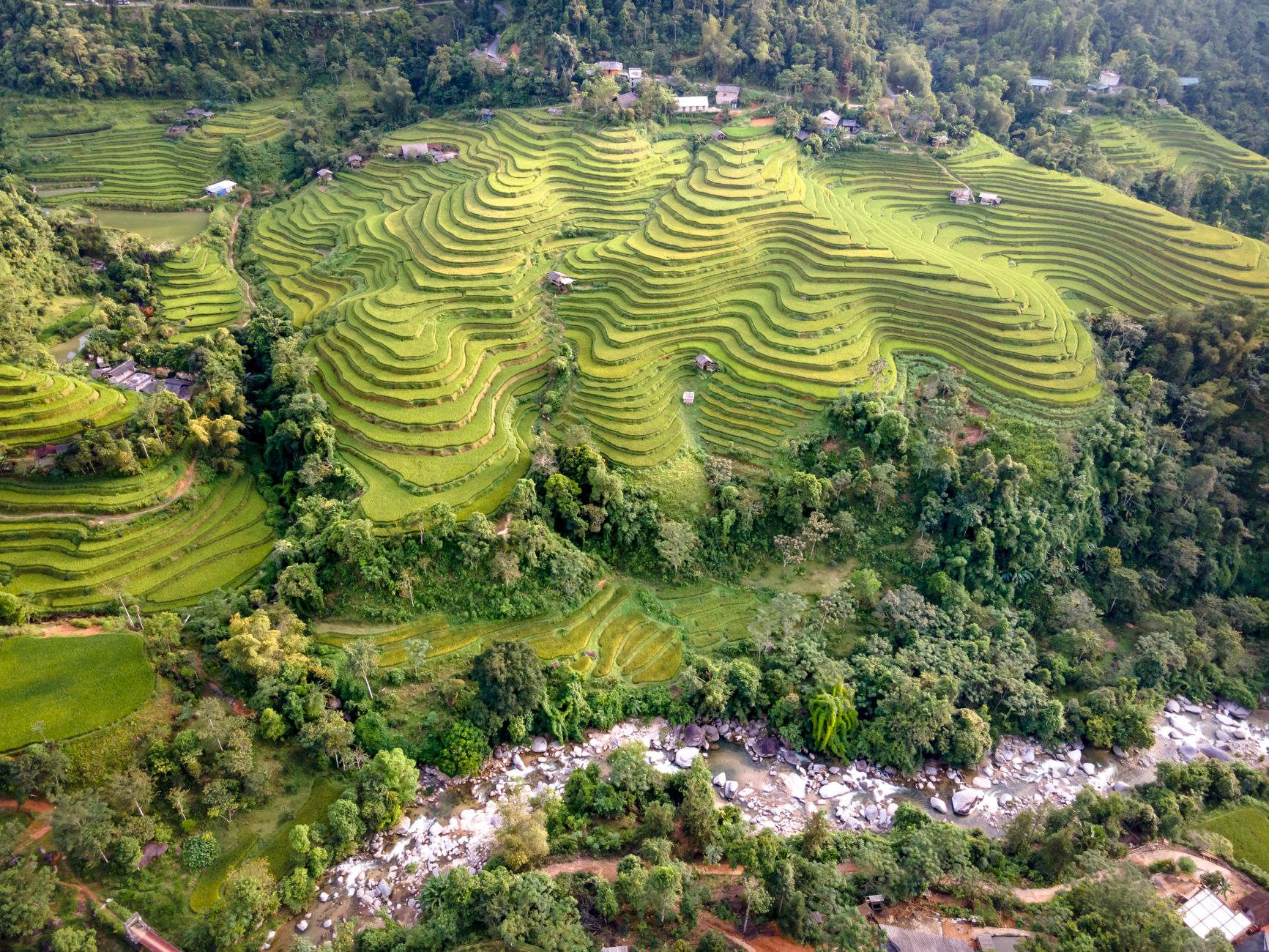
Den Co Tien — the Fairy Temple — perches on Truong Le mountain at the southern end of Sam Son beach in Thanh Hoa province. It's not a major pilgrimage site on the scale of Bai Dinh or the Perfume Pagoda, but for travelers passing through Thanh Hoa or spending time on the central coast, it's a worthwhile half-day stop that most foreign visitors skip entirely.
What it is and why it's there
Den Co Tien is a small temple complex built into the rocky face of Truong Le mountain, overlooking the East Sea. The name translates roughly to "Fairy Maiden Temple," tied to a local legend about celestial maidens who descended to the mountain to play chess and bathe in the sea below. The temple has been a site of local worship for centuries, though the current structures have been rebuilt and expanded over the decades — you'll see a mix of weathered stone and newer painted concrete.
The complex includes the main temple hall, a series of smaller shrines tucked into rock formations, and a winding stone path that climbs through boulders to a viewpoint at the top. It's modest in scale compared to Hue's imperial tombs or Ninh Binh (닌빈 / 宁平 / ニンビン)'s sprawling pagoda complexes, but the setting — temple architecture pressed against sea-facing granite — gives it a character that flat-ground temples can't match.
Why travelers go
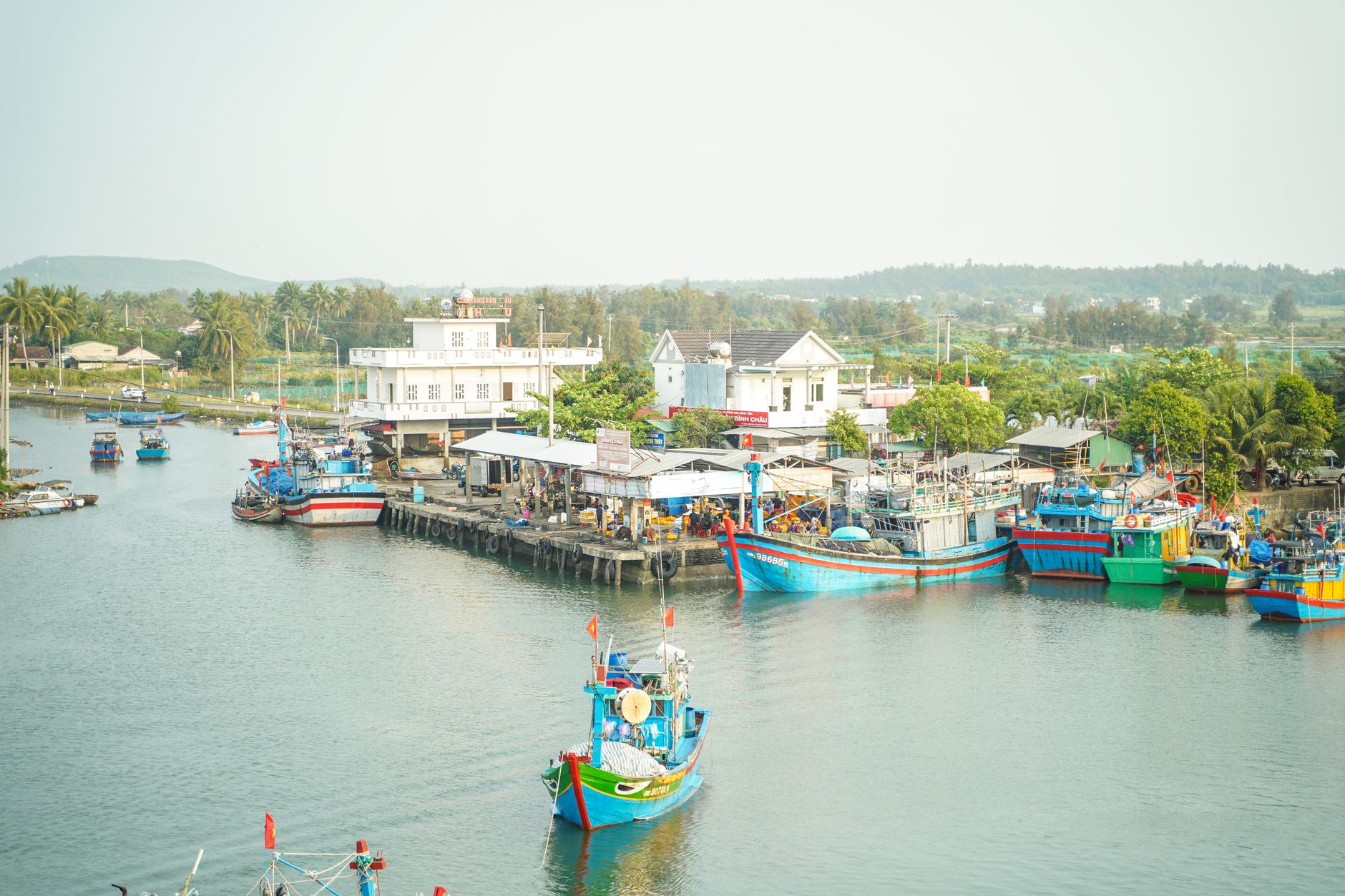
Most people visit for three reasons. First, the views from the hilltop are genuinely good: you get a wide sweep of Sam Son beach curving north, fishing boats clustered near the shore, and on clear mornings the coastline fading into haze. Second, it's an active place of worship, not a ticketed museum, so there's actual incense smoke and prayer happening around you. Third, it pairs naturally with a Sam Son beach day — the temple is only about 2 km from the main beach strip.
Foreign visitors are rare here. You'll mostly see Vietnamese families, couples, and older worshippers. That's part of the appeal.
Best time to visit
The sweet spot is March through May or September through October. Summer months (June–August) are peak domestic holiday season at Sam Son beach, which means the temple path gets crowded on weekends and the town's prices inflate. The heat and humidity in July–August also make the uphill climb less pleasant.
Winter (December–February) is cooler and quieter, but Thanh Hoa's coast gets grey and drizzly. Visibility drops, and the viewpoint loses most of its appeal in fog.
Early morning — before 8 a.m. — is the best window regardless of season. The light is better for the eastward views, the stone steps aren't hot yet, and you'll have the path mostly to yourself.

Photo by Kirandeep Singh Walia on Pexels
How to get there from Hanoi
Thanh Hoa city is the nearest major hub, about 150 km south of Hanoi.
- Bus: Regular buses from Hanoi (하노이 / 河内 / ハノイ)'s Giap Bat or Nuoc Ngam stations to Thanh Hoa city run throughout the day. The ride takes roughly 3–3.5 hours and costs 100,000–150,000 VND. From Thanh Hoa city, grab a local bus or taxi to Sam Son (16 km east, about 30 minutes). A taxi from Thanh Hoa city center to Sam Son runs around 200,000–250,000 VND.
- Train: The Reunification Express stops at Thanh Hoa station. Hanoi to Thanh Hoa takes about 3 hours on an SE train; tickets range from 80,000 VND (hard seat) to 250,000 VND (soft seat). From the station, same taxi ride to Sam Son.
- Motorbike: If you're riding south from Hanoi, the QL1A route is straightforward but heavy on trucks. Budget 3.5–4 hours.
Once in Sam Son, Den Co Tien is at the far southern end of the beach road (Duong Ho Xuan Huong). You can walk from most Sam Son hotels in 15–30 minutes, or take a xe om for 15,000–20,000 VND.
What to do
Climb the temple path
The main trail from the base to the summit shrine takes 20–30 minutes at a relaxed pace. It's stone steps cut into rock — not technical, but wear shoes with grip. Along the way you pass through several shrine alcoves carved into boulder formations. Stop and look at the details: stone chess boards referencing the fairy legend, incense holders wedged into crevices, small offerings of fruit and flowers.
Sit at the summit viewpoint
The flat rock area at the top is where the views open up. Bring water and sit for a while. On clear days you can see Hon Trong Mai (the Rooster and Hen rocks), a pair of sea stacks just offshore that are Sam Son's most photographed landmark.
Visit the main temple hall
The lower temple hall is where most of the worship activity happens. If you're not familiar with Vietnamese temple etiquette: dress modestly (cover shoulders and knees), remove shoes before entering, don't point your feet at altars, and ask before photographing people praying. You can buy incense bundles at the entrance for 5,000–10,000 VND.
Walk the coastal rock formations
Below the temple, the shoreline is a jumble of large granite boulders. You can scramble along these at low tide — it's a nice contrast to the sandy beach further north. Watch your footing when the rocks are wet.
Combine with Sam Son beach
After the temple, walk or ride back to the main beach strip for a swim. Sam Son isn't Phu Quoc — it's a domestic resort town with karaoke bars and seafood restaurants rather than boutique hotels — but the water is clean enough and the beach is wide.
Where to eat nearby
Sam Son is a seafood town. The strip along Duong Thanh Nien has dozens of open-air restaurants with tanks of live fish, crab, and shrimp out front. Prices are posted per kilogram — expect to pay 200,000–400,000 VND per kg for shrimp, less for clams and snails. Point at what you want and specify how you'd like it cooked (grilled, steamed, stir-fried with tamarind).
For something more specific, look for "nem chua" — Thanh Hoa's famous fermented pork rolls. They're sold everywhere in the province, often wrapped in banana leaves and bundled with garlic and chili. Grab a bag from a market stall for 5,000–10,000 VND per piece. "Banh cuon" — steamed rice rolls — also shows up at morning stalls near the beach market, served with herbs and dipping sauce for around 25,000–35,000 VND.
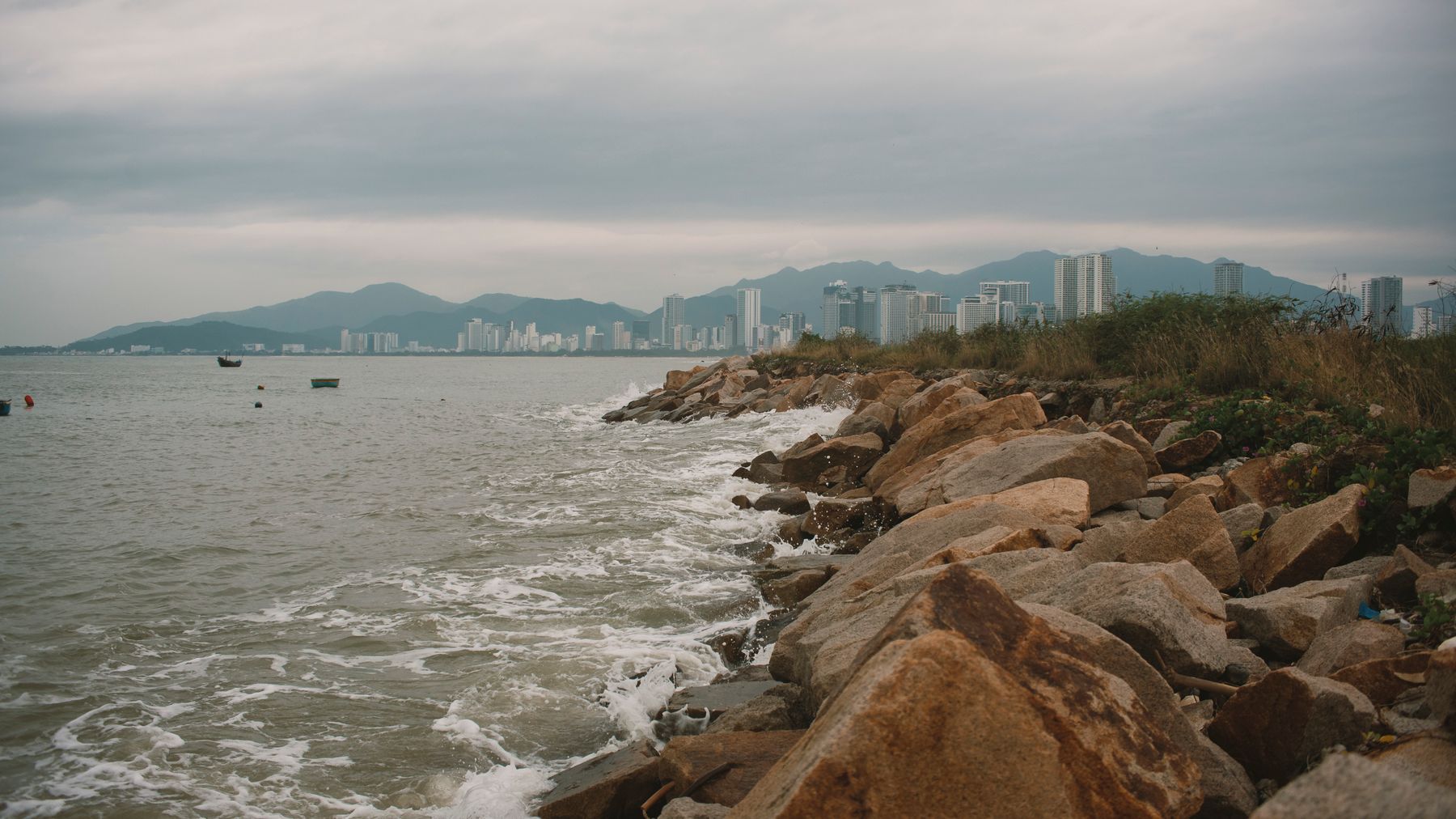
Photo by DUONG QUÁCH on Pexels
Where to stay
Sam Son has hundreds of hotels and guesthouses, almost all geared toward Vietnamese domestic tourists.
- Budget: Basic guesthouses (nha nghi) along the back streets go for 200,000–400,000 VND per night. Don't expect much beyond a bed, AC, and hot water.
- Mid-range: Newer hotels on the beachfront road charge 500,000–900,000 VND. Rooms are clean, some with sea views.
- Higher-end: FLC Sam Son is a large resort complex at the north end of the beach with rooms from 1,200,000 VND and up. It's generic resort style, but the facilities are decent if you want a pool.
Book ahead on weekends from June to August. Outside peak season, you can walk in and negotiate.
Practical tips
- The climb is short but exposed — bring a hat and sunscreen if visiting midday.
- There's no entrance fee for the temple complex itself.
- Toilet facilities at the base are basic. Use your hotel bathroom before heading out.
- If you're continuing south along the coast toward Hue or Da Nang, Thanh Hoa is a logical overnight stop rather than a destination in itself. Den Co Tien and Sam Son beach fill a solid half day.
- Vietnamese coffee is easy to find in Sam Son — the town has plenty of small cafe shops along the beach road. Sit with a "ca phe sua da" and watch the fishing boats come in.
Common mistakes
Don't visit at midday in summer — the stone steps radiate heat and there's almost no shade. Don't wear flip-flops on the temple path; the rocks get slippery. Don't skip the summit just because the lower temple looks small — the view is the whole point. And don't expect English menus or English-speaking staff at Sam Son restaurants. Have Google Translate ready or learn a few food words in Vietnamese before you arrive.
Last updated · May 29, 2026 · independently researched, never sponsored.