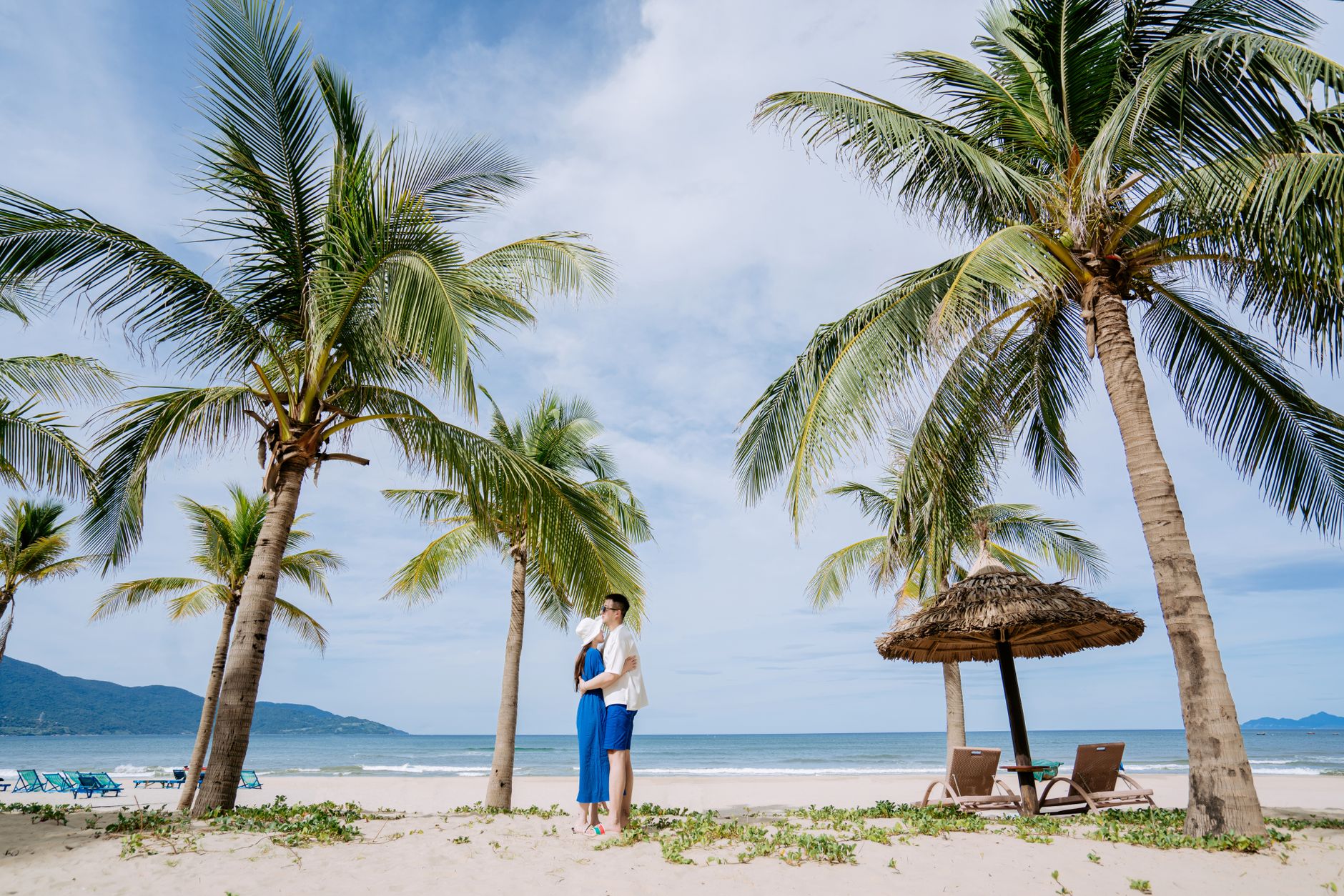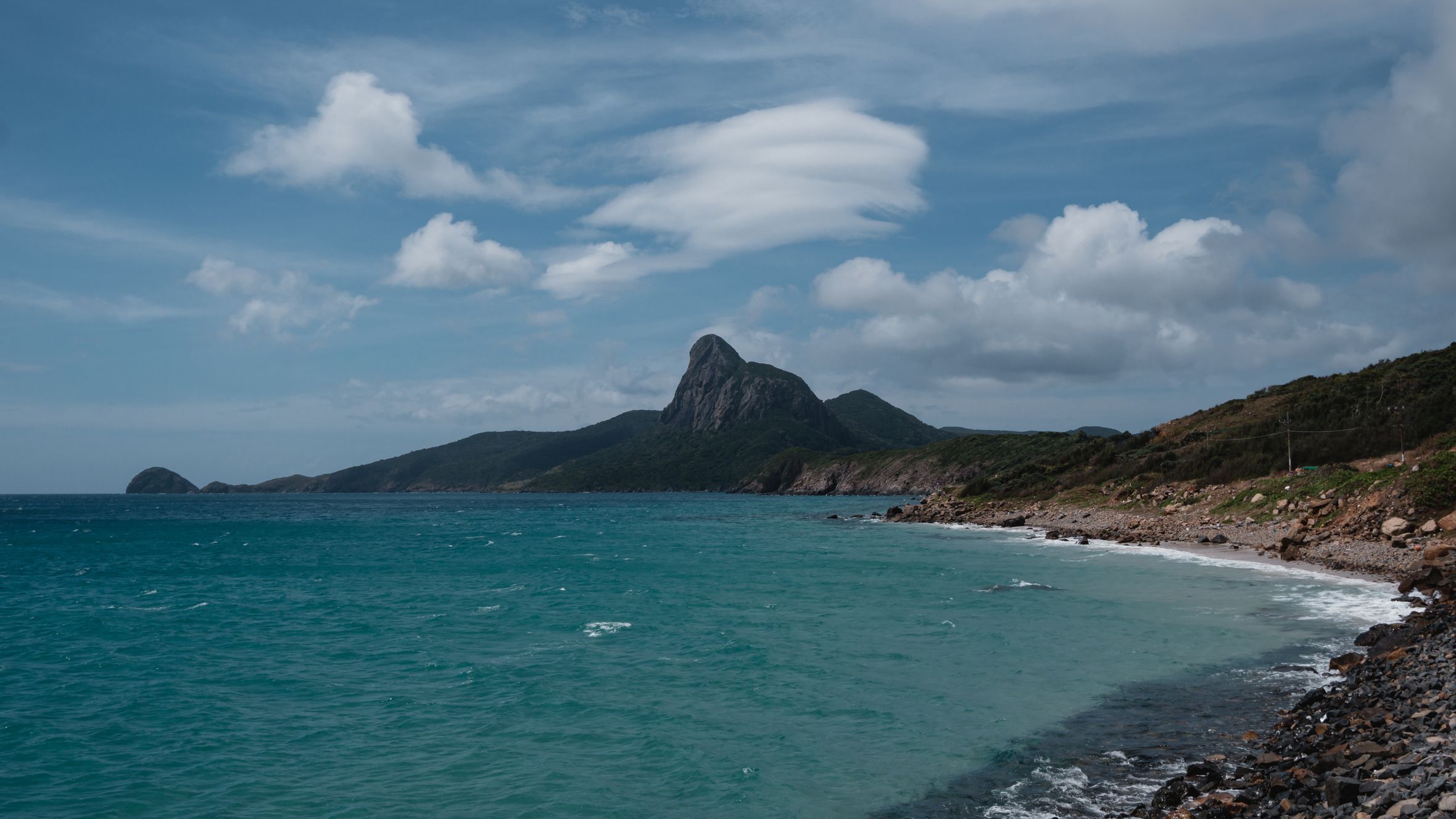
Bai Dam Trau sits at the northern tip of Con Son island in the Con Dao archipelago — a short crescent of pale sand backed by coastal forest, with water clear enough to see your feet in chest-deep. Since the 2025 administrative changes folded the former Ba Ria - Vung Tau province into greater Ho Chi Minh City, Con Dao now technically falls under Saigon (사이공 / 西贡 / サイゴン)'s expanded borders. Don't let that confuse you: this is still a remote island, and getting here still requires a flight or a fast ferry.
What Bai Dam Trau actually is
A roughly 300-meter beach tucked into a cove just a few hundred meters from Con Dao's Co Ong Airport. The runway ends close to the shore, so small turboprops come in low overhead on approach — it's become one of those oddly photogenic things people seek out, like Maho Beach in Saint Martin but far less chaotic. Outside of that quirk, Bai Dam Trau is simply a well-kept beach with coarse white sand, moderate shade from casuarina and almond trees, and reliably calm water during the dry months.
The beach has been part of Con Dao National Park's buffer zone for years, which has kept commercial development minimal. There's a single restaurant-shack setup near the tree line and not much else. That's the appeal.
Why travelers go
Con Dao draws people who want clean water and quiet without flying to the Philippines or Indonesia. Bai Dam Trau specifically works because it's easy to reach — about 2 km from the airport and 13 km from Con Son town center — and because it stays relatively empty even in peak season. The snorkeling off the rocks on the southern end of the cove is decent, with hard coral and small reef fish visible in 1-3 meters of water.
It's also just a good place to sit for a few hours. No one hassles you to rent a jet ski or buy a coconut every ten minutes, which is increasingly rare on Vietnamese beaches.
Best time to visit
The dry season on Con Dao runs from March through September, with April to June being the calmest and driest window. Sea visibility at Bai Dam Trau peaks during these months — you can often see 8-10 meters in the shallows.
Avoid October through February if you're set on beach time. The northeast monsoon brings choppy water, occasional heavy rain, and reduced ferry services. The beach itself can get rough surf that stirs up the sand.
June through August is also turtle nesting season on other Con Dao beaches (Bay Canh island, mainly), so combining Bai Dam Trau with a night turtle-watching tour works well logistically.
How to get there
From Saigon, you have two options:
Fly
Bamboo Airways and VASCO run turboprop flights from Tan Son Nhat to Co Ong Airport (COD). Flight time is about 45 minutes. Tickets range from 1,200,000 to 2,500,000 VND one-way depending on season and how far ahead you book. From the airport, Bai Dam Trau is a 5-minute motorbike ride north — you can walk it in 20 minutes if you're not carrying much.
Ferry
Con Dao Express and Phu Quoc Express operate fast ferries from Vung Tau (붕따우 / 头顿 / ブンタウ) port (Cau Da terminal). The crossing takes roughly 3.5 to 4 hours and costs around 500,000-700,000 VND per seat. Ferries run daily in dry season, less reliably in monsoon months. From Con Son pier, rent a motorbike (150,000-200,000 VND/day) and ride north along the coastal road to the beach.
If you're coming from central Saigon, budget 2 hours by car or bus to reach Vung Tau port first.
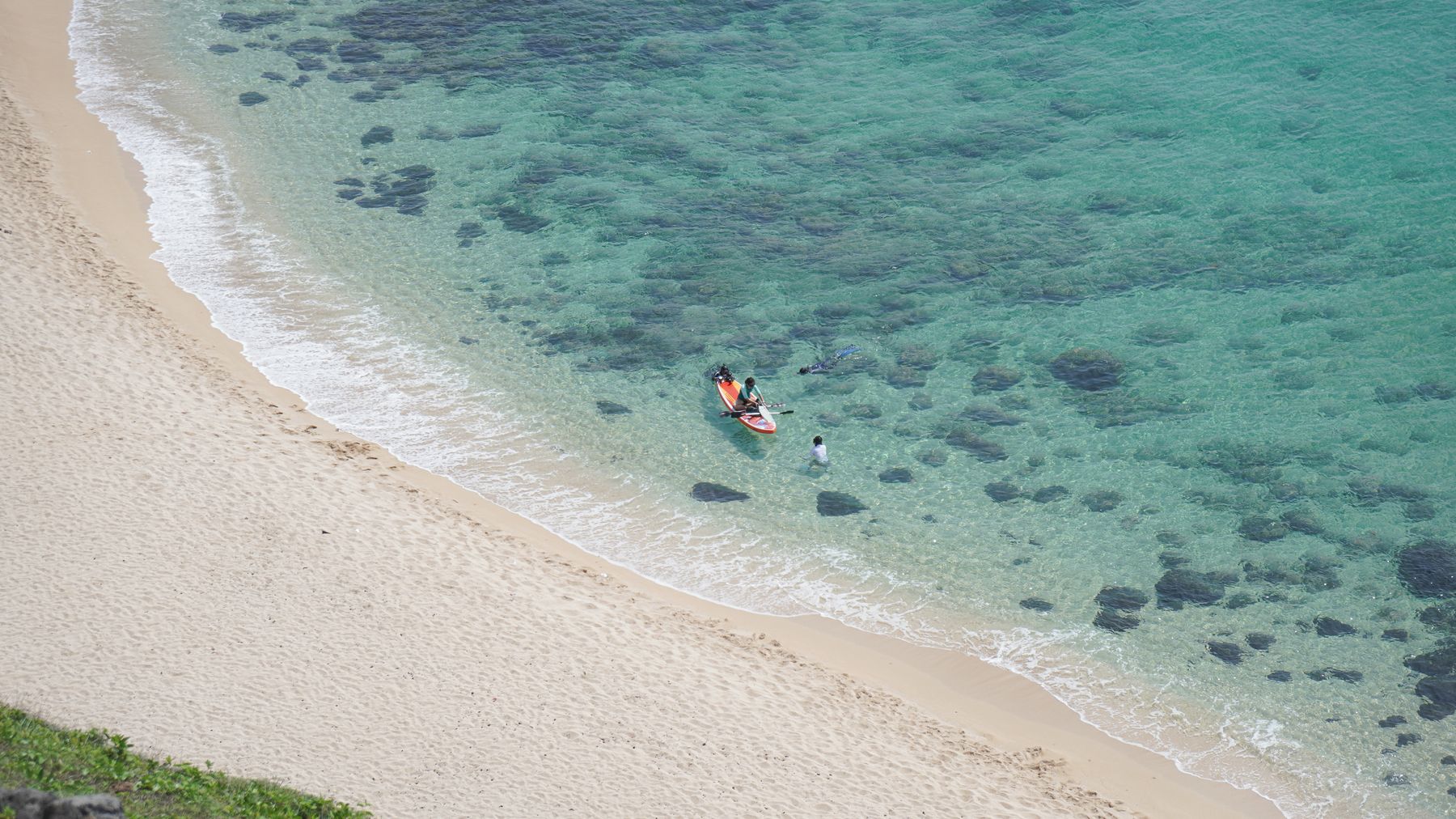
Photo by Woki Nguyn on Pexels
What to do
Snorkel the south rocks. Bring your own mask and snorkel — there's no rental kiosk at the beach. The rocky outcrop at the southern end of the cove shelters small coral formations and schools of damselfish, parrotfish, and the occasional blue-spotted ray in sandy patches.
Watch the planes land. Co Ong's runway 28 approach brings aircraft in directly over the beach at maybe 30-50 meters altitude. There are typically 2-4 flights per day, so check the schedule if this matters to you. Morning flights tend to approach from the sea side.
Walk to Mui Ca Map. A rough trail from the south end of Bai Dam Trau leads along the rocks toward Mui Ca Map (Shark Cape), about a 30-minute scramble. Good views of the coastline and empty coves. Wear proper shoes, not flip-flops.
Kayak the cove. The beach restaurant sometimes has basic sit-on-top kayaks for rent at around 100,000 VND per hour. The water inside the cove stays calm enough for casual paddling most mornings.
Do nothing. Bring a book, find shade under the almond trees, swim when you're hot. Bai Dam Trau rewards low ambition.
Where to eat nearby
The lone beach shack sells fried rice, grilled squid, and cold beer at island-markup prices (a plate of com chien runs about 80,000-100,000 VND). It's fine but not special.
For better food, head back into Con Son town. Look for "bun cha" made with fresh-caught fish instead of pork at the small stalls along Nguyen Duc Thanh street — a Con Dao twist on the Hanoi classic. The local "hu tieu" here uses a seafood broth that's distinctly southern, lighter than what you'd find in Saigon. A bowl runs 35,000-50,000 VND.
For seafood dinners, Thu Ba (on Vo Thi Sau street) has been serving grilled lobster, mantis shrimp, and raw blood cockles at reasonable-for-an-island prices — expect 300,000-600,000 VND per person depending on what you order.
Where to stay
Budget: Guesthouses in Con Son town start around 300,000-500,000 VND per night. Nothing fancy — fan rooms, shared balconies, functional.
Mid-range: A few proper hotels along the waterfront road (Ton Duc Thang) offer air-conditioned rooms with sea views for 800,000-1,500,000 VND.
High-end: Six Senses Con Dao is the obvious splurge, with villas starting around 10,000,000 VND per night. It's on a different beach (Dat Doc) but worth mentioning if budget isn't a constraint.
There's no accommodation at Bai Dam Trau itself.

Photo by Quang Nguyen Vinh on Pexels
Practical tips locals would tell you
- Bring water and snacks. The beach shack's hours are unreliable, especially on weekdays in low season. Don't assume it'll be open.
- Sunscreen is expensive on Con Dao. Buy it in Saigon or Vung Tau before you come. The minimart in Con Son town charges 2-3x mainland prices.
- Motorbike rental is the way to move around. Taxis exist but are limited and overpriced. Most guesthouses arrange bike rentals.
- Cash is still king on the island. ATMs exist in Con Son town but run out of money on busy weekends. Bring enough dong from the mainland.
Common mistakes to avoid
- Showing up in monsoon season expecting calm water. Check conditions before booking. November and December are the roughest months.
- Not bringing reef shoes. The entry point near the rocks has some sharp coral fragments. Barefoot snorkeling here is a recipe for cut feet.
- Trying to do Con Dao as a day trip. Some agencies in Vung Tau sell day-trip packages. The ferry schedule barely makes it possible, and you'll spend most of your time in transit. Two nights minimum to actually enjoy Bai Dam Trau and the rest of the archipelago.
- Leaving trash. This sounds obvious, but the beach has no cleanup crew. Whatever you bring in, take out. Con Dao's park authorities take littering seriously — fines start at 500,000 VND.
Practical notes
Bai Dam Trau works best as part of a 2-3 day Con Dao trip rather than a standalone destination. Combine it with the national park trails, a turtle-watching night tour on Bay Canh, and long seafood dinners in Con Son town. Book flights early in peak season — Con Dao's small airport means limited seats, and prices climb fast.
Last updated · May 26, 2026 · independently researched, never sponsored.