What Hon Bay Canh Is — and Why It Matters
Hon Bay Canh is the second-largest island in the Con Dao archipelago, sitting about 12 km east of Con Son island. It's uninhabited — no hotels, no restaurants, no cell towers. What it does have: dense primary forest covering roughly 700 hectares, mangrove flats on its western shore, coral reefs off the eastern coast, and some of the most important sea turtle nesting beaches in Southeast Asia.
The island falls within Con Dao National Park, which means access is regulated and visitor numbers are capped. Green turtles and hawksbill turtles come ashore here between June and October to lay eggs. A small ranger station operates year-round, and the park runs a turtle conservation program that travelers can join during nesting season.
This isn't a day-trip-and-cocktails kind of island. It's quiet, raw, and genuinely wild. That's the draw.
Why Travelers Go
Three reasons, mostly:
Turtle nesting. Hon Bay Canh is one of the few places in Vietnam (베트남 / 越南 / ベトナム) where you can watch endangered sea turtles lay eggs under supervision of park rangers. During peak season (June–September), female turtles haul themselves onto the beach after dark. Rangers guide small groups to observe at a respectful distance. It's not guaranteed on any given night, but the odds are good in July and August.
Snorkeling and coral. The reefs off Hon Bay Canh's eastern side are among the healthiest in Con Dao. Visibility runs 10–20 meters depending on the season. You'll see hard corals, anemones, clownfish, parrotfish, and occasionally reef sharks in deeper water. No dive shops on the island itself — you bring gear from Con Son or book through a tour operator there.
Solitude. The island gets maybe 20–40 visitors on a busy day. Most of Con Dao's tourists stay on Con Son and never make the boat trip. If you want a beach with nobody on it, this is one of the few honest options left in southern Vietnam.
Best Time to Visit
March through September is the window. The sea is calmest from March to June, making the boat crossing comfortable. Turtle nesting peaks June through September. October onwards brings rougher seas and the park sometimes restricts boat access.
The sweet spot is late June to mid-August — calm enough water, high chance of turtle sightings, and warm without the worst of the April–May heat.
Avoid December through February. Swells can hit 2–3 meters and most boat operators won't run the crossing.
How to Get There
Hon Bay Canh is reached from Con Son island, the main hub of the Con Dao archipelago.
Getting to Con Son: Fly from Saigon (Tan Son Nhat) — about 45 minutes, tickets run 1,200,000–2,500,000 VND one-way depending on season. Alternatively, a high-speed ferry operates from Vung Tau (around 3.5 hours, roughly 350,000–500,000 VND). The ferry is cheaper but runs less frequently and cancels in bad weather.
Con Son to Hon Bay Canh: Charter a speedboat through Con Dao National Park or a local tour operator. The crossing takes 30–45 minutes. Expect to pay 2,500,000–4,000,000 VND for a boat (not per person — per boat, fitting 8–10 people), plus a national park entrance fee of 60,000 VND per person. Some tour companies on Con Son bundle the boat, snorkeling gear, lunch, and park fees into packages around 600,000–900,000 VND per person for a group day trip.
You cannot just show up at the dock and go. Book at least a day ahead through your hotel or a tour office on Con Son. The park limits daily visitors.
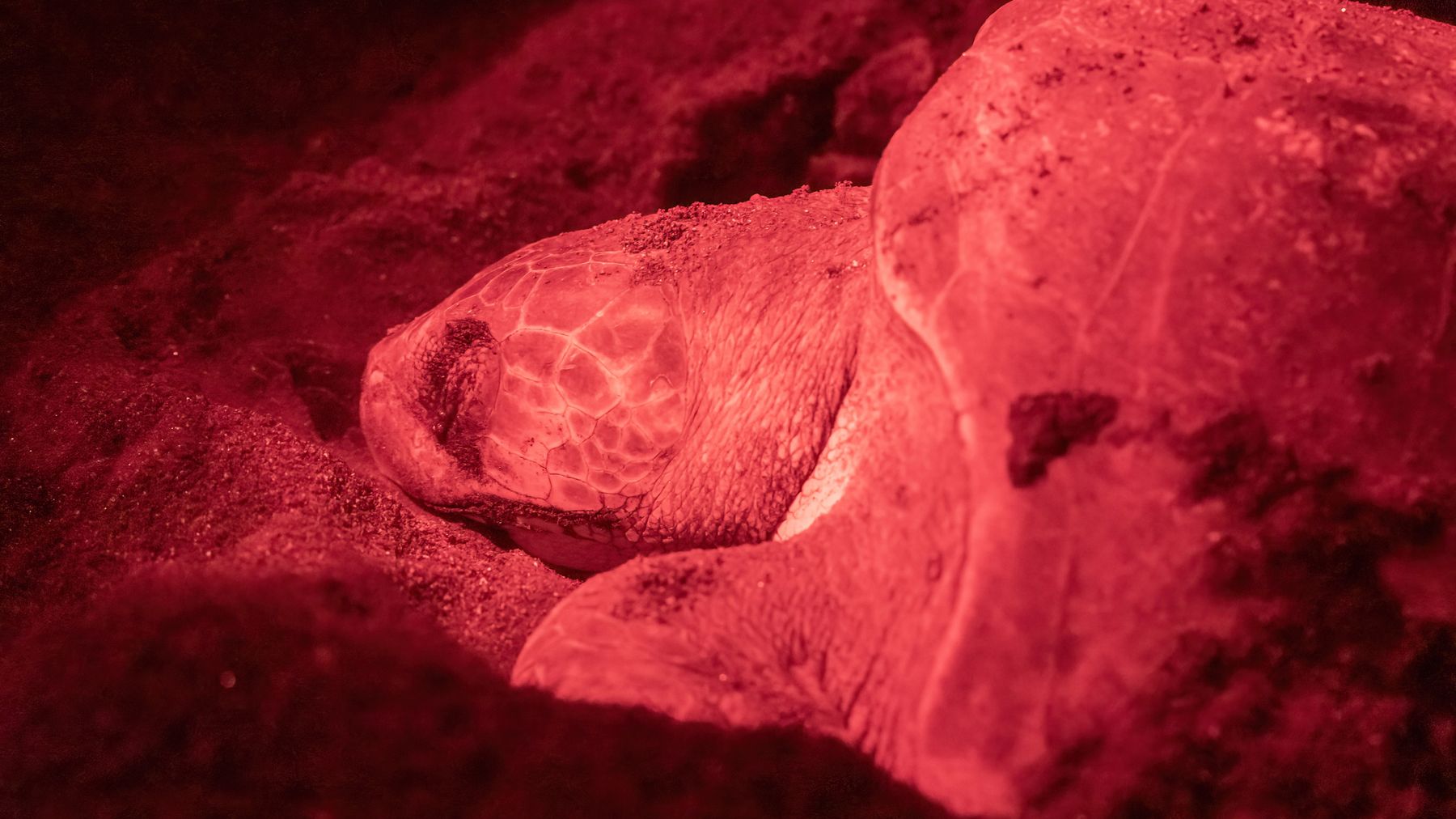
Photo by Karlus Morales on Pexels
What to Do
Walk the Forest Trail
A marked trail runs about 2 km from the ranger station through old-growth forest to a viewpoint on the island's spine. The canopy is thick — long-tailed macaques, black squirrels, and if you're patient, the Con Dao black giant squirrel. Bring water. There's no shop.
Snorkel the East Reef
The boat drops you at a buoy off the eastern shore. The reef starts in about 2 meters of water and drops to 8–10 meters. Healthy staghorn and brain coral, sea cucumbers on the sand, schools of fusiliers. Fins and mask are essential — bring your own or confirm your tour includes them.
Visit the Mangroves
The western side of Hon Bay Canh has a mangrove system you can explore at mid-tide by kayak (some tours include this) or on foot along a boardwalk the rangers maintain. Mudskippers, fiddler crabs, and juvenile fish use the roots as nursery habitat.
Join the Turtle Watch (Seasonal)
Available June–September, usually starting around 20:00. Rangers radio the station when a turtle is spotted. Groups of 5–10 are led to the nesting site. No flash photography, no torches, no noise. You watch from about 5 meters away. The whole thing can take 30 minutes to two hours depending on the turtle. Book this separately through the national park office on Con Son — it's 300,000–500,000 VND per person and requires an overnight stay at the ranger station.
Overnight at the Ranger Station
Basic but functional: shared rooms with bunk beds, mosquito nets, generator power until 22:00. Around 200,000–400,000 VND per night. You bring your own food or arrange meals in advance. This is the only way to do the turtle watch — day-trippers leave before dark.
Where to Eat Nearby
There's no food on Hon Bay Canh itself. Eat before and after on Con Son.
Try "hu tieu" at any of the morning noodle stalls near the Con Dao market — the southern-style pork broth version is solid here. For seafood, the restaurants along Nguyen Duc Thanh street serve grilled squid and steamed clams at reasonable prices (150,000–300,000 VND for a full meal). If you're coming from or returning to Saigon (사이공 / 西贡 / サイゴン), a bowl of "com tam" at the airport area stalls makes a good bookend.
Where to Stay
You'll base yourself on Con Son. Budget guesthouses run 300,000–600,000 VND per night. Mid-range hotels with air conditioning and breakfast go for 800,000–1,500,000 VND. There's one luxury resort (Six Senses) at the high end. For Hon Bay Canh overnight, the ranger station bunks are the only option — book through the national park office.

Photo by Trung Nguyen on Pexels
Practical Tips Locals Would Tell You
- Bring cash. No ATMs on Hon Bay Canh, and card machines on Con Son are unreliable outside hotels.
- Reef shoes matter. The beach entry to snorkeling spots has sharp coral rubble. Flip-flops won't cut it.
- Sunscreen choice counts. The park asks visitors to use reef-safe sunscreen. Rangers do check.
- Pack lunch for day trips. A banh mi and fruit from Con Son market is the move. There's zero food infrastructure on the island.
- Charge everything the night before. No power outlets on Hon Bay Canh during the day, and the generator at the ranger station runs limited hours.
Common Mistakes
Booking the wrong season. Showing up in November hoping for turtles and calm water — you'll get neither. Check conditions before committing to flights.
Underestimating the crossing. Even in good months, the open water between Con Son and Hon Bay Canh can be choppy. Motion sickness medication is worth having.
Treating it like a resort island. There's no bar, no lounge chair, no Wi-Fi. People who expect comfort facilities leave disappointed. People who come prepared to be on a wild island remember it for years.
Practical Notes
Hon Bay Canh is a national park zone — respect the rules, stay on marked trails, and follow ranger instructions during turtle watches. The island rewards people who plan ahead and show up with the right expectations. It's one of the few places in southern Vietnam where the reef is still healthy and the beach is still empty.
Last updated · May 26, 2026 · independently researched, never sponsored.