What Doi Con Heo actually is
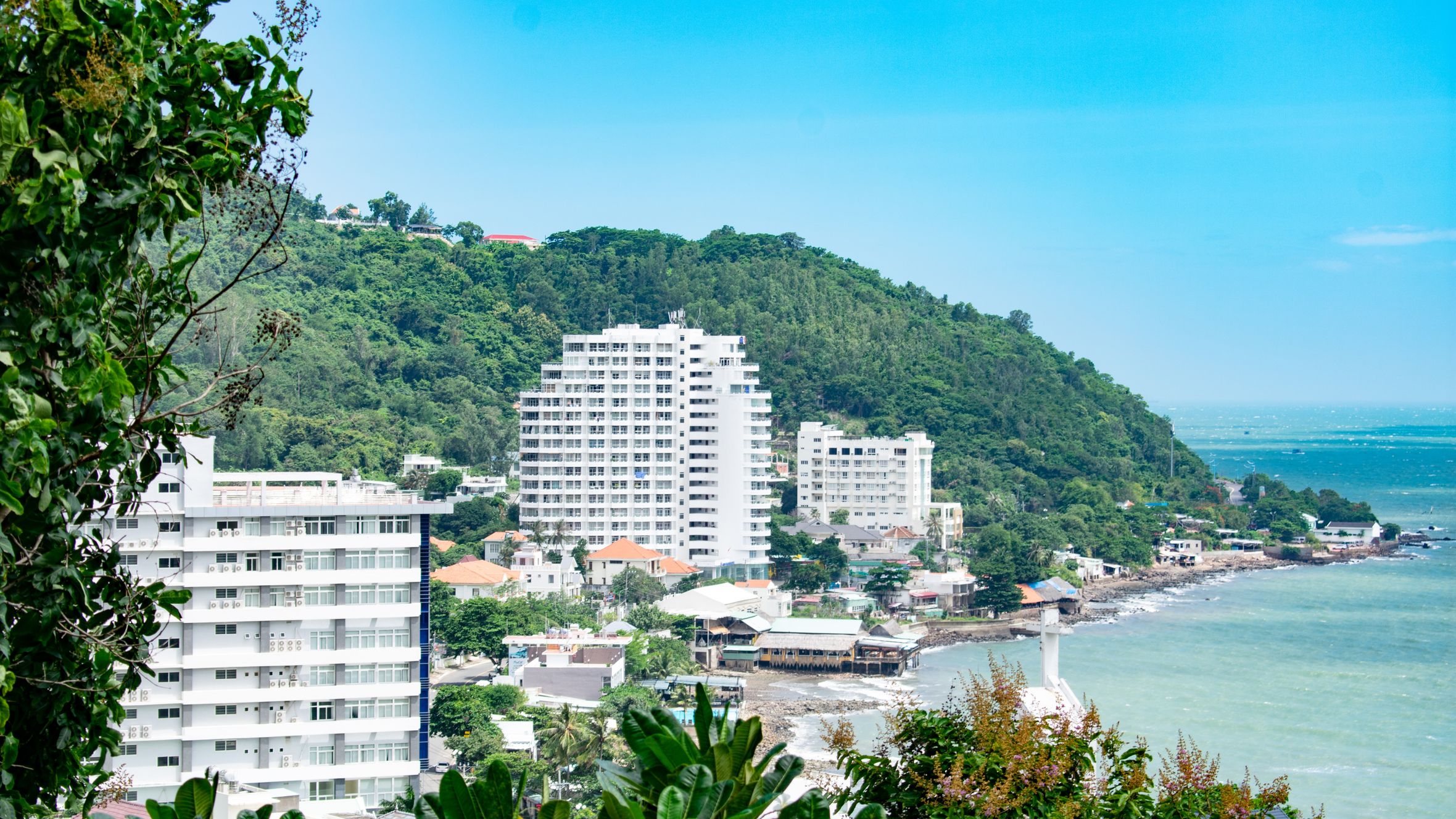
Doi Con Heo — literally "Pig Hill" — is a low coastal hill on the Vung Tau peninsula, now part of the expanded Ho Chi Minh City. It sits on the smaller of Vung Tau's two prominent ridges, Nui Nho (Small Mountain), at roughly 170 meters elevation. The hill earned its nickname decades ago from locals who thought its profile resembled a pig lying on its side. There's no dramatic origin story here — just a funny name that stuck.
The area around Doi Con Heo includes a lighthouse built during the French colonial period (late 1800s), walking paths through coastal scrubland, and direct sightlines to the 32-meter Christ of Vung Tau (붕따우 / 头顿 / ブンタウ) statue on the same ridge. The hill itself is not a manicured park or a ticketed attraction. It's more of a neighborhood landmark with trails, wind, and views that reward anyone willing to walk uphill for 20 minutes.
Why travelers go
Most people visiting Vung Tau stick to Back Beach (Bai Sau) for swimming and Front Beach (Bai Truoc) for seafood. Doi Con Heo offers something different: elevation, quiet, and a 360-degree perspective of the coastline, the port, and the South China Sea stretching out flat to the horizon.
The real draw is the walk itself. The trail from the base of Nui Nho through Doi Con Heo to the lighthouse and onward to the Jesus statue covers about 2 km one way, mostly on paved paths with some rocky sections. You pass old military bunkers from various eras, frangipani trees, and — on weekday mornings — almost nobody. It's one of the few places in the Vung Tau area where you can hear waves from above without a restaurant soundtrack.
Best time to visit
November through March is ideal. The dry season means clear skies, lower humidity, and cooler mornings. Temperatures hover around 26-30°C, which makes the uphill walk tolerable.
Avoid weekends and public holidays from April through September if you can. The combination of rain, heat, and domestic tourist crowds (Vung Tau is Saigon (사이공 / 西贡 / サイゴン)'s default beach escape) makes the experience less pleasant. Early mornings — before 8 AM — are best year-round. The light is good for photos, and you'll share the trails with local joggers rather than tour groups.
How to get there from Saigon
Vung Tau is roughly 95 km southeast of central Saigon. Three realistic options:
Hydrofoil (Greenlines or Vina Express): Departs from Bach Dang Wharf in District 1. Travel time is about 90 minutes. Tickets run 250,000-350,000 VND one way depending on the operator and seat class. This is the most pleasant option — no traffic, river views, and you arrive at Vung Tau's central pier.
Bus: Futabus and Kumho Samco run coaches from Mien Dong bus station. About 2-2.5 hours depending on traffic. Tickets cost 80,000-130,000 VND. Comfortable enough, but HCMC-to-Vung Tau traffic on weekends can stretch the trip to 3+ hours.
Motorbike or car: Take the HCMC-Long Thanh-Dau Giay expressway, then National Road 51 south. Around 2 hours without traffic. Tolls total roughly 50,000 VND for a car.
Once in Vung Tau, Doi Con Heo is at the southern tip of the peninsula. From the hydrofoil pier, it's a 4 km ride — about 20,000-30,000 VND by Grab bike. Head toward the Jesus statue; the trailhead is along Hai Dang street near the old lighthouse road.
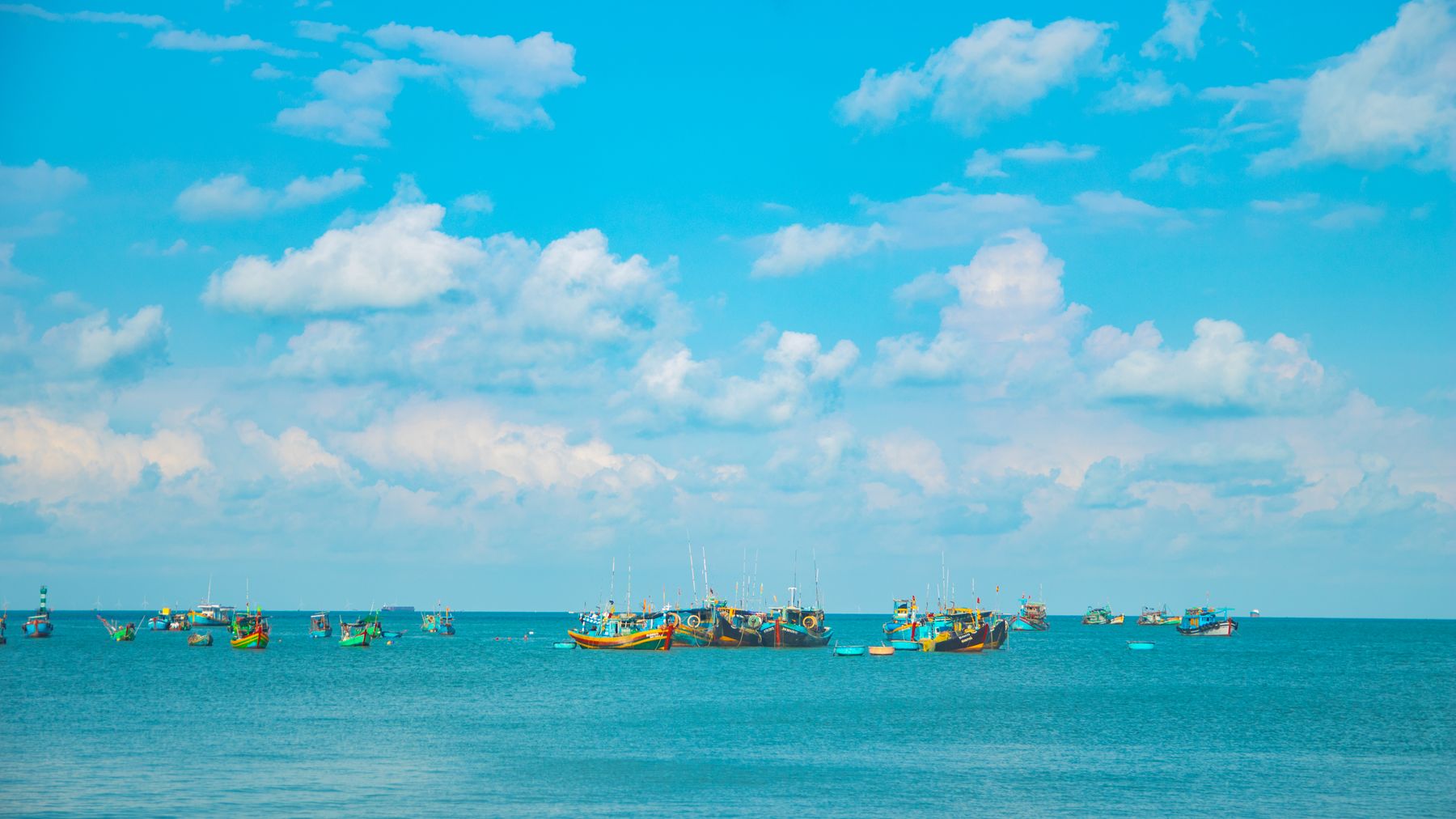
Photo by Tường Chopper on Pexels
What to do
Walk the Nui Nho ridge trail
The main activity. Start from the base near Hai Dang street and follow the paved path uphill. You'll pass the Doi Con Heo viewpoint, continue to the Vung Tau Lighthouse (built 1862, still operational), and can extend all the way to the Christ statue. Budget 1.5-2 hours for a relaxed round trip with stops.
Visit the Vung Tau Lighthouse
One of the oldest lighthouses in Southeast Asia. The whitewashed tower sits at the top of Nui Nho with a small courtyard. Entry is free most days, though opening hours can be inconsistent — mornings are your safest bet. The view from the lighthouse platform covers both Back Beach and Front Beach simultaneously.
Explore the old bunkers
Scattered along the ridge are concrete military bunkers and gun emplacements from various periods. They're not signposted or maintained as exhibits — you just come across them along the trail. Interesting for history-minded visitors, and they provide shade on hot days.
Catch sunset from the western slope
The western face of Doi Con Heo looks out over Front Beach and the harbor. In the dry season, sunsets here are consistently good. Locals bring coffee in thermoses and sit on the rocks. No vendors, no entrance fee, no plastic chairs — just the hill.
Combine with the Christ statue
The 32-meter statue is a 15-minute walk from the lighthouse. Entry is free but you need to climb 811 steps to the base. The interior staircase goes up to the arms for a narrow-window view. It's worth doing once, especially if you're already on the ridge.
Where to eat nearby
Back at sea level, Vung Tau's food scene is heavily seafood-driven. Two things worth seeking out:
Banh khot — crispy mini rice-flour pancakes cooked in cast-iron molds, topped with shrimp and eaten wrapped in herbs and lettuce. Vung Tau claims this dish as its own. Quan Banh Khot Goc Vu Sua on Nguyen Truong To street is a reliable spot; a plate of 10-12 runs about 50,000-70,000 VND.
Bun rieu with crab from the market stalls near Cho Vung Tau (Vung Tau Market). A bowl costs 35,000-45,000 VND and tends to be more crab-forward than versions in Saigon.
For seafood, the restaurants lining Tran Phu street (Front Beach) are fine for grilled squid and steamed clams, but prices are 20-30% higher than non-tourist spots a few blocks inland.
Where to stay
Vung Tau has accommodation at every price point. For Doi Con Heo access, staying near Front Beach or in the southern part of town is most convenient.
- Budget: Guesthouses along Ha Long street and Ba Cu street. Expect 250,000-400,000 VND/night for a clean room with AC and wifi.
- Mid-range: Three- and four-star hotels along Tran Phu and Quang Trung streets. 600,000-1,200,000 VND/night. Many include breakfast.
- Higher-end: A few resort-style properties on Back Beach. 1,500,000-3,000,000 VND/night, with pools and beach access.
Book ahead on weekends and holidays — Vung Tau fills up fast with Saigon day-trippers staying overnight.

Photo by Costa Karabelas on Pexels
Practical tips locals would tell you
- Wear proper shoes, not flip-flops. The trail has loose gravel and uneven concrete in places.
- Bring water. There are no vendors on the hill itself.
- The lighthouse sometimes closes without notice for maintenance. Don't build your whole morning around it.
- Grab works well in Vung Tau for getting around, but drivers thin out after 9 PM.
- If you're combining Vung Tau with a longer southern Vietnam trip, the city also works as a jumping-off point for Con Dao (flights or ferries) or a day trip from Saigon before heading to the Mekong Delta or Phu Quoc.
Common mistakes to avoid
- Going midday in summer. The hill has limited shade and the concrete paths radiate heat. You'll be miserable by noon in July.
- Expecting a developed attraction. There's no ticket booth, no gift shop, no cafe at the top. That's the appeal, but manage expectations.
- Driving a motorbike up the steep sections. Some paths look rideable but are pedestrian-only and steep enough that turning around is awkward. Park at the base.
- Skipping the walk and only doing the Jesus statue. The statue is the famous landmark, but the quieter sections of the ridge around Doi Con Heo are where the actual experience is.
Practical notes
Doi Con Heo works best as part of a half-day exploring the Nui Nho ridge, combined with lunch in town and an afternoon on the beach. It's not a destination that needs its own dedicated trip — but if you're in Vung Tau anyway and want something beyond sand and seafood, the hill delivers.
Last updated · May 29, 2026 · independently researched, never sponsored.