What is "lau ca lang"?
"Lau ca lang" is a Central Highlands (중부 고원 / 中部高原 / 中部高原) hotpot centered on small freshwater fish—usually caught from mountain streams—simmered in a broth spiked with lemongrass, dill, turmeric, and whatever wild herbs the cook has foraged that morning. It's less refined than a Saigon fish hotpot and more honest: the fish are whole and small, the vegetables unpeeled, the broth deliberately murky with river silt and intention. Buon Ma Thuot, the coffee capital of Vietnam, sits in Dak Lak province where these streams run clear and cold. The fish taste like the water they came from.
You won't find "lau ca lang" plated nicely elsewhere. In Hanoi, they've turned it into something photogenic. Here, it's still a working-class dinner—the kind families gather around on a Thursday night, not an Instagram stop.
Where Locals Go
Nha Hang Rang Dong
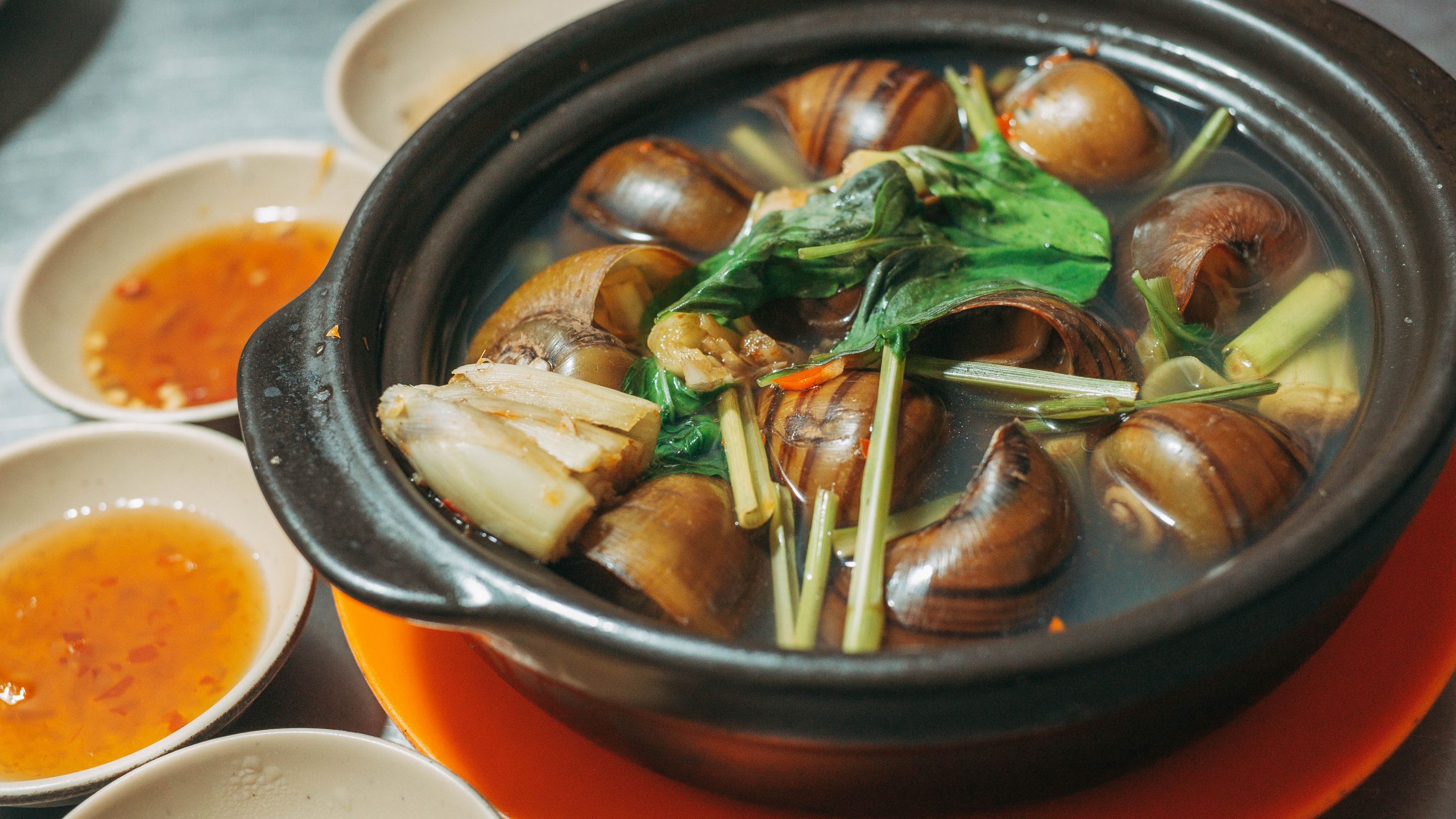
Located on Ly Thai To Street, a five-minute walk from Buon Ma Thuot's market, Rang Dong has been running since 1998. The owner, Mrs. Huong, sources fish daily from suppliers in the nearby Serepok River basin. Her "lau ca lang" is understated: a clay pot arrives at your table steaming, the broth pale brown and barely seasoned, with maybe 15–20 small fish (each the size of your index finger), plus fresh dill, wild mint, and strips of turmeric root. You add fish sauce, lime, and bird's-eye chili to taste at the table. A full pot serves two to three people and costs around 180,000–220,000 VND. Open from 10 a.m. to 9 p.m. daily. No reservations; arrive before noon or after 6 p.m. to avoid the lunch crush.
Lau Ca Lang Nguyen Hue
This is a hole-in-the-wall on Nguyen Hue Street (the busy downtown strip), squeezed between a motorbike repair shop and a cigarette kiosk. Three plastic tables outside, four inside. The broth here is slightly richer—the cook adds coconut milk to the base—which changes the flavor entirely. It's creamier, less mineral. Locals have strong opinions about whether this is "authentic" anymore; most say it's still worth eating. Pots run 160,000–200,000 VND. The shop opens at 11 a.m. and closes by 8 p.m.; dinner service is busiest between 5:30 and 7 p.m.
Quan Lau Ca Lang Anh Tuan
On the outskirts, a 10-minute motorbike ride from the city center toward the Buon Ma Thuot Zoo, this spot feels more like a roadside pavilion than a restaurant. A few corrugated-metal walls, ceiling fans, and mismatched furniture. The fish are slightly larger here (almost restaurant-sized), and the broth includes river snails and shrimp as well. You get the sense the cook is experimenting—adding star anise one week, removing it the next. Pots: 200,000–250,000 VND. Opens at 10 a.m. and stays open until the last customer leaves, usually around 9 p.m. During coffee-harvest season (October–December), it's packed with migrant workers and locals.
Lau Ca Buon Ma Thuot (Market-Side)
Inside or just outside Buon Ma Thuot Market's west entrance, a vendor named Mr. Hien has a stall with four tables. He doesn't have a formal name or phone; locals just say "the lau ca guy at the market." His fish are the smallest and the freshest—he buys them at 6 a.m. from suppliers who've been fishing since predawn. The broth is just water, fish stock, and dried herbs. Pots: 140,000–170,000 VND (the cheapest in the city). Open mornings from 6 a.m. to 11 a.m. and evenings from 4 p.m. to 7 p.m. Not a destination lunch, but a genuine local ritual.

Photo by Nhựt Nguyên Trần on Pexels
What Makes It Different Here
Buon Ma Thuot's version of "lau ca lang" lacks the refinement you'd find in larger cities, and that's the point. The fish here are smaller, sometimes not cleaned beyond a rinse. The herbs are foraged rather than cultivated. Broth clarity is not a priority; cloudiness is a sign the cook didn't waste time straining. Cooks don't publish recipes or teach classes; they adapt daily based on what's available and what the last customer preferred.
Compared to Saigon's more buttoned-up fish hotpots, or even the versions you'll find in Da Lat or Nha Trang (냐짱 / 芽庄 / ニャチャン), "lau ca lang" in Buon Ma Thuot tastes regional, specific, and unpolished. That's not a criticism. It means the tradition is still working—still feeding ordinary people on an ordinary evening, not performing for tourists.
How to Order
Walk in, sit down, say "mot noi lau ca lang" (one pot of fish hotpot). They will ask: fresh or frozen (always fresh), and sometimes the size—small or medium. Don't overthink it; the shop will bring what they caught today.
You'll get a clay pot on a portable burner, a plate of greens (usually mint, dill, sawtooth coriander), lime wedges, bird's-eye chilies, and a small bowl of fish sauce. Cook the fish for 3–5 minutes once the broth boils. Eat immediately; the flesh toughens quickly. Add greens and chili to your personal dipping sauce as you eat.
Unlike fancier hotpots, there are no prawns, no mushrooms, no tofu, no side-course theatrics. Just fish, broth, herbs, and condiments. Meals take 15–20 minutes. Locals don't linger.
Photo by Nhựt Nguyên Trần on Pexels
When to Go
Lunch rush (11:30 a.m.–1:30 p.m.) is busiest at all spots. If you're traveling solo, avoid this window unless you enjoy standing or sharing a table. Dinner (6–7:30 p.m.) is second-busiest and skews toward families and after-work groups.
Mornings (6–10 a.m.) are quietest at the market stall and Nha Hang Rang Dong; you'll eat alongside construction workers and delivery drivers—the real crowd. The fish are also freshest then.
Winter (November–February) is the best season to eat "lau ca lang" in Buon Ma Thuot. Water temperatures are cooler, streams run clearer, and fish are in better condition. During dry season (April–June), some vendors shift to larger, farm-raised fish, and the broth tastes more generic. Avoid rainy season (July–September), when mountain streams flood and fishing is less reliable.
Practical Notes
Buon Ma Thuot has no English menus or credit-card readers at street-level "lau ca lang" stalls. Bring cash in small denominations (50,000 and 100,000 VND notes). No reservations—first come, first served. If a shop is full, wait 15 minutes or try another spot; turnover is fast. Tap water is not safe; stick to bottled water, which all shops serve.
Try to visit Buon Ma Thuot in the context of a larger coffee-focused trip through Dak Lak province. A morning eating "lau ca lang" at the market, followed by a coffee plantation tour or waterfall visit in the afternoon, gives you a fuller sense of why this region tastes the way it does.
Last updated · Sep 18, 2026 · independently researched, never sponsored.