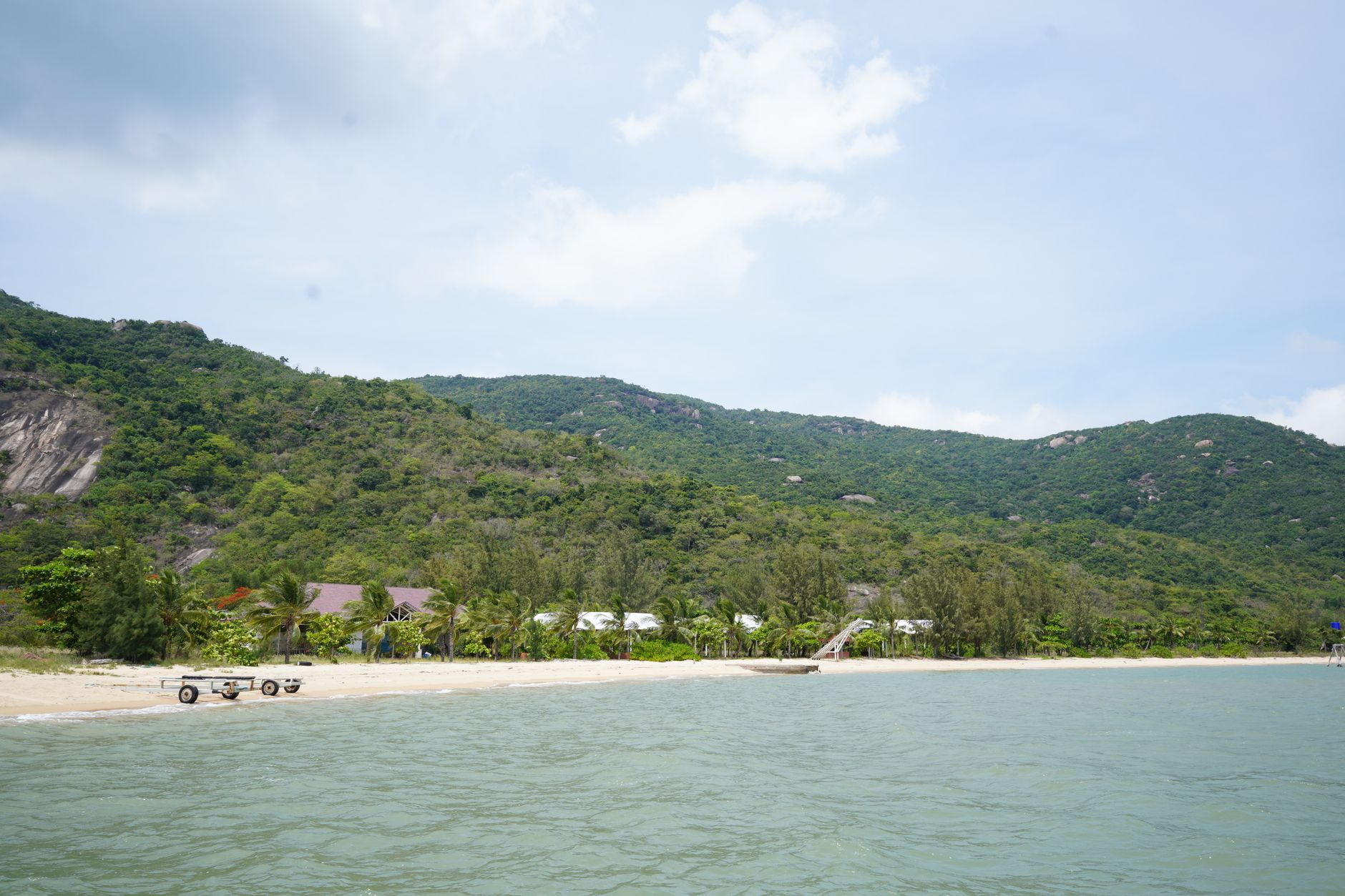
Bien Ba Dong sits on the coast of Tra Vinh province, about 55 km south of Tra Vinh city — a rare stretch of actual ocean beach in the Mekong Delta (메콩 델타 / 湄公河三角洲 / メコンデルタ). With administrative changes merging Tra Vinh into the expanded Vinh Long province, you may see it listed under either name. On the ground, nothing changes: the same grey-brown sand, the same casuarina windbreaks, the same relative absence of other tourists.
What it is
Bien Ba Dong (literally "Ba Dong Sea") runs roughly 10 km along the coast of Duyen Hai district, facing the East Sea. This is not a postcard-perfect white-sand beach — the water here carries Mekong sediment, so it trends murky brown-green, and the sand is coarse and dark. What it offers instead is space. Even on weekends, the beach rarely feels crowded. A row of casuarina pines backs the shore, and a few seafood shacks and guesthouses cluster near the main access road.
The beach has been a local weekend escape for Tra Vinh and Vinh Long residents for decades. A small tourism zone was developed in the early 2000s with basic infrastructure — parking, a sea-viewing tower, some concrete walkways — but it never became a major destination. That's part of its appeal.
Why travelers go
Honestly, most foreign travelers don't. Bien Ba Dong draws domestic weekenders and the occasional backpacker exploring the deep Mekong Delta beyond the usual Can Tho circuit. You come here because you want to see what a Mekong Delta beach town actually looks like — fishing boats, shrimp ponds, Khmer pagodas along the road, and a coastline that feels like the edge of the country rather than a resort zone.
If you're already in the region visiting Vinh Long's floating markets or making a loop through Can Tho (껀터 / 芹苴 / カントー) and Tra Vinh, Bien Ba Dong makes a worthwhile detour. Just calibrate expectations: this is a place, not a destination experience.
Best time to visit
The dry season from November to April is best. Skies are clearer, humidity drops slightly, and the road out to the coast isn't waterlogged. December through February is the sweet spot — temperatures hover around 26-30°C, and weekend crowds thin out after the Tet holiday rush in January or February.
Avoid September and October if you can. Heavy rains turn the approach roads muddy, and the sea gets rough with onshore winds. The beach itself can erode significantly during storm season.
How to get there
The nearest major hub is Can Tho, roughly 100 km away. From Can Tho, you have two realistic options:
By motorbike or car
The most flexible option. Take QL54 east toward Tra Vinh city (about 2 hours, 85 km), then head south on DT913 to Duyen Hai and follow signs to Bien Ba Dong. Total ride is around 2.5-3 hours depending on stops. If you're renting a motorbike in Can Tho, expect to pay 150,000-200,000 VND/day for a Honda Wave or similar.
By bus + xe om
Catch a bus from Can Tho bus station to Tra Vinh city (around 70,000-90,000 VND, 2 hours). From Tra Vinh, local buses run to Duyen Hai town, but the final 10 km to the beach usually requires a "xe om" (motorbike taxi) for about 40,000-60,000 VND. Budget 3.5-4 hours total.
If you're coming from Vinh Long city instead, it's about 130 km via QL53 and QL54 — roughly 3 hours by motorbike.

Photo by Serg Alesenko on Pexels
What to do
Walk the casuarina-lined shore. The main beach stretches about 3 km in the accessible tourism zone. Early morning is best — local fishermen haul in nets around 5:30-6:00 AM, and you can watch the catch get sorted right on the sand. No admission fee.
Climb the sea-viewing tower. A concrete observation tower near the main entrance gives a decent panoramic view of the coastline and the tree line behind it. It's not dramatic, but it orients you to the geography — you can see how the Mekong's channels meet the sea to the north.
Visit the Khmer pagodas on the drive in. Tra Vinh has one of the highest concentrations of Khmer communities in Vietnam, and the road from Tra Vinh city to Duyen Hai passes several ornate Khmer pagodas. Ang Pagoda and Hang Pagoda are the most visited, with their distinctly Southeast Asian spires and quiet temple grounds. Free to enter; dress modestly.
Rent a hammock and do nothing. Several beachfront stalls rent hammocks under the casuarina trees for 20,000-30,000 VND. Order a coconut, read a book, watch fishing boats. This is the actual main activity at Bien Ba Dong and there's no reason to pretend otherwise.
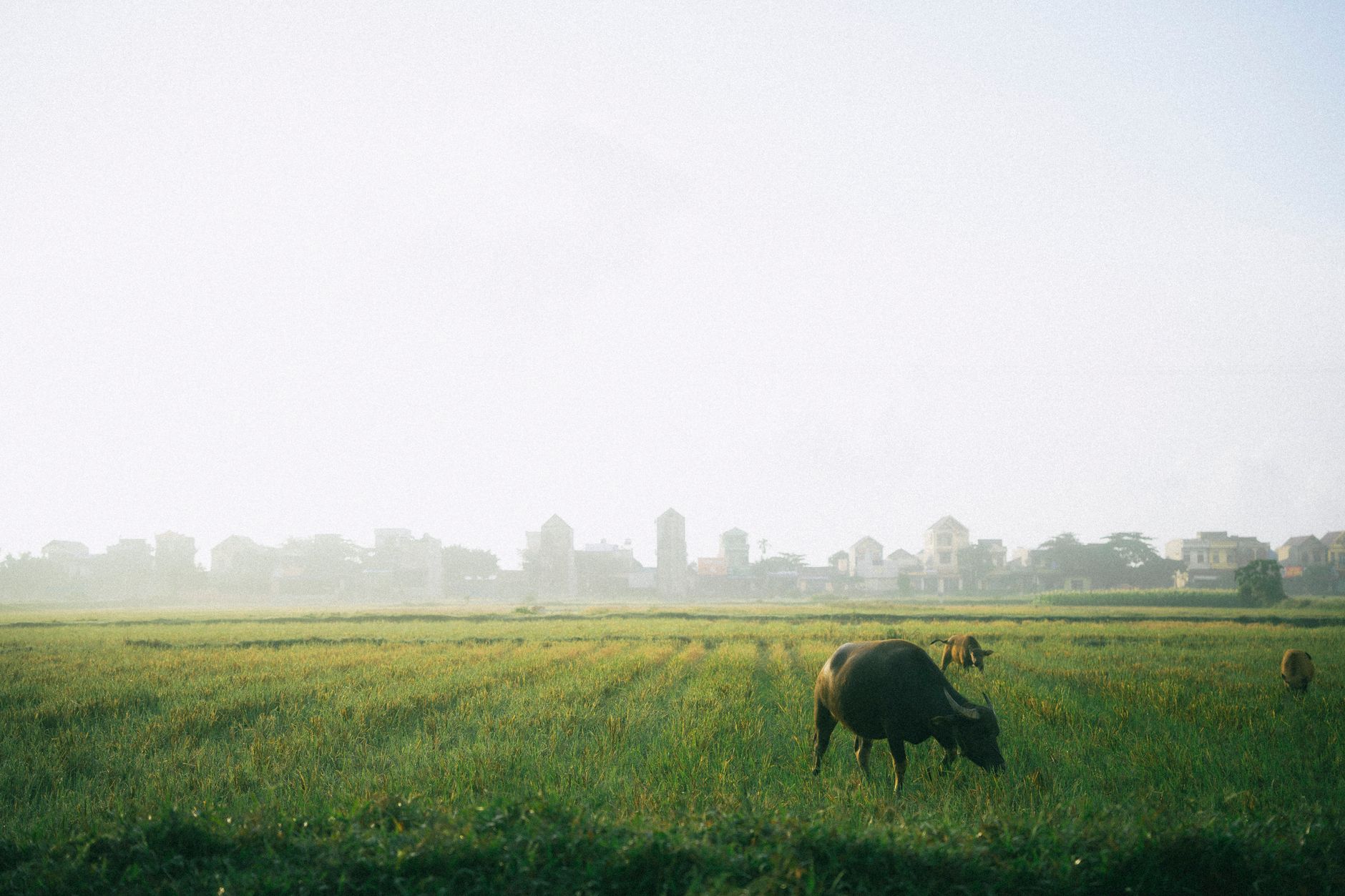
Explore the shrimp ponds. The area behind the beach is lined with aquaculture ponds. An early morning or late afternoon bicycle ride along the pond roads gives you a look at delta-coast life that most travelers never see. Ask your guesthouse if they can lend or rent a bicycle.
Where to eat
Seafood is the obvious play. The cluster of open-air restaurants near the beach entrance serves grilled clams, steamed crab, and fried fish at reasonable prices — a full seafood spread for two runs about 200,000-350,000 VND.
Seek out "banh canh" — the thick tapioca-flour noodle soup that's a Tra Vinh specialty. The crab version ("banh canh cua") is rich and slightly sweet. You'll find it at small shops in Duyen Hai town for 30,000-45,000 VND a bowl. Also worth trying is "bun nuoc leo," a Khmer-influenced fish noodle soup with fermented fish paste — an acquired taste, but genuinely local.
Where to stay
Accommodation is basic. A few guesthouses ("nha nghi") sit near the beach entrance, charging 200,000-400,000 VND per night for a fan or air-con room. Don't expect hot water or English-speaking staff. The rooms are clean enough but spartan.
For more comfort, stay in Tra Vinh city (55 km back) where you'll find proper hotels in the 400,000-800,000 VND range with reliable Wi-Fi and breakfast. Cuu Long Hotel and Tra Vinh Palace are decent mid-range options.

Photo by Quang Nguyen Vinh on Pexels
Practical tips
- Bring cash. There are no ATMs at the beach, and card payments don't exist here. Stock up in Tra Vinh city.
- Sunscreen and a hat are non-negotiable. The casuarina shade only covers the back of the beach. The open sand reflects hard.
- Bring a basic Vietnamese phrasebook or translation app. English is almost nonexistent in Duyen Hai. Even simple interactions — ordering food, negotiating a xe om — will require some Vietnamese.
- Swimming caution. Currents can be strong, especially during incoming tides. There are no lifeguards. Locals swim close to shore and you should do the same.
Common mistakes
Coming with resort expectations. This is not Phu Quoc or Mui Ne. If you need a pool bar and a beach towel service, Bien Ba Dong will disappoint you.
Not bringing enough fuel. If you're on a motorbike, fill up in Duyen Hai. The stretch between town and beach has no gas stations.
Rushing it as a day trip from Can Tho. The 3-hour drive each way makes a day trip exhausting. Stay one night near the beach or in Tra Vinh city so you can actually enjoy the morning light on the coast.
Practical notes
Bien Ba Dong works best as part of a wider Mekong Delta loop — combine it with a day in Can Tho, a stop at Vinh Long's floating markets, and the Khmer cultural sites around Tra Vinh. It's a quiet footnote to a delta trip, not a headline destination, and that's exactly what makes it worth the detour.
Last updated · May 29, 2026 · independently researched, never sponsored.