Ha Tinh sits in the narrow waist of central Vietnam (베트남 / 越南 / ベトナム), squeezed between the Truong Son mountains and the East Sea. It's not on many tourist radars, which is exactly why Bien Ky Ninh — a several-kilometer arc of sand in Ky Anh district — feels like it belongs to a different era of Vietnamese beach travel. No jet skis, no thumping speakers, no roped-off resort sections. Just a wide, gently sloping shoreline backed by casuarina trees and a handful of seafood shacks.
What Bien Ky Ninh actually is
Bien Ky Ninh is the main public beach serving Ky Ninh commune in southern Ha Tinh province, roughly 50 km south of Ha Tinh city center. The beach runs for about 3 km with fine, pale sand and relatively calm water from April through September. It's been a popular weekend escape for locals from Ha Tinh and neighboring Nghe An for years, but infrastructure aimed at outside visitors is still minimal. A few guesthouses and seafood restaurants have popped up along the coastal road, and the local government has added basic facilities — showers, parking, trash bins — but it hasn't been packaged into a resort zone yet.
The area around Ky Anh has changed significantly since the Vung Ang economic zone was developed nearby, bringing more workers and more weekend traffic to the beach. But during weekdays, especially outside of summer, you can walk the full length and see maybe a dozen people.
Why travelers go
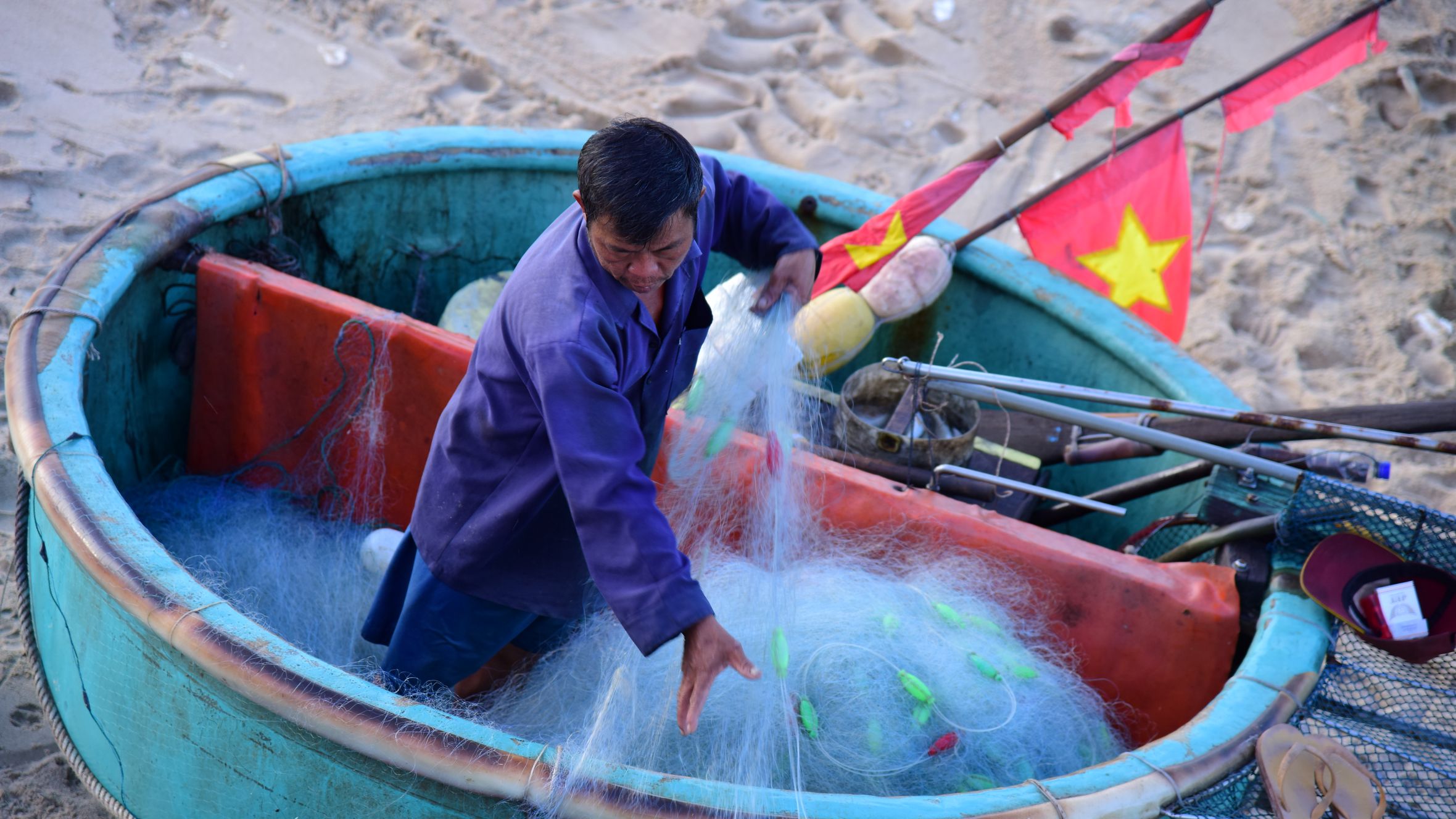
Honestly, most foreign travelers don't — and that's the draw for those who do. Bien Ky Ninh offers a glimpse of what Vietnamese coastal life looks like when tourism isn't the main economic engine. Fishing boats still launch from the southern end of the beach in the early morning. The seafood is priced for locals, not visitors. And the swimming conditions are genuinely good: a gradual slope, no sudden drop-offs, and water that's warm enough from late April onward.
If you're traveling the length of Vietnam by motorbike or train and want a beach stop between Hue and Vinh that isn't Cua Lo or Lang Co, this is a solid option.
Best time to visit
Aim for May through August. Ha Tinh's coast gets hot — temperatures regularly hit 35-37°C in June and July — but the water is warm and the skies are mostly clear. September and October bring the tail end of typhoon season; swells pick up and rain can be heavy for days at a stretch. November through March is cool and grey, with temperatures dropping to 15-18°C and persistent drizzle. Swimming isn't appealing during those months, and many beachside restaurants close or reduce hours.
If you want fewer people, come on a weekday in May or early June before Vietnamese school holidays start.

Photo by Vietnam Hidden Light on Pexels
How to get there
The nearest major transport hub is Vinh, about 90 km north. From Vinh, you have a few options:
- Motorbike or car along the AH1 (National Highway 1A): Around 1.5-2 hours depending on traffic through the small towns. This is the most practical option and gives you flexibility once you arrive. Renting a motorbike in Vinh costs roughly 120,000-180,000 VND/day.
- Bus from Vinh to Ky Anh town: Several daily departures from Ben Xe Vinh (Vinh bus station), costing around 80,000-100,000 VND. The ride takes about 2-2.5 hours. From Ky Anh town center, you'll need a local xe om (motorbike taxi) for the final 8 km to the beach — expect 30,000-50,000 VND.
- Train: Vinh railway station connects to both Hanoi and Saigon. From Vinh, take a bus or taxi onward.
If you're coming from Hue (about 270 km south), the drive takes 4-5 hours via the Ho Chi Minh (호치민 / 胡志明 / ホーチミン) Highway or AH1. Phong Nha is roughly 160 km to the south and makes a natural pairing if you're working your way up the coast.
What to do
Swim and do nothing particularly ambitious
The beach itself is the main event. The sand is clean, the water is clear enough, and the absence of commercial water sports means it's genuinely peaceful. Bring a book. The casuarina tree line provides decent shade if you don't want to rent a beach umbrella (usually 20,000-30,000 VND).
Watch the fishing boats at dawn
Head to the southern end of the beach around 5:00-5:30 AM. Local fishermen bring in the night's catch in round basket boats ("thung chai") and larger wooden vessels. You can buy fish and squid directly if you're staying somewhere with a kitchen or a willing cook. Prices are negotiable but dramatically cheaper than any restaurant — a kilo of fresh squid might run 60,000-80,000 VND.
Ride to Deo Ngang (Ngang Pass)
About 30 km south of Bien Ky Ninh, the old Ngang Pass marks the historical boundary between northern and southern Vietnam. The pass itself is a short but scenic ride through forested hills with views down to the coast on both sides. There's a small temple complex at the top (Hoành Son Quan) and the ruins of an old gate. It's worth an hour or two by motorbike.
Explore Ky Anh town market
The central market in Ky Anh town is small but lively in the morning. Good for picking up local snacks, fruit, and getting a sense of daily life in a Vietnamese district town that doesn't cater to tourists at all.
Visit Vung Chua - Dao Yen
About 60 km south near Quang Binh province, the Vung Chua memorial site sits on a forested headland overlooking the sea. It's a place of significance for many Vietnamese visitors, set in a quiet stretch of coastline worth seeing.
Where to eat nearby
Seafood is the obvious play here. Small restaurants along the beach road serve whatever came in that morning — grilled fish, steamed clams, stir-fried squid with lemongrass. A full seafood spread for two runs about 200,000-350,000 VND.
Two local dishes to seek out: "cu doi" — a type of shellfish unique to Ha Tinh's coast, usually steamed with lemongrass or grilled — and "banh duc", a savory rice-flour cake served with minced shrimp that's a Ha Tinh staple. Neither is fancy, but both are specific to this stretch of coast. If you're passing through Vinh on your way in or out, that's good territory for a bowl of proper "bun bo Hue" — the central Vietnamese soup has strong roots across the Ha Tinh-Nghe An corridor too.

Photo by Long Bà Mùi on Pexels
Where to stay
Accommodation near Bien Ky Ninh is basic. A few guesthouses ("nha nghi") sit along the road leading to the beach, typically 200,000-400,000 VND/night for a clean room with air conditioning, hot water, and Wi-Fi. Don't expect much English. Ky Anh town has slightly more options, including a couple of mini-hotels in the 400,000-600,000 VND range.
There's no international-brand hotel anywhere nearby. If you need that level of comfort, stay in Vinh and day-trip.
Practical tips locals would tell you
- Bring cash. There are a couple of ATMs in Ky Anh town, but nothing at the beach. Card payments are essentially nonexistent here.
- Sunscreen is critical. The central Vietnamese sun between May and August is no joke, and shade options on the open beach are limited.
- Carry water and snacks if you plan to be on the beach for a full day. The nearest convenience store is back in town.
- Riptides can occur after storms or during transitional weather in September-October. Ask locals before swimming if you're visiting in shoulder season.
Common mistakes to avoid
Don't show up in winter expecting a beach day — Ha Tinh's coast is cold and grey from November to March and you'll wonder why you came. Don't rely on ride-hailing apps; Grab coverage this far from a major city is spotty at best. And don't skip the morning fish market in favor of sleeping in — it's the most memorable thing you'll do here.
Bien Ky Ninh isn't a destination that will change your life. It's a good, honest beach in a part of Vietnam that doesn't perform for visitors. Sometimes that's exactly the right speed.
Last updated · Apr 2, 2026 · independently researched, never sponsored.