Vietnam (베트남 / 越南 / ベトナム)'s most meaningful birthday isn't your 18th or 30th — it's the first one. The "thoi noi" ceremony marking a baby's first full year is one of the few occasions where family gatherings, ritual food, and genuine superstition still sit comfortably at the same table.
What Thoi Noi Actually Is
The word "thoi noi" (sometimes spelled thoi noi or thoi noi tron) refers to the moment a child is taken out of the hanging cradle — noi — that traditionally rocked them through their first year. At twelve months, the baby is considered sturdy enough to face the world, and the family marks this with a ceremony that blends Buddhist-influenced offerings, ancestor veneration, and a fair amount of food.
The centrepiece of the ritual is the object-selection game. A tray of symbolic items is placed in front of the child: a pen, a calculator, scissors, thread, soil, a book, coins, a mirror. Whatever the baby reaches for first is read as a sign of future character or vocation. Grab the pen and you might become a writer. Grab the coins and the aunties will nod knowingly. It is, of course, entirely unscientific and entirely irresistible.
But before anyone watches the baby grab anything, the family eats.
The Food: What Lands on a Thoi Noi Table
The spread varies by region and family budget, but certain dishes appear again and again because they carry meaning, not just flavour.
Xoi — sticky rice — is nearly non-negotiable. It comes in multiple colours at a thoi noi: red (xoi gac, made with gac fruit) for luck and prosperity, yellow (xoi dau xanh, with mung bean) for warmth and happiness, sometimes white or purple (xoi cam, coloured with magenta plant). A full thoi noi tray might have three or five colours arranged in a pattern. The number matters — even numbers are for funerals.
Che is the other constant. These sweet dessert soups range from che dau den (black bean) to che troi nuoc (glutinous rice balls in ginger syrup). Che troi nuoc appears at almost every life-stage ceremony in Vietnam — its round shape signals wholeness and reunion.
Ga luoc — poached whole chicken — anchors the savoury side, served with salt, lime leaves, and a bowl of the poaching broth for dipping. The chicken must be presented whole for the offering before it is cut. Alongside it you will typically find "gio lua" (Vietnamese pork sausage), braised pork belly, and a sour soup — canh chua in the south, something closer to a clear broth up north.
In the south, particularly in Saigon and the Mekong Delta (메콩 델타 / 湄公河三角洲 / メコンデルタ), "banh it" and "banh tet" sometimes appear on offering trays. In central Vietnam — Hue families especially — the presentation of food on lacquer trays gets noticeably more formal, reflecting the region's court-influenced food culture.
The Offering Tray vs. the Eating Table
There are usually two distinct moments at a thoi noi. First, a tray goes to the altar — ancestor offerings, the Twelve Midwives (Muoi Hai Ba Muoi) who are believed to watch over children in their first year, and sometimes a local deity. The food on the altar is composed, specific, and not touched until incense burns down. Then there is the meal for the living, which is generous, loud, and considerably more relaxed.

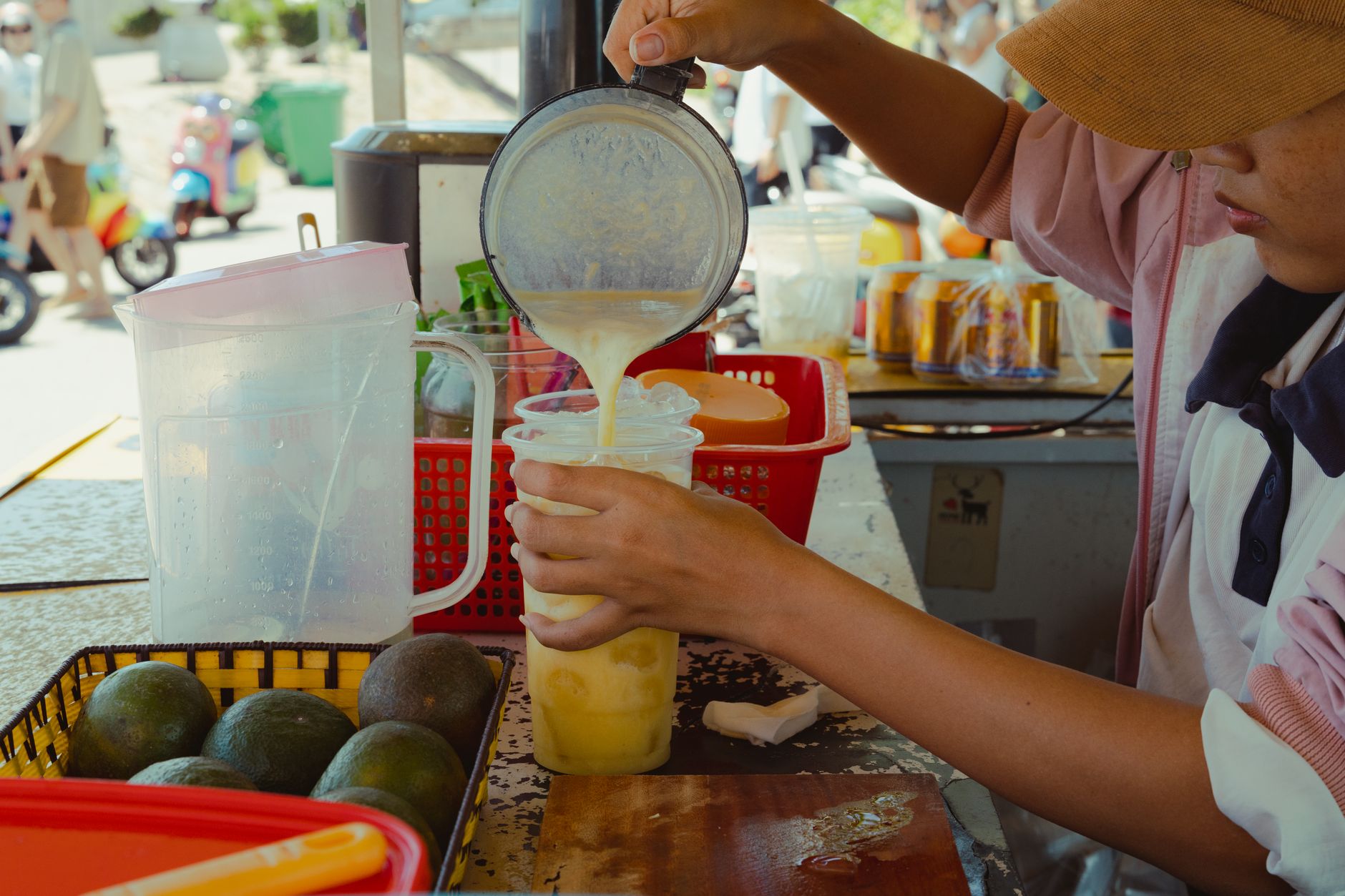
Photo by Vietnam Tri Duong Photographer on Pexels
Birthday Culture Beyond Year One
For most of Vietnamese history, individual birthdays after the first year were not widely celebrated in the Western sense. The Lunar New Year — Tet / 越南春节 / テト) — served as a collective birthday for everyone. You turned a year older when the new year arrived, regardless of your actual birth month.
That has changed, gradually and unevenly. Urban families in Hanoi and Saigon now routinely throw birthday parties for children at ages five, ten, and every year in between. Korean and Western-influenced cake shops have spread across every city. Cafes in Hanoi's Tay Ho district and Saigon's District 3 do brisk business in custom birthday cakes, some of them genuinely beautiful and very expensive — 500,000 to over 2,000,000 VND for a multi-tier decorated cake is normal now.
But it is worth noting that cake was not always part of this. The "sinh nhat" (birthday) cake tradition arrived with French influence and accelerated through the 1990s and 2000s as consumer culture grew. For many families, the cake is still somewhat performative — something for the photos — while the real food happens elsewhere at the table.
Adult milestone birthdays — 60 and 70 especially — trigger the largest celebrations. The 60th birthday, or "luc tuat", marks the completion of one full cycle of the Vietnamese zodiac calendar (12 animals × 5 elements). Families treat this the way other cultures treat a 50th. The food spread at a 60th birthday banquet rivals a wedding: multiple courses, seafood, whole roasted pig, "banh chung" if it falls near Tet season, and always, somewhere, a table of desserts that includes che.

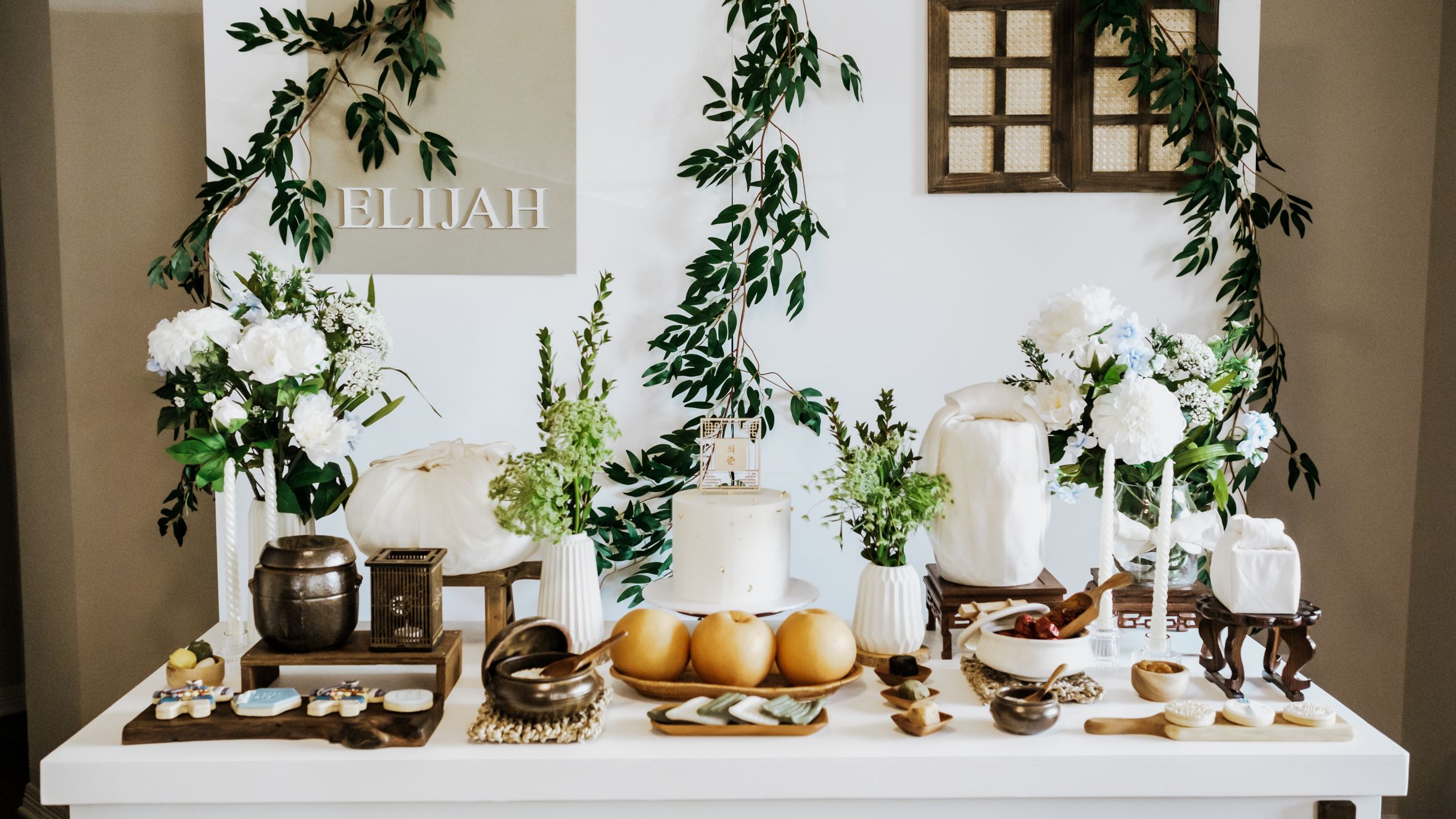
Photo by quang vinh on Pexels
Regional Differences Worth Knowing
In the south, thoi noi ceremonies tend to be louder, more elaborate, and more likely to include a hired MC and a photographer. The food table is bigger and the guest list wider. In the north, the ceremony is quieter and more inward-facing — a family affair, fewer guests, the altar given more prominence than the banquet. In central Vietnam, the ritual components are most strictly observed; ask a family from Hue about the correct number of dishes on the offering tray and you will get a detailed and passionate answer.
Practical Notes
If you are invited to a thoi noi as a guest, bring a red envelope with cash rather than a physical gift — it is the most practical and appreciated gesture. Amounts between 200,000 and 500,000 VND are standard from friends; closer family gives more. Eat everything offered; refusing food at a Vietnamese celebration, especially one with ritual significance, reads as inauspicious. And if the baby grabs the scissors, do not worry — the family has already decided what it means.
Last updated · May 29, 2026 · independently researched, never sponsored.