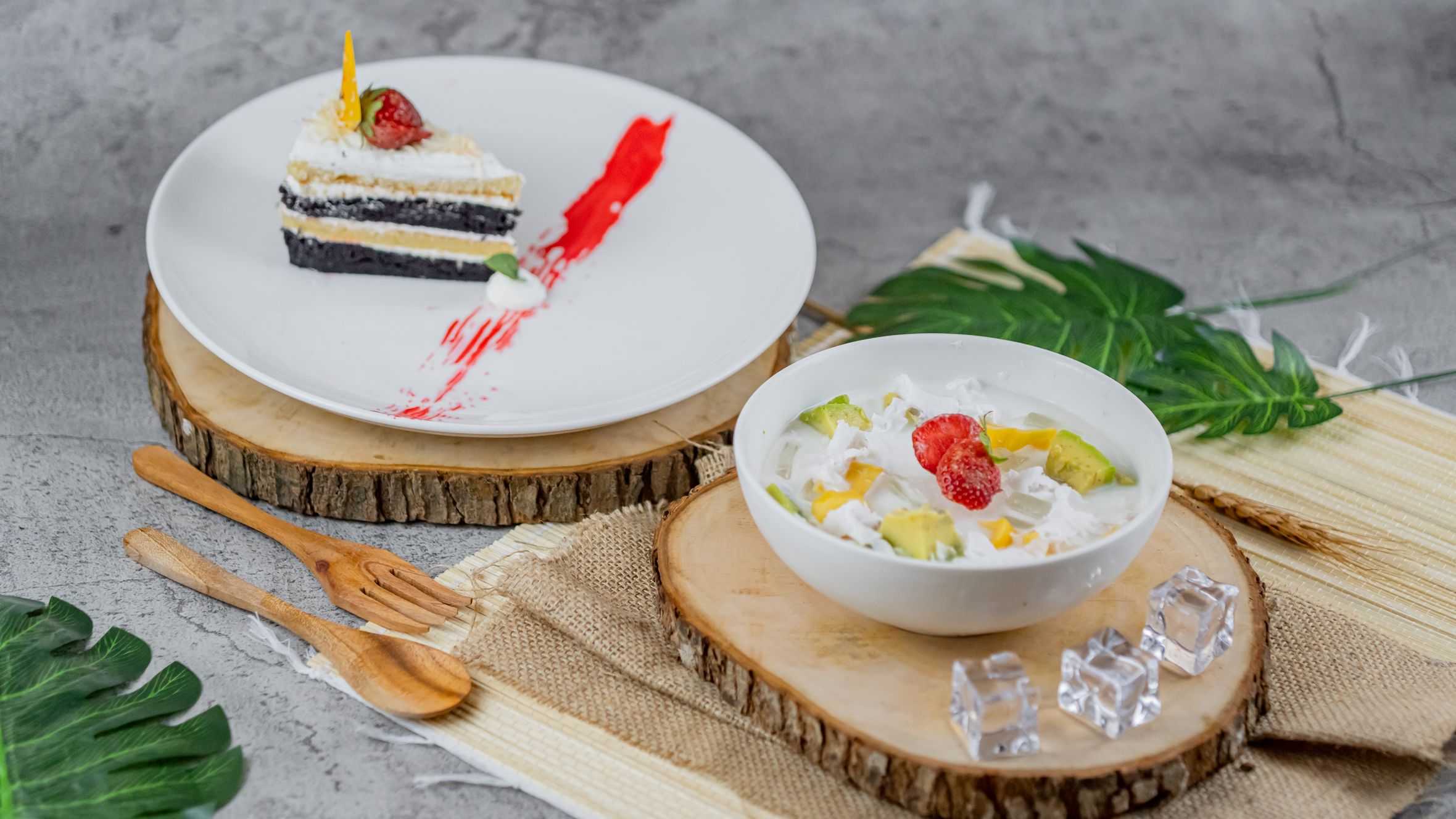
If you've ever sat down at a Vietnamese dessert stall and pointed at the most chaotic, colorful bowl on the menu, you probably landed on "che Thai" — and you made the right call.
What Che Thai Actually Is
"Che" is the broad Vietnamese term for sweet soups and puddings — a category that runs from simple mung bean porridge to elaborate layered constructions. "Che Thai" is the jewel of that category in the south: a chilled bowl of mixed tropical fruit, chewy jellies, and water chestnuts, drowned in sweetened coconut cream and finished with crushed ice.
Despite the name, you won't find an identical dish called this in Thailand. What happened is more interesting than direct import. Vietnamese cooks, especially in Saigon, borrowed techniques and flavor logic from Thai dessert culture — the heavy use of coconut milk, the pairing of sweet fruit with salt-tipped cream, the habit of mixing textures aggressively — and built something that became entirely their own. By the 1980s and 1990s, che Thai was a fixture in Saigon's street dessert scene, particularly in the districts with large communities of ethnic Chinese and southern Vietnamese traders who had long-standing cross-border culinary connections.
Today it is a southern dish in character, even if you can find versions of it in Hanoi. The Saigon (사이공 / 西贡 / サイゴン) version is richer, colder, more maximalist. The north tends to dial back the coconut cream and reduce the fruit count.
What Goes Into the Bowl
There is no single canonical recipe, but there are components that appear consistently enough to call them standard.
Fruit: Jackfruit strips (fresh or canned) and lychee are the two anchors. Both are sweet, both hold their texture in cold coconut cream. Longan, rambutan, and toddy palm seeds ("thot not") show up regularly. Some vendors add fresh mango or candied tamarind.
Jellies: This is where vendors differentiate themselves. Pandan jelly (green, lightly grassy) is almost universal. Coconut jelly (white, soft, faintly sweet) is common. You'll also see red-dyed jelly cubes, butterfly pea flower jelly (dark blue-purple), and taro jelly depending on the shop.
Water chestnuts: Often coated in tapioca flour and briefly cooked, giving them a translucent, bouncy shell around the crunchy core. They add the most interesting texture contrast in the bowl.
Coconut cream: Not coconut water, not coconut milk — cream, the thick stuff, usually slightly salted and sometimes sweetened with sugar syrup. This is what makes che Thai feel indulgent. A good vendor makes the cream fresh or sources it from a reliable supplier. Canned coconut cream exists and you can taste the difference.
Ice: Crushed or shaved, not cubed. The ice integrates into the coconut cream as it melts and thins the sauce gradually — by the bottom of the bowl, the flavor shifts. Eat it fast.

Photo by Nguyễn Thị Thảo Hà (Ha Nguyen) on Pexels
The Regional Variants
Saigon's version, as described above, leans maximalist. If a stall lists twelve components on the sign, expect all twelve in the bowl.
In Hue and Da Nang, che culture is deeply serious — the region has its own elaborate dessert traditions — but che Thai sits slightly outside the local canon. You'll find it, but it often appears simpler, with fewer fruit layers and less coconut cream by volume.
In Hanoi (하노이 / 河内 / ハノイ), che Thai is available but feels transplanted. The northern palate runs a bit less sweet, and the portions tend to be smaller. Street stalls serving the Hanoi version sometimes substitute tinned lychee for fresh fruit entirely, which changes the flavor profile noticeably.
A specific sub-variant worth knowing: "che Thai sua chua" — che Thai with a scoop of plain yogurt stirred in. The tartness cuts the sweetness and the cream simultaneously. It sounds strange and tastes very good. Common in Saigon, rare elsewhere.
How to Order It
At a dedicated che stall, you often see the components displayed in labeled containers. Point and assemble your own bowl, or ask for "mot chen che Thai" (one bowl of che Thai) and let the vendor do it.
Two useful modifiers:
- "It ngot" — less sweet. Say this if you want the vendor to hold back on sugar syrup.
- "Them nuoc cot dua" — more coconut cream. Say this if you want extra.
Price range: 20,000–40,000 VND in Saigon depending on location and portion size. Tourist-area shops near Ben Thanh Market charge toward the top of that range. Neighborhood stalls in Districts 3, 5, or 10 often charge 20,000–25,000 VND for a generous bowl.
Che Thai is almost always served cold. If a vendor offers it warm, you've found either a very unusual preparation or a vendor who ran out of ice — the former is rare enough that you can just clarify "lanh" (cold) when ordering.

Photo by Liuuu _61 on Pexels
Where to Try It
Three spots across Vietnam worth going out of your way for:
Che Khuc Bach — Dang Van Ngu, Saigon
This street in Phu Nhuan District is lined with dessert stalls open from late afternoon into the night. Several vendors do che Thai well here, with fresh jackfruit and housemade pandan jelly. No single famous stall name — walk the block, look for the longest queue, sit down.
Che Ba Ba — Hoi An Old Town
A small family-run shop near the edge of Hoi An's old quarter. Their che Thai skews central Vietnamese — less coconut cream, more jelly variety, slightly less sweet. A good reference point for understanding how the dish shifts regionally. Around 25,000 VND.
Che Hoa Cau — Nguyen Thi Minh Khai, Saigon
A long-running Saigon institution serving multiple che varieties. Their che Thai uses fresh toddy palm seeds alongside the standard jackfruit and lychee. It's the kind of place locals bring visitors when they want to show off what southern Vietnamese dessert actually tastes like. Expect to pay 30,000–35,000 VND.
Practical Notes
Che Thai is a warm-weather dessert by design — it works because of the contrast between tropical sweetness and cold coconut cream, and Vietnam's heat means it's good year-round. If you're eating your way through Saigon's street food scene, budget a che Thai stop for mid-afternoon, when the heat peaks and the dessert stalls set out their freshest components. Avoid pre-packaged versions sold in convenience stores — the coconut cream separates and the jelly goes rubbery. The real thing costs almost nothing and takes about ninety seconds to assemble in front of you.
Last updated · May 29, 2026 · independently researched, never sponsored.






