Da Nang doesn't get enough credit for coffee. Most visitors are here for the beach or as a base for Hoi An day trips, so the cafe scene flies under the radar. That's a mistake — the city has a genuinely interesting range, from old-school filter drip shops near the Han River to specialty roasteries sourcing directly from the Central Highlands (중부 고원 / 中部高原 / 中部高原).
The Baseline: What Da Nang Coffee Looks Like
"Vietnamese coffee" here means the same dark-roasted robusta tradition you find across the country — strong, slightly bitter, often mixed with condensed milk and served over ice as "ca phe sua da (연유커피 / 越南冰咖啡 / ベトナムアイスコーヒー)". Da Nang leans into this hard. You'll find small plastic-stool shops on almost every residential street charging 15,000–25,000 VND a cup. These are worth sitting at for at least one morning. Order, wait, watch the city move.
The local style worth knowing: Da Nang has its own variant called "ca phe vot" — filter coffee steeped in a sock-like cloth filter, then served in a small glass. A few older shops near Hai Chau District still do this properly. It tastes earthier and less sharp than the Saigon drip style.
Beachfront: My Khe and the Tourist Strip
The stretch of cafes along Vo Nguyen Giap and the beachfront roads near My Khe is predictably tourist-facing — Instagram-friendly interiors, English menus, prices that reflect the location (50,000–80,000 VND for a latte). The coffee is often decent rather than great. That's fine. You're paying for the sea breeze and the view of the South China Sea, and that's a reasonable trade.
A few spots stand out from the generic:
The Roastery Da Nang (near the northern end of the beach strip) is a reliable stop — they roast in-house, the espresso is well-pulled, and the space is airy without being cavernous. Expect to pay 55,000–75,000 VND for espresso drinks.
Horizon Coffee on Pham Van Dong has a rooftop terrace with a clear view toward the coastline. It's busier on weekends, but the cold brew here is one of the better ones in the city — less sweet, longer extraction, closer to what you'd get from a serious specialty bar.
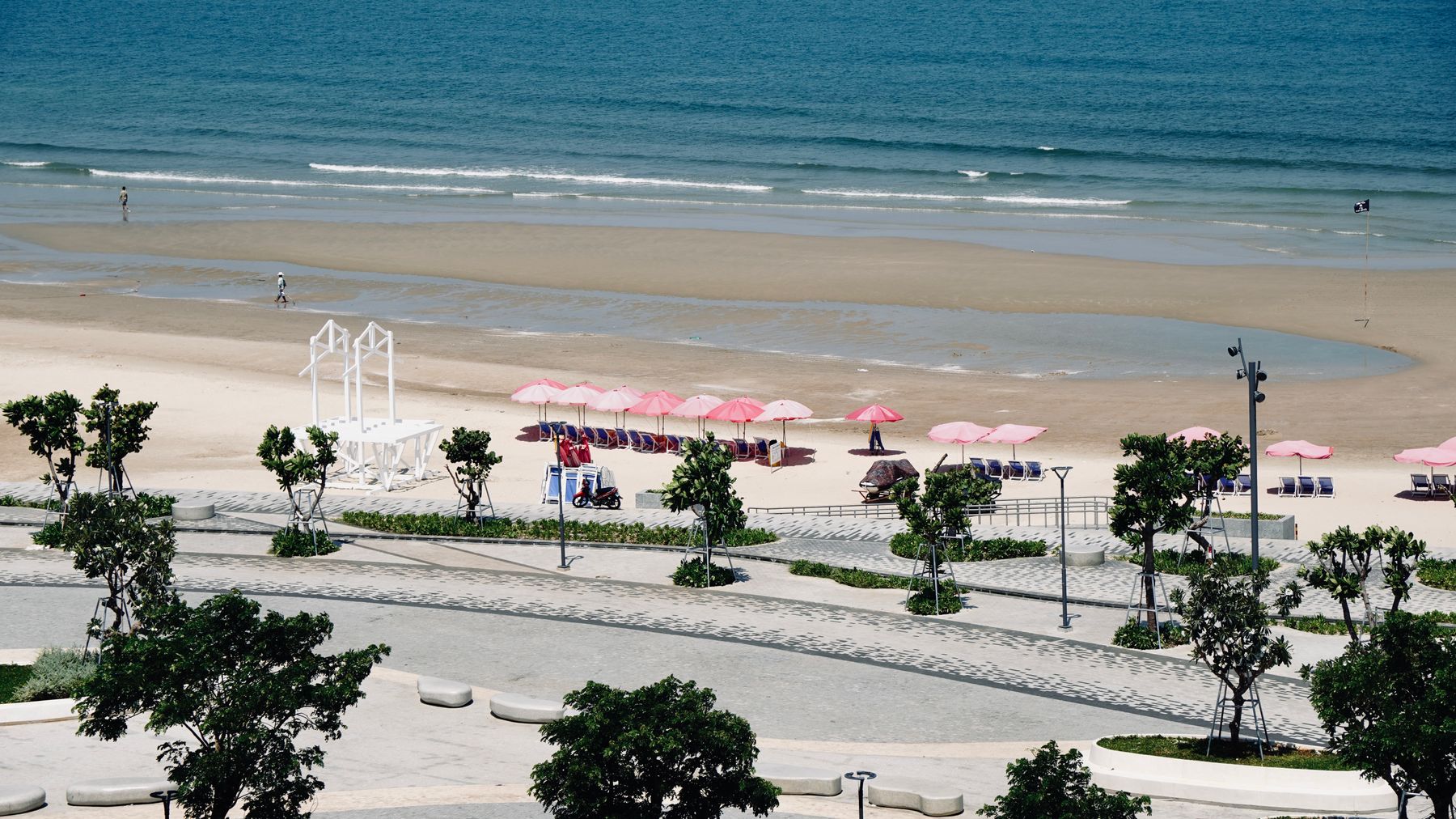
Photo by Tuan Vy on Pexels
River-View Spots: Han River and Bach Dang
The Han River waterfront, particularly along Bach Dang, is where you find Da Nang's more lived-in cafe culture. The street is lined with shops that have been here for years, drawing a mix of locals, students, and day-trippers who've wandered over from Hoi An.
Ca Phe Bich is a narrow, two-storey place about 300m from the Dragon Bridge. The ground floor is standing-room only in the mornings; the upstairs has river-facing windows. Their ca phe sua da is among the better traditional cups in the city — the condensed milk ratio is restrained, not cloying.
For "egg coffee" — the Hanoi-origin whipped egg yolk and coffee drink that has spread across the country — a few spots on Bach Dang now offer it. Quality varies. If you've had it done properly in Hanoi, you may find the Da Nang versions slightly thin on the custard layer. Still worth trying if this is your first exposure to it.
The Specialty Scene: Smaller Than You'd Expect, Better Than You'd Think
Da Nang's third-wave coffee presence is real but compact. The city sits close enough to the Central Highlands — Vietnam's main arabica-growing region, around 150 km to the southwest — that a handful of roasters have built direct-sourcing relationships with farms in Lam Dong and Kon Tum provinces.
43 Factory Coffee Roaster is the name that comes up most consistently among people who follow Vietnamese specialty coffee seriously. Located in Son Tra District, it's a working roastery with a cupping bar — you can watch the roasting operation while you drink. They focus on single-origin Vietnamese arabica, and the filter coffee here is genuinely worth the trip: clean, fruit-forward, nothing like the robusta you'll drink everywhere else. Prices run 70,000–110,000 VND for filter and pour-over options. It's about 4 km from the city center, easily reached by GrabBike.
Một Café near the An Thuong area (the expat/digital nomad neighborhood roughly 1 km back from My Khe) takes a quieter approach — no roastery theater, just well-sourced beans, careful extraction, and a space that's actually conducive to sitting for two hours with a laptop. Their Vietnamese drip done with washed arabica is a good bridge between the traditional local style and specialty coffee.

Photo by FOX ^.ᆽ.^= ∫ on Pexels
An Thuong: The Neighborhood Worth Knowing
If you're staying in Da Nang for more than two nights, An Thuong rewards slow exploration. The streets between Nguyen Van Thoai and Do Ba are packed with independent cafes, a few of which have been running for a decade or more. Prices here are more local — 30,000–50,000 VND for most drinks — and the atmosphere is less performative than the beachfront strip. Early morning, these places fill with people on their way to work. That's the best time to go.
Practical Notes
Most cafes in Da Nang open by 7:00 or 7:30 AM and close by 10:00 PM. Grab is the easiest way to reach spots outside the center — fares across the city rarely exceed 40,000 VND. If you're also visiting Hoi An (30 km south), note that it has its own distinct cafe scene worth a separate half-day; the two cities don't really overlap in character.
Last updated · May 29, 2026 · independently researched, never sponsored.