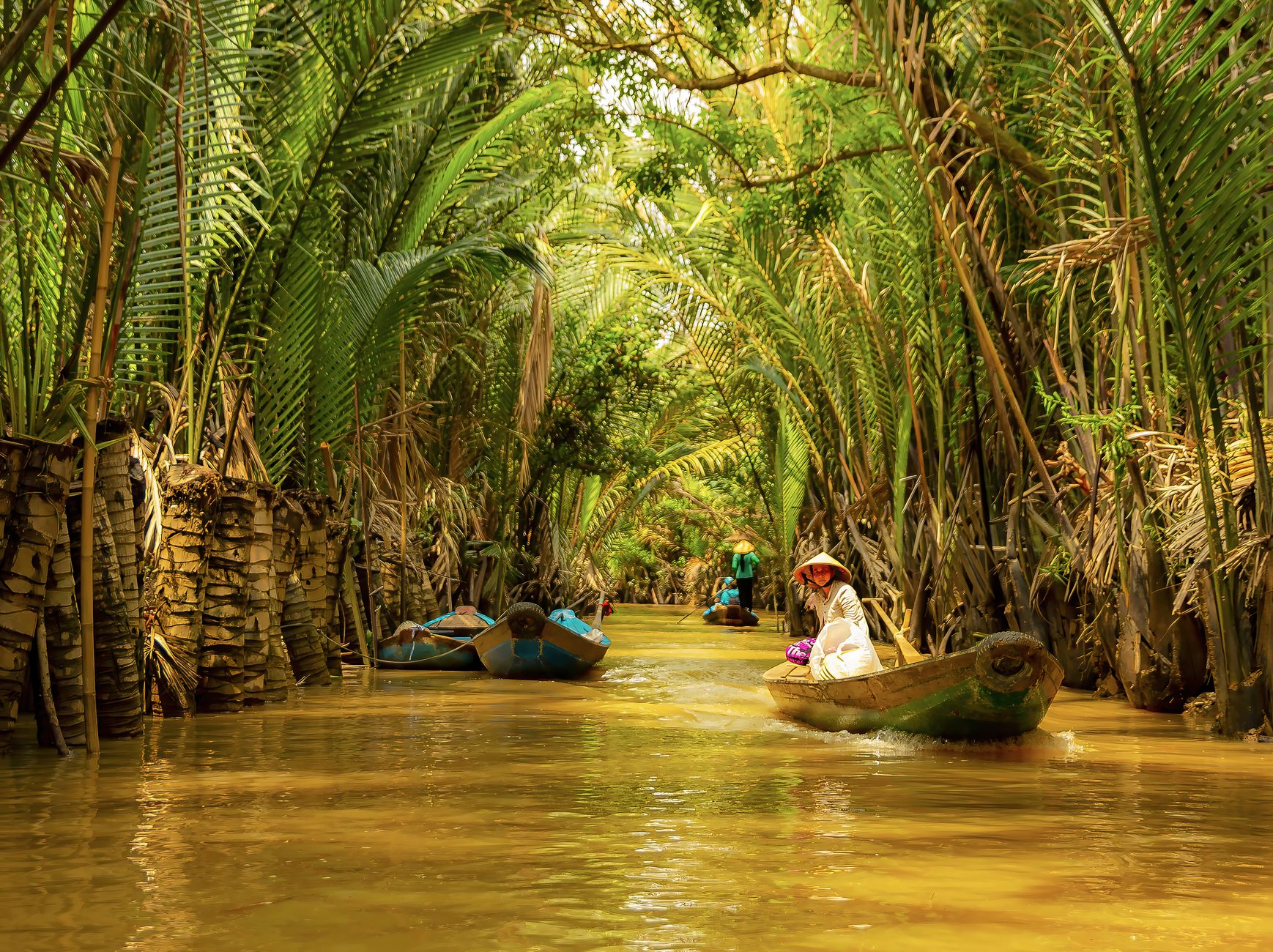
What Dam Thi Tuong actually is
Dam Thi Tuong is a roughly 700-hectare brackish-water lagoon spread across Phu Tan district in Ca Mau province, deep in the southern Mekong Delta (메콩 델타 / 湄公河三角洲 / メコンデルタ). It sits about 30 km southwest of Ca Mau city — close enough for a day trip, far enough that you won't see tour buses.
The lagoon has been a fishing ground for generations. Families here raise shrimp, crab, and fish in flooded pens that stretch across the water's surface, and the surrounding mangrove and melaleuca forests give the whole area a slightly wild, waterlogged feel that's different from the manicured rice paddies you see further north in the delta. During the French colonial period, the lagoon was already noted as a significant aquaculture site, and it hasn't changed all that much since. Ca Mau province (which historically absorbed parts of the former Bac Lieu province) has always been defined by water — canals, rivers, coastline, and lagoons like this one.
If you've spent time in Can Tho or the more polished parts of the Mekong Delta, Dam Thi Tuong feels like stepping back a decade. That's the appeal.
Why travelers go
Most people visiting Ca Mau are heading to Dat Mui — the southernmost tip of Vietnam (베트남 / 越南 / ベトナム) — and Dam Thi Tuong gets treated as a side trip. But it deserves more than a quick stop.
The lagoon is genuinely photogenic at dawn when fishing boats head out and the light sits low on the water. It's also one of the few places in the delta where you can get onto the water with a local family and actually see how shrimp farming works, rather than watching from a bridge. Birdwatchers come here too — the surrounding wetlands host herons, egrets, and cormorants, especially in the dry season when birds concentrate around the remaining water.
It's not an adventure destination. It's a slow, quiet place where the main activity is paying attention.
Best time to visit
The dry season — December through April — is the best window. Water levels are manageable, the weather is warm without being brutal, and the bird populations peak between January and March.
Avoid September and October if you can. That's peak rainy season in Ca Mau, and the lagoon area can flood significantly. Roads leading to the lagoon get muddy, boat trips get cancelled, and the mosquitoes are relentless.
Early morning visits (before 7 AM) are worth the effort regardless of season. The fishing activity is concentrated at dawn, and by mid-morning the heat flattens everything.
How to get there from Ca Mau city
From Ca Mau city center, Dam Thi Tuong is about 30 km southwest, roughly a 45-minute drive.
- Motorbike rental: The most flexible option. Rentals in Ca Mau city run 150,000–200,000 VND/day. The road (via Provincial Road 54) is paved and flat — easy riding even for less experienced drivers.
- Xe om (motorbike taxi): Around 100,000–150,000 VND one way. Negotiate before you go and arrange a return time, because finding a ride back from the lagoon isn't guaranteed.
- Taxi: A car from Ca Mau city costs roughly 300,000–400,000 VND one way. Mai Linh operates in the area. Again, arrange a return or have your driver wait.
- Organized tour: A few guesthouses in Ca Mau city offer half-day trips to Dam Thi Tuong combined with Dat Mui for around 500,000–800,000 VND per person, including boat ride.
If you're coming from Saigon, the fastest route is a flight to Ca Mau airport (about 1 hour, Vietnam Airlines or Bamboo Airways), then ground transport to the lagoon. Buses from Saigon to Ca Mau take 8–9 hours and cost around 200,000–250,000 VND.

Photo by Vietnam Tri Duong Photographer on Pexels
What to do at Dam Thi Tuong
Boat ride through the lagoon
This is the main event. Local operators run small wooden boats through the lagoon's channels and across the open water for 200,000–350,000 VND per boat (not per person — fits 2–4 people). A typical circuit takes 1–2 hours and passes through shrimp pens, fish traps, and floating houses. Ask your boatman to stop at one of the fishing families' platforms — they'll usually show you how the crab and shrimp traps work.
Watch the morning fish market
At the boat landing area near the lagoon, there's a small early-morning market where fishermen sell their overnight catch. It's informal — no stalls, just baskets on the ground — and it wraps up by 7 AM. Mud crabs, shrimp, snakehead fish, and whatever else came up in the nets.
Walk the melaleuca forest paths
On the lagoon's edges, dirt paths wind through melaleuca (tram) forest. These aren't marked trails — you'll need to ask a local to point you in the right direction. The walks are short (1–2 km) but atmospheric, especially with the sound of birds overhead.
Try hand-net fishing
Some boat operators let you try "tat mung" — a hand-net method used in the shallow parts of the lagoon. You won't catch much, but it's a good way to understand why the locals are so much better at it than you.
Cycle the surrounding villages
The flat roads around Phu Tan district are perfect for cycling. Bring your own bike or ask your accommodation in Ca Mau about rentals. The route from the lagoon north toward Cai Nuoc passes through shrimp farm country and small hamlets with almost no traffic.
Where to eat nearby
Dam Thi Tuong is known for two things: mud crab and shrimp. Several small restaurants near the boat landing cook whatever was caught that morning.
Order cua rang me (mud crab stir-fried with tamarind) — the crabs here are fat and the preparation is simple. A plate runs about 150,000–250,000 VND depending on size and season. The other local specialty is lau mam — a fermented-fish hotpot that's a Mekong Delta staple. It's pungent and rich, served with a pile of fresh herbs, water spinach, and rice noodles. Expect to pay around 120,000–180,000 VND for a pot that feeds two.
For something simpler, "hu tieu" — a southern-style noodle soup — is available at roadside stalls in the surrounding villages for 25,000–35,000 VND a bowl.
Where to stay
There's no accommodation at the lagoon itself. You'll base yourself in Ca Mau city.
- Budget: Nha nghi (guesthouses) around Ca Mau's center cost 200,000–350,000 VND/night. Basic but clean.
- Mid-range: Hotels like Muong Thanh Ca Mau or Anh Nguyet Hotel offer air-conditioned rooms with breakfast for 500,000–900,000 VND/night.
- Homestay: A few homestays have appeared closer to the lagoon in Phu Tan district. Ask at the Ca Mau tourism office on Ly Bon street — availability changes seasonally.
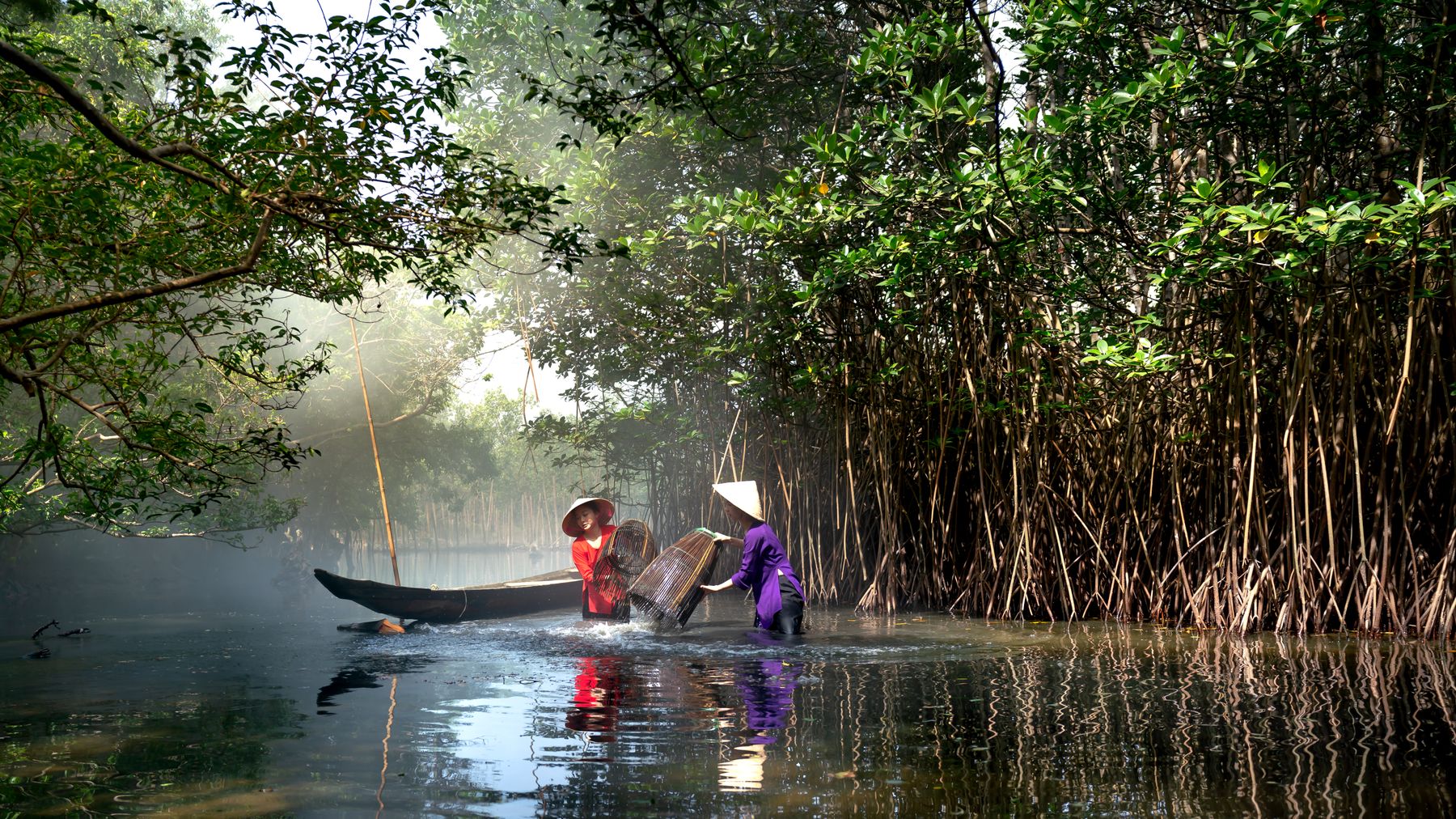
Photo by Quang Nguyen Vinh on Pexels
Practical tips locals would tell you
- Bring mosquito repellent. The lagoon is surrounded by standing water and mangroves. It's a mosquito paradise.
- Wear shoes that can get wet. You'll step in and out of boats, and the banks are muddy.
- Cash only. There are no ATMs near the lagoon. Withdraw in Ca Mau city before heading out.
- If you want the best boat price, go directly to the boat landing rather than booking through a hotel. The markup disappears.
- Sunscreen matters more than you think. The water reflects light and you're fully exposed on the boat.
Common mistakes to avoid
- Arriving after 9 AM. The fishing activity is over, the light is harsh, and you'll wonder what the fuss was about. Get there early.
- Skipping the boat ride. Some travelers drive to the lagoon, look at the water from the road, and leave. The whole point is getting on the water.
- Not arranging return transport. There are very few vehicles for hire at the lagoon. If you came by taxi or xe om, confirm your pickup time before your driver leaves.
Practical notes
Dam Thi Tuong works best as a half-day trip from Ca Mau city, ideally paired with a visit to Dat Mui if you're heading south anyway. It's not a place with a checklist of attractions — it's a place where you slow down, watch people work, and eat well. Budget half a day and about 500,000 VND total for transport and a boat ride.
Last updated · Sep 20, 2026 · independently researched, never sponsored.