Dai Nam sits about 30 km north of central Saigon, sprawling across roughly 450 hectares of landscaped grounds that include temples, a water park, a zoo, an amusement park, and a replica of Vietnamese historical landmarks. It's a strange, ambitious place — sometimes called "Vietnamese Disneyland" by locals, though that comparison undersells how odd and genuinely interesting the temple sections are.
What it is
The full name is Dai Nam Van Hien, which translates loosely to "Great Southern Civilization." It was built by Huynh Uy Dung, a Binh Duong-based businessman, starting in the late 1990s and opening in phases through the 2000s. The complex was originally in Binh Duong province, but following recent administrative changes it now falls within Ho Chi Minh City (호치민시 / 胡志明市 / ホーチミン市)'s expanded boundaries.
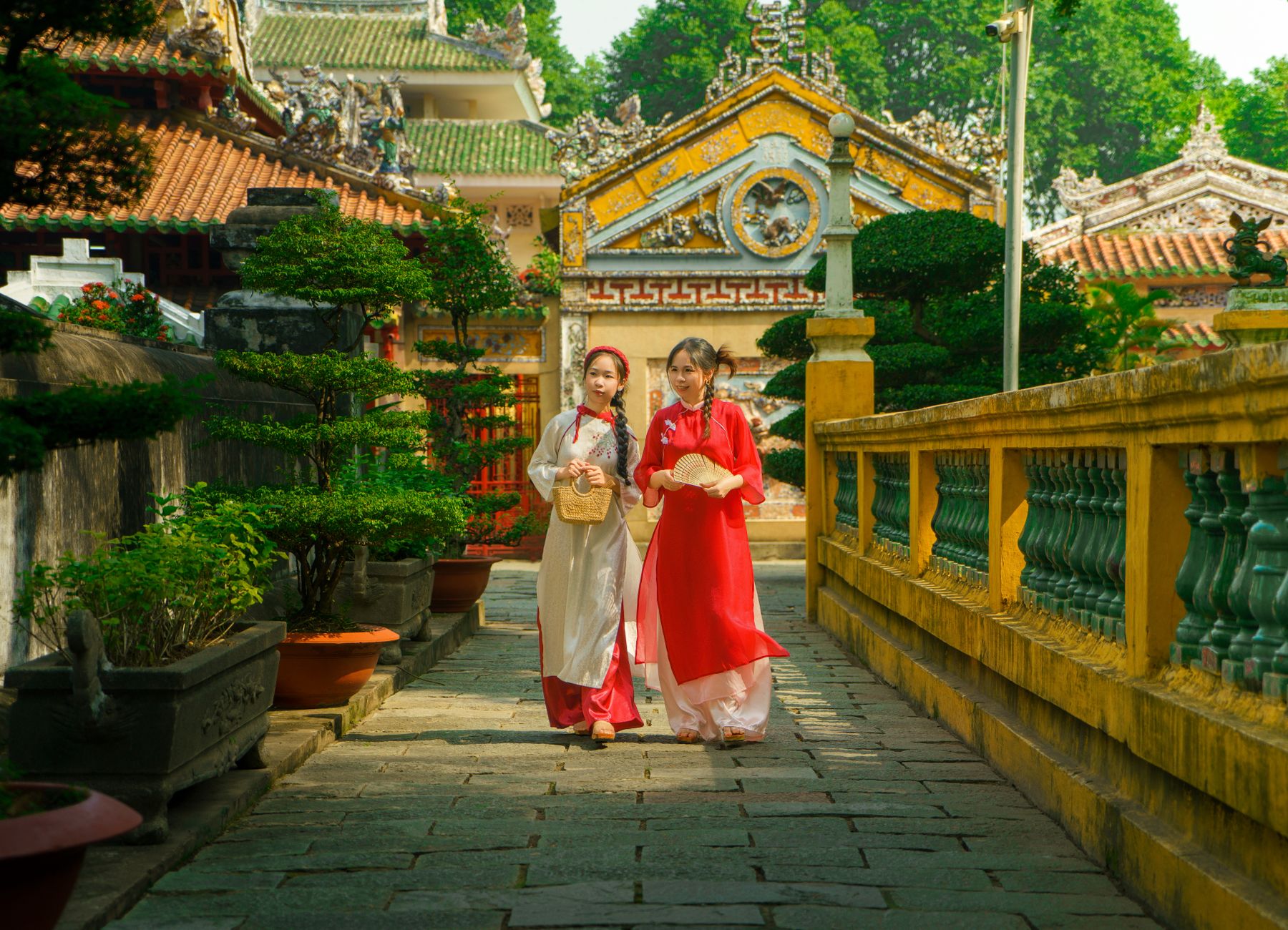
The centerpiece is the temple area — Den Tho Dai Nam — a massive complex with ornate halls dedicated to Vietnamese historical figures, Buddhist deities, and Confucian principles. The architecture is heavy on dragon motifs, red lacquer, and gold leaf. It's not ancient, but it's built with genuine materials and serious craftsmanship. Think of it as a modern monument to Vietnamese cultural identity, built at an industrial scale.
Surrounding the temples, you'll find a zoo with around 400 animals, a water park (seasonal), an amusement park with rides, and a large artificial lake. Admission to the temple grounds is free. The other sections have separate tickets.
Why travelers go
Most foreign visitors don't know about Dai Nam, which means you'll be surrounded almost entirely by Vietnamese families. That alone makes it interesting. On weekends and holidays, the place is packed — kids running between rides, grandparents lighting incense at the temple altars, teenagers taking selfies with the massive golden Buddha statues.
The temple complex itself is genuinely impressive in scale. The main hall stretches something like 500 meters, with interlocking courtyards and dozens of altars. If you're interested in how modern Vietnamese people engage with traditional religious and cultural symbols, this is a more honest window than many heritage-tourism sites.
And if you're traveling with kids, the combination of zoo, water park, and rides makes it a solid full-day outing.
Best time to visit
Dai Nam is an outdoor complex, so the dry season — November through April — is your best bet. Weekdays are dramatically less crowded than weekends. If you visit on a Saturday or Sunday, arrive before 9 AM to get parking and beat the worst of the crowds.
Avoid Tet and major public holidays unless you want to experience the place at maximum chaos. The temple area gets especially busy during Tet when families come to pray for good fortune in the new year.
The water park typically operates from around March to September. If that's a priority, aim for April or May before the heaviest rains.
How to get there from Saigon
Dai Nam is in Thu Dau Mot, reachable via the My Phuoc-Tan Van expressway.
- Motorbike or car: About 45-60 minutes from District 1, depending on traffic. Take the My Phuoc-Tan Van expressway north. Grab or taxi will run 250,000-350,000 VND one way.
- Bus: Bus route 616 runs from Saigon (사이공 / 西贡 / サイゴン)'s Mien Dong bus station toward Thu Dau Mot. From there you'll need a short xe om (motorbike taxi) ride. Total cost under 50,000 VND, but expect 90 minutes or more.
- Organized tour: Some budget tour operators in the Pham Ngu Lao backpacker area offer day trips for around 400,000-600,000 VND including transport.
If you're riding a motorbike, the route is straightforward and well-signed once you're on the expressway.

Photo by Tiểu Bảo Trương on Pexels
What to do
Walk the temple complex
This is the main event. Give yourself at least 90 minutes to walk through the temple halls. The architecture mixes Buddhist, Confucian, and folk-religion elements. Look for the massive golden Buddha in the main hall and the series of smaller altars dedicated to historical Vietnamese figures. Photography is allowed in most areas — just don't use flash inside the prayer halls.
Visit the zoo
The zoo houses tigers, elephants, hippos, and a decent collection of Southeast Asian wildlife. It's not world-class by international standards, but it's been gradually improving enclosure conditions. Ticket: around 100,000 VND for adults. The white tiger enclosure and the elephant area draw the biggest crowds.
Ride the boats on the lake
The artificial lake at the center of the complex has swan-shaped pedal boats and small motorboats. It's kitschy, it's fun, and it gives you a different perspective on the temple skyline. About 50,000-80,000 VND per boat.
Hit the water park (seasonal)
If it's open during your visit, the water park has wave pools, slides, and a lazy river. Entry is around 150,000-200,000 VND. Bring your own towel — rentals are overpriced.
Watch the fountain show
On weekends and holidays, there's a musical fountain show near the lake in the late afternoon. It's free and surprisingly well-produced.
Where to eat nearby
Inside Dai Nam, food courts serve standard Vietnamese fare — rice plates, noodle soups, grilled meats — at reasonable prices (40,000-70,000 VND per dish). The quality is canteen-level: fine, not memorable.
For something better, head into Thu Dau Mot town after your visit. Look for "banh beo" — small steamed rice cakes topped with dried shrimp and scallion oil, a specialty of the area. "Com tam" (broken rice) shops are everywhere and reliably good. There's a cluster of local restaurants along Yersin Street near the old market area where a full meal runs 50,000-80,000 VND.
If you're heading back toward Saigon, the stretch of Highway 13 near Lai Thieu has roadside fruit stalls selling rambutan, mangosteen, and durian — Binh Duong's traditional orchard belt.
Where to stay
Most visitors treat Dai Nam as a day trip from Saigon, and that's the practical move. If you want to stay nearby:
- Budget: Guesthouses in Thu Dau Mot run 250,000-400,000 VND per night.
- Mid-range: A few 3-star hotels near the expressway exit charge 500,000-800,000 VND.
- Back in Saigon: The Pham Ngu Lao area or District 1 hotels give you more dining and nightlife options after a day out.

Photo by Vy Van Bui on Pexels
Practical tips
- Bring sun protection. The temple complex is mostly open-air with limited shade between buildings. A hat and water bottle are essential.
- Wear shoes you can slip on and off easily — you'll need to remove them at several temple entrances.
- The complex is large enough that walking the whole thing takes 4-5 hours. Rent an electric cart (available near the main entrance) if you're visiting with elderly travelers or small children.
- ATMs are available at the entrance but sometimes run out of cash on busy weekends. Bring enough VND in advance.
- Vietnamese coffee from the stalls inside the complex is decent and costs about 20,000 VND — cheaper than most Saigon cafes.
Common mistakes
- Arriving after noon on weekends. Parking becomes a nightmare and the temple halls get uncomfortably packed.
- Skipping the temples for the rides. The amusement park is forgettable by international standards. The temple complex is the real draw.
- Not checking the water park schedule. It closes for maintenance periodically and isn't open year-round. Check before you go.
- Wearing shorts or sleeveless tops to the temples. You'll be asked to cover up at some halls. A light long-sleeve shirt in your bag solves this.
Practical notes
Dai Nam works best as an early-start day trip from Saigon. Combine it with a stop at Lai Thieu's fruit orchards on the way back for a full day outside the city. It won't change your life, but it's a genuine slice of how Vietnamese families spend their weekends — and the temple architecture is worth the ride.
Last updated · May 26, 2026 · independently researched, never sponsored.