Chua Ba Thien Hau in the Thu Dau Mot district — formerly part of Binh Duong province, now absorbed into the expanded Ho Chi Minh City — is one of the oldest and most active Chinese-Vietnamese temples in southern Vietnam (베트남 / 越南 / ベトナム). If you're already in Saigon and want a half-day trip that feels genuinely different from the city center, this is a solid pick.
What It Is and Why It Matters
Chua Ba Thien Hau is a temple dedicated to Thien Hau (Mazu), the sea goddess widely worshipped by ethnic Chinese communities across Southeast Asia. The temple was built in the mid-19th century by Cantonese and Fujian immigrants who settled in the region to trade ceramics and textiles. It shares its name and deity with the more famous Thien Hau Pagoda in Saigon (사이공 / 西贡 / サイゴン)'s Chinatown (Cho Lon), but the two are distinct sites with different histories.
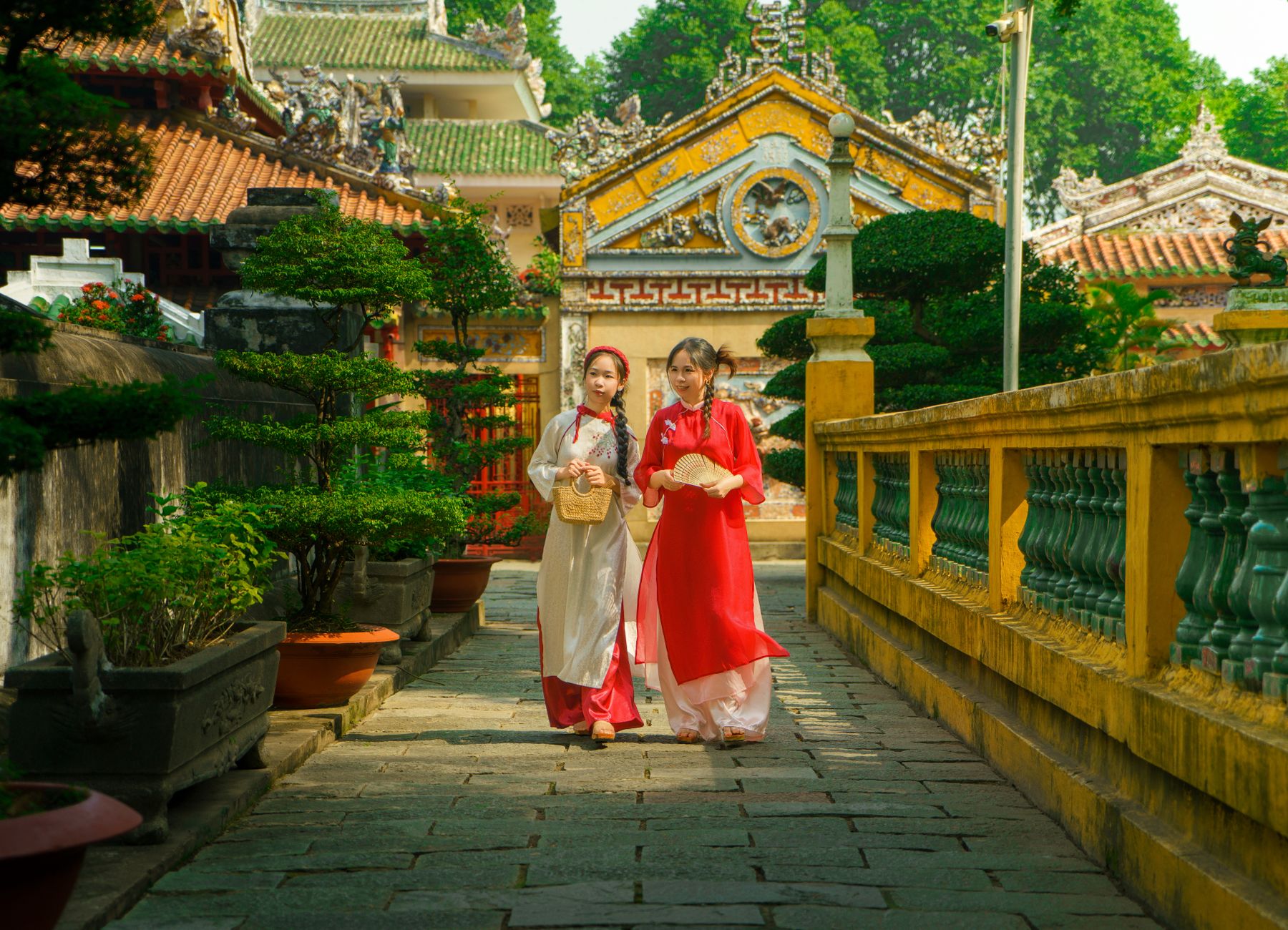
What makes the Binh Duong version worth the trip is its relative quiet. Where the Cho Lon temple gets busloads of tourists daily, this one draws mostly local worshippers and the occasional photographer chasing coil-incense shots without the crowd. The architecture is classic southern Chinese — carved stone columns, ceramic roof figures depicting mythological scenes, and heavy use of red and gold lacquer. The main hall houses three altars, with Thien Hau at the center flanked by Quan Cong (a deified general) and Ong Bon (a guardian deity).
Why Travelers Go
Most visitors come for a combination of reasons: the photogenic interior with its hanging spiral incense coils, the chance to see a functioning community temple rather than a tourist attraction, and the excuse to explore Thu Dau Mot — a town with its own food scene and colonial-era buildings that most Saigon visitors never see. The temple is also a window into the Chinese-Vietnamese cultural layer of the south, which shaped everything from regional cuisine to business networks.
Best Time to Visit
The temple is open year-round, but timing matters. The busiest and most atmospheric periods are during Tet (late January to mid-February) and the Thien Hau festival on the 23rd day of the third lunar month (usually March or April). During these times, the temple is packed with offerings, lion dances, and incense smoke thick enough to taste. If you want photos without crowds, weekday mornings between 8:00 and 10:00 AM any time from November to March — the cooler dry season — are ideal. Avoid weekend afternoons, especially around the 1st and 15th of the lunar month, when locals come to pray in numbers.
How to Get There from Saigon
Thu Dau Mot sits roughly 30 km north of central Saigon. You have a few options:
- Grab/taxi: The most convenient. A Grab car from District 1 costs around 150,000–200,000 VND one way and takes 45–70 minutes depending on traffic. Rush hour (7:00–9:00 AM, 5:00–7:00 PM) can push this past 90 minutes — avoid those windows.
- Public bus: Bus route 616 runs from Ben Thanh Market area toward Thu Dau Mot. The fare is about 7,000–10,000 VND, but expect the ride to take 90 minutes or more. You'll need to walk or grab a xe om (motorbike taxi) for the last stretch to the temple.
- Motorbike: If you're comfortable on two wheels, take Highway 13 (Quoc Lo 13) north. It's a straightforward ride, mostly flat, and gives you the flexibility to stop at roadside "com tam" stalls along the way.
The temple address is on Nguyen Du Street in Thu Dau Mot. Any local will know it if you say "Chua Ba."

Photo by Vy Van Bui on Pexels
What to Do
Walk the Main Hall Slowly
Don't rush through. The carved stone panels near the entrance depict scenes from Chinese folklore and take real craftsmanship to appreciate. Look up — the ceiling is hung with dozens of spiral incense coils, each one representing a prayer that burns for days. The light filtering through the smoke is the reason photographers come here.
Buy and Light an Incense Coil
You can purchase a personal incense coil at the temple for around 50,000–100,000 VND. A caretaker will attach a red tag with your name and wish, then hang it from the ceiling. It's a genuine local practice, not a tourist gimmick.
Check the Side Altars
The left and right wings house secondary altars and ancestral tablets. These are easy to miss but give you a sense of how the temple functions as a community center, not just a place of worship. You'll often see older Chinese-Vietnamese residents chatting, drinking tea, and playing chess in the courtyard.
Explore Thu Dau Mot's Colonial Quarter
Within walking distance of the temple, you'll find a handful of French-era administrative buildings and shophouses along the main streets. None are individually famous, but the neighborhood has an unhurried small-town feel that contrasts sharply with Saigon.
Visit the Binh Duong Ceramics Workshops
The region has been producing ceramics for generations. Several small workshops and showrooms sit within a few kilometers of the temple. If you're on a motorbike, it's an easy add-on. Look for Lai Thieu village, about 10 km south, which is the traditional center of the craft.
Where to Eat Nearby
Thu Dau Mot isn't a food destination the way Saigon or Hoi An are, but it has its own specialties. Look for "banh beo" — small steamed rice cakes topped with dried shrimp, scallion oil, and crispy pork skin, served in tiny saucers. The best versions are at no-name stalls near the central market. A full set of 10–15 saucers costs around 30,000–50,000 VND.
For something more substantial, "hu tieu" is the go-to noodle soup in this part of the south — pork-based broth, rice noodles, sliced pork, and shrimp. There are several decent bowls within a few blocks of the temple for 35,000–45,000 VND. And if you need caffeine, any local "ca phe sua da" spot will do. The south likes it sweet.
Where to Stay
Most travelers visit Chua Ba Thien Hau as a day trip from Saigon, which makes the most sense. If you do want to overnight in Thu Dau Mot — maybe to catch the temple at dawn — budget hotels along the main road run 250,000–400,000 VND per night. Don't expect much beyond a clean room and air conditioning. For anything more polished, you're better off staying in Saigon and making the drive.

Photo by William Chen on Pexels
Practical Tips Locals Would Tell You
- Dress modestly. Shoulders and knees covered. This is an active place of worship, and the caretakers will notice.
- Remove your shoes before stepping onto raised altar platforms. Follow what the locals do.
- Don't photograph people praying without asking. General interior shots are fine, but pointing a lens at someone mid-prayer is considered rude.
- Bring cash. There's nowhere to tap a card at the temple or most nearby food stalls.
- Combine it with something else. On its own, the temple is a 30–45 minute visit. Pair it with the ceramics village, lunch in Thu Dau Mot, or a wander through the old streets to justify the trip.
Common Mistakes to Avoid
The biggest one: confusing this temple with the Thien Hau Pagoda in Cho Lon (District 5, Saigon). They honor the same deity, but they're 30 km apart. Double-check your Grab destination before you ride. Also, don't show up at noon — the temple is open but the caretakers often rest, the incense burns low, and the light is flat. Morning is better in every way.
Practical Notes
Chua Ba Thien Hau is free to enter. Opening hours are roughly 6:00 AM to 6:00 PM daily, though the gates may close earlier on quiet weekdays. Budget a half day including travel from Saigon, and you'll have time to see the temple, eat well, and still be back in the city by mid-afternoon.
Last updated · May 29, 2026 · independently researched, never sponsored.