What it is
Den Da Hoa sits on the banks of the Red River in Binh Minh commune, Khoai Chau district, Hung Yen province — about 60 km southeast of Hanoi. The temple is dedicated to Chu Dong Tu, one of Vietnam (베트남 / 越南 / ベトナム)'s Four Immortals ("Tu Bat Tu"), and his wife Tien Dung, a princess who defied court conventions to marry a poor fisherman. The love story is one of the most retold in Vietnamese folklore, and this temple marks the spot where, according to legend, the couple first met.
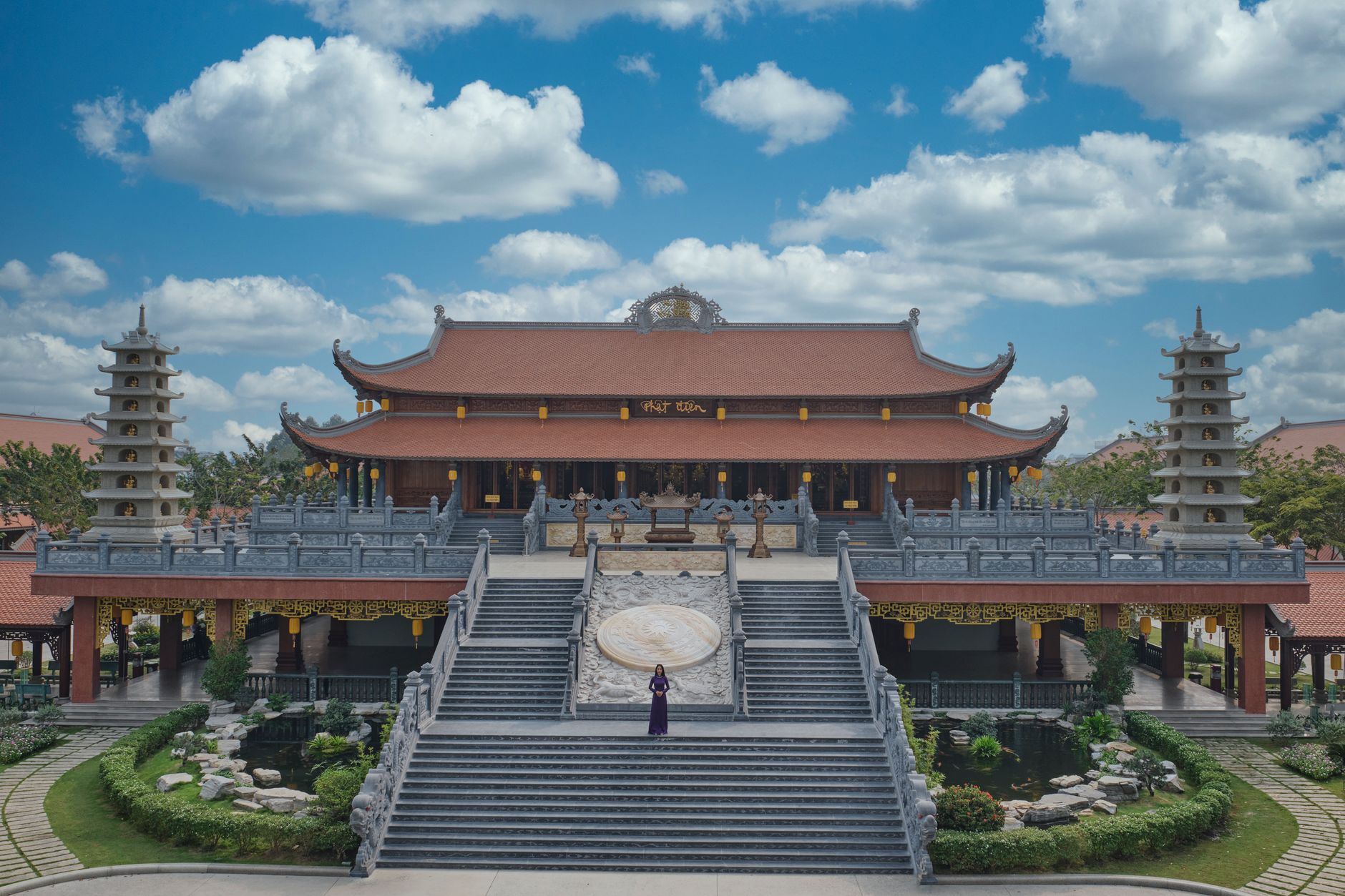
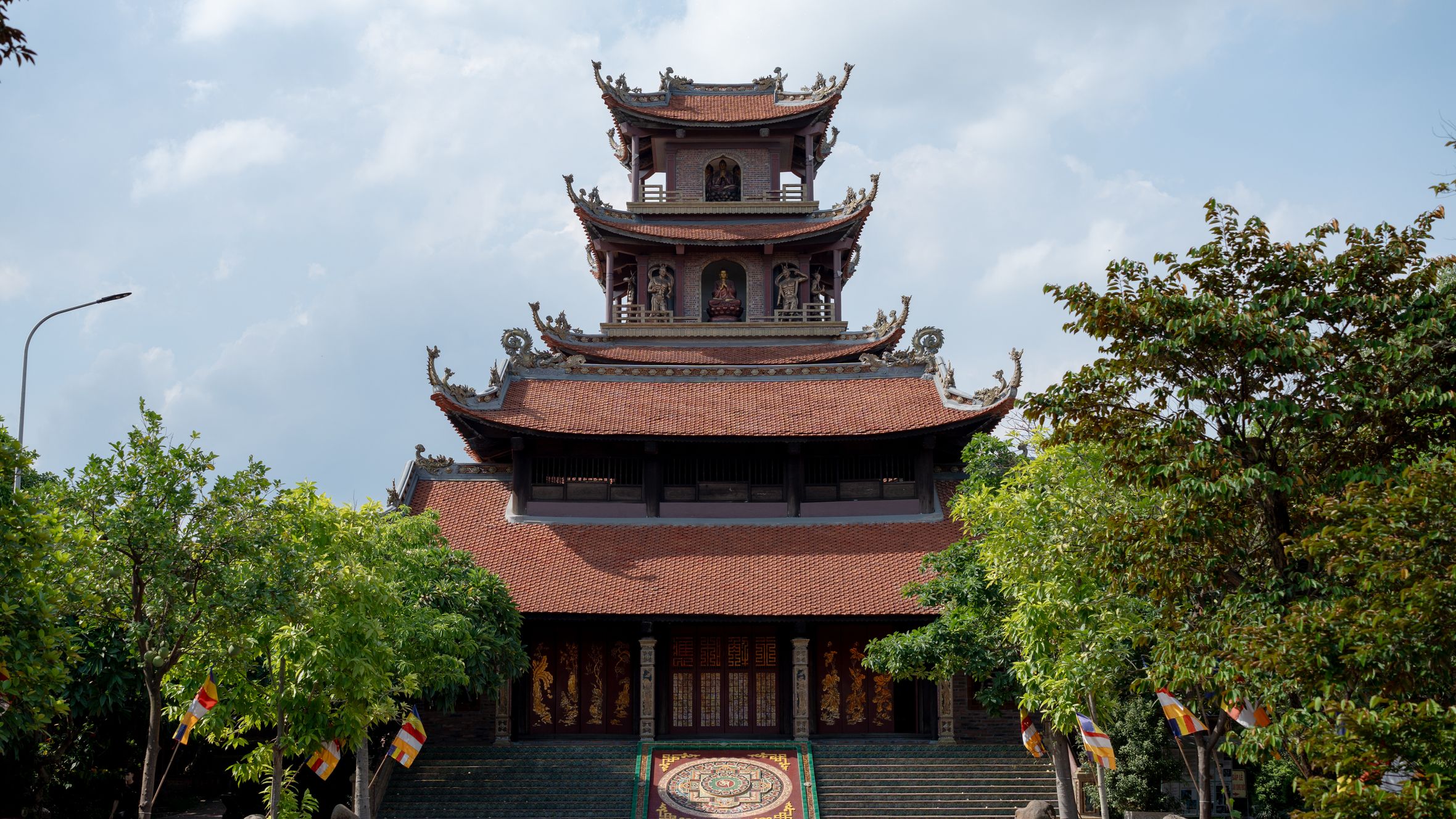
The current complex dates from the Nguyen dynasty period, though worship here is far older. The architecture follows a classic northern Vietnamese communal style: curved roofs, carved wooden beams darkened by incense smoke, and a courtyard that floods with pilgrims during festival season. It was recognized as a national historical monument in 1962.
Why travelers go
Den Da Hoa isn't a tourist attraction in the usual sense — you won't find tour buses or souvenir shops. People come here for three reasons: to see a well-preserved example of Red River Delta temple architecture, to witness one of the north's liveliest spring festivals, or simply because they're exploring Hung Yen province and want something more meaningful than another rice paddy photo.
The temple complex is compact but detailed. The carvings on the main hall — dragons, phoenixes, lotus motifs — are some of the finest woodwork in the region. If you've visited the [Temple of Literature](/posts/temple-of-literature-hanoi (하노이 / 河内 / ハノイ)-guide) in Hanoi and wondered what similar craftsmanship looks like outside the capital, this is a good answer.
Best time to visit
The Den Da Hoa festival runs from the 10th to the 16th of the third lunar month (usually April). During this period the temple grounds come alive with processions, traditional games, folk singing in the "quan ho" style, and boat races on the river. The 14th day is the main ceremony.
Outside festival time, October through March offers cool, dry weather and empty grounds — ideal if you prefer quiet contemplation over crowds. Avoid July and August: the heat is brutal and afternoon storms can make the riverside road muddy.
How to get there from Hanoi
By motorbike or car: Take National Highway 5 east toward Hai Duong, then turn south on Highway 39 toward Hung Yen city. From there, follow provincial road 196 north to Khoai Chau district. Total distance: roughly 60 km, about 1.5 hours by motorbike depending on traffic through the industrial zones east of Hanoi.
By bus: Catch a bus from Hanoi's Giap Bat station to Hung Yen city (40,000-60,000 VND, 1.5 hours). From Hung Yen bus station, hire a "xe om" (motorbike taxi) to the temple — about 15 km north, costing 50,000-80,000 VND. Grab bikes are unreliable this far out.
By private car: A day-trip hire from Hanoi runs 1,200,000-1,500,000 VND round-trip with wait time. Worth it if you want to combine with other Hung Yen stops.

Photo by Quang Nguyen Vinh on Pexels
What to do
Walk the main temple complex
The layout follows a progression: the gate house ("ngu mon"), the courtyard, the worship hall, and the inner sanctum. Take your time in the main hall where the Chu Dong Tu and Tien Dung statues sit behind layers of silk draping. Notice the ceiling — the painted panels depict scenes from the legend.
Explore the riverside
The temple backs onto the Red River embankment. Walk up the dyke for a wide view of the floodplain — banana groves, fish ponds, and the occasional sand barge. In late afternoon, local fishermen set nets along the shallows. It's a ten-minute walk and gives context to why this spot was sacred: the river was everything.
Visit the festival (if timing works)
The spring festival includes a reenactment of Chu Dong Tu and Tien Dung's meeting, performed on wooden boats. There's also competitive rice cooking, chess played with human pieces, and enough sticky rice and roast pork to feed a village — because it does.
Check the secondary shrines
Two smaller temples sit within 500 meters: one dedicated to Chu Dong Tu's father, another to a local tutelary spirit. They're modest but peaceful, often completely empty.
Photograph the carved details
Bring a zoom lens or just get close. The door panels and column brackets feature some of the most intricate dragon carvings in the Red River Delta. Morning light (before 9 AM) hits the main hall facade directly.
Where to eat nearby
Hung Yen province is known for "nhan long" (longan fruit) and freshwater fish. In Khoai Chau town, about 3 km from the temple, small rice shops serve "bun ca" — rice noodles with fried fish in turmeric broth, a northern specialty. Expect 35,000-50,000 VND per bowl.
If you're heading back through Hung Yen city, look for "banh cuon" — the Hung Yen version uses slightly thicker sheets than Hanoi's and comes with a pork-and-mushroom filling. Shops along Trung Trac street are reliable.
Where to stay
Most travelers visit Den Da Hoa as a day trip from Hanoi. If you want to stay overnight:
- Budget: Nha nghi (guesthouses) in Khoai Chau town run 200,000-350,000 VND/night. Basic but clean. Don't expect English.
- Mid-range: Hung Yen city (15 km south) has a few proper hotels in the 400,000-700,000 VND range with air-con and hot water.
- Alternative: Some travelers base in Hanoi and combine Den Da Hoa with Bat Trang pottery village (on the return route) for a full day out.

Photo by Valeria Drozdova on Pexels
Practical tips locals would tell you
- Remove shoes before entering any worship hall. This isn't optional.
- Bring incense if you want to pay respects — bundles are sold at the entrance for 10,000 VND. Light them outside, not inside the wooden halls.
- Dress modestly: covered shoulders and knees. Enforcement is social, not official, but you'll get looks.
- The temple closes around 5 PM. Arrive by 3 PM if you want unhurried time.
- During festival week, the road from Khoai Chau gets choked with motorbikes. Park early and walk the last 500 meters.
Common mistakes to avoid
- Coming without cash. There are no ATMs near the temple. Bring small bills for xe om, incense, and food.
- Expecting English signage. There is none. Download Vietnamese phrases or bring a translation app.
- Rushing through. The complex is small but rewards slow attention. Budget at least 60-90 minutes.
- Confusing this with Den Dai Loi or other Chu Dong Tu temples. There are multiple temples in the Chu Dong Tu complex across Hung Yen. Den Da Hoa is specifically in Binh Minh commune, Khoai Chau — confirm with your driver.
Practical notes
Den Da Hoa pairs well with a broader Hung Yen day trip — the province is flat, quiet, and barely touristed. Combine it with a longan orchard visit (harvest season: July-August) or the ancient Pho Hien trading quarter in Hung Yen city. It's the kind of place where the value isn't in spectacle but in texture: woodsmoke, river light, and a legend that still means something to the people who live here.
Last updated · May 26, 2026 · independently researched, never sponsored.