Den Cuong sits on the side of Cuong Mountain in Cua Lo town, Nghe An province, facing the East Sea. It's one of the oldest and most significant temples in north-central Vietnam (베트남 / 越南 / ベトナム), and for most foreign travelers, it's completely off the radar — which is exactly why it's worth the detour.
What it is and why it matters
Den Cuong — sometimes written as Cuong Temple — is dedicated to Thuc An Duong Vuong, the king who founded the Au Lac kingdom around the 3rd century BC. The temple commemorates the legend of his final stand: pursued by enemies and betrayed, he's said to have ridden his horse to this clifftop and disappeared into the sea. Whether you buy the mythology or not, the site has been a place of worship for centuries, and the current structure dates to restorations in the 19th century with further renovations since.
The temple complex spreads across several terraced levels up the hillside, with old banyan trees, incense-thick halls, and views down to the coastline. It's a working religious site, not a museum — locals come here to pray, especially around festival season.
Why travelers go
Den Cuong appeals to a specific kind of traveler: someone interested in Vietnamese folk religion, historical architecture, or just getting out of the standard Hanoi–Hue–Hoi An loop. The temple grounds are quiet on weekdays, the coastal setting is genuinely unusual for a temple of this age, and the surrounding area gives you a window into life in Nghe An that you won't get from a resort town.
If you're passing through on the north-south route — say, between Hanoi (하노이 / 河内 / ハノイ) and Phong Nha — it's a worthwhile half-day stop.
Best time to visit
The Den Cuong festival falls in the second lunar month, usually late February or March. During the festival, the temple fills with pilgrims, processions, and traditional performances. It's the most atmospheric time to visit, but also the most crowded.
For a quieter experience, come between September and November. The weather in Nghe An cools slightly after the summer heat, rain tapers off by mid-October, and you'll likely have the temple grounds mostly to yourself on a weekday morning. Avoid June through August — it's brutally hot in this part of central Vietnam, regularly hitting 38-40°C.
How to get there
The nearest major hub is Vinh, the capital of Nghe An, about 16 km south of Den Cuong.
From Hanoi to Vinh: The most practical option is the train. The Reunification Express runs daily; Hanoi to Vinh takes roughly 5.5–6.5 hours depending on the service, with tickets around 200,000–450,000 VND for a seat or soft berth. Buses from Nuoc Ngam station run frequently and cost 180,000–250,000 VND (about 6 hours). Flights from Hanoi to Vinh take under an hour and start around 700,000 VND if booked early.
From Vinh to Den Cuong: Grab a taxi or use the Grab app — the ride to Cua Lo takes about 25 minutes and costs 150,000–200,000 VND. Local buses run the Vinh–Cua Lo route as well for around 15,000–20,000 VND, but schedules are irregular. If you've rented a motorbike, follow QL46 east toward the coast; the temple is signposted as you approach Cua Lo.

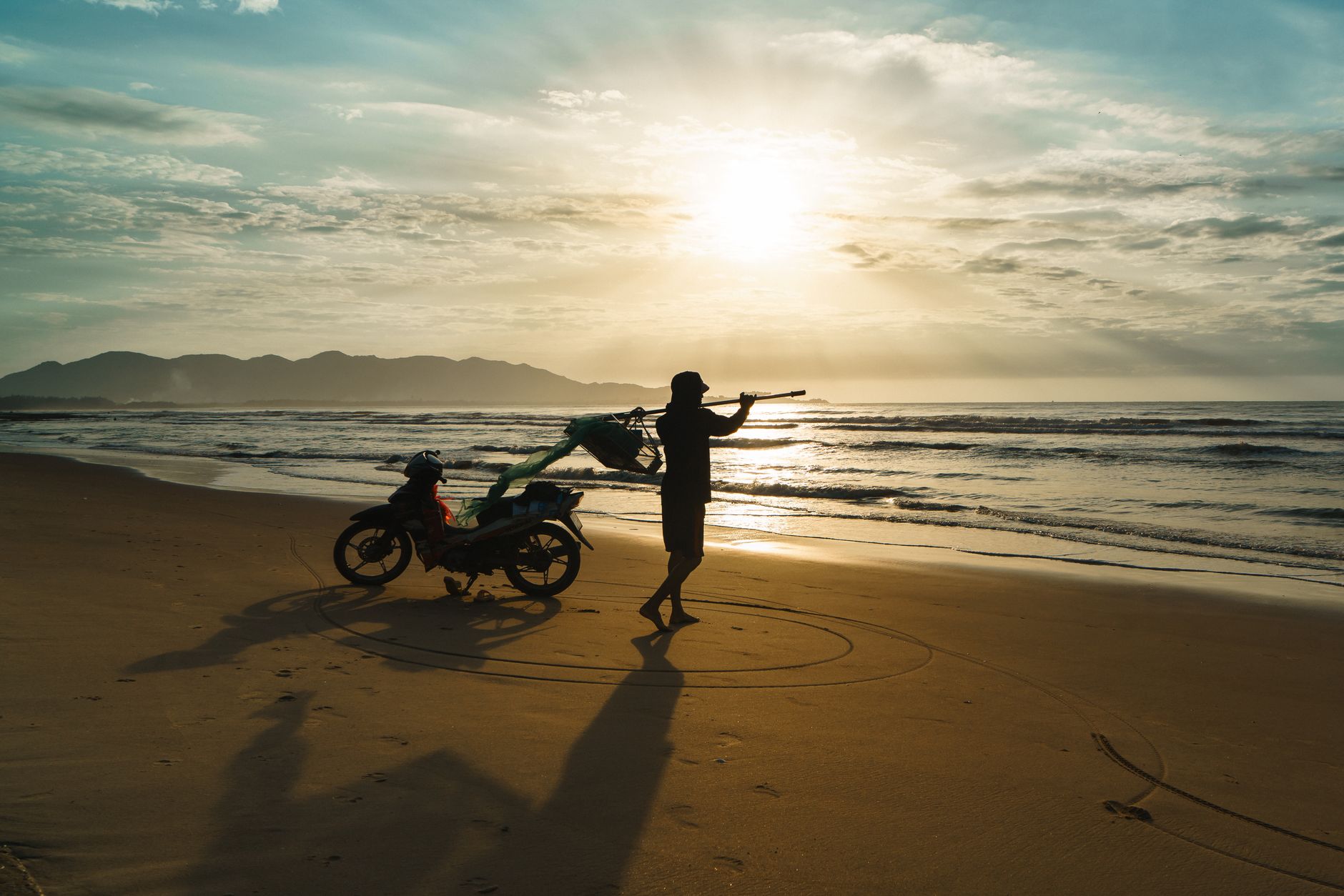
Photo by SICULA Đỗ on Pexels
What to do at Den Cuong
Walk the full temple complex
Don't just peek into the main hall and leave. The complex has three main sections — the lower gate, the middle courtyard, and the upper sanctum — connected by stone steps. The upper level houses the main altar to An Duong Vuong and offers a clear view of the sea. Budget 45 minutes to an hour to walk everything without rushing.
Visit during early morning prayers
Arrive before 7:30 AM and you'll catch local worshippers lighting incense and making offerings. The smell of sandalwood, the low murmur of prayer, and the mist coming off the hillside make this the best hour to be there. Photography is fine in the courtyards, but ask before shooting inside the altar halls.
Explore Cua Lo beach afterward
Cua Lo is a popular domestic beach town, and the stretch of sand is just a few minutes from the temple. It's not the prettiest beach in Vietnam — think local families, seafood shacks, and karaoke bars — but it's real and unpretentious. Good for a swim after a temple visit, especially in the shoulder months.
Check out the banyan trees and stone carvings
Several of the banyans on the grounds are reportedly hundreds of years old, their root systems crawling over the stonework. The carved dragons and phoenixes on the gate pillars are typical of 19th-century Nguyen dynasty restoration style — worth a close look if you're interested in Vietnamese temple architecture.
Attend the festival (if timing works)
The Den Cuong festival includes a ceremonial procession from the beach up to the temple, traditional music, and offerings. You may catch performances of folk songs from the Nghe Tinh tradition. It's one of the larger temple festivals in the region and gives genuine insight into how ancestor worship functions in daily Vietnamese life.
Where to eat nearby
Nghe An is famous for "luon" — freshwater eel, prepared half a dozen ways. The local specialty is "chao luon" (eel porridge) and "luon xao lan" (eel stir-fried with lemongrass and chili). Head to the strip of eel restaurants along the road between Vinh and Cua Lo — Quan Luon Ba Gai is a reliable local pick. A full plate of eel with rice and sides runs about 60,000–90,000 VND.
For something simpler, Cua Lo's beachfront has rows of seafood spots where you pick your fish from the tank. Grilled squid and steamed clams are the standards. Expect to pay 150,000–300,000 VND for a seafood spread for two, plus a few rounds of "bia hoi" if you're in the mood.
Where to stay
Cua Lo has plenty of guesthouses and mid-range hotels aimed at domestic tourists. Budget rooms go for 250,000–400,000 VND per night; newer hotels along the beachfront charge 500,000–900,000 VND. Don't expect boutique anything — this is a Vietnamese family-holiday town, not a backpacker hub. Vinh has a wider range, including a couple of decent business hotels in the 600,000–1,200,000 VND range if you'd rather base yourself there.

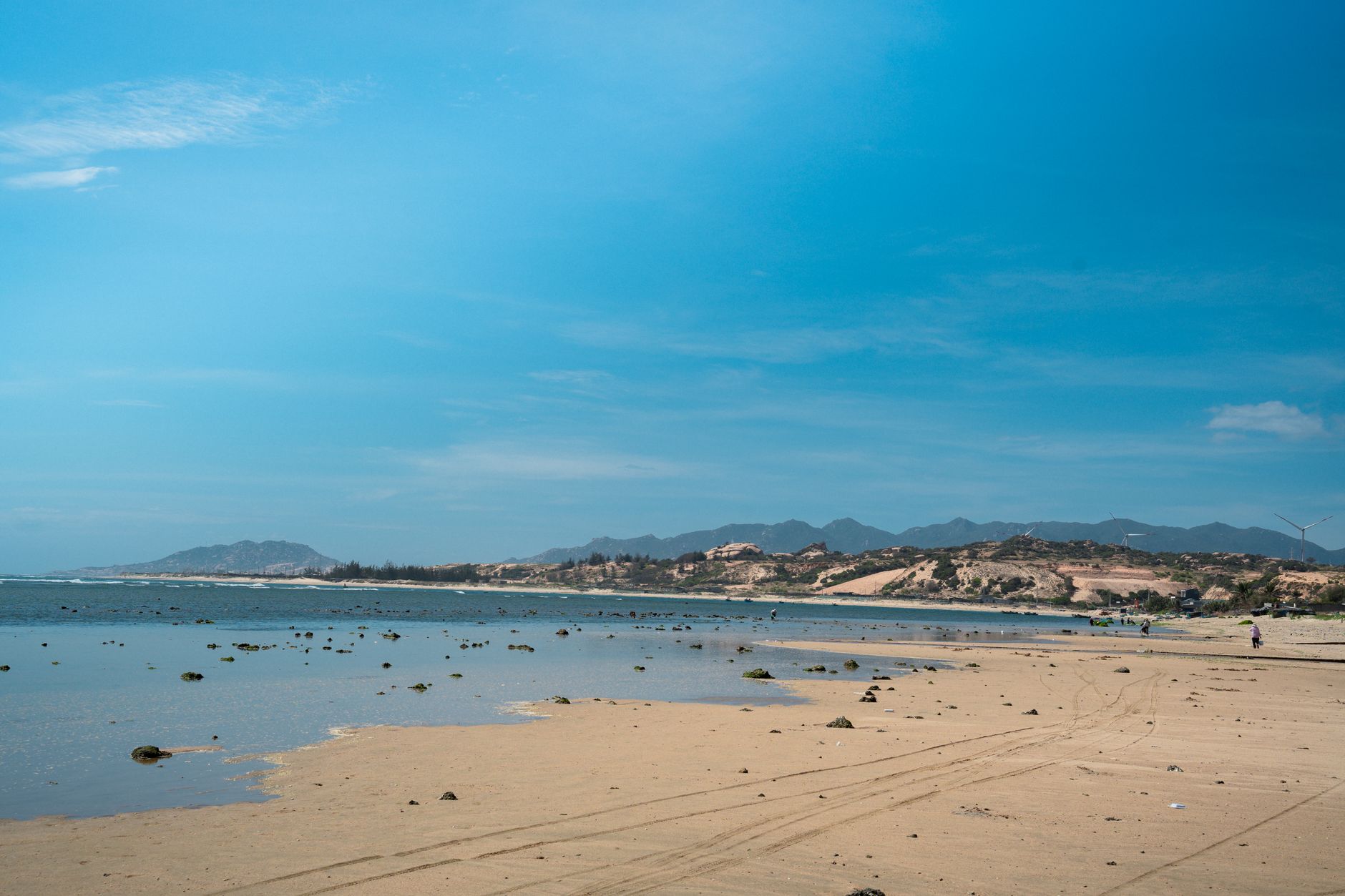
Photo by Hồng Quang Official on Pexels
Practical tips locals would tell you
- Dress modestly at the temple. Shoulders and knees covered — this isn't flexible.
- Bring cash. There's no ATM at the temple itself, though Cua Lo town has a few.
- Shoes off before entering any hall with an altar. Follow what everyone else is doing.
- If you want to make an offering, buy incense and "vang ma" (spirit money) from the vendors outside the gate. A small bundle costs 10,000–20,000 VND.
- The temple closes around 5:30 PM. Morning visits are better in every way.
Common mistakes to avoid
- Rushing through: People treat this as a 15-minute photo stop. Give it an hour.
- Coming midday in summer: There's almost no shade on the stone steps. You'll melt.
- Skipping the upper level: The main altar and the sea view are at the top. That's the whole point.
- Expecting English signage: There's very little. Read up before you arrive or grab a Vietnamese-speaking friend.
Practical notes
Den Cuong is free to enter, though donation boxes are placed near the main altar. The temple is an easy half-day trip from Vinh and pairs well with an afternoon at Cua Lo beach. If you're traveling the north-south route and want a stop between Hanoi and Hue that most guidebooks skip entirely, this is a solid one.
Last updated · May 29, 2026 · independently researched, never sponsored.