What it is
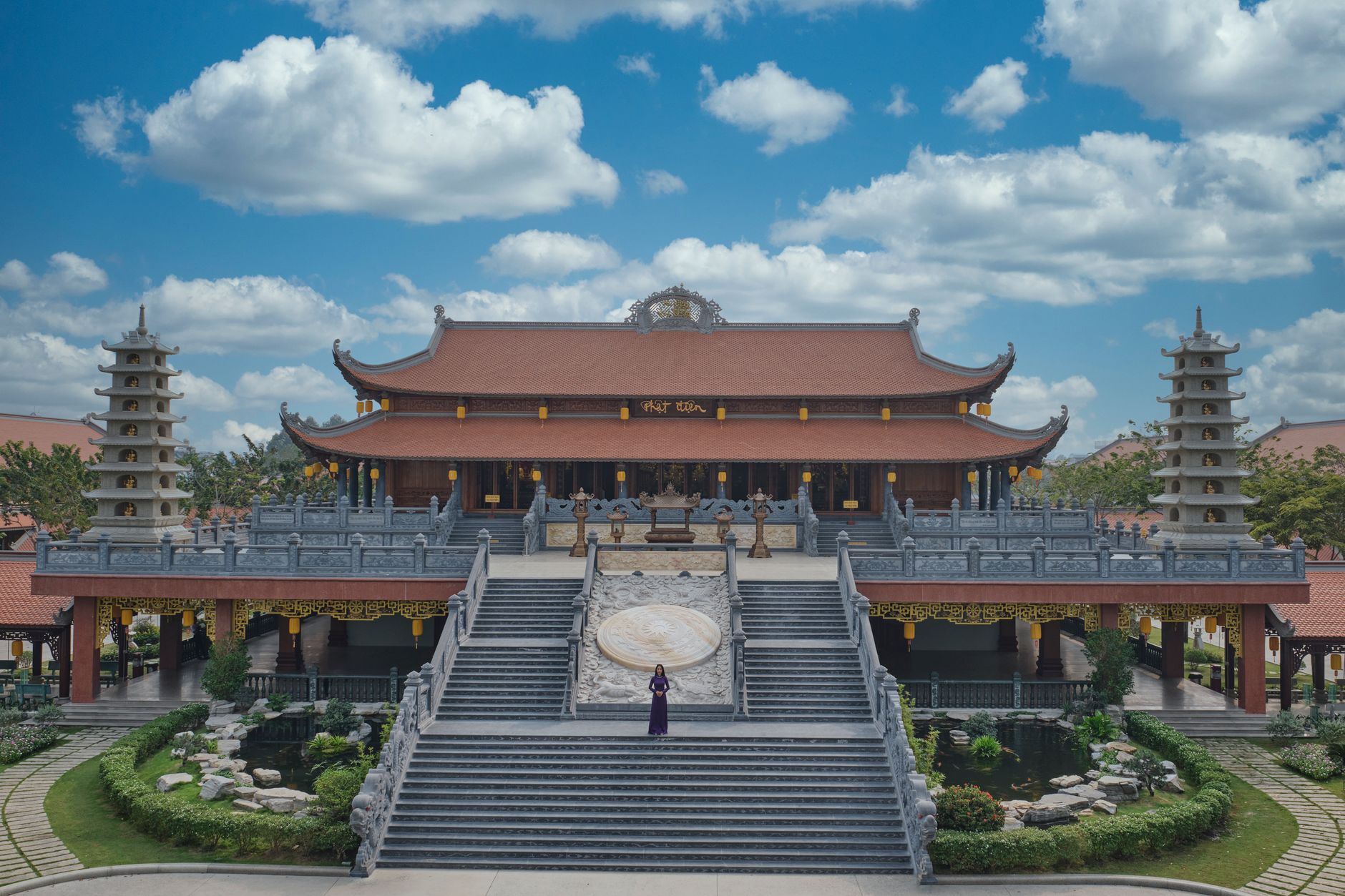
Dong Do Quang Hoi is a historic assembly hall complex in Hung Yen province, about 60 km southeast of Hanoi. The name translates roughly to "Eastern Capital Broad Assembly" — a reference to its original function as a gathering place for merchants and scholars traveling between the old capital and the Red River Delta's trading towns.
The complex dates to the late Le Dynasty period (17th-18th century), when Hung Yen's Pho Hien trading port was one of the busiest commercial centers in northern Vietnam. Foreign traders — Japanese, Chinese, Dutch — passed through here, and assembly halls like this one served as places where merchant guilds met, negotiated, and prayed. Think of it as the northern equivalent of Hoi An's Chinese assembly halls, but without the tourist infrastructure or the crowds.
After Pho (쌀국수 / 越南河粉 / フォー) Hien's decline as a port (the river silted up, trade shifted elsewhere), these halls became community spaces and places of worship. Dong Do Quang Hoi survived largely because local villagers maintained it through centuries of war and neglect.
Why travelers go
Honestly, most don't — and that's part of the appeal. Hung Yen province sits in a tourism dead zone between Hanoi (하노이 / 河内 / ハノイ) and the coast, which means you'll likely be the only visitor on any given day. People who do come are usually interested in Vietnamese architectural history, Red River Delta village life, or the Pho Hien trading port story.
The woodwork inside the main hall is genuinely impressive — carved dragons, lotus motifs, and lacquered beams that have held up remarkably well. If you've visited the Temple of Literature in Hanoi and wanted to see similar craftsmanship without 200 other tourists in frame, this delivers.
Best time to visit
October through March gives you cooler, drier weather — ideal for wandering village lanes on foot or by bicycle. The Red River Delta gets brutally humid from May through August (35°C+ with 90% humidity), and the halls have no air conditioning.
If you time it around Tet or local village festivals (usually lunar January-February), you might catch ceremonies at the hall. The annual commemoration typically falls in the second or third lunar month — ask at any Hung Yen tourism office for exact dates, as they shift yearly.
How to get there from Hanoi
Hung Yen city is the nearest hub. From Hanoi:
- Bus: Catch a bus from Giap Bat station heading to Hung Yen city. Takes about 1.5 hours, costs 60,000-80,000 VND. Buses run every 20-30 minutes throughout the day.
- Motorbike/car: Take National Highway 5 east, then cut south on Highway 39. About 60 km, roughly 1.5 hours depending on traffic through the industrial zones around Hai Duong turnoff.
- Grab car from Hanoi: Around 350,000-450,000 VND one way. Reasonable if you're splitting with someone.
From Hung Yen city center, Dong Do Quang Hoi is about 5-8 km depending on the exact route. A local xe om (motorbike taxi) runs 30,000-50,000 VND, or you can rent a bicycle from your guesthouse.
Photo by Quang Nguyen Vinh on Pexels
What to do
Explore the main hall
The central worship hall is the architectural highlight — five bays wide, with heavy ironwood columns and original 18th-century carvings on the crossbeams. Look up at the ridgepole for dragon carvings and date inscriptions. The altar at the back honors the hall's founding patrons. Spend 30-45 minutes here.
Walk the Pho Hien heritage area
Dong Do Quang Hoi sits within the broader Pho Hien ancient trading quarter. Several other temples, pagodas, and old merchant houses are within walking or cycling distance — notably Chua Chuong (a well-preserved pagoda) and the Mao Dien temple complex. You can cover three or four sites in a half-day loop of about 4 km.
Visit the local market
Hung Yen's morning markets wind down by 9-10 AM. Get there early for "banh cuon" (steamed rice rolls) made fresh at stalls, longan fruit in season (July-August), and fermented pork sausages. The market near Pho Hien is small but authentic — no tourist pricing.
Cycle through longan orchards
Hung Yen is Vietnam's longan capital. The orchards along the village roads make for easy, flat cycling. In July and August the trees are heavy with fruit and villagers will often wave you over to try some.
Photograph village architecture
The surrounding villages retain traditional Red River Delta layout — narrow lanes, laterite walls, fishponds, and ancestral halls every few hundred meters. It's the kind of rural north Vietnam landscape that's disappearing fast as urbanization spreads.
Where to eat nearby
Hung Yen's signature dishes:
- "Bun thang" — the clear, delicate Hanoi-style noodle soup is done well at several shops in Hung Yen city center, usually 35,000-45,000 VND per bowl. Look for places on Tran Hung Dao street.
- Longan-smoked chicken — a local specialty where the bird is smoked over longan wood. A few restaurants on the road between Hung Yen city and Pho Hien serve this. Ask for "ga hun khoi nhan." Around 150,000-200,000 VND for a half chicken.
For Vietnamese coffee, there are a few basic cafes in Hung Yen city but nothing fancy. Bring expectations accordingly.
Where to stay
- Budget: Nha nghi (guesthouses) in Hung Yen city run 200,000-350,000 VND/night. Clean enough, basic amenities, hot water. Try along Nguyen Van Linh street.
- Mid-range: A couple of mini-hotels near the city center offer rooms with air conditioning and breakfast for 400,000-600,000 VND.
- Alternative: Most travelers visit as a day trip from Hanoi and don't stay overnight. This is perfectly doable if you leave Hanoi by 8 AM.

Photo by HONG SON on Pexels
Practical tips locals would tell you
- Bring cash. There are ATMs in Hung Yen city but nothing near the heritage sites themselves.
- Dress modestly if entering active worship areas — cover shoulders and knees.
- The caretaker at Dong Do Quang Hoi may or may not be present. If the gate is closed, ask at the nearest house — someone usually has a key or phone number.
- Download offline maps before you go. Google Maps coverage of village lanes here is hit-or-miss.
- Vietnamese language helps enormously. Almost nobody in rural Hung Yen speaks English.
Common mistakes to avoid
- Arriving after 4 PM: Heritage sites in this area don't have set hours but caretakers leave in the afternoon. Come before 3 PM to be safe.
- Skipping Pho Hien context: Dong Do Quang Hoi makes more sense when you understand the broader trading port history. Read up before you go — it turns a "nice old building" into a genuinely interesting visit.
- Expecting Hoi An-level tourism infrastructure: There are no guided tours, no English signage, no gift shops. That's the charm, but plan for self-sufficiency.
- Going only for the single hall: Budget a half-day minimum to cover the surrounding Pho Hien sites. One hall alone isn't worth a 3-hour round trip from Hanoi.
Practical notes
Dong Do Quang Hoi works best as part of a broader Hung Yen/Pho Hien half-day or full-day trip from Hanoi. Combine it with two or three nearby heritage sites and a market visit for a satisfying day out. It's not a destination that needs a dedicated multi-day trip — but for anyone interested in northern Vietnamese history beyond the usual Hanoi circuit, it delivers real substance without the crowds.
Last updated · May 29, 2026 · independently researched, never sponsored.