What it is
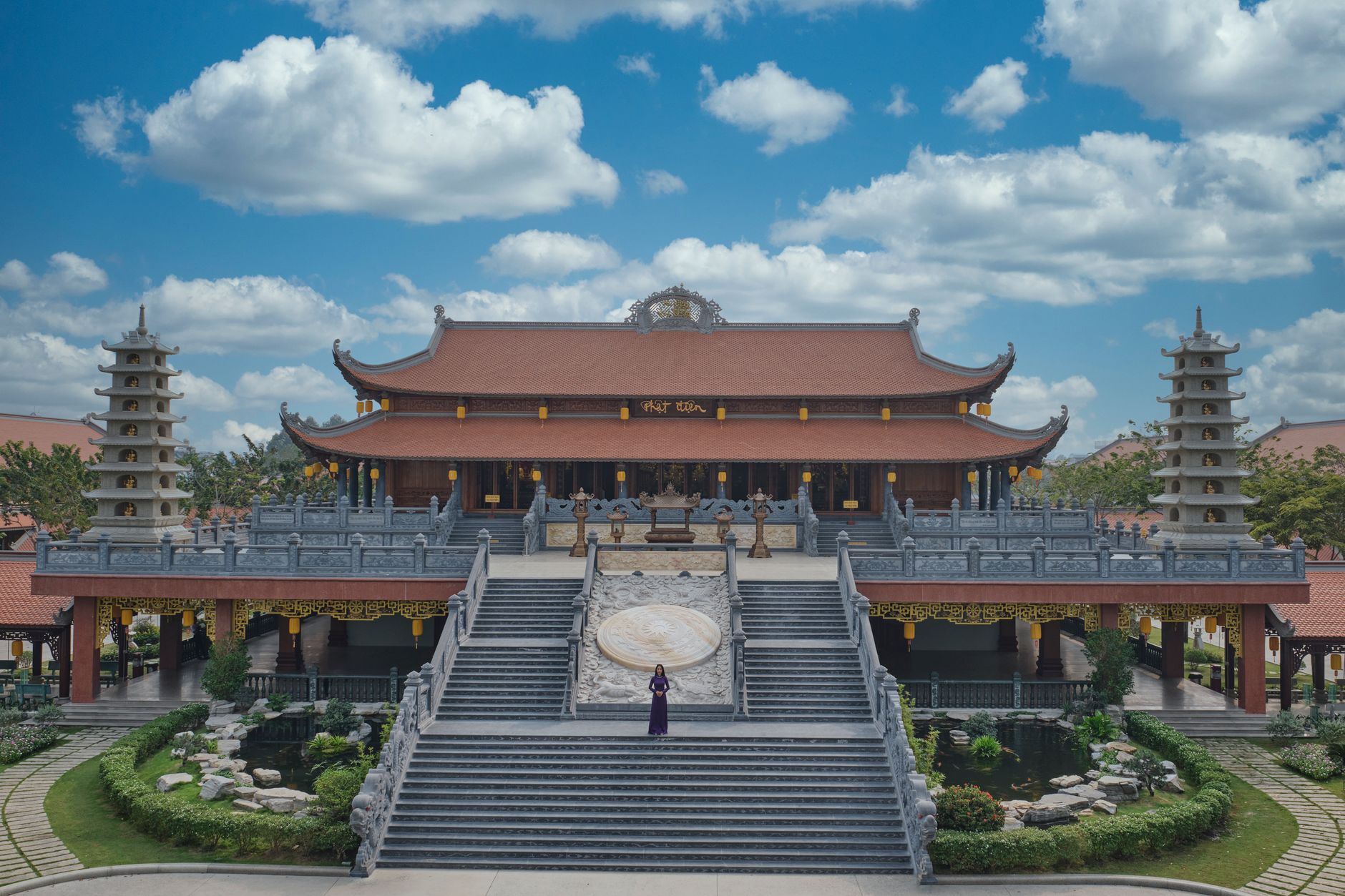
Chua Keo (full name: Than Quang Tu) is a 17th-century Buddhist pagoda complex sitting on flat rice-paddy land in what was formerly Thai Binh province, now part of the merged Hung Yen administrative area in northern Vietnam (베트남 / 越南 / ベトナム)'s Red River Delta. The pagoda dates to 1632 in its current form, though the original temple on this site goes back to the 12th century. It was built to honor the monk Khong Lo, a figure tied to both Buddhist practice and local water-control legends — fitting for a region where life has always revolved around rivers and irrigation.
What makes Chua Keo notable isn't just age. It's the bell tower. The three-story wooden bell tower (gac chuong) rises 12 meters with no nails — held together entirely by joinery. It's considered one of the finest surviving examples of traditional Vietnamese wooden architecture, and honestly, standing underneath it and looking up at the interlocking brackets is worth the trip alone.
Why travelers go
Most foreign visitors to northern Vietnam stick to Hanoi, Ninh Binh (닌빈 / 宁平 / ニンビン), Ha Long Bay, or Sapa. Chua Keo gets almost zero international tourism, which is exactly why some travelers seek it out. You won't find tour buses or ticket queues. What you will find: a genuinely old complex where monks still live, local devotees come to pray, and the architecture hasn't been "restored" into something unrecognizable.
Photographers come for the bell tower and the reflection pools. Architecture nerds come for the joinery. People who've already done the standard northern loop come because they want something quieter and more honest than the heavily visited pagodas closer to Hanoi.
Best time to visit
The pagoda is open year-round, but two windows stand out:
- September–November: Dry, cooler weather. The surrounding rice paddies turn gold before harvest, and the light is good for photography. Comfortable cycling weather if you're riding from town.
- 4th day of the 1st lunar month (usually late January or February): The annual Chua Keo festival. This is a big local event with water puppet shows (Water Puppetry is a northern Vietnamese tradition worth seeing in any context), traditional games, and processions. It's crowded with Vietnamese visitors but zero foreign tourists — genuinely festive, not performative.
Avoid June–August if you dislike heat and humidity. The Delta in summer is 35-38°C with thick air. The pagoda has shade but no air conditioning, obviously.
How to get there
From Hanoi (the nearest major hub), Chua Keo is roughly 110 km southeast — about 2 to 2.5 hours by car or motorbike via QL1A and then cutting east.
- Bus: Take a bus from Giap Bat station to Thai Binh city (60,000–80,000 VND, ~2 hours). From Thai Binh city center, Chua Keo is about 17 km southeast in Vu Thu district. Grab a local xe om (motorbike taxi) for 50,000–70,000 VND or use Grab if available.
- Motorbike: The most flexible option. Straight shot from Hanoi, mostly flat delta roads. Easy riding if you're comfortable with Vietnamese traffic outside the city.
- Private car/driver: Expect 1,200,000–1,500,000 VND round-trip from Hanoi with waiting time. This makes sense if you're combining with other delta stops.

Photo by HONG SON on Pexels
What to do
1. Study the bell tower up close
The gac chuong is the centerpiece. Walk around it, look at how the wooden brackets interlock without metal fasteners. The craftsmanship dates to the 17th century. Ask the caretaker if you can go up — sometimes they allow it, sometimes not, depending on the day and their mood.
2. Walk the full complex front to back
Chua Keo stretches along a central axis: entrance gate, courtyard, main worship hall, back hall, then the bell tower. Don't just photograph the front and leave. The rear halls have old wooden statues and carved panels that most visitors walk past. Budget 45–60 minutes for the full complex.
3. Sit by the lotus pond
The front courtyard has a large pond that fills with lotus in summer. Even outside lotus season, it's a calm spot. Locals sit here in the late afternoon. Bring something to drink and just be still for a while — this isn't a place that rewards rushing.
4. Talk to the monks (if you speak some Vietnamese)
This is a living monastery, not a museum. If you have basic Vietnamese or a translation app, the resident monks are generally happy to explain the history. They're proud of the place.
5. Cycle the surrounding villages
The flat delta landscape around Chua Keo is classic northern Vietnam: narrow lanes between rice paddies, brick village gates, small family temples. Rent a bicycle in Thai Binh city (ask your hotel) or ride your own motorbike slowly through Vu Thu district.
Where to eat nearby
Thai Binh province is known for "banh canh" — thick tapioca-flour noodle soup, often with crab. Look for banh canh cua at the small shops along the road between Thai Binh city and the pagoda. A bowl runs 30,000–45,000 VND.
Also worth trying: "nem chua" from Thai Binh. It's fermented pork wrapped in banana leaf — tangy, slightly sour, eaten as a snack with herbs. Vendors sell it at local markets and sometimes near the pagoda entrance.
For a full meal, head back to Thai Binh city center. The area around Tran Hung Dao street has local rice-and-dish (com binh dan) shops where 40,000–60,000 VND gets you rice, meat, vegetables, and soup.
Where to stay
Thai Binh city has basic hotels and guesthouses:
- Budget: Nha nghi (guesthouses) near the bus station, 200,000–350,000 VND/night. Clean enough, fan or AC, hot water. Don't expect English.
- Mid-range: A few newer hotels in the city center (Song Tra Hotel, Hung Vuong Hotel) at 400,000–700,000 VND/night. Private rooms, wifi, breakfast sometimes included.
- No luxury options exist here. This isn't a tourist town. If you need comfort, stay in Hanoi and day-trip.

Photo by HONG SON on Pexels
Practical tips locals would tell you
- Dress modestly. Shoulders and knees covered. This is an active place of worship, not a ruin.
- There's no entrance fee, but leave a donation (10,000–50,000 VND in the donation box is normal).
- Arrive before 9 AM or after 3 PM for the best light and fewest domestic tour groups (weekends especially).
- Bring mosquito repellent. It's the delta — standing water everywhere.
- The pagoda has no ATM nearby. Bring cash from Thai Binh city.
Common mistakes to avoid
- Rushing through in 15 minutes. People drive here, snap the bell tower, and leave. You'll miss the rear halls and the atmosphere entirely.
- Coming on a major holiday without expecting crowds. Tet and the pagoda festival bring thousands of local visitors. Great energy, but not the contemplative experience.
- Confusing this with Chua Keo in Hanh Thien (Nam Dinh). There are two pagodas associated with the Khong Lo monk. Make sure your driver knows you want Chua Keo in Vu Thu, Thai Binh — not the other one.
- Skipping Thai Binh entirely because it's not on the tourist trail. That's exactly the reason to go.
Practical notes
Chua Keo works best as a day trip from Hanoi or as a stop on a longer Red River Delta loop that might include Ninh Binh or Nam Dinh. It pairs well with slow travel — cycling, eating local food, staying in places where nobody speaks English. That's not a limitation; it's the point.
Last updated · May 29, 2026 · independently researched, never sponsored.