What it is
Chua Chuong — the Bell Pagoda — is a 17th-century Buddhist temple complex in Hung Yen city, about 60 km southeast of Hanoi. It sits on Pho Hien, what was once one of the busiest trading ports in northern Vietnam during the 16th and 17th centuries. The pagoda dates to 1643, rebuilt and expanded several times since, and is considered one of the best-preserved examples of traditional Vietnamese Buddhist architecture in the Red River Delta.
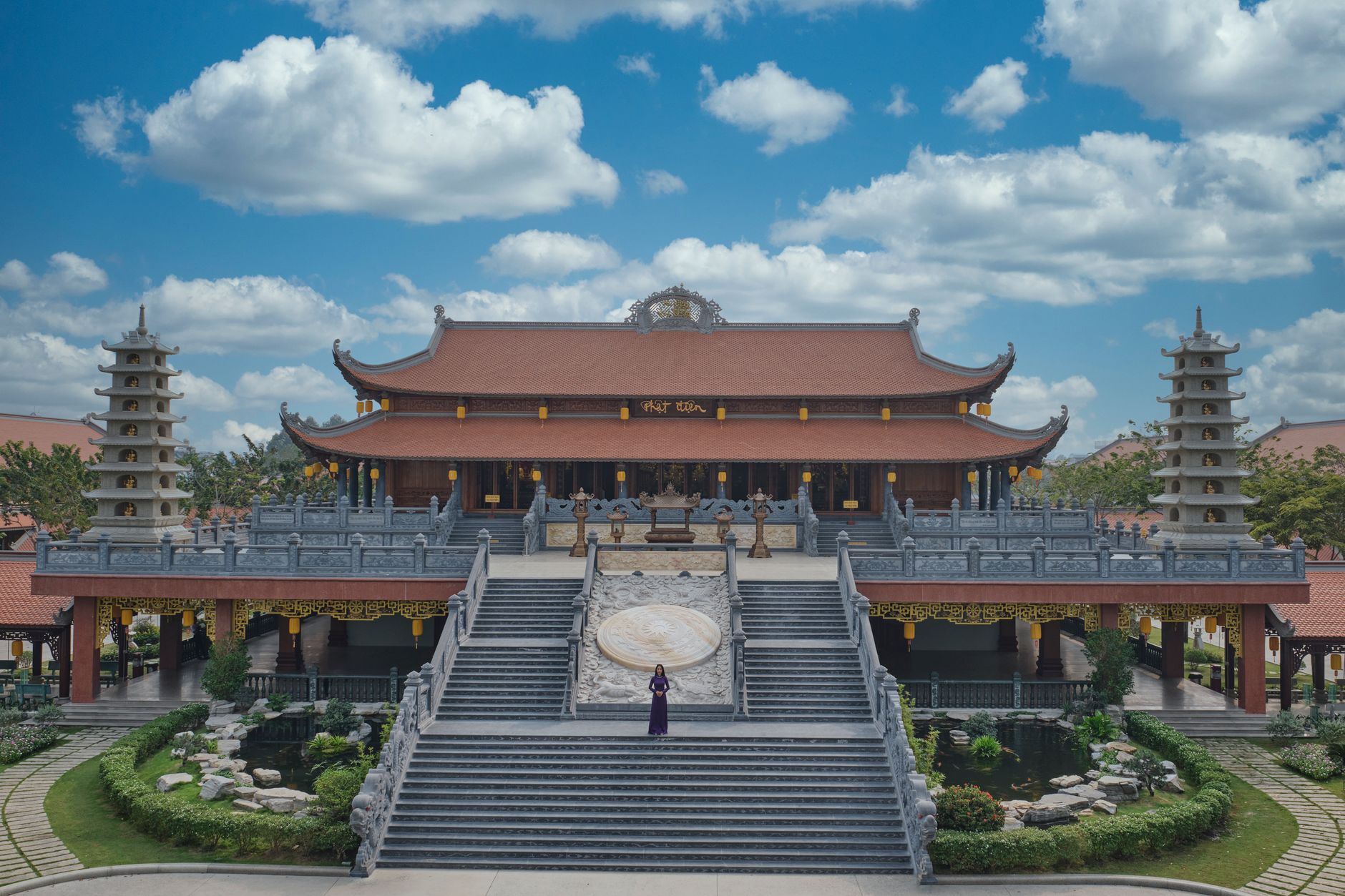
The name comes from a large bronze bell cast in 1711 that still hangs in the bell tower. The complex includes a triple gate (tam quan), main worship hall, ancestral hall, and a quiet lotus pond flanked by frangipani trees. Unlike the heavily restored pagodas around Hanoi (하노이 / 河内 / ハノイ), Chua Chuong retains its wooden columns, curved tile roofs, and weathered laterite courtyards without aggressive renovation.
Why travelers go
Honestly, most foreign travelers don't — and that's precisely the appeal. Chua Chuong gets domestic visitors during Tet and Buddhist holidays, but on a regular Tuesday you'll likely have the courtyards to yourself. People come for the architecture (carved wooden panels, dragon banisters, original tile work), the atmosphere of a functioning neighborhood pagoda, and the surrounding Pho (쌀국수 / 越南河粉 / フォー) Hien historical area which has a handful of other temples and old merchant houses within walking distance.
If you've done the circuit of Hanoi's pagodas — Tran Quoc Pagoda, One Pillar Pagoda, the Temple of Literature — and want something with the same historical weight but none of the crowds, this is a solid half-day trip.
Best time to visit
February through April is ideal. The weather is cool but not biting, and the lotus pond starts greening up by March. During Tet / 越南春节 / テト) (late January or early February, depending on the lunar calendar), the pagoda hosts prayer ceremonies and gets decorated, which adds atmosphere but also crowds.
Avoid June through August — the heat in the delta is oppressive, 36-38°C with high humidity, and there's minimal shade between the buildings. September and October bring occasional flooding to low-lying parts of Hung Yen city, though the pagoda itself sits on slightly elevated ground.
How to get there from Hanoi
Hung Yen city is roughly 60 km from central Hanoi. You have three options:
Bus
Catch a bus from Giap Bat station (southern Hanoi) to Hung Yen bus station. Departures every 20-30 minutes, journey takes about 1.5 hours, ticket costs 50,000-70,000 VND. From Hung Yen bus station, it's a 3 km xe om (motorbike taxi) ride to the pagoda — around 20,000 VND.
Motorbike
Take National Highway 5 east, then cut south on Highway 39. About 1.5 hours from Hanoi's edge if traffic cooperates. The road is flat delta riding, nothing technical. Parking at the pagoda is free.
Grab car
A Grab from central Hanoi runs 350,000-450,000 VND one way. Not the most efficient option, but workable if you're combining with other stops in Hung Yen province.

Photo by Quang Nguyen Vinh on Pexels
What to do
Walk the full complex slowly. Most visitors head straight to the main hall. Instead, enter through the tam quan gate and work your way back. The carved wooden transoms above the doorways in the second hall are some of the finest 18th-century woodwork in the north — dragon and phoenix motifs with traces of original lacquer and gilt.
Ring the bell (ask first). The bronze bell in the tower is still functional. Monks will sometimes allow visitors to ring it during non-ceremony hours. Just ask politely — "Con xin phep danh chuong" works.
Visit the Pho Hien historical area. Within 1 km of Chua Chuong, you'll find Den Mau (Mother Goddess temple), Chua Hien (another old pagoda), and remnants of the old trading port quarter. The whole strip takes about an hour on foot.
Photograph the lotus pond at dawn. If you stay overnight, the pond behind the main hall catches early morning light beautifully from about 5:30-6:30 AM. The resident monks are up chanting by then, and the combination of sound and light is worth the early alarm.
Check the side halls for wooden statuary. The ancestral hall has a collection of carved Arhat figures — 18 of them, each about 60 cm tall, dating to the 18th century. They're not behind glass or roped off. You can get close enough to see chisel marks.
Where to eat nearby
Hung Yen isn't a food destination on the level of Hanoi or Hue, but it has two local specialties worth seeking:
"Bun thang" Hung Yen style — the broth here tends to be lighter and slightly sweeter than the Hanoi version, served at small shops along Tran Hung Dao street, about 500 m from the pagoda. A bowl runs 30,000-40,000 VND.
"Nhan long" (longan) — Hung Yen is Vietnam's longan capital. If you visit July through August, fresh longan is everywhere. Dried longan is available year-round at the market on Le Dai Hanh street. It makes decent trail snack material for onward travel.
For a full meal, the row of "com binh dan" (rice-and-sides) shops near the bus station offers standard delta fare — fried fish, morning glory, tofu — for 35,000-50,000 VND per plate.
Where to stay
Hung Yen city has limited accommodation. Options:
- Budget: Nha nghi (guesthouses) along Nguyen Van Linh street, 200,000-350,000 VND/night. Basic but clean. Don't expect English.
- Mid-range: Muong Thanh Hung Yen hotel, about 600,000-900,000 VND/night. The only chain hotel in town. Air conditioning, hot water, breakfast included.
- Day trip: Most travelers just visit from Hanoi and return the same day, which is entirely feasible given the 1.5-hour transit time.

Photo by Loifotos on Pexels
Practical tips locals would tell you
- Dress modestly. Shoulders and knees covered. This is an active worship site, not a museum.
- Remove shoes before entering any hall. There are shoe racks at each entrance.
- The pagoda has no entrance fee. A small donation (20,000-50,000 VND) in the offering box near the main altar is appreciated.
- Bring mosquito repellent if visiting in the evening. The lotus pond breeds them.
- The complex closes informally around 5:30 PM. Arrive before 4 PM to have enough time.
Common mistakes to avoid
- Confusing Hung Yen city with Hung Yen province. The province is large. Make sure your driver or bus is going to the city (thanh pho Hung Yen), not some random district.
- Coming on the 1st or 15th of the lunar month. These are peak prayer days. The pagoda gets packed with locals burning incense and the smoke can be overwhelming.
- Skipping the back halls. The rear of the complex, past the main worship area, has the oldest and most interesting structures. Most day-trippers miss them entirely.
- Not bringing cash. There are no ATMs within immediate walking distance of the pagoda. The nearest bank branch is about 1 km away on Nguyen Van Linh street.
Practical notes
Chua Chuong works best as a half-day trip from Hanoi, combined with a wander through the Pho Hien area. It's not a place that needs a full day — two to three hours covers the complex and surroundings comfortably. If you're heading south toward Ninh Binh afterward, Hung Yen sits roughly on the way and makes a logical morning stop.
Last updated · May 29, 2026 · independently researched, never sponsored.