What Den Thuong Is and Why It Matters
Den Thuong — the Upper Temple — sits at the peak of Nghia Linh mountain, roughly 175 meters above the Red River plain in Viet Tri city, Phu Tho province. It's the highest and most sacred of the four main temples within the Hung Kings Temple complex (Den Hung), a site tied directly to Vietnam (베트남 / 越南 / ベトナム)'s origin story. According to tradition, this is where the Hung Kings — the semi-mythical founders of the first Vietnamese state, Van Lang — made offerings to heaven and earth, praying for good harvests and national prosperity.
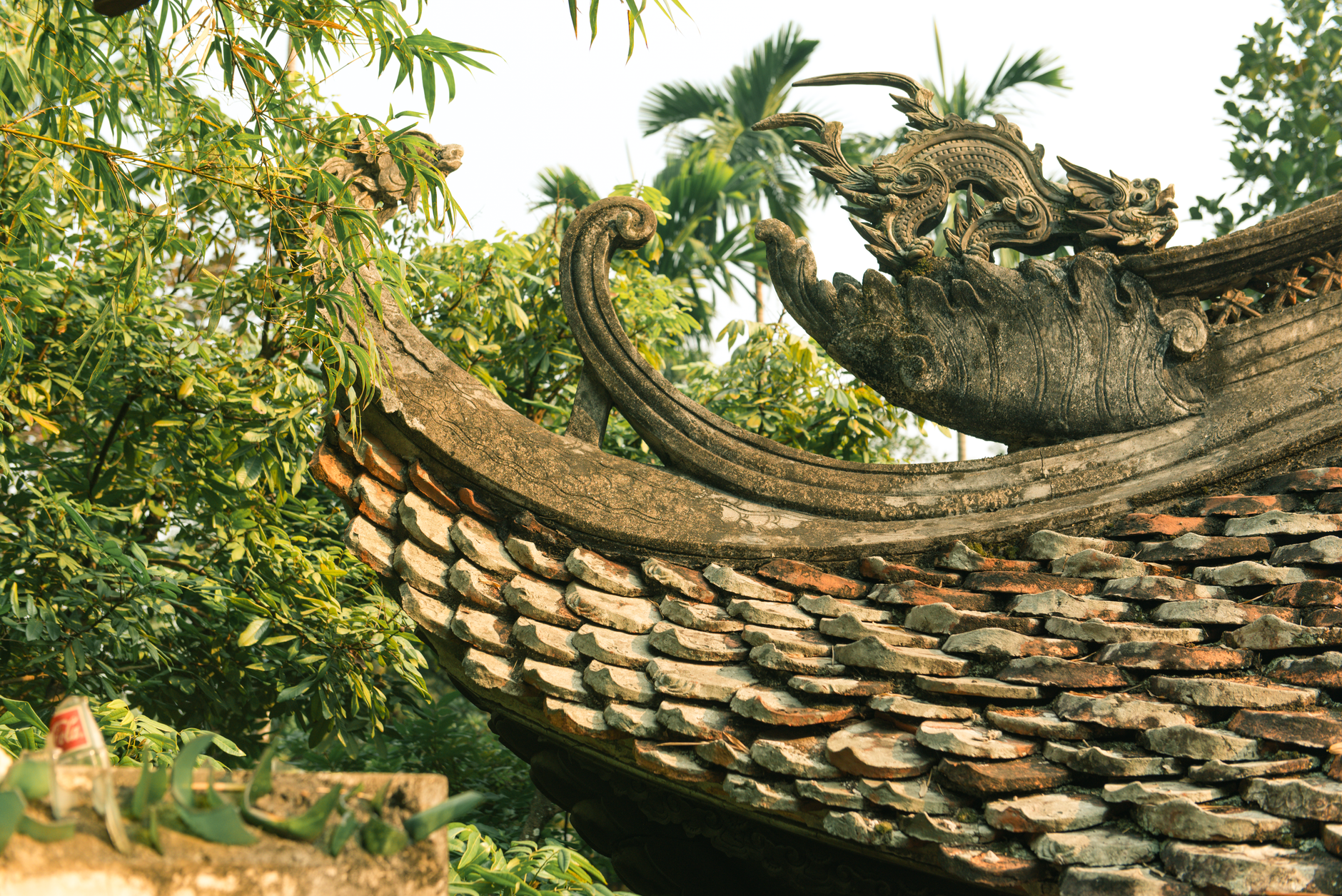
The temple in its current form dates to restorations in the 15th and 17th centuries, though worship here goes back far longer. The architecture is modest compared to, say, the Imperial Citadel Thang Long in Hanoi, but that's part of the appeal. Den Thuong is not about grandeur. It's a compact wooden temple surrounded by old-growth trees, incense smoke, and a stillness that the lower temples don't have — mostly because fewer visitors make it all the way up.
Why Travelers Go
Den Thuong draws two types of visitors. The first are Vietnamese pilgrims, especially around the Hung Kings Festival (10th day of the third lunar month, usually falling in April). This is a national holiday, and the temple complex can see hundreds of thousands of visitors over a few days. The second group are travelers interested in Vietnamese cultural roots — the kind of people who've already done the [Temple of Literature](/posts/temple-of-literature-hanoi (하노이 / 河内 / ハノイ)-guide) in Hanoi and want to go deeper into the country's pre-imperial history.
The climb itself is worth it. The stairway from the base of the complex to Den Thuong passes through forest, past Den Ha (Lower Temple) and Den Trung (Middle Temple), and takes about 30-40 minutes at a comfortable pace. You arrive slightly winded, slightly sweaty, and the quiet at the top feels earned.
Best Time to Visit
The Hung Kings Festival (usually mid-April) is the most culturally significant time, but also the most crowded — we're talking shoulder-to-shoulder on the staircases. If you want the atmosphere without the crush, aim for weekdays in March, early April, or October through November. The weather in Phu Tho is best from October to December: cooler, drier, and the haze lifts enough that you get decent views from the summit. Summer months (June-August) bring heat and afternoon downpours that make the stone steps slippery.
How to Get There
From Hanoi, Den Hung is about 85 km northwest — roughly two hours by car or motorbike via the Noi Bai - Lao Cai expressway (exit at Phong Chau). Buses from My Dinh bus station run to Viet Tri city for around 80,000-100,000 VND; from Viet Tri's bus station, grab a local bus or taxi to the temple complex gate (about 7 km, 50,000-70,000 VND by taxi). If you're riding a motorbike from Hanoi, the route is straightforward and mostly highway.
Entrance to the Hung Kings Temple complex costs 10,000 VND per person. There's a shuttle cart from the gate partway up the hill for 30,000 VND one way, but it only takes you to the lower area — the final climb to Den Thuong is on foot.
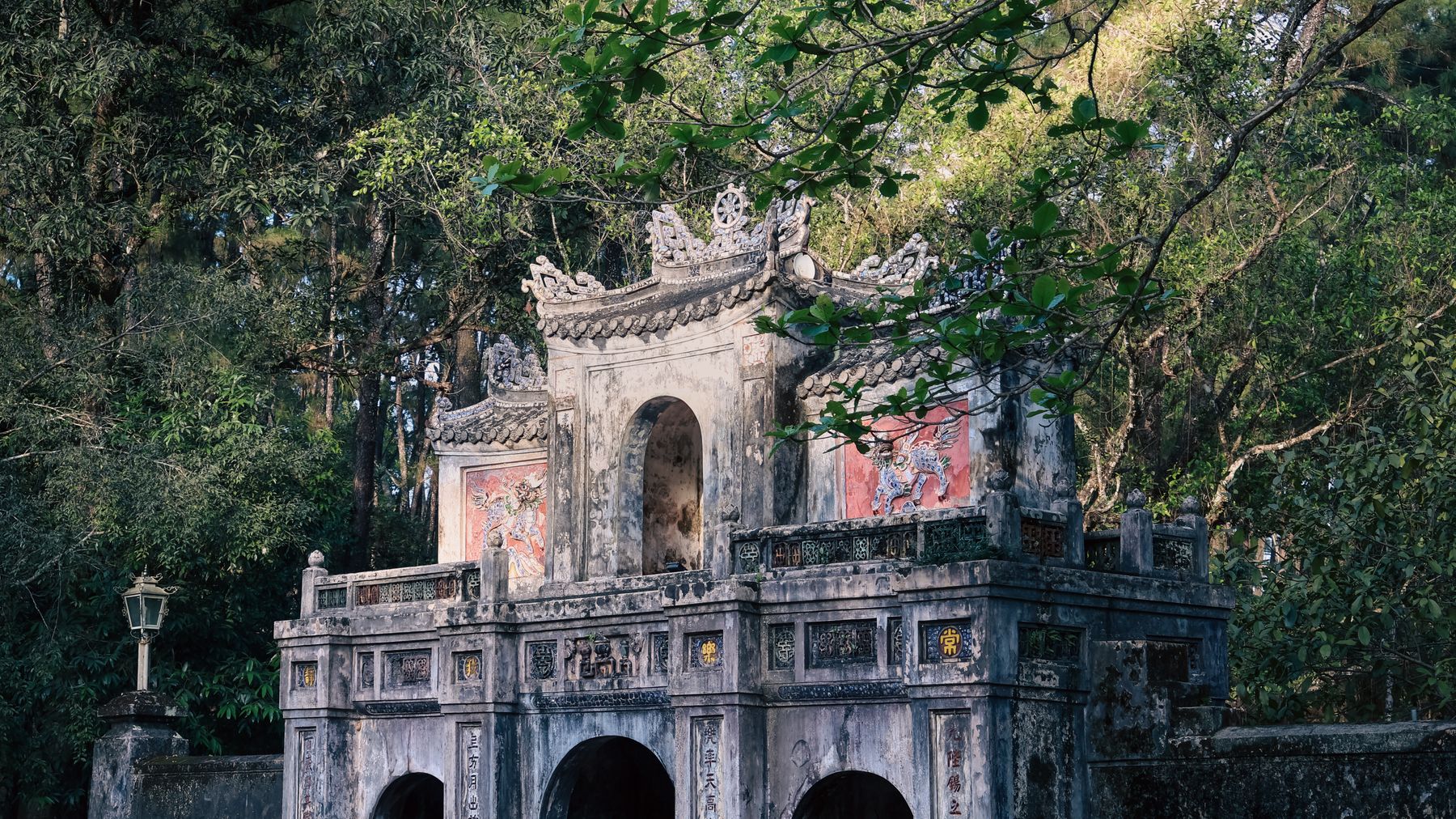
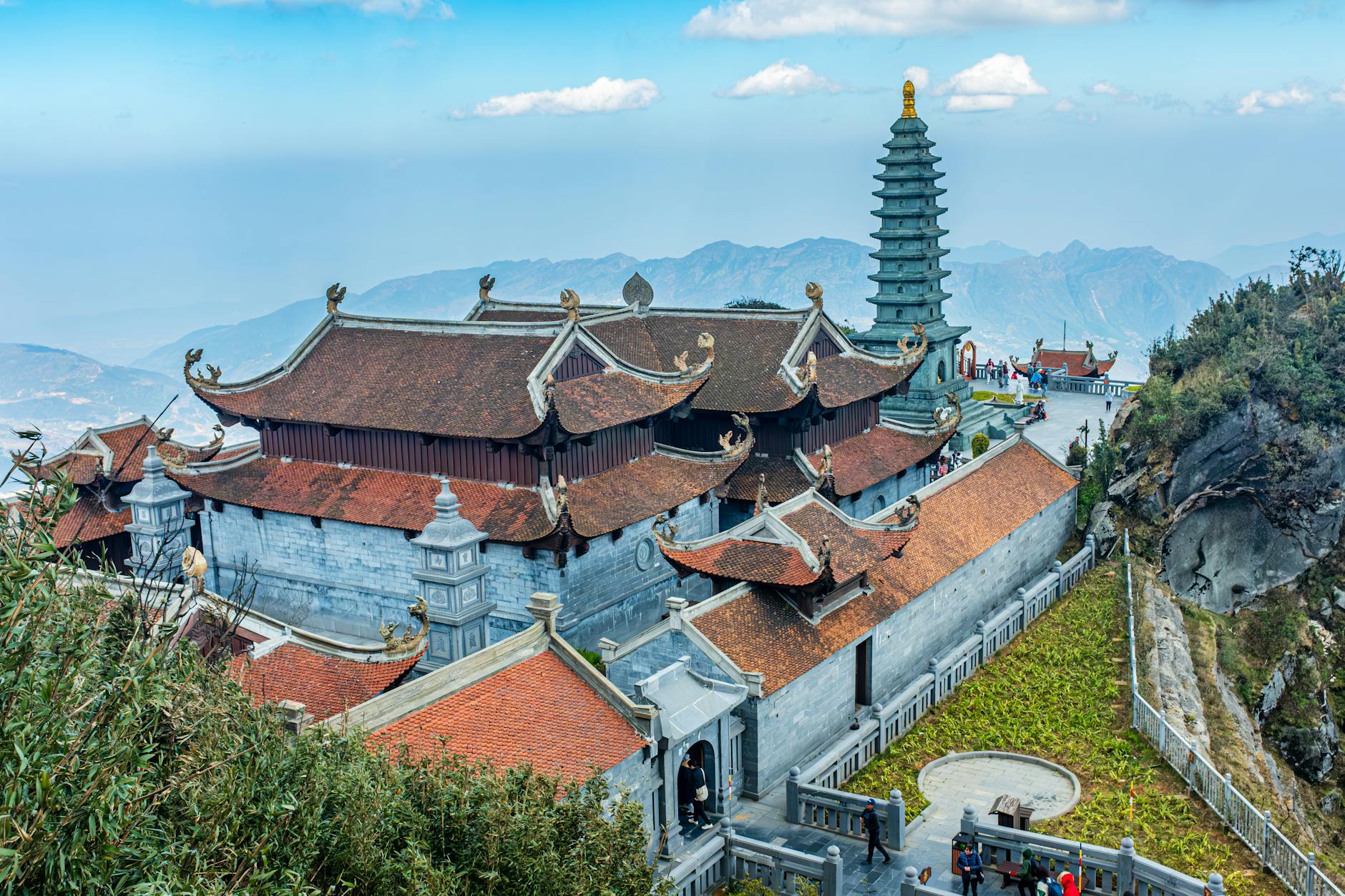
Photo by Minh Lê on Pexels
What to Do
Walk the Full Temple Route
Don't skip straight to the top. Start at Den Ha, where the main gate and a small museum sit. Move up to Den Trung, which honors the Hung Kings' role in teaching rice cultivation. Then climb to Den Thuong. The full walk gives context and builds the experience. Budget 2-2.5 hours for the round trip with time to look around at each stop.
Visit the Hung Kings Museum
Located near the base of the complex, the museum holds Bronze Age artifacts — Dong Son drums, pottery, tools — excavated from the area. It's small but well-organized and gives background that makes the temples more meaningful. Free entry with your complex ticket.
Pay Respects at the Gieng Temple
Often overlooked, Den Gieng (Well Temple) sits on a side path below Den Thuong. Legend says the Hung Kings' daughters used a well here as a mirror. It's quieter than the main temples and has a more intimate feel.
Catch the "Banh Chung, Banh Day" Story
The origin myth of "banh chung" (square sticky rice cake) and "banh day" (round sticky rice cake) is set here — Prince Lang Lieu supposedly presented these to his father, a Hung King, and won the throne. You'll see references throughout the complex. During festival season, there are actual banh chung-making demonstrations.
Walk the Forest Paths
The complex sits within a national forest. Side trails wind through old trees — some centuries-old — that most visitors ignore. If you have an extra hour, the canopy and birdsong are a good reason to linger.
Where to Eat Nearby
Phu Tho isn't a food destination on the level of Hanoi or Hue, but there are a few things worth seeking out. Look for "banh cuon" Phu Tho style — thinner and chewier than the Hanoi version, served with a slightly sweeter dipping sauce. Vendors cluster near the complex entrance and along the road into Viet Tri. For a sit-down meal, Viet Tri city has local rice-and-dish joints (com binh dan) where a plate of grilled pork, rice, and greens runs 35,000-50,000 VND. Don't expect craft cocktails — this is a provincial capital, and "bia hoi" on plastic stools is the evening move.
Where to Stay
Most travelers visit Den Thuong as a day trip from Hanoi, and that's the most practical approach. If you want to stay overnight — say, to catch an early morning visit before the crowds — Viet Tri has a handful of hotels in the 300,000-600,000 VND range (Muong Thanh Viet Tri is the most reliable mid-range option). Budget guesthouses near the temple complex gate run 200,000-350,000 VND but are basic.

Photo by Quang Nguyen Vinh on Pexels
Practical Tips Locals Would Tell You
- Wear proper shoes. The stone steps to Den Thuong get slick, especially after rain. Sandals are a bad idea.
- Bring incense and offerings if you want to participate. Small bundles of incense and votive paper are sold at the base for 10,000-20,000 VND. Nobody will pressure you, but joining in is part of the experience.
- Start early. The complex opens at 7:00 AM. By 10:00 AM on weekends, the stairs get congested. Early morning also means cooler temperatures for the climb.
- Carry water. There are a few drink vendors partway up, but selection is limited and prices are marked up. A bottle from the base costs 10,000 VND; halfway up, expect 20,000.
Common Mistakes to Avoid
- Visiting only during the Hung Kings Festival without planning. The national holiday means roads from Hanoi are jammed and the complex is packed. If you go during festival time, leave Hanoi before 6:00 AM or consider staying in Viet Tri the night before.
- Skipping the lower temples. Den Thuong is the highlight, but rushing past Den Ha and Den Trung means missing half the story.
- Wearing shorts or revealing clothing into the temples. This is an active worship site, not a ruin. Dress respectfully — knees and shoulders covered is the safe bet.
- Assuming it's not worth the trip. Den Thuong doesn't have the visual drama of Bai Dinh or the scale of the sites in Ninh Binh. What it has is age, meaning, and a forest-wrapped setting that rewards anyone willing to climb.
Practical Notes
Den Thuong is easily combined with a day trip from Hanoi, especially if you have your own wheels. Pair it with a drive through the tea plantations west of Viet Tri for a full day. The temple complex is a genuine piece of Vietnamese identity — not a tourist attraction built for cameras, but a place where people still come to connect with something older than any dynasty.
Last updated · May 29, 2026 · independently researched, never sponsored.