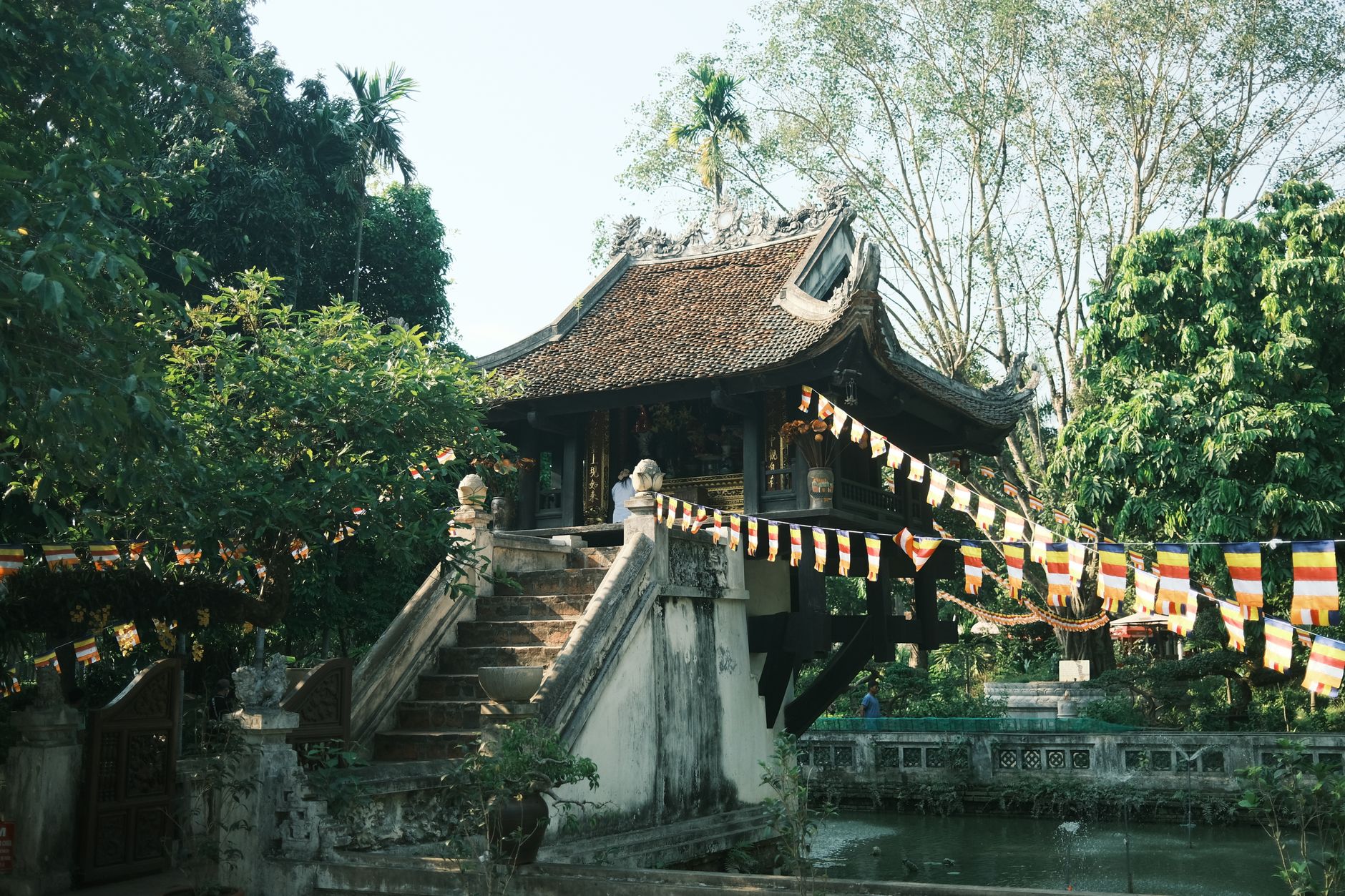
What it is and why it matters
Den Hai Ba Trung in Me Linh district is the principal temple dedicated to the Trung Sisters — Trung Trac and Trung Nhi — two of the most revered historical figures in Vietnamese culture. The temple sits on a low hill in Hat Mon commune, roughly where the sisters are believed to have rallied their forces nearly two thousand years ago. The current complex dates mostly to the Le and Nguyen dynasties, with renovations in the 20th century, but the site has been a place of worship for centuries.
This isn't the Den Hai Ba Trung in Hanoi's Hai Ba Trung district (the smaller, more accessible one near Dong Da). The Me Linh temple is the original, the bigger complex, and the site of the largest annual festival honoring the sisters. Most foreign visitors don't know it exists.
Why travelers go
If you've already covered the [Temple of Literature](/posts/temple-of-literature-hanoi (하노이 / 河内 / ハノイ)-guide) and Tran Quoc Pagoda in central Hanoi, Den Hai Ba Trung offers something different: a major historical site without the tour bus crowds. The grounds are spacious and quiet on ordinary days — tiled courtyards, old banyan trees, incense smoke drifting through wooden halls. The architecture follows classic northern Vietnamese temple design: triple-gate entrance, tiered roofs, carved dragon banisters. There's a small museum room with artifacts and panels (Vietnamese-language only) tracing the Trung Sisters' story.
For anyone interested in how Vietnamese people honor their historical figures, this temple is more revealing than most sites in central Hanoi. The rituals here, especially during festival season, are serious and deeply felt — not performative.
Best time to visit
The temple festival falls on the 6th day of the 2nd lunar month (usually March). This is the single biggest event of the year: processions, traditional music, ceremonial offerings, and thousands of locals in attendance. If you want atmosphere and spectacle, aim for festival day. Arrive early — by 7:00 AM — because the main ceremonies start in the morning and the roads get congested.
Outside of festival season, the best months are October through April, when Hanoi's weather is cooler and drier. Summer visits (May–August) are fine but hot and humid, with occasional heavy rain that turns the grounds slippery. Weekdays year-round are nearly empty, which is ideal if you prefer to explore without crowds.
How to get there from Hanoi
Den Hai Ba Trung is about 40 km northwest of Hanoi's Old Quarter, in Me Linh district. Budget 60–90 minutes by car or motorbike depending on traffic.
- Grab car: Around 250,000–350,000 VND one way from the Old Quarter. The return trip can be harder to book — cell signal in the area is fine, but fewer drivers operate out there. Consider asking your driver to wait (negotiate a round-trip fare of roughly 500,000–600,000 VND including waiting time).
- Motorbike: Take Route 23 north through Dong Anh, then follow signs toward Hat Mon commune. The ride is straightforward and mostly flat. Rental bikes in Hanoi run 120,000–180,000 VND per day.
- Bus: Bus 35 from Long Bien station heads toward Me Linh town center (about 10,000 VND). From Me Linh, you'll need a xe om (motorbike taxi) for the last 5 km to the temple — expect 20,000–30,000 VND. This route takes longer (90–120 minutes total) and requires some flexibility.
There's no direct tourist shuttle. This is a local destination, which is part of its appeal.
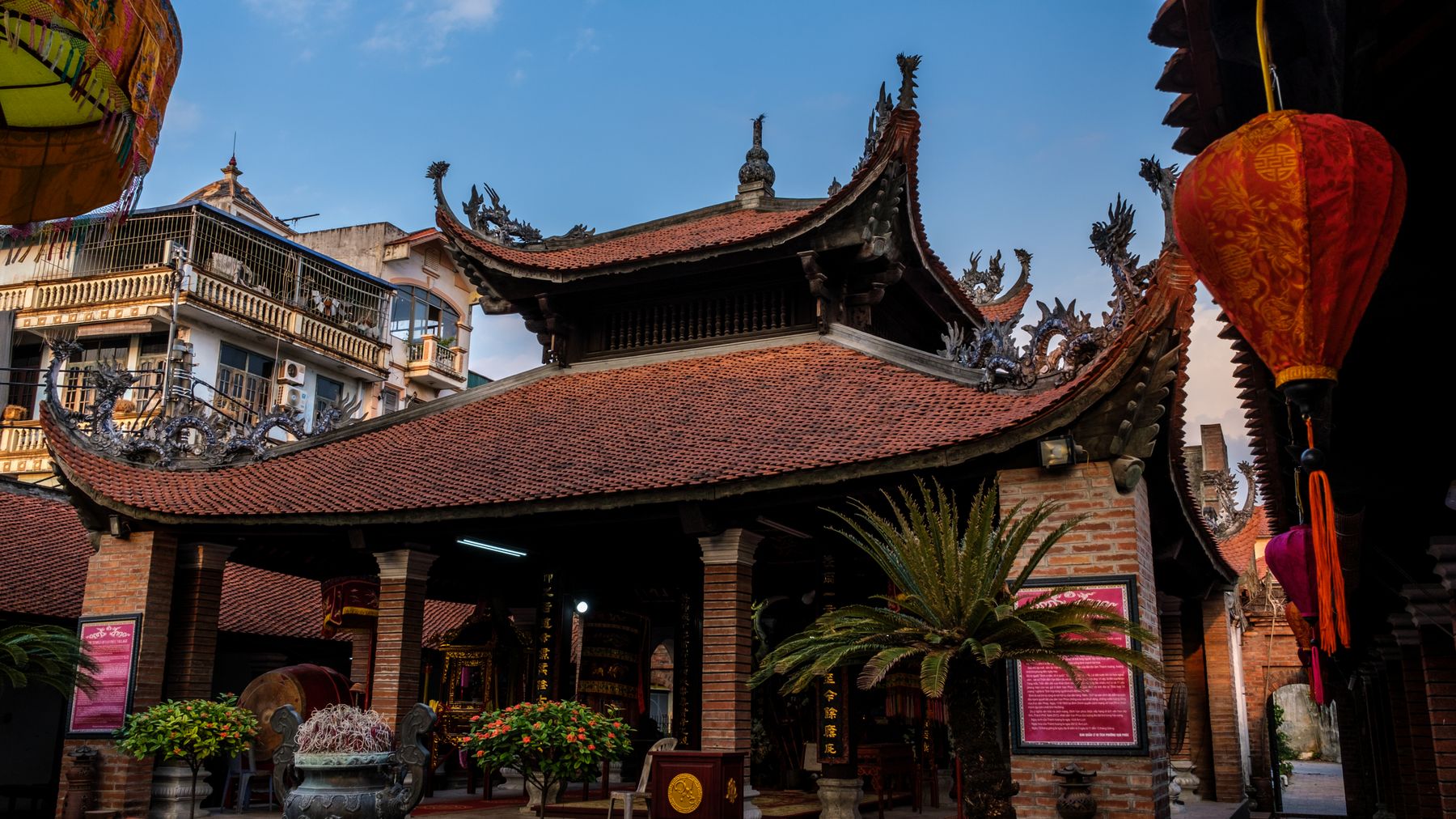
Photo by Nghĩa Văn on Pexels
What to do
Walk the full complex
The temple grounds are larger than they first appear. Start at the main triple gate ("ngu mon quan"), pass through the courtyard to the front hall, then continue to the rear sanctuary where the primary altar to the Trung Sisters sits. Don't skip the side halls — one contains tablets and carvings that date to the Nguyen dynasty. The whole circuit takes 30–45 minutes at a relaxed pace.
Visit the stele house
To the left of the main hall, a small stele pavilion holds carved stone tablets. These are historical records of temple restorations and royal decrees. Even if you can't read the Han-Nom script, the craftsmanship on the stone is worth seeing up close.
Climb the hill behind the temple
A short path leads to the top of the hill behind the main complex. The view isn't dramatic — flat delta farmland, fish ponds, village rooftops — but it gives you a sense of the landscape the Trung Sisters would have known. On clear days in winter, it's a calm spot.
Attend a ceremony (if timing allows)
Beyond the main festival, the temple holds smaller ceremonies on the 1st and 15th of each lunar month. These are modest — a few dozen worshippers, incense, chanting — but they're authentic and you're welcome to observe quietly.
Explore Hat Mon village
The surrounding village is a working agricultural community. A 20-minute walk through the lanes gives you a look at daily rural life just outside Hanoi: drying rice on tarps, small family temples, chickens, lotus ponds. No souvenir shops, no tourist infrastructure — just ordinary village Vietnam (베트남 / 越南 / ベトナム).
Where to eat nearby
There are no notable restaurants at the temple itself, just a few drink stalls selling tra da (iced tea) and snacks. For a proper meal, head to Me Linh town center (about 5 km away), where local com binh dan (everyday rice shops) serve standard northern fare for 35,000–50,000 VND per plate.
If you're riding back toward Hanoi, Dong Anh district has decent "bun cha" joints along the main road — nothing famous, but solid and cheap at around 40,000 VND. For something more specific, save your appetite for Hanoi's Old Quarter, where you can find proper "pho" or "banh cuon" within minutes of parking.
Where to stay
Most travelers visit Den Hai Ba Trung as a half-day trip from Hanoi and sleep in the city. That's the sensible move — Me Linh has very limited accommodation and what exists is basic nha nghi (guesthouses) aimed at Vietnamese travelers, around 200,000–300,000 VND per night.
In Hanoi, budget hostels in the Old Quarter start around 150,000 VND for a dorm bed. Midrange hotels run 600,000–1,200,000 VND. If you want something quieter, the Tay Ho (West Lake) area is a good base for northern excursions like this one.

Photo by Sóc Năng Động on Pexels
Practical tips locals would tell you
- Dress modestly. This is an active place of worship. Cover your shoulders and knees. Shoes off before entering any hall — look for the pile of sandals at the threshold.
- Bring cash. There are no ATMs at the temple and no card machines nearby. Small bills are useful for offerings, drinks, and xe om rides.
- Incense is available on-site for a small donation (10,000–20,000 VND). Light it outside, bow three times, then place it in the designated urns. Don't photograph people mid-prayer.
- Vietnamese language only. Signage and museum panels have no English translations. A translation app or a Vietnamese-speaking friend makes the visit much richer.
Common mistakes to avoid
- Confusing the two temples. The Den Hai Ba Trung in Hai Ba Trung district (central Hanoi, near Dong Da) is a different, smaller site. Make sure your driver knows you want Me Linh district, Hat Mon commune.
- Going without a plan for the return trip. Grab availability drops outside central Hanoi. Arrange your ride back before you arrive.
- Rushing it. Some visitors spend 15 minutes, snap a few photos, and leave. The temple rewards a slower pace — sit in the courtyard, watch the incense smoke, walk the village. Give it at least 90 minutes.
Practical notes
Den Hai Ba Trung is free to enter. The temple opens daily, roughly 7:00 AM to 5:30 PM, though hours can shift during festivals. Combine it with a stop in Dong Anh or a ride out to Soc Son for a full day outside central Hanoi.
Last updated · May 26, 2026 · independently researched, never sponsored.