Tra Vinh doesn't sit on many foreign travelers' radar, which is exactly why Den Tho Bac Ho here feels different from similar memorials elsewhere in the country. It's quieter, more local, and set among the kind of Mekong Delta (메콩 델타 / 湄公河三角洲 / メコンデルタ) landscape that rewards people who actually slow down.
What It Is and Why It's There
Den Tho Bac Ho (literally "Temple Worshipping Uncle Ho") is a memorial dedicated to Ho Chi Minh (호치민 / 胡志明 / ホーチミン), built in 1971 during wartime and later expanded. The current complex sits on Nguyen Thi Minh Khai Street in Tra Vinh city center, covering roughly 3,000 square meters of gardens, memorial halls, and a main shrine building.
What makes this particular memorial notable is its blend of Khmer-influenced architectural elements with Vietnamese design — a reflection of Tra Vinh province's large Khmer community. The curved rooflines and decorative motifs pull from both traditions in a way you won't find at memorials in Hanoi or Saigon. The grounds include a bonsai garden, lotus ponds, and several pavilions with historical photographs.
Note: Tra Vinh province was merged into the larger Vinh Long administrative area in a recent reorganization. You'll still see "Tra Vinh" on most maps and in local usage. The site hasn't moved — just the bureaucratic lines around it.
Why Travelers Go
Most foreign visitors end up here as part of a broader Mekong Delta loop. The memorial itself takes 30–45 minutes to walk through, but it works as an anchor point for exploring Tra Vinh city — a place with genuine Khmer pagodas, empty roads lined with old trees, and very few tourists.
For architecture and history buffs, the dual Khmer-Vietnamese design language is the draw. For everyone else, the grounds are genuinely peaceful — big shade trees, well-maintained gardens, and the kind of silence that's hard to find in the Delta's busier towns like Can Tho.
Best Time to Visit
The dry season from November through April is most comfortable. December to February is ideal — temperatures hover around 27–30°C instead of the 35°C+ you'll get from March onward.
Avoid visiting during Tet (late January or early February, depending on the lunar calendar) unless you want to see the memorial decorated for the holiday. It draws large local crowds during Tet week, and many nearby restaurants close for days.
The memorial is open daily, typically 7:00–11:00 and 13:30–17:00. Free admission.
How to Get There
From Can Tho — the nearest major hub — Tra Vinh city is about 100 km southeast, roughly 2.5 hours by car or motorbike on QL54 and QL60.
- Bus: Regular buses from Can Tho bus station to Tra Vinh bus station run every 30–45 minutes. Tickets cost 70,000–90,000 VND. The ride takes about 2.5–3 hours depending on stops.
- Motorbike: The ride from Can Tho is flat Delta road the whole way — rice paddies, river crossings, minimal elevation. Rentals in Can Tho run 120,000–180,000 VND per day.
- Grab car: Available from Can Tho, expect to pay around 400,000–500,000 VND one way.
From Saigon, Tra Vinh is about 200 km — a 4-hour drive or a 5-hour bus ride from Mien Tay bus station (130,000–160,000 VND).
Once in Tra Vinh city, the memorial is centrally located. A xe om (motorbike taxi) from the bus station costs 15,000–20,000 VND, or it's a 10-minute walk.
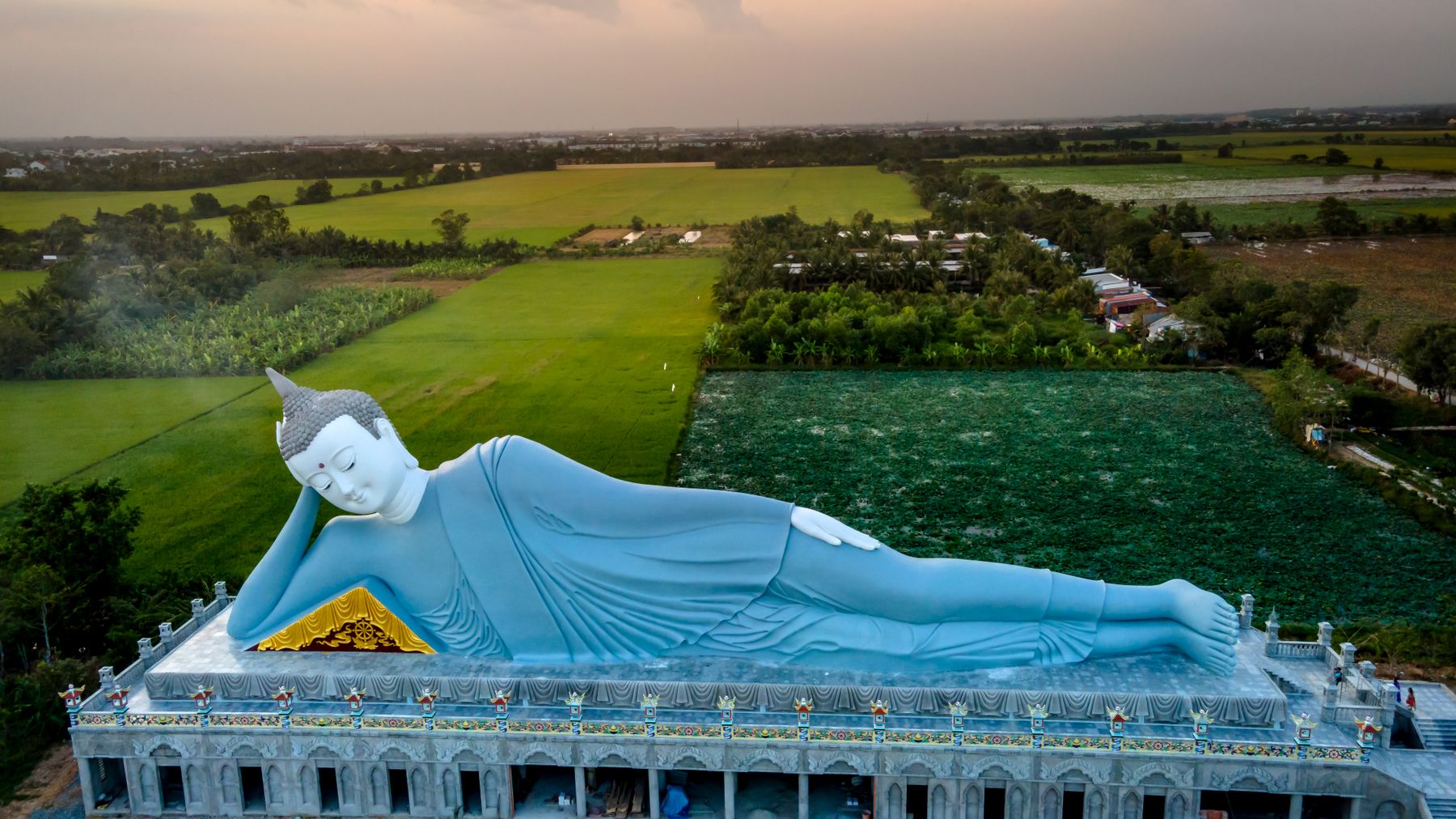
Photo by Quang Nguyen Vinh on Pexels
What to Do
Walk the Main Shrine Hall
The central building houses the altar and a bronze bust. The interior is kept simple — wood paneling, historical timeline displays, and offerings of fruit and flowers from locals. Photography is allowed but keep it respectful. No flash.
Explore the Garden Grounds
The bonsai collection behind the main hall is surprisingly extensive. Over 100 specimens, some decades old. The lotus ponds bloom best from June to August, but the gardens are maintained year-round.
Visit Ang Pagoda Nearby
Just 2 km south of the memorial, Ang Pagoda (Angkorajaborey) is one of the most significant Khmer pagodas in the Delta. The main hall dates to the 10th century (rebuilt multiple times) and features ornate Khmer carvings, Theravada Buddhist murals, and a resident community of monks. This is the real architectural highlight of a Tra Vinh visit.
Cycle the Khmer Pagoda Loop
Tra Vinh has over 140 Khmer pagodas scattered across the province. Rent a bicycle (50,000–80,000 VND per day from most guesthouses) and ride the rural roads south and west of town. Chua Hang, Chua Doi (the "bat pagoda" with its colony of fruit bats), and Chua Nodol are all within a 15 km radius.
Browse Tra Vinh Market
The central market on Dien Bien Phu Street is small but worth 30 minutes. Khmer snacks, dried fish, and local fruit — look for "banh tet / 越南春节 / テト)" wrapped in banana leaves and the unusual purple-fleshed sweet potatoes from the area.
Where to Eat Nearby
Tra Vinh's food scene reflects its Khmer heritage. Two things to seek out:
- Bun nuoc leo — a Khmer-style noodle soup with a pounded fish and lemongrass broth, served with banana blossom, water lily stems, and herbs. The stalls along Pham Ngu Lao Street near the market serve it for 25,000–35,000 VND a bowl. It doesn't taste like "pho" or "bun bo Hue" — the flavor profile is distinctly Khmer.
- Banh pia — a flaky mooncake-like pastry stuffed with durian and mung bean. Tra Vinh's version is less sweet than the Soc Trang style. Sold in boxes at bakeries around town, 60,000–80,000 VND for a box of four.
Where to Stay
Tra Vinh is a small city with limited accommodation, all budget to mid-range:
- Budget guesthouses: 150,000–250,000 VND per night. Basic fan rooms, clean enough. Try the guesthouses on Nguyen Dang and Le Loi streets.
- Mid-range hotels: 400,000–700,000 VND per night. Air-con, hot water, Wi-Fi. Phuong Nam Hotel and Thanh Tra Hotel are both central and functional.
Don't expect boutique stays or hostels with common areas. This is a provincial town, not Hoi An.

Photo by Nguyen Truong Khang on Pexels
Tips Locals Would Tell You
- Dress modestly at the memorial and at Khmer pagodas — cover shoulders and knees. This matters more here than it might at tourist-heavy sites elsewhere.
- Bring cash. Card acceptance in Tra Vinh is near zero outside hotels. There are ATMs (Vietcombank, Agribank) on Nguyen Dang Street.
- Combine with a Can Tho trip. Tra Vinh works as an overnight side trip from Can Tho. Do the floating markets in the morning, drive to Tra Vinh in the afternoon, explore the next morning, and loop back.
- Learn "sua" (xin chao is fine, but "sua" — milk — is the word you'll need at every coffee stall). Vietnamese coffee with condensed milk is the default order. A "ca phe sua da" here costs 12,000–18,000 VND.
Common Mistakes
- Rushing through. Travelers often try to "do" Tra Vinh in two hours between buses. The memorial alone is quick, but the pagoda circuit and the town's pace deserve at least one overnight.
- Skipping the Khmer pagodas. The memorial is fine, but Tra Vinh's real distinction is being the Khmer cultural heartland of the Delta. If you visit Den Tho Bac Ho and leave without seeing Ang Pagoda or Chua Doi, you've missed the point.
- Expecting English. Almost nobody in Tra Vinh speaks English beyond basic greetings. Download Vietnamese on Google Translate offline before you arrive.
Practical Notes
Tra Vinh is a slow, genuine corner of the Mekong Delta that happens to have a well-maintained memorial at its center. Budget one full day minimum — arrive in the afternoon, sleep, explore the next morning. Pair it with Can Tho for a two- or three-day Delta loop that gets you well beyond the usual tourist circuit.
Last updated · May 29, 2026 · independently researched, never sponsored.