What it is
Den Thuong (literally "Upper Temple") is a hillside shrine in Lao Cai city dedicated to Tran Hung Dao, the 13th-century general credited with repelling Mongol invasions. The temple complex sits at roughly 800 meters above sea level on a wooded ridge overlooking the Red River valley and the Chinese border crossing below. It's not large — you can walk the entire grounds in 30 minutes — but the setting is atmospheric: old banyan trees, incense smoke curling through tiled roofs, and views that stretch across the valley on clear mornings.
The current structure was rebuilt in the 1990s after wartime damage, though the site has held a shrine since at least the 18th century. For most travelers, it functions as a quiet cultural stop before or after the Sapa leg of a northern Vietnam (베트남 / 越南 / ベトナム) trip.
Why travelers go
Three reasons, honestly:
-
The view. On a clear day you get a wide panorama of Lao Cai city, the river, and the mountains beyond. It's one of the few elevated viewpoints accessible without a motorbike ride into the hills.
-
The atmosphere. Den Thuong draws local worshippers, not tour buses. You'll smell incense, hear chanting on festival days, and see grandmothers making offerings of fruit and "xoi" (sticky rice). It feels lived-in rather than museumified.
-
Convenience. If you're passing through Lao Cai — transferring from the overnight train to a bus headed for Sapa (사파 / 沙坝 / サパ) — the temple is a 10-minute taxi ride from the station. It fills an hour usefully.
Best time to visit
The temple is open year-round, but timing matters:
- Early morning (6:30–8:00 AM) gives you the best light for photos and fewer visitors. Mist often hangs in the valley at this hour between October and March.
- Hung Kings Festival (10th day of the third lunar month, usually April) bringsثم ceremonies and traditional performances. The temple gets crowded but it's genuinely festive — drums, processions, the works.
- Tet / 越南春节 / テト) sees heavy local traffic in the first three days of the lunar new year. Expect queues on the stone staircase.
- Rainy season (June–August) makes the stone steps slippery. Bring shoes with grip.
Weather in Lao Cai is cooler than lowland Vietnam. Even in summer, mornings at the temple hover around 22–25°C. In December and January, it can drop to 8–12°C — bring a layer.
How to get there
From Lao Cai train station
The temple is about 3 km from the station. A taxi (Grab or local) costs 30,000–50,000 VND. If you've got a backpack, leave it at your hotel or the station's luggage storage (10,000 VND/bag) before heading up.
From Sapa
Sapa is 35 km southwest. Buses and minivans run hourly (70,000–100,000 VND, 45 minutes). Get off at Lao Cai bus station, then grab a xe om or taxi to Den Thuong. Total time from Sapa town center: about one hour.
From Hanoi
The overnight train (SP3 or SP1) from Hanoi to Lao Cai takes roughly 8 hours, arriving around 5:30–6:00 AM. Perfect timing for an early temple visit before continuing to Sapa. Alternatively, the Hanoi–Lao Cai expressway cuts driving time to around 3.5 hours if you're in a private car.

Photo by Kirandeep Singh Walia on Pexels
What to do
- Climb the main staircase. Around 200 stone steps wind through trees. Take it slow — it's steeper than it looks.
- Visit the main hall. Tran Hung Dao's altar sits centrally. You can buy incense bundles (5,000 VND) at the entrance if you'd like to make an offering.
- Walk the back trails. Behind the main temple, a short path loops through forest to a secondary shrine. Quieter, shadier, good for a breather.
- Check the calligraphy. Several stone stelae near the entrance carry historical inscriptions. Even if you can't read Han-Nom script, the carved stonework is worth a look.
- Photography. The best angles are from the upper terrace looking back toward town, or from the staircase mid-climb with incense smoke in the foreground.
Where to eat
Den Thuong itself has no restaurants, but Lao Cai city has solid options within 2 km:
- Pho stalls along Nguyen Hue street — bowls run 35,000–50,000 VND. The broth here is typically the northern style: clear, beefy, minimal herbs compared to southern pho.
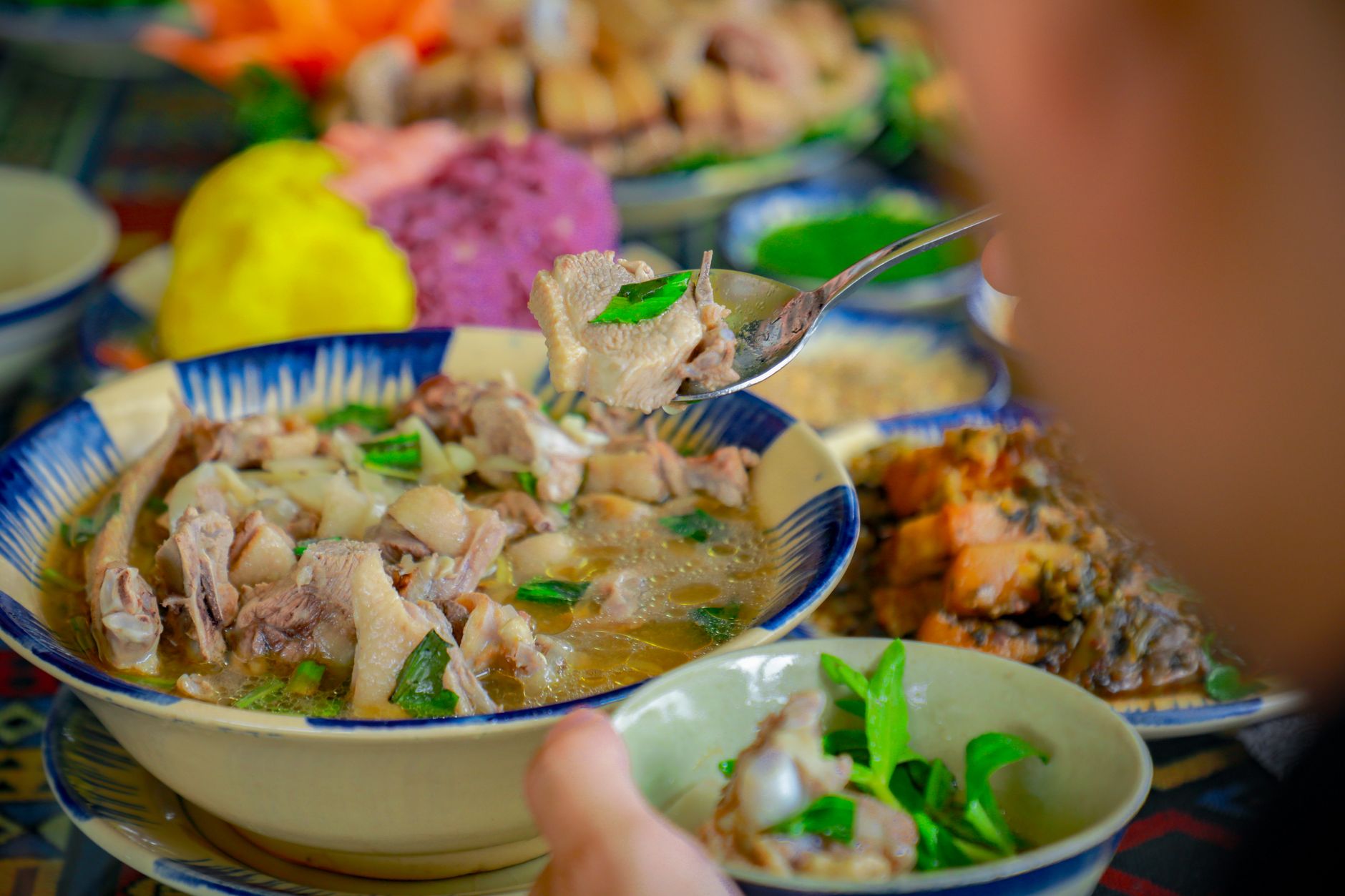
- "Thang co" (horse meat hotpot) is the regional specialty of Lao Cai's highland minorities. Try it at Coc Leu market area — about 80,000 VND per portion. Not for everyone, but it's authentic.
- Banh cuon vendors near the central market serve thin rice rolls with pork and mushroom filling, 25,000–40,000 VND.
- For Vietnamese coffee, the cafes along Hoang Lien street do decent "ca phe sua da" for 20,000–30,000 VND.
Where to stay
Most travelers sleep in Sapa rather than Lao Cai city, but if your train arrives late or you want an early temple visit:
- Budget: guesthouses near the train station run 200,000–350,000 VND/night. Basic but clean enough for one night.
- Mid-range: Sapaly Hotel or Lao Cai Star Hotel offer rooms around 500,000–800,000 VND with breakfast and decent Wi-Fi.
- Skip luxury here — save that budget for a Sapa homestay or lodge with valley views.
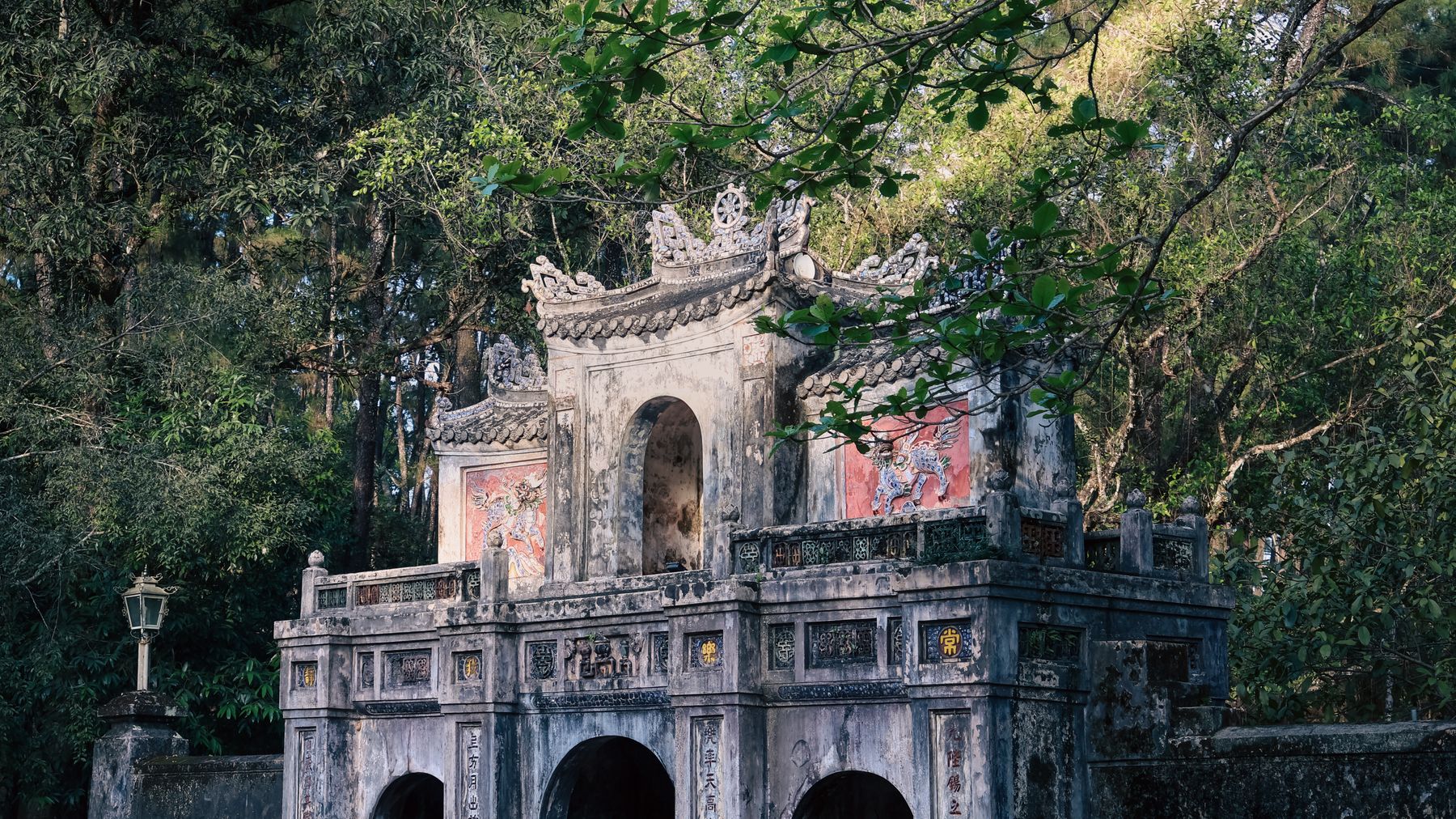
Photo by Minh Lê on Pexels
Practical tips
- Dress modestly. Shoulders and knees covered. This is an active place of worship, not just a tourist site.
- Bring cash. No ATMs at the temple. The nearest machines are in town near the market.
- Time budget: 45 minutes to 1.5 hours is plenty unless you're there for a festival.
- Combine it with a walk through Coc Leu market (the old border-trade market) if you have a morning free in Lao Cai.
Common mistakes
- Skipping it entirely. Most travelers blast through Lao Cai without stopping. If your Sapa bus isn't for another hour, Den Thuong beats sitting in a waiting room.
- Wearing sandals on the stairs. The stone gets slick, especially after rain. Trainers or hiking shoes are much safer.
- Visiting midday. The sun beats directly onto the staircase between 11 AM and 2 PM. No shade, no breeze. Go early or late.
- Expecting a grand complex. This isn't Bai Dinh or the Temple of Literature in scale. It's a local shrine with local energy — calibrate expectations accordingly.
Final note
Den Thuong won't be the highlight of a northern Vietnam trip — that's probably Sapa's rice terraces or Ha Giang's mountain passes. But it's a grounding stop: a real place where real people worship, with a view that reminds you Lao Cai is more than just a transit point. Worth the hour.
Last updated · May 29, 2026 · independently researched, never sponsored.