Den Tho Le Hoan sits in Xuan Lap commune, Tho Xuan district, about 40 km west of Thanh Hoa city center. It's the kind of place most foreign travelers blow right past on their way to somewhere else — and that's exactly why it's worth a stop.
What It Is
Den Tho Le Hoan is a temple complex dedicated to Le Hoan (941–1005), the founder of the Early Le dynasty and one of Vietnam (베트남 / 越南 / ベトナム)'s most respected military leaders. He's credited with repelling a Song dynasty invasion in 981, which bought centuries of independence for the country. The temple stands on land believed to be near his birthplace, and locals in Tho Xuan district treat it less as a tourist attraction and more as a living place of worship.
The complex was recognized as a National Historical Relic in 1986 and underwent significant restoration in the early 2000s. What you see today blends old wooden architecture with newer stonework, spread across a walled compound shaded by old banyan trees. It's modest compared to Hue's imperial sites or Hanoi's Temple of Literature, but that's part of the appeal — it feels like it belongs to the community around it, not to a tourism board.
Why Travelers Go
Most visitors are Vietnamese, often from Thanh Hoa province itself, coming for festivals or family prayer days. Foreign travelers who make it here tend to be history-focused or looking for something off the standard Hanoi-to-Hue corridor. The temple gives you a window into early Vietnamese dynastic history without crowds, ticket queues, or souvenir hawkers. If you're already passing through Thanh Hoa — maybe en route to Ninh Binh (닌빈 / 宁平 / ニンビン) or Phong Nha — it's a worthwhile detour.
Best Time to Visit
The big event is the Le Hoan Festival, held annually on the 7th and 8th of the third lunar month (usually March or April). During the festival, the temple comes alive with processions, traditional music, and offerings. It's crowded by local standards but nowhere near the chaos of Tet or Hung Kings Festival. Outside festival time, the temple is quiet year-round.
Weather-wise, aim for October through March — dry, cooler, and comfortable for walking around an open compound. April through September brings heavy heat and afternoon rains that can turn the surrounding roads muddy.

Photo by thAnh nguyễn on Pexels
How to Get There
From Thanh Hoa city, you have a few options:
- Motorbike or car: Head west on DT506 toward Tho Xuan. The ride is about 40 km and takes roughly 50–60 minutes depending on traffic. Roads are decent but narrow in spots. If you're renting a motorbike in Thanh Hoa, expect to pay 120,000–150,000 VND per day.
- Grab car: A one-way Grab from central Thanh Hoa runs around 200,000–280,000 VND. Availability can be thin in Tho Xuan for the return trip, so consider asking the driver to wait or arrange a round trip.
- Local bus: Buses from Thanh Hoa's bus station run to Tho Xuan town, roughly 15,000–20,000 VND. From Tho Xuan town center, you'll need a "xe om" (motorbike taxi) for the last 5 km to the temple — about 30,000 VND.
If you're coming from Hanoi (about 150 km north), take a Limousine van from Nuoc Ngam or Giap Bat station to Thanh Hoa (around 150,000–200,000 VND, 3 hours), then continue by motorbike or Grab.
What to Do
Walk the Temple Compound
The main hall houses Le Hoan's altar and a carved wooden statue. The architecture follows a traditional northern Vietnamese layout — a front gate, a courtyard, and three rear chambers. Take your time in the main hall; the woodwork on the columns and ceiling beams is detailed and well-maintained. Incense is usually burning, and you're welcome to light a stick yourself.
Read the Stele and Inscriptions
Several stone stele in the courtyard carry inscriptions about Le Hoan's life and the temple's restoration history. Most are in classical Chinese script, but a few informational signs in Vietnamese (and occasionally English) give context. This is where you'll learn about the 981 campaign and Le Hoan's role in shaping early Vietnamese statehood.
Visit During the Festival Procession
If your timing lines up with the Le Hoan Festival, you'll see palanquin processions, traditional drumming, and "ca tru" performances. Villagers dress in ceremonial "ao dai" and carry offerings through the surrounding lanes. It's one of the more authentic local festivals you'll find in Thanh Hoa province — no commercial booths, no entrance fee inflation.
Explore the Surrounding Village
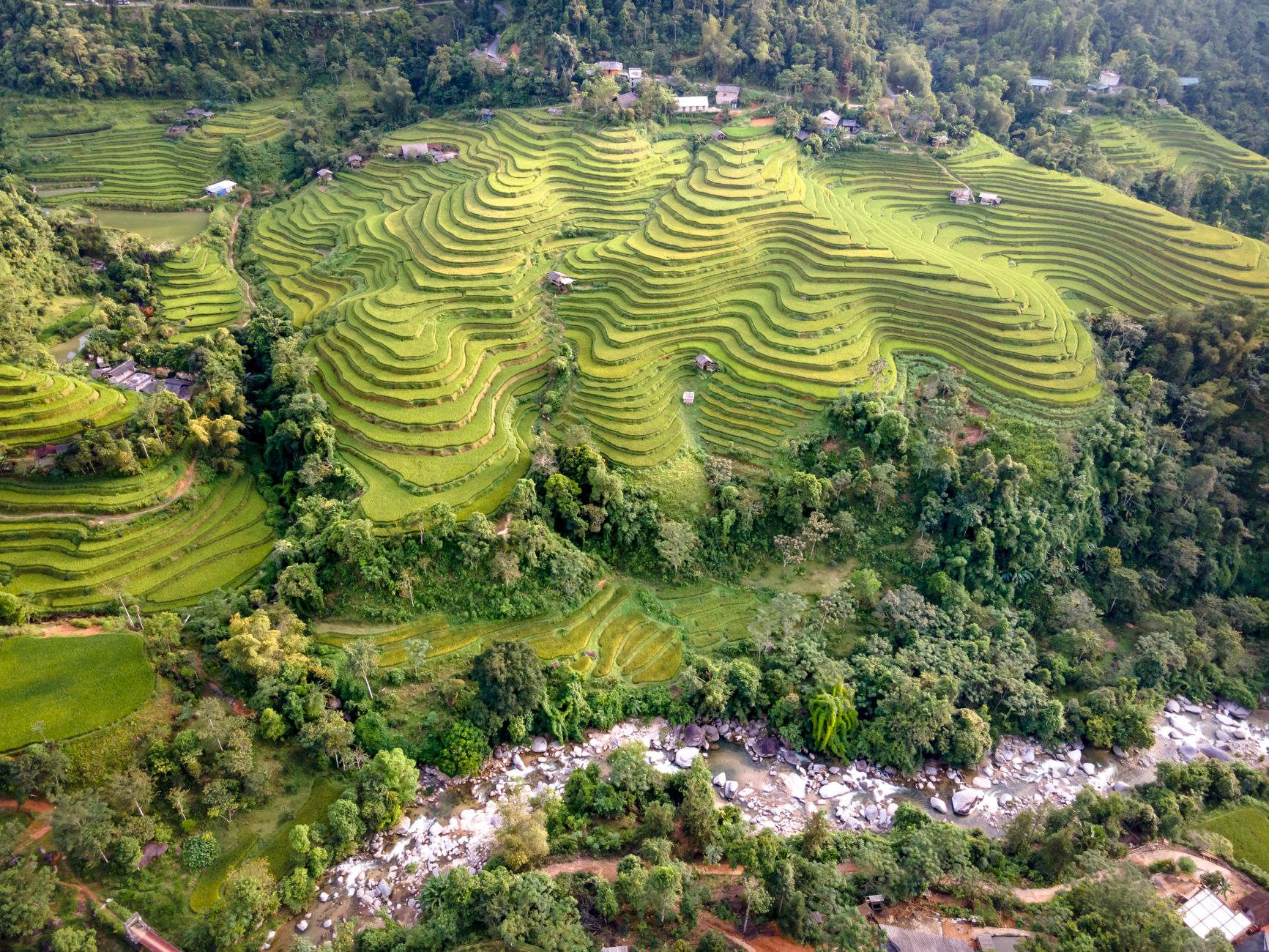
Xuan Lap commune is a farming village. Walking or riding a bike along the lanes near the temple gives you a look at daily rural life in central Vietnam — rice paddies, water buffalo, and small workshops making "nem chua" (fermented pork rolls), which Thanh Hoa is famous for.
Combine with Lam Kinh Historical Site
Lam Kinh, the royal citadel ruins of the Later Le dynasty, is only about 15 km further west. If you're already out in Tho Xuan, pairing both sites into a half-day loop makes sense. Lam Kinh has more open space and forested grounds — good for a slower afternoon.
Where to Eat Nearby
Tho Xuan town has basic "com binh dan" (everyday rice plate) restaurants, but two local specialties are worth seeking out:
- Nem chua Thanh Hoa: Thanh Hoa's signature fermented pork roll, wrapped in banana and fig leaves. You'll find vendors along the main road in Tho Xuan. A bundle of 10 rolls costs around 30,000–50,000 VND. Tangy, slightly sour, and pairs well with cold beer.
- Banh cuon: Thin steamed rice rolls filled with minced pork and mushrooms, served with dipping sauce. Look for small breakfast shops near Tho Xuan's market area. A plate runs 20,000–30,000 VND.
For a fuller meal, head back toward Thanh Hoa city where restaurant options expand significantly — grilled seafood joints along Quang Trung street are a local go-to.

Photo by HONG SON on Pexels
Where to Stay
Tho Xuan doesn't have tourist-grade hotels. Your best bet is to base in Thanh Hoa city and day-trip to the temple.
- Budget: Guesthouses and mini-hotels near Thanh Hoa train station, 200,000–350,000 VND/night.
- Mid-range: Muong Thanh Grand Thanh Hoa or similar, around 600,000–900,000 VND/night. Clean, air-conditioned, breakfast included.
- Comfort: FLC Thanh Hoa resort (about 15 km east of the city center, beachside) if you want to make a weekend of it, from 1,000,000 VND/night.
Practical Tips
- Dress modestly. The temple is an active place of worship. Cover your shoulders and knees. Shoes off before entering the main hall.
- No entrance fee as of early 2025, though a small donation box sits near the altar. Dropping 20,000–50,000 VND is customary.
- Bring cash. There are no ATMs at the temple. The nearest reliable ATM is in Tho Xuan town.
- Vietnamese phrasebook helps. Almost nobody here speaks English. Even basic greetings — "xin chao," "cam on" — go a long way with temple caretakers.
Mistakes to Avoid
- Don't expect a big production. This is a local heritage site, not a polished tourist complex. There's no audio guide, no cafe, no gift shop. That's the point.
- Don't come without a plan for return transport. Grab availability drops to near zero in rural Tho Xuan after dark. Arrange your ride back before you arrive.
- Don't skip Lam Kinh. Coming all the way out to Tho Xuan for just one temple and turning around feels like a missed opportunity. The two sites together justify the trip.
Last updated · May 29, 2026 · independently researched, never sponsored.