Den Tran is the kind of place that rewards you for showing up on an ordinary Tuesday. No tour buses, no selfie sticks — just incense smoke curling through centuries-old courtyards and locals going about their devotions like they've done for generations.
What It Is
Den Tran (Tran Temple) is a complex of temples and shrines dedicated to the Tran Dynasty (1225–1400), one of Vietnam (베트남 / 越南 / ベトナム)'s most celebrated ruling families. They're the ones who repelled Mongol invasions three times — a fact every Vietnamese schoolchild knows by heart.
The complex sits in Tuc Mac village, Loc Vuong ward, in what was historically Nam Dinh city. Following the provincial merger, this area now falls under the broader Ninh Binh (닌빈 / 宁平 / ニンビン) administrative region. The site includes three main structures: Thien Truong Temple (dedicated to 14 Tran kings), Co Trach Temple (honoring Tran Hung Dao, the general who defeated the Mongols), and a smaller shrine to Tran Dynasty queens.
The temples were originally built in the 13th century, destroyed over time, and reconstructed in the 17th century. What you see today is mostly that later reconstruction, with restorations in the 1990s and 2000s.
Why Travelers Go
Den Tran isn't a UNESCO site and doesn't make many itinerary listicles. That's part of the appeal. People come here for three reasons:
- The seal-bestowing ceremony — the annual "Khai An" festival in the first lunar month draws thousands who believe receiving a stamped seal brings luck for the year. It's chaotic, intense, and genuinely fascinating.
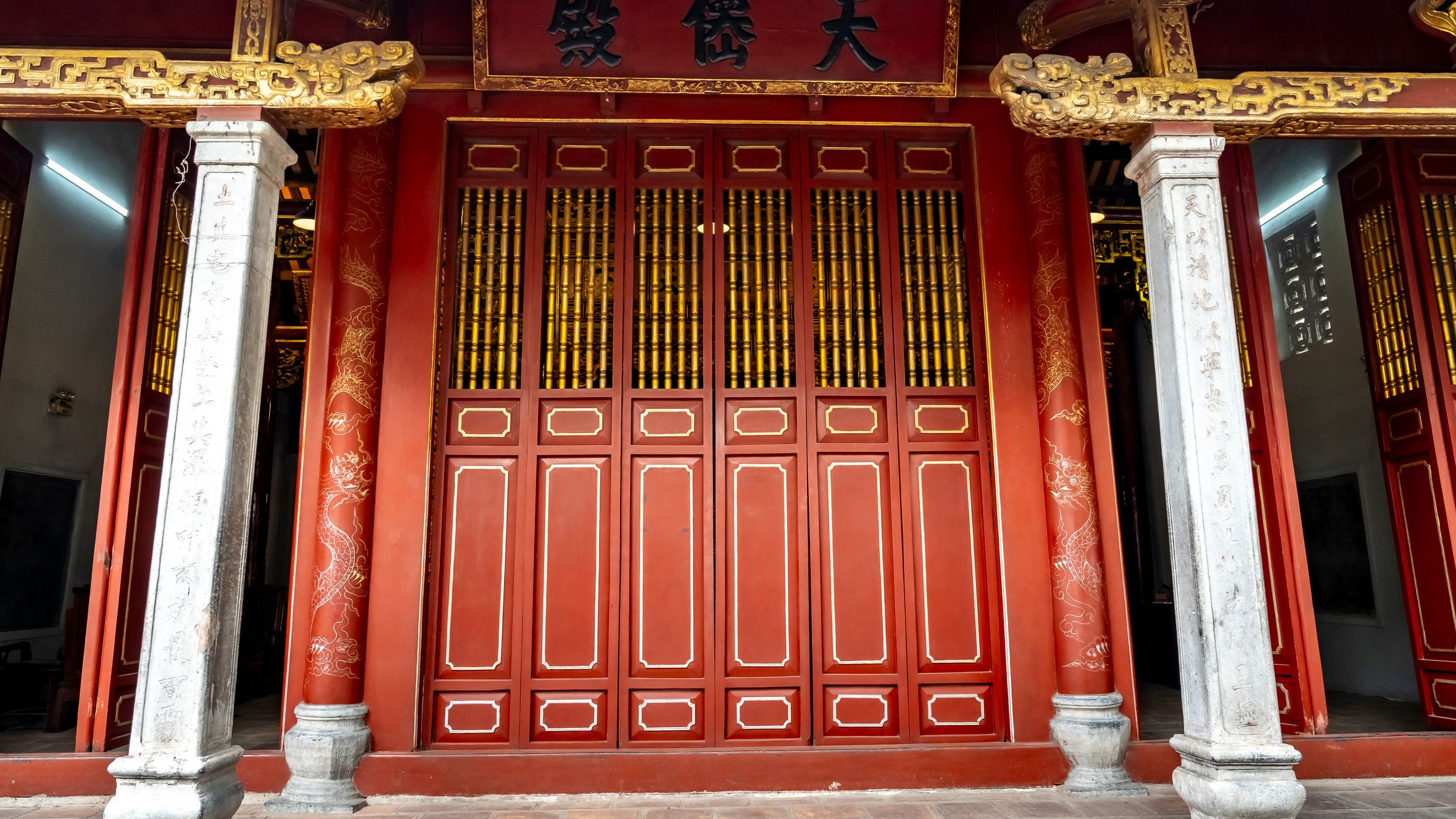
- Architecture without the crowds — the wooden carvings, dragon motifs, and layered roof structures rival anything in Hue's Imperial Citadel, but you can actually photograph them without 40 people in frame.
- Context for Ninh Binh trips — if you're already visiting Tam Coc, Hoa Lu, or Bai Dinh, Den Tran adds a different texture. Less landscape, more living history.
Best Time to Visit
January–March ([lunar new year](/posts/tet / 越南春节 / テト)-lunar-new-year-guide) period): The Khai An festival falls on the 14th–16th of the first lunar month (usually February or early March). This is peak energy — drums, processions, huge crowds. Go if you want spectacle.
September–November: Dry, cooler weather. Minimal visitors. The courtyards are quiet, the light is soft in the afternoons. This is when photographers and history buffs should come.
Avoid July–August if possible. The heat is brutal and afternoon downpours turn the grounds muddy.
How to Get There
From Ninh Binh city center, Den Tran is about 30 km northeast — roughly 40 minutes by motorbike or car along QL10.
- Motorbike rental: 120,000–150,000 VND/day from most Ninh Binh hotels. The road is flat and straightforward.
- Grab car: Around 200,000–250,000 VND one way from Ninh Binh station area.
- Local bus: Catch a bus toward Nam Dinh from Ninh Binh bus station (about 25,000 VND), then a xe om (motorbike taxi) for the last 3 km to the temple.
If you're coming from Hanoi directly, it's about 90 km — under two hours by car via the Cau Gie–Ninh Binh expressway, exiting toward the former Nam Dinh area.

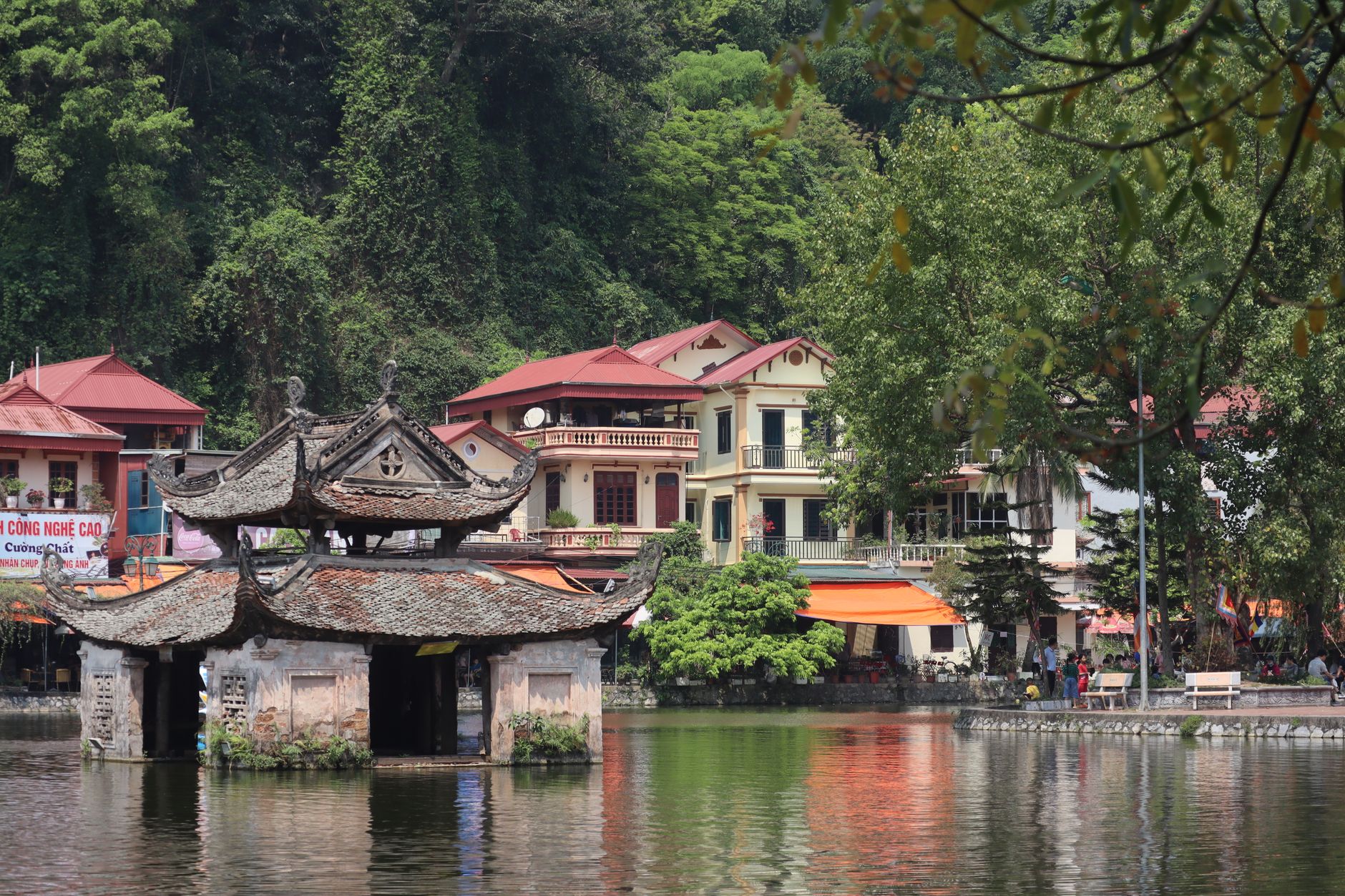
Photo by Valeria Drozdova on Pexels
What to Do
Walk the Full Complex
Most visitors only see Thien Truong Temple at the front. Walk through to Co Trach Temple behind it — the altar arrangement honoring Tran Hung Dao is more elaborate, and the rear garden is where locals come to sit and talk. Budget 60–90 minutes for the full loop.
Read the Stelae
Several stone stelae in the courtyard carry inscriptions from the 17th and 18th centuries. They record temple restorations and donor names. You won't find English translations on-site, but a Vietnamese companion or a translation app makes these surprisingly interesting.
Visit the Adjacent Tran Dynasty Museum
A small museum (more of an exhibition hall) on the grounds displays Tran-era ceramics, weapons, and documents. Free entry. It takes 20 minutes and gives useful context before you explore the temples.
Attend a Ceremony
Even outside festival season, offerings happen daily — particularly on the 1st and 15th of each lunar month. Watching families lay out fruit, incense, and paper offerings is a window into how ancestor veneration works in practice. Be respectful: don't step over offerings, keep your voice down, ask before photographing people.
Explore Tuc Mac Village
The surrounding village has narrow lanes, banyan trees, and a communal house worth a 15-minute wander. It's not "scenic" in the postcard sense, but it's real.
Where to Eat Nearby
The area around Den Tran isn't a food destination, but two things are worth seeking:
- "Pho" Nam Dinh style — the local pho here uses a slightly sweeter, more pork-forward broth than Hanoi's version. Look for any shop with a queue on Tran Hung Dao street in the nearby urban area. A bowl runs 35,000–50,000 VND.
- "Banh cuon" — rice rolls filled with minced pork and wood ear mushroom, served with fried shallots and dipping sauce. The Nam Dinh version is thinner and more delicate than what you'll find in Hanoi. Street stalls near the market serve this for breakfast (20,000–30,000 VND).
Where to Stay
Most travelers base themselves in Ninh Binh city (30 km away), where accommodation ranges from 200,000 VND hostels to 2,000,000+ VND boutique hotels near Tam Coc.
If you want to stay closer to Den Tran, basic local guesthouses ("nha nghi") exist in the former Nam Dinh urban area for 250,000–400,000 VND/night. Don't expect English-speaking staff or international-standard amenities. They're clean, functional, and cheap.

Photo by Karolina on Pexels
Practical Tips Locals Would Tell You
- Dress modestly. Long pants or a skirt below the knee, covered shoulders. This is an active religious site, not a ruin.
- Bring small bills. If you want to make an offering or buy incense at the gate (10,000–20,000 VND), vendors rarely have change for 500,000 notes.
- Remove your hat inside temple halls. Shoes off where indicated (look for the pile of sandals at the door).
- The seal ceremony is NOT the whole festival. If you visit during Khai An, arrive early morning to see the wrestling matches, chess games, and water puppet performances happening in the grounds. Water Puppetry here is rougher and more energetic than Hanoi's tourist shows.
Common Mistakes to Avoid
- Showing up only for the seal during festival and leaving immediately. The ceremony itself takes minutes; the surrounding cultural activities are the real draw.
- Not bringing water. There's limited shade in the courtyards and no convenience store inside the complex.
- Expecting English signage. There's almost none. Download a translation app or bring a Vietnamese phrasebook.
- Skipping the back temples. The rear section of the complex is quieter, better preserved, and far more atmospheric than the front.
Practical Notes
Entry to Den Tran is free year-round. The complex is open roughly 7:00–17:30 daily, with slightly extended hours during festival periods. Combine it with a day trip to Ninh Binh's limestone landscape — the contrast between quiet temple courtyards and the karst scenery at Tam Coc or Hoa Lu makes for a full, varied day in the north.
Last updated · May 29, 2026 · independently researched, never sponsored.