What it is
The Vietnam (베트남 / 越南 / ベトナム) Museum of Ethnology (Bao Tang Dan Toc Hoc Viet Nam) sits on Nguyen Van Huyen Street in Cau Giay District, about 8 km west of Hoan Kiem Lake. It opened in November 1997 and was designed in collaboration with French museologists — the building itself, shaped like a Dong Son bronze drum when seen from above, is worth noting before you even step inside.
The museum documents the cultures, daily lives, and traditions of Vietnam's 54 officially recognized ethnic groups. Unlike the propaganda-heavy museums closer to the Old Quarter, this one lets objects and context do the talking. It's run by the Vietnam Academy of Social Sciences and houses around 15,000 artifacts and 42,000 photographs, though only a fraction is on display at any time.
Why travelers actually go
If you only visit one museum in Hanoi, this is the one. The indoor galleries are well-curated, but the outdoor section is what sets it apart — full-scale houses from ethnic communities across Vietnam are reconstructed on landscaped grounds. A Bahnar communal house ("rong") towers over the garden at nearly 20 meters. There's a Tay stilt house, a Cham tower, and an Ede longhouse you can walk through.
It's also one of the few places in the city where you can get a genuine sense of how diverse Vietnam is beyond the Kinh majority. If you're planning trips to Sapa, Ha Giang, or the Central Highlands (중부 고원 / 中部高原 / 中部高原), spending a couple of hours here first gives you real context for what you'll see.
Best time to visit
The museum is open Tuesday through Sunday, 8:30 AM to 5:30 PM. Closed Mondays.
For weather, October through December is ideal — cooler air, low humidity, and the outdoor section is comfortable to walk. January and February work too, though it can get drizzly and grey. Avoid July and August if you can; Hanoi's heat and humidity make the outdoor grounds genuinely unpleasant after 11 AM.
Weekday mornings are quietest. Weekend afternoons bring school groups and families, and the paths between outdoor houses get crowded. Aim for a Tuesday or Wednesday morning if your schedule allows it.
How to get there
From the Old Quarter (Hoan Kiem area), you have a few options:
- Grab or taxi: 20-30 minutes depending on traffic. Expect 50,000-80,000 VND one way. This is the simplest option.
- Bus: Route 14 runs from the city center toward Cau Giay and stops near the museum. Around 8,000 VND per ride. Takes 40-50 minutes and requires a short walk at the end.
- Motorbike: If you're renting one, the ride is straightforward along Cau Giay Street. Parking at the museum costs 5,000-10,000 VND.
Don't try walking from the Old Quarter — it's too far and Hanoi sidewalks aren't built for long strolls.

Photo by Quang Nguyen Vinh on Pexels
What to do inside
Walk the indoor galleries floor by floor
The ground floor covers the Kinh (Viet) majority and lowland groups. The upper floor focuses on highland and smaller ethnic communities — Hmong, Dao, Thai, Muong, Ede, Jarai, and others. Displays include clothing, farming tools, ritual objects, and wedding items. The textile collection is particularly strong. Budget 60-90 minutes for the indoor section.
Explore the outdoor exhibition
This is where the museum earns its reputation. Walk through over a dozen full-scale traditional houses spread across the grounds. The Bahnar rong is the showpiece, but the Viet water puppet stage and the Cham display house are worth lingering at. Allow at least 45 minutes. Wear shoes you're comfortable walking on gravel paths in.
Catch a water puppetry performance
The museum runs Water Puppetry shows on weekends and occasional weekdays at the outdoor pool stage. Check the schedule at the ticket counter — performances are usually at 10:00 AM and 2:30 PM. It's a smaller, quieter alternative to the Thang Long theatre near Hoan Kiem, and you're watching it in an outdoor setting that feels closer to how the art form was originally performed in village ponds.
Visit the Southeast Asia gallery
Opened in 2013 in a separate building on the grounds, this section covers cultures across the broader region — Indonesia, Laos, Cambodia, and others. It's less visited than the main building, which means fewer crowds. The textiles and boat displays here are genuinely interesting if you have the time.
Browse the gift shop
Not the usual tourist-shop situation. The museum shop sells crafts sourced from ethnic communities — brocade bags, handwoven scarves, basketwork. Prices are fixed and fair, and the quality is a step above what you'll find at Dong Xuan Market.
Where to eat nearby
The museum's own café serves decent Vietnamese coffee and simple meals, but you're better off heading out for proper food.
- "Bun cha" on Nguyen Van Huyen Street: Several small local places serve Hanoi's signature grilled pork and noodle dish within walking distance of the museum entrance. A full plate with dipping broth runs 40,000-55,000 VND.
- "Pho" along Cau Giay Street: Head east toward the Cau Giay intersection for reliable pho shops. Nothing fancy — plastic stools, quick service, 45,000-60,000 VND per bowl. Pho Thin Cau Giay is a solid pick.
If you want egg coffee or something more atmospheric, save it for when you're back in the Old Quarter.
Where to stay
Most travelers stay in the Old Quarter or around Hoan Kiem Lake and visit the museum as a half-day trip, which makes the most sense. There's no compelling reason to stay in Cau Giay unless you have business there.
- Budget (Old Quarter hostels/guesthouses): 200,000-400,000 VND per night
- Mid-range (boutique hotels near Hoan Kiem): 800,000-1,500,000 VND per night
- Upscale (French Quarter or West Lake area): 2,500,000-5,000,000 VND per night
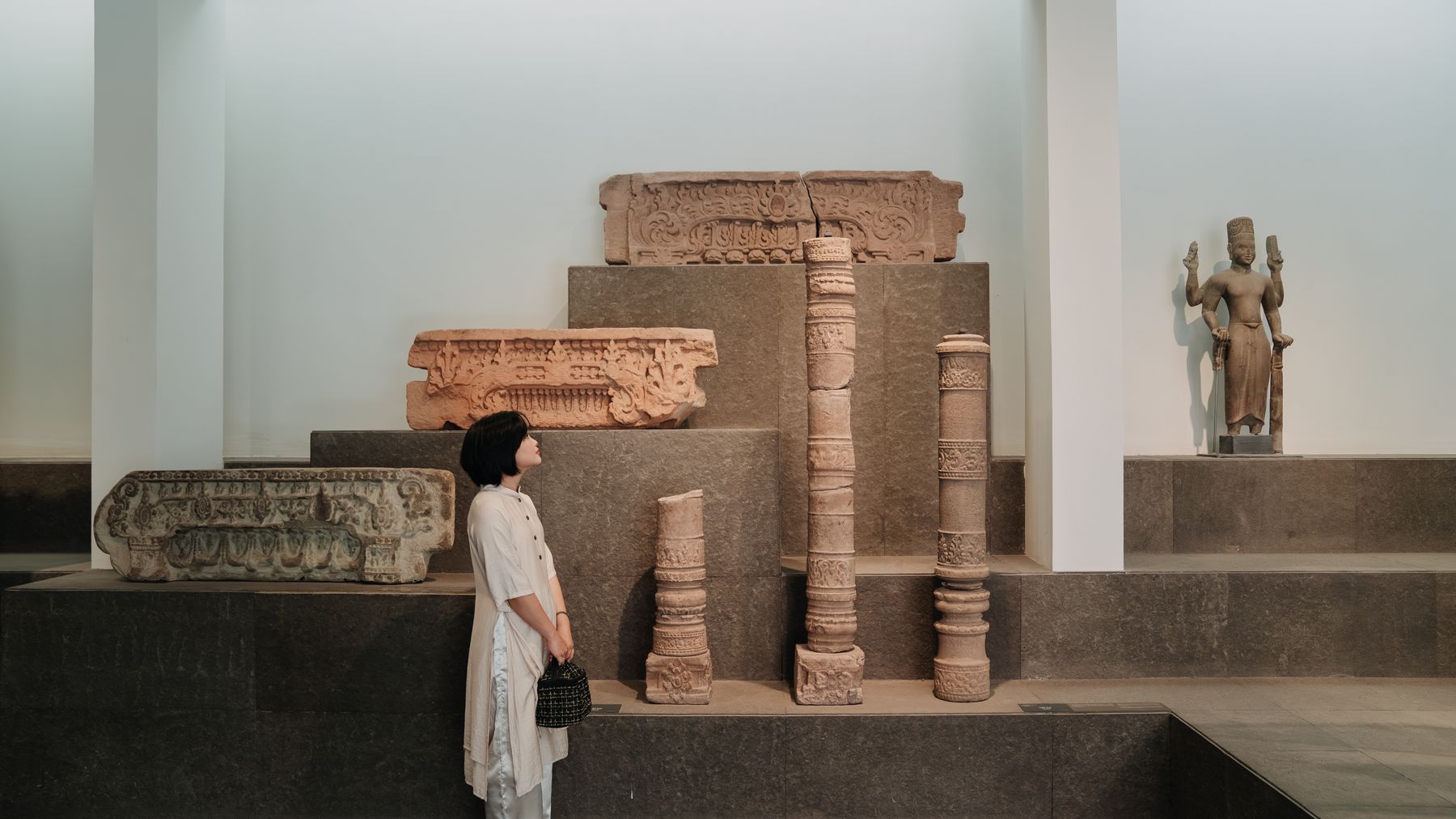
Photo by Huy Nguyễn on Pexels
Practical tips locals would tell you
- Admission is 40,000 VND for adults (foreign visitors). Students with ID get a discount. Children under 6 are free.
- Rent the audio guide (available in English, French, Japanese, and Vietnamese) for 50,000 VND. The indoor labels are decent, but the audio adds stories you won't get from signage alone.
- Bring water. The outdoor section has limited shade in summer, and there's no vendor between the houses.
- Photography is allowed everywhere except where specifically marked. No flash in the indoor galleries.
- Combine it with the nearby Dich Vong area if you want to see a regular Hanoi neighborhood that tourists rarely visit — local markets, street food stalls, zero souvenir shops.
Common mistakes to avoid
- Skipping the outdoor section. Some visitors spend all their time indoors and miss the best part. The reconstructed houses are the reason this museum stands out from every other museum in Hanoi.
- Coming on a Monday. It's closed. Every week. Check before you go.
- Visiting after 3:30 PM. The grounds are large, and if you arrive late you'll feel rushed. Start by noon at the latest to see everything comfortably.
- Taking a taxi without using Grab. Street taxis near the museum sometimes run rigged meters for the return trip. Use the Grab app — it's standard practice in Hanoi and removes the hassle.
Practical notes
Budget a solid half day for the museum — two hours minimum, three if you're genuinely interested. It pairs well with a morning at the Temple of Literature or an afternoon exploring West Lake. Of all the cultural stops in Hanoi, this one rewards the time you give it.
Last updated · May 29, 2026 · independently researched, never sponsored.