What it is
Suoi Giang is a commune perched at around 1,400m elevation in the highlands northwest of Hanoi, now part of the expanded Lao Cai province (following its merger with the former Yen Bai province). The area is home to hundreds of ancient "shan tuyet" tea trees — some over 300 years old, with trunks wider than a person's arm span. The Hmong community here has cultivated these trees for generations, harvesting leaves by hand from gnarled branches that twist upward through the mist.
Unlike the manicured, flat-topped rows you see in Moc Chau or Thai Nguyen, Suoi Giang's tea grows semi-wild on steep slopes. The trees aren't trimmed into hedges; they're left to grow tall, and pickers climb ladders or shimmy up trunks to reach the top leaves. It looks nothing like a typical Vietnamese tea plantation, and that's the point.
Why travelers go
Three reasons, mostly:
-
The landscape. Rolling green hills disappearing into cloud cover, ancient trees draped in moss, valleys dropping away below unpaved roads. It's dramatic without being touristy — you won't find selfie platforms or glass-bottom walkways here.
-
The tea. Shan tuyet from old-growth trees has a different character than plantation tea — thicker body, less astringency, a lingering sweetness. You can buy it directly from Hmong families for 200,000–400,000 VND per kilogram depending on grade.
-
The quiet. Suoi Giang sees a fraction of the visitors that Sapa gets, despite being in the same broader region. If you've done the Sapa circuit and want something less developed, this delivers.
Best time to visit
The tea hills look best from March through May (spring harvest, bright green new growth) and September through November (autumn harvest, cool air, less rain). December and January bring fog that can swallow entire hillsides — atmospheric if you like moody landscapes, but you might not see much beyond 50 meters.
Avoid June through August if you dislike mud. The roads get slippery and landslides occasionally block access for a day or two.
How to get there
From Hanoi (하노이 / 河内 / ハノイ), you're looking at roughly 250 km — about 5–6 hours by motorbike or private car via the Noi Bai–Lao Cai expressway, exiting toward Nghia Lo, then climbing into the hills. The last 30 km from Nghia Lo town up to Suoi Giang is a winding mountain road, paved but narrow with sharp turns and no guardrails in places.
By motorbike: The most common approach for independent travelers. Rent in Hanoi (150,000–200,000 VND/day for a Honda Wave; more for an XR150) and ride up in one long day, or break the trip in Nghia Lo.
By bus + xe om: Catch a bus from Hanoi's My Dinh station to Nghia Lo (around 150,000 VND, 4 hours), then hire a local motorbike taxi up the mountain (negotiate — expect 150,000–200,000 VND one way).
By car: Hiring a private driver from Hanoi runs about 2,500,000–3,500,000 VND round trip. Worth it if you're in a group of 3–4.
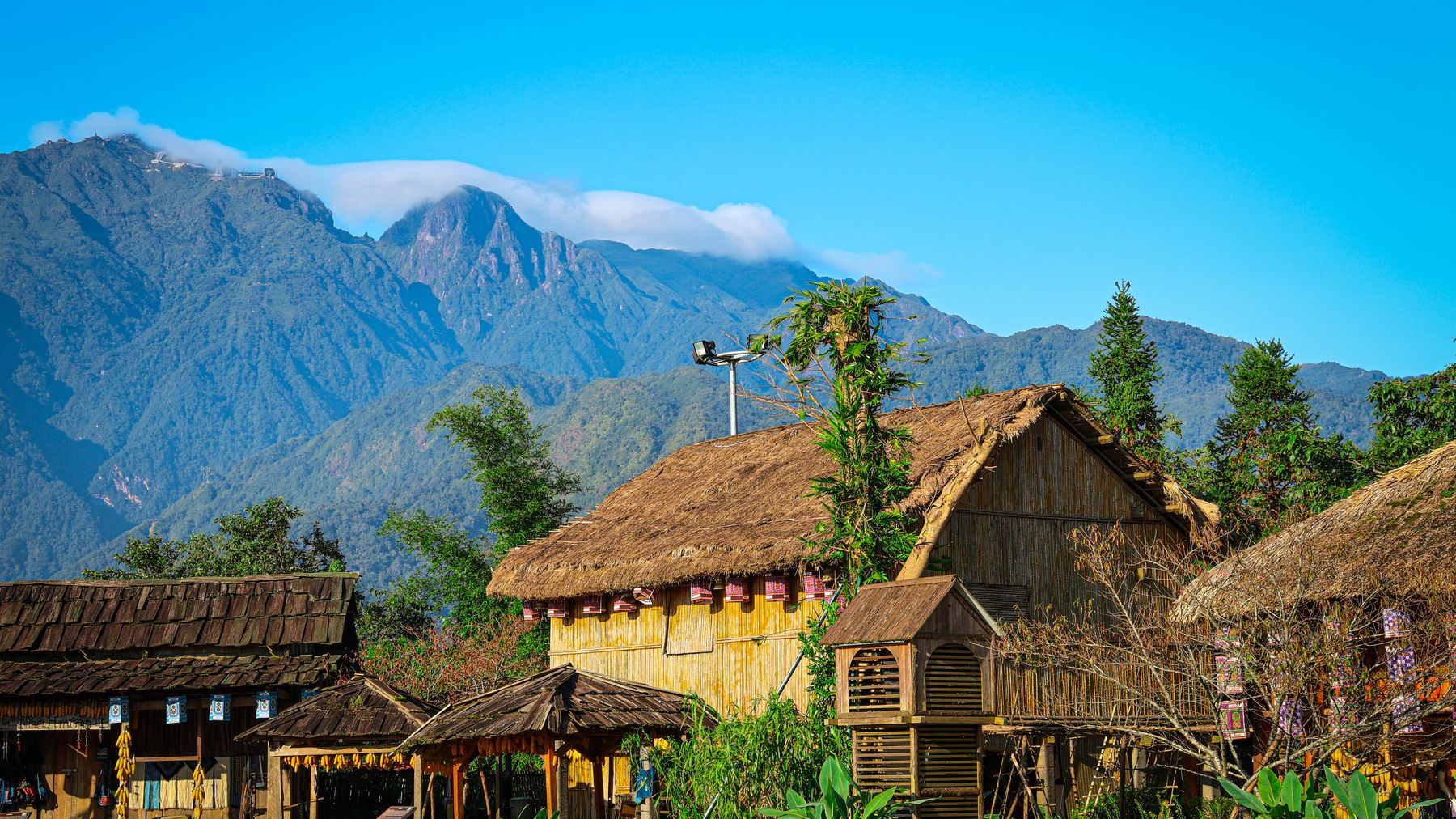
Photo by Haneul Trac on Pexels
What to do
Walk the tea hills
The main draw. No formal trails exist — you walk along dirt paths between the ancient trees, through Hmong hamlets, past drying racks where fresh leaves wilt in the sun. A good loop takes 2–3 hours. Ask a local family if you can watch them process tea; most are happy to show you the hand-rolling and pan-firing steps.
Visit the "king tea tree"
The oldest documented shan tuyet tree in Suoi Giang — estimated at over 400 years — sits on a hillside about 2 km from the commune center. It's become a minor pilgrimage for tea enthusiasts. The trunk is massive, the canopy wide. Worth a short detour.
Catch sunrise from Suoi Giang peak
At roughly 1,600m, the viewpoint above the commune offers a sea-of-clouds panorama on clear mornings. You need to be there by 5:30–6:00 AM. The road up is steep and unpaved — a motorbike handles it, a sedan might not.
Try local Hmong food
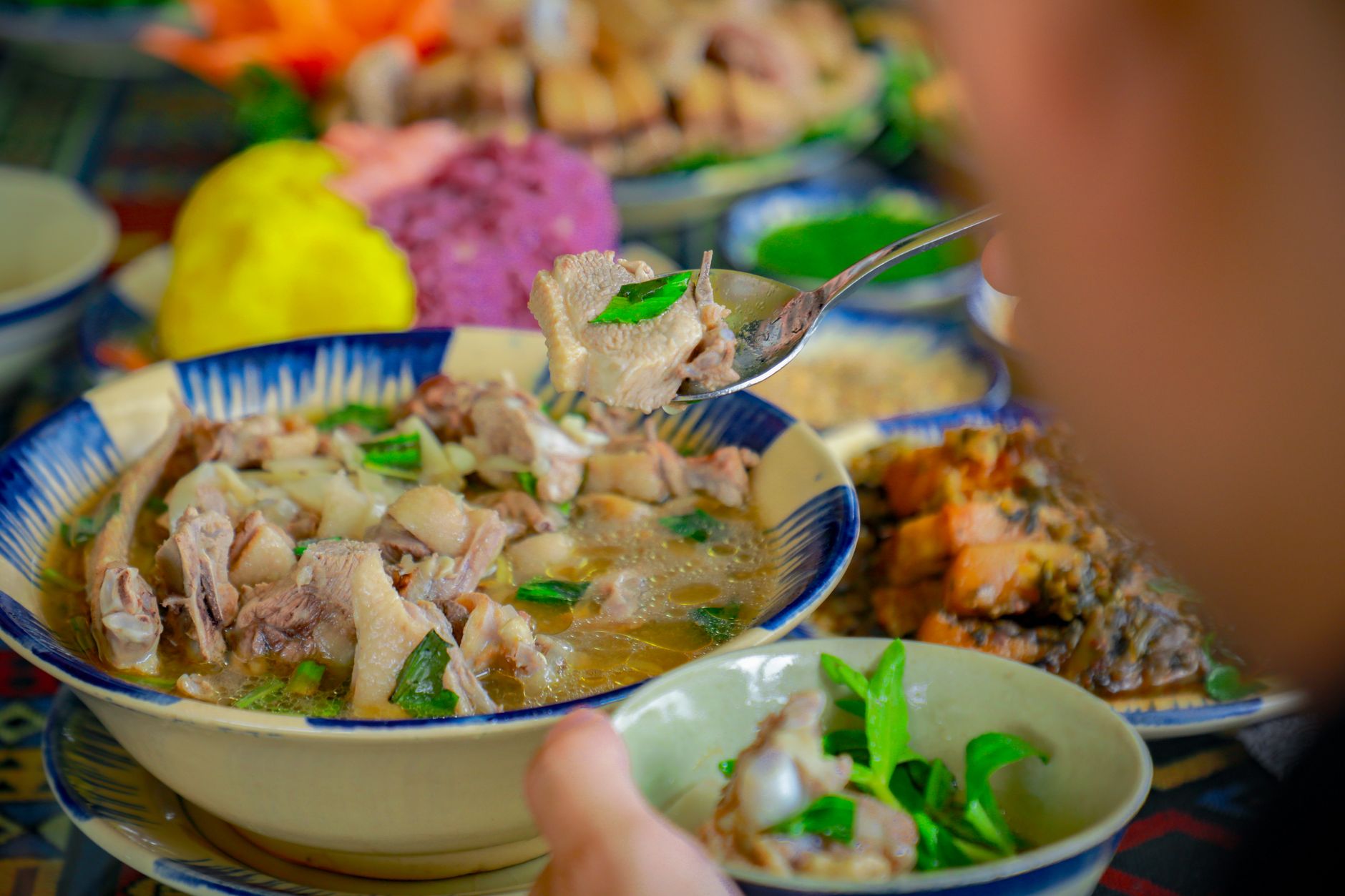
Look for "thang co" (a sour, pungent horse-meat hotpot traditional to the Hmong) and "xoi ngu sac" (five-color sticky rice). Both are available at small family-run eateries along the main road through the commune.
Where to eat
There are no proper restaurants — just a handful of family kitchens that serve meals to visitors. Expect rice, stir-fried vegetables, grilled pork or chicken, and tea served constantly. A full meal runs 80,000–120,000 VND per person. If you have dietary restrictions, bring your own snacks. Options are limited and menus don't exist — you eat what's cooked.
For Vietnamese coffee, you'll need to drop back down to Nghia Lo town, where a few cafes along the main strip serve decent "ca phe sua da (연유커피 / 越南冰咖啡 / ベトナムアイスコーヒー)."
Where to stay
Homestays are the only real option in Suoi Giang itself. Hmong families offer basic rooms or mattresses on the floor — clean enough, cold at night (bring a sleeping bag October through March). Expect 150,000–250,000 VND per person including dinner and breakfast.
Nghia Lo town has guesthouses and a couple of small hotels if you want a hot shower and a proper bed (300,000–500,000 VND/night). It's a 45-minute ride back down the mountain.
There's no Airbnb presence here and no hotel booking sites cover Suoi Giang. You show up, ask around, or call ahead if you have a local contact.
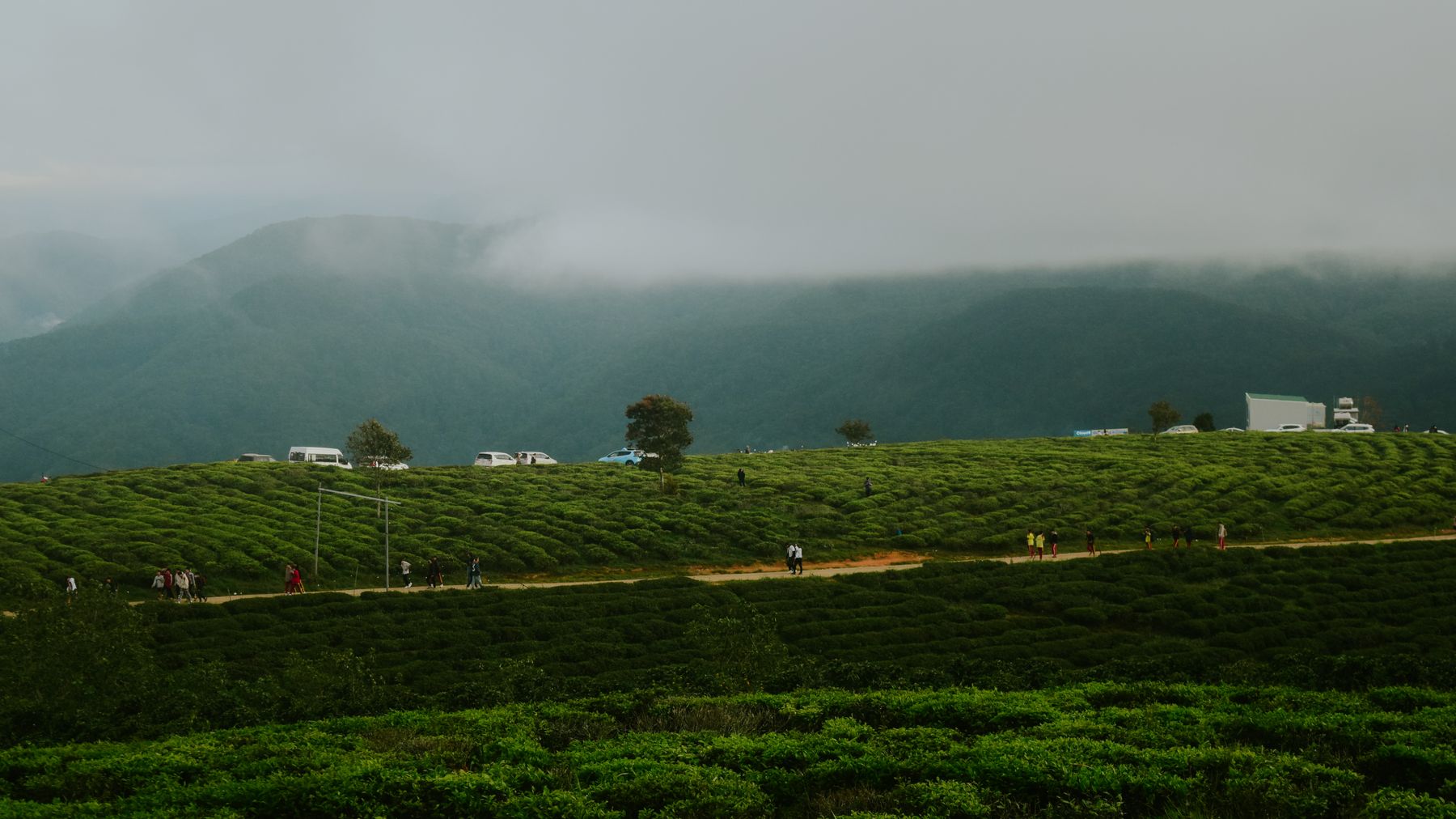
Photo by Dongdilac on Pexels
Practical tips
- Bring cash. No ATMs in Suoi Giang. The nearest is in Nghia Lo.
- Phone signal is patchy — Viettel works best up here. Download offline maps before you climb.
- Pack layers. Even in summer, mornings at 1,400m are cool. In winter, it drops near freezing.
- Fuel up in Nghia Lo. There's no petrol station in the commune.
- Respect the trees. Don't climb them for photos — they're living, producing assets for local families.
Common mistakes
Trying to day-trip from Hanoi. The 5-hour drive each way leaves you exhausted with barely an hour on the hills. Stay at least one night.
Coming without a motorbike. Getting around Suoi Giang on foot is possible but slow. The tea hills spread across several kilometers of terrain. A bike lets you cover more ground.
Expecting Sapa-level infrastructure. No tour offices, no English menus, no guided treks. That's part of the appeal, but prepare accordingly.
Final note
Suoi Giang isn't a destination you stumble into — it takes effort to reach and offers little in the way of comfort. What it gives back is a quieter, more honest version of highland Vietnam: ancient trees, working farms, and tea served by the people who grew it. If that sounds like your kind of travel, the drive is worth it.
Last updated · May 29, 2026 · independently researched, never sponsored.