What Tan Cuong actually is
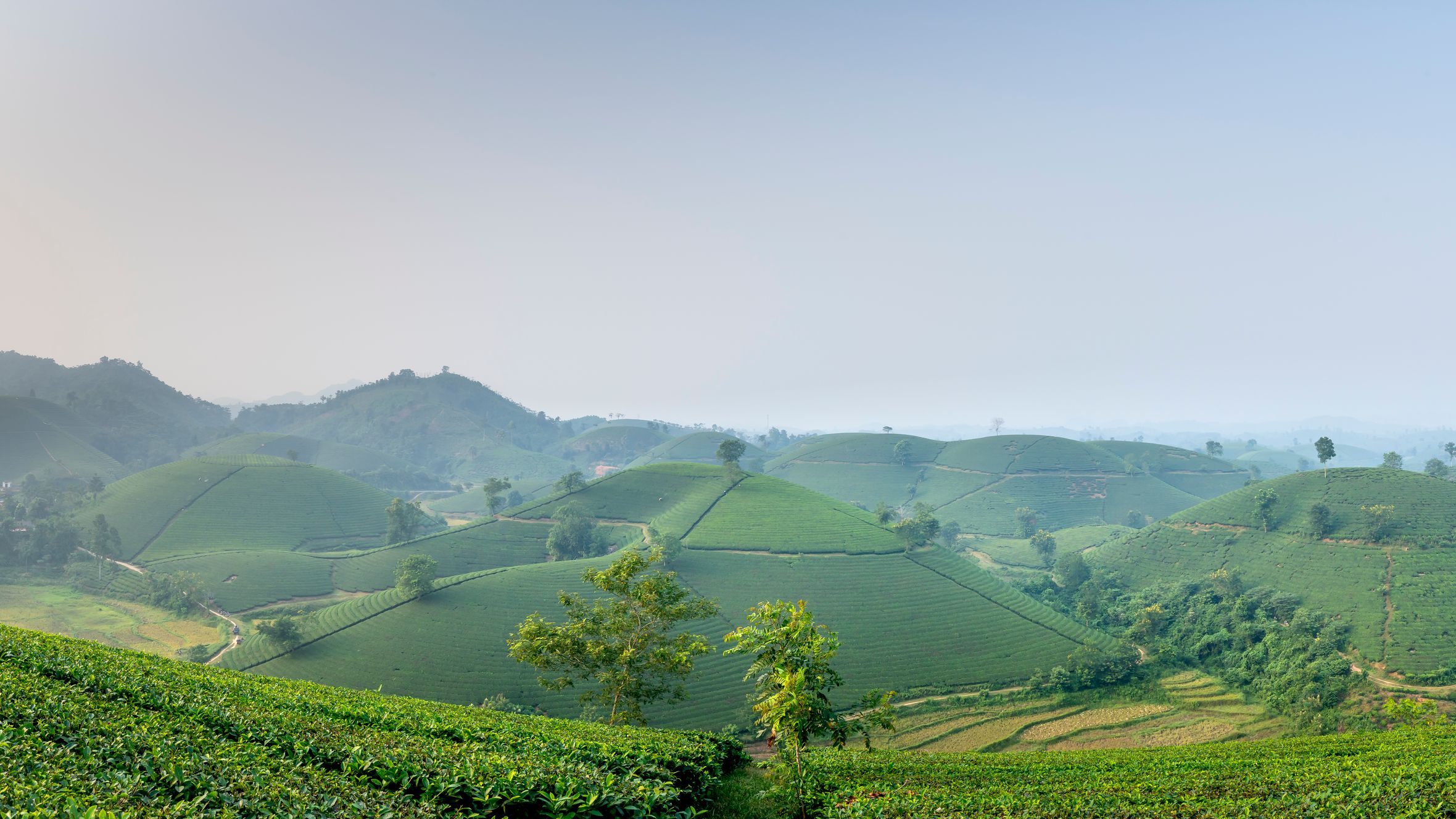
Tan Cuong is a commune about 12 km west of Thai Nguyen city center, and it's the place Vietnamese people mean when they talk about proper "tra Thai Nguyen" — the country's most respected green tea. The rolling hills here aren't vast highland plateaus like Moc Chau or wild mountain terraces like those around Sapa. They're modest, orderly, impossibly green, and surrounded by small family operations that have been growing and processing tea for generations.
Tea cultivation in Tan Cuong dates back over a century, though the area's reputation solidified in the mid-20th century when Thai Nguyen green tea became the standard by which all Vietnamese tea is judged. The soil composition and microclimate — warm days, cool nights, reliable rainfall — create a flavor profile that other provinces struggle to replicate. If you've ever been served tea at a Vietnamese home or office, there's a good chance it came from here.
With the recent administrative merger of Thai Nguyen and Bac Kan provinces, the broader region has more to offer than before for travelers heading north. But Tan Cuong remains the anchor attraction on this side of the province.
Why travelers go
Most foreign visitors skip Thai Nguyen entirely on their way to Ha Giang or the northeast mountains. That's a mistake if you care about tea or want a window into rural northern Vietnamese life without the tourist infrastructure (or tourist prices) of places like Ninh Binh (닌빈 / 宁平 / ニンビン) or Mai Chau.
Tan Cuong is where you sit on a low stool, watch someone brew tea with the focus of a surgeon, and understand why Vietnamese people take this drink so seriously. It's quiet, slow, and genuinely local. You won't find tour buses here.
Best time to visit
The tea harvest runs in cycles, but the two peak seasons are:
- Spring harvest (March–April): The first flush after Tet produces the most prized leaves. The hills are at their greenest. Weather is mild, occasionally misty in the mornings — good for photos, good for walking.
- Autumn harvest (September–October): Slightly less famous than spring tea, but the weather is comfortable and the hills are lush from summer rain.
Avoid mid-summer (June–August) if you dislike heat and humidity — Thai Nguyen sits in a basin and gets genuinely hot. December–February is cooler but the hills look less vibrant between harvests.
How to get there from Hanoi
Thai Nguyen city is the gateway. From Hanoi, you have a few options:
- Bus: Regular coaches leave from My Dinh bus station. The ride takes about 1.5–2 hours depending on traffic. Tickets run 80,000–120,000 VND. Buses are frequent — roughly every 20–30 minutes throughout the day.
- Motorbike: A straightforward 80 km ride north on QL3 (National Road 3). The highway section is decent. Budget about 1.5 hours without stops.
- Private car/taxi: A Grab car from central Hanoi (하노이 / 河内 / ハノイ) to Thai Nguyen city costs around 400,000–550,000 VND one way.
From Thai Nguyen city center to Tan Cuong, it's another 12 km west. A Grab bike costs roughly 30,000–40,000 VND. Local xe om (motorbike taxis) at the bus station will quote 50,000–70,000 VND — negotiate before you ride. If you have your own motorbike, just follow signs toward Tan Cuong from the city; the road is paved and easy.

Photo by Quang Nguyen Vinh on Pexels
What to do
Walk the tea hills
The hills themselves are open and you can walk between rows of tea bushes on dirt paths. No entrance fee — this is farmland, not a park. Be respectful: stick to paths, don't trample plants. Early morning is best, when mist hangs low and workers are out picking.
Visit a tea processing household
Several families in Tan Cuong welcome visitors to watch the drying and rolling process. This isn't a polished factory tour — you'll see woks over wood fires, bamboo trays spread with wilting leaves, and hand-rolling techniques. Most households will sit you down for a tasting session afterward. No fixed price, but buying a pack of tea (50,000–200,000 VND depending on grade) is the polite move.
Tour the Tan Cuong Tea Museum
A small museum near the commune center covers the history of tea in the region. Exhibits are modest — old tools, photos, some signage in Vietnamese and English. Worth 30 minutes if you're interested in context. Free entry.
Drink tea at a hillside stall
A handful of simple tea shops sit right on the hill slopes. Order a pot of fresh green tea (10,000–20,000 VND) and sit overlooking the rows. This is the whole point. Don't rush it.
Cycle the surrounding villages
If you have a bicycle or motorbike, the roads around Tan Cuong wind through rice paddies and small villages. The 15 km loop through Phuc Xuan and Phuc Triu communes is flat, quiet, and has almost zero traffic. You'll pass fish ponds, jackfruit trees, and more tea plots.
Where to eat nearby
Tan Cuong itself has limited food options — a few "com binh dan" (everyday rice) spots along the main road. For something more specific:
- "Banh cuon" in Thai Nguyen city: The province does excellent steamed rice rolls, thinner and more delicate than the Hanoi version. Look for stalls near Dong Quang market. A plate runs 25,000–35,000 VND.
- Grilled pork with "bun": Thai Nguyen's version of rice noodles with charcoal-grilled pork is a solid lunch. Street stalls on Luong Ngoc Quyen street in the city center are reliable. Around 30,000–45,000 VND.
If you're heading back to Hanoi, you can always stop for "bun cha" there instead.
Where to stay
Most travelers base themselves in Thai Nguyen city:
- Budget: Basic guesthouses ("nha nghi") near the bus station or market area go for 200,000–350,000 VND/night. Clean enough, no frills.
- Mid-range: A few business-style hotels in the city center offer air conditioning, decent Wi-Fi, and breakfast for 400,000–700,000 VND/night.
- Homestay: A couple of homestays have popped up closer to the tea hills. Expect basic rooms and good hospitality. Around 300,000–500,000 VND including breakfast. Ask locally — these aren't well-listed on booking platforms yet.

Photo by Quang Nguyen Vinh on Pexels
Practical tips locals would tell you
- Buy tea directly from farmers, not from souvenir shops in the city. You'll get better quality at lower prices, and you can taste before buying.
- Bring cash. Card payment is essentially nonexistent in Tan Cuong. ATMs are in Thai Nguyen city.
- Wear shoes you don't mind getting dirty. The paths between tea rows are packed earth — fine when dry, muddy after rain.
- Learn one phrase: "Cho toi xin mot am tra" (Can I have a pot of tea). It goes a long way.
- Vietnamese coffee is widely available in Thai Nguyen city if you need a caffeine switch, but asking for coffee in the tea hills might get you a look.
Common mistakes to avoid
- Treating it as a half-day Hanoi side trip. You can technically do it in a day, but you'll spend most of your time on transport and miss the slow pace that makes Tan Cuong worthwhile. One overnight is better.
- Expecting a manicured tourist attraction. There are no ticket booths, guided audio tours, or gift shops. That's the appeal — but manage expectations.
- Visiting only the museum and leaving. The museum is fine, but the real experience is sitting with a tea farmer, watching them work, and drinking what they made. That requires a bit of wandering and willingness to point and smile.
Practical notes
Tan Cuong works well as a stop on a longer route into the northeast — you can continue north from Thai Nguyen toward Bac Kan, Ba Be Lake, or eventually Ha Giang. If you're only doing Hanoi and surroundings, it makes a solid overnight trip that feels genuinely different from the capital. Bring an empty bag — you'll want to take tea home.
Last updated · May 29, 2026 · independently researched, never sponsored.