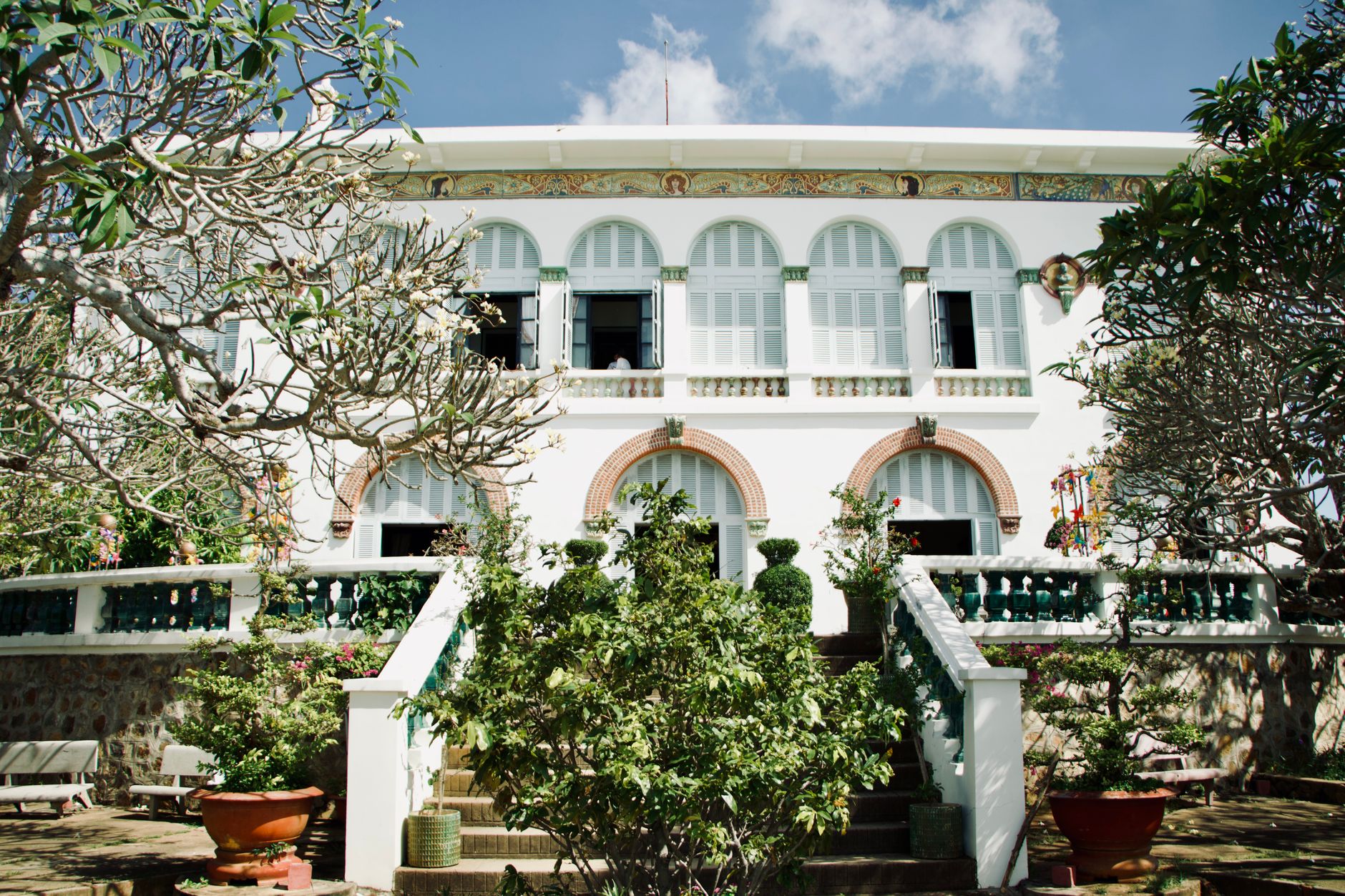
Doi Vong Canh sits about 7 km southwest of Hue's city center, a low forested hill overlooking a bend in the Huong River. It's the kind of place that doesn't appear on most itineraries, which is exactly why it's worth the detour.
What it is
The name translates roughly to "Hill of Gazing at the Scenery," and that's honest advertising. Doi Vong Canh rises about 43 meters above the south bank of the Huong River, covered in pine and eucalyptus planted decades ago. The hilltop has been a local picnic spot and a place for quiet contemplation long before tourism was a consideration.
During the Nguyen Dynasty, the surrounding area held significance as part of the royal landscape — Hue (후에 / 顺化 / フエ)'s emperors deliberately incorporated natural features like rivers and hills into their geomantic vision of the capital. The Tomb of Tu Duc is only about 1.5 km to the west, and the hill falls within the same belt of royal tombs and pagodas that lines the river's south bank. There's no entrance fee, no ticket booth, and no gift shop. It's a public hill with a dirt path to the top.
Why travelers go
The draw is simple: an unobstructed panorama of the Huong River curving through low green hills, with Hue's skyline visible in the distance. On clear mornings, the light on the water is genuinely good — photographers know about this spot even if guidebooks don't. It's also a functioning piece of local life. Hue residents come here in the early morning to exercise, in the late afternoon to sit and talk, and on weekends for family outings. You'll see more motorbikes than tour buses.
If you're spending a few days in Hue visiting the Imperial Citadel, pagodas, and royal tombs, Doi Vong Canh offers a change of pace — no history lesson, no audio guide, just a hill and a view.
Best time to visit
Hue's weather is its own creature. The wet season runs roughly September through January, with November and December getting the worst of it — heavy rain, grey skies, occasional flooding in low-lying areas. For Doi Vong Canh specifically, that means a muddy trail and zero visibility from the top.
The sweet spot is February through April, when the rain eases off and temperatures hover around 22-28°C. Mornings are often clear, and the humidity hasn't ramped up to summer levels yet. May through August is hot — pushing 35°C and above — but if you go early (before 8 AM), it's manageable. Late afternoon, around 4-5 PM, also works when the light turns gold on the river.
How to get there
From central Hue, Doi Vong Canh is a 20-25 minute ride heading southwest along the river road. You have a few options:
- Motorbike rental: The most practical choice. Rentals run 120,000-150,000 VND/day from shops near the backpacker area on Pham Ngu Lao or Vo Thi Sau streets. The route follows the south bank of the Huong River past Thien Mu Pagoda and is flat and easy to navigate.
- Grab bike: Around 25,000-40,000 VND one way from the city center. Getting a return ride can be tricky since drivers are sparse out here — arrange a pickup time or be prepared to wait.
- Bicycle: About 7 km from Hue's center. Doable if you're comfortable cycling in traffic for the first couple of kilometers, then it opens up into quieter roads along the river. Many hotels and hostels rent bikes for 50,000-80,000 VND/day.
- Organized tour: Some Hue city tours that cover the royal tombs pass near Doi Vong Canh, but few actually stop here. If you're booking a private car for the tomb circuit (typically 500,000-700,000 VND for a half day), ask the driver to add it.

Photo by Tường Chopper on Pexels
What to do
Walk the hill trail
The path from the base to the summit takes about 15-20 minutes at an easy pace. It's a dirt trail through pine trees — not paved, not marked, not difficult. Wear shoes with some grip if it's been raining recently. At the top, a flat clearing with a few concrete benches gives you the full river panorama.
Combine with the royal tomb circuit
Doi Vong Canh sits right between the Tomb of Tu Duc (1.5 km west) and the Tomb of Khai Dinh (about 3 km south). If you're doing Hue's tomb route, slotting the hill in between tombs breaks up the historical intensity with something unstructured. Most visitors do Tu Duc first, then swing by Doi Vong Canh, then continue to Khai Dinh.
Photograph the river bend
The hilltop gives you an elevated angle on one of the Huong River's most photogenic curves. Bring a decent lens if you care about this sort of thing. Late afternoon light — around 4:30-5:00 PM from March through June — catches the river at its best.
Sit and do nothing
This is genuinely the main activity, and it's underrated. Bring a book, bring a coffee from one of the small stalls at the base of the hill, and just sit. The absence of other tourists, entrance fees, and structured experiences is the point.
Walk the river road
The stretch of road along the Huong River between Thien Mu Pagoda and Doi Vong Canh is one of the more pleasant walks or rides in Hue. About 4 km, mostly shaded, with the river on one side and gardens on the other.
Where to eat nearby
There isn't much at the hill itself — maybe a drinks vendor on a good day. But heading back toward town along the river road, you'll pass through areas with small local restaurants.
For something specific to Hue, look for "bun bo Hue" — the city's signature spicy beef noodle soup, which you'll find at small shopfront places along Kim Long street on the way back. A bowl runs 30,000-45,000 VND. "Banh canh (반깐 / 粗米粉汤 / バインカイン)" — thick tapioca noodle soup with crab — is another Hue staple worth trying at the same stops.
If you want something more substantial, head back to the area near the Citadel or the south bank's Nguyen Sinh Cung street for a wider range of restaurants.
Where to stay
Most travelers stay in central Hue and visit Doi Vong Canh as a half-day trip. Accommodation clusters around the south bank near Pham Ngu Lao street (budget, 200,000-400,000 VND/night) or along Le Loi street closer to the river (mid-range, 600,000-1,200,000 VND/night). A handful of upscale resorts sit along the Huong River between the city and the hill — Pilgrimage Village and similar properties — running 1,500,000-3,500,000 VND/night.
There's no accommodation at Doi Vong Canh itself, and you wouldn't want there to be.

Photo by Tom Fisk on Pexels
Practical tips
- Bring water. There's no reliable vendor at the top, and the walk up gets warm even on mild days.
- Go early or late. Midday heat in summer makes the exposed hilltop unpleasant. Before 8 AM or after 4 PM is the move.
- Don't rely on phone signal for navigation once you leave the main road. Download offline maps or screenshot directions before heading out.
- Wear closed shoes if it's rained in the past 48 hours. The trail gets slick.
Mistakes to avoid
- Treating it as a major destination. Doi Vong Canh is a 1-2 hour stop, not a half-day attraction. Don't come expecting infrastructure, facilities, or curated experiences.
- Skipping it because it's "just a hill." In a city heavy with palace history and ticketed sites, an hour on a quiet hilltop with a river view recalibrates the trip.
- Coming in heavy rain. The trail isn't maintained — it turns to mud, and the view disappears into grey. Check conditions before heading out.
- Not combining it with nearby tombs. Going to Doi Vong Canh alone requires the same 20-minute ride as the tomb route. Pair them and the logistics make more sense.
Practical notes
Doi Vong Canh is free, open all day, and takes almost no planning. It works best folded into a morning or afternoon exploring Hue's south bank — tombs, pagodas, river roads, and this quiet hill where the city feels far away even though it's not.
Last updated · May 26, 2026 · independently researched, never sponsored.