Vietnamese weddings are a logistical feat — dozens of round tables, lazy susans spinning constantly, dish after dish arriving from a kitchen cranking out food for two hundred people at once. If you're vegan, the spread can look simultaneously abundant and off-limits. The good news: there's usually more you can eat than it first appears. The bad news: almost nothing is labeled, and your hosts will be too busy to field detailed questions about fish sauce content.
Here's what actually works.
Understand the Structure of a Wedding Feast
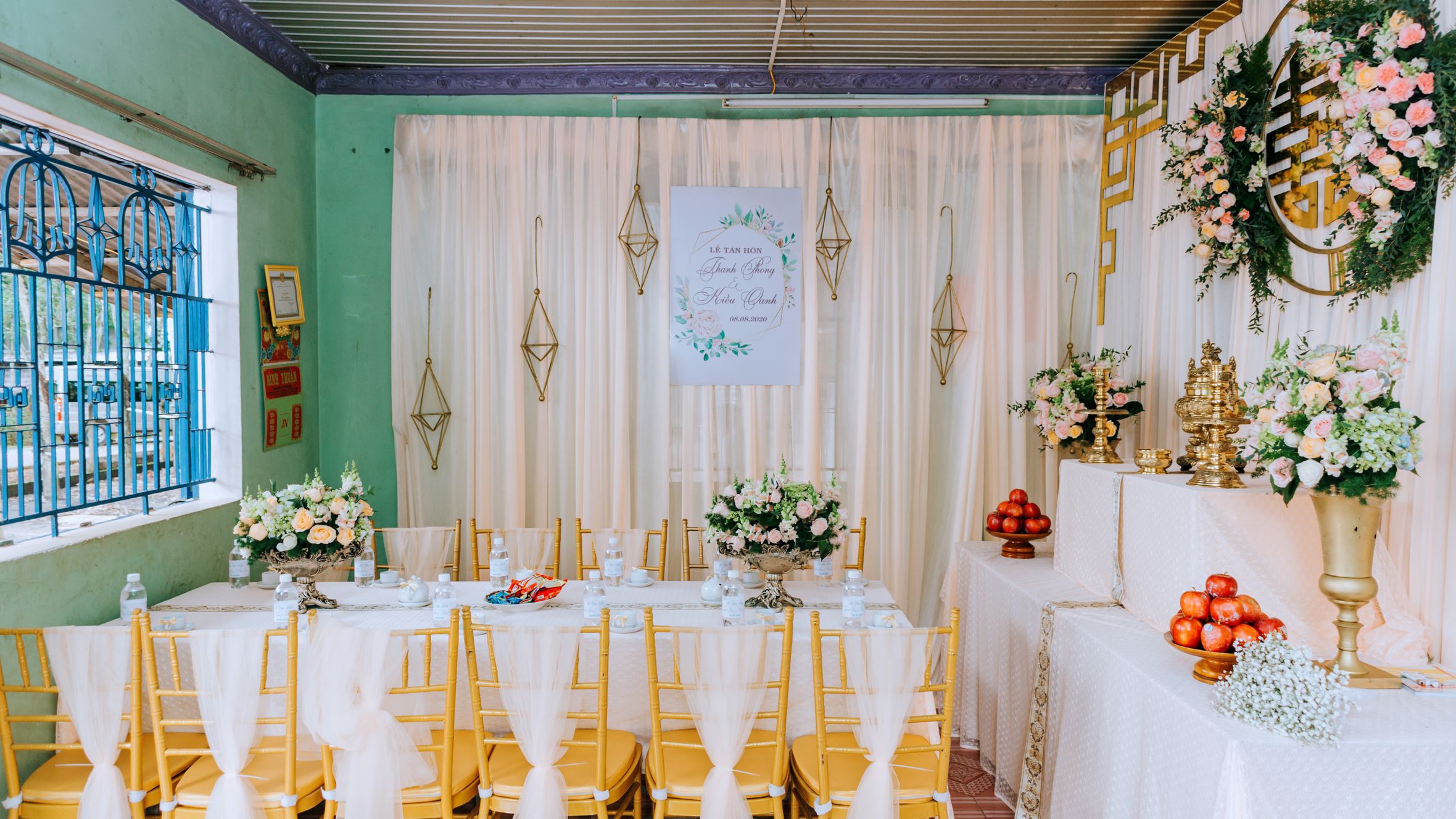
Most Vietnamese wedding banquets follow a fairly predictable sequence, whether you're at a rented hall in Saigon, a backyard tent in the Mekong Delta (메콩 델타 / 湄公河三角洲 / メコンデルタ), or a hotel ballroom in Hanoi. Expect somewhere between eight and twelve courses, starting with cold appetizers and moving through soups, fried dishes, a whole steamed or roasted animal (often chicken or suckling pig), fried rice or noodles, and finally a sweet dessert soup.
The majority of dishes are built on pork or seafood stocks, even when the plate itself looks vegetable-forward. A plate of stir-fried morning glory almost certainly went into a wok that had been used for shrimp paste. "Man tom" — fermented shrimp paste — shows up in more dishes than most guests realize. Assume any stir-fried vegetable has had contact with animal product unless you can confirm otherwise.
What Is Likely Safe
Fresh fruit platters served toward the end of the meal are your most reliable option. Weddings in Vietnam (베트남 / 越南 / ベトナム) almost always close with sliced watermelon, dragon fruit, or a seasonal mix — none of which get dressed in anything. Eat freely.
Steamed or boiled corn and sweet potato sometimes appear as filler courses at larger regional weddings, particularly in central and northern Vietnam. These are usually plain.
Pickled vegetables — cucumber, carrot, daikon — served as table condiments are generally safe, though at fancier Saigon venues they may be dressed lightly in fish sauce. Worth checking.
Plain steamed jasmine rice, which arrives mid-meal, is safe. It's cooked in water.
Wedding "che" — the sweet dessert soup — varies widely. Some versions are coconut milk and mung bean, which are vegan. Others include "thach" (jelly) or tapioca with no animal products. But some "che" are made with lard or egg. Ask before assuming.
What Looks Safe But Isn't
"Goi cuon" — fresh spring rolls — appear at some wedding banquets as a starter. They look plant-forward but almost always contain shrimp or pork. The dipping sauce is typically hoisin thinned with pork broth.
Vegetable soups are the biggest trap. A clear broth with tofu and greens sounds vegan, but that broth was almost certainly made from pork bones. The same applies to any congee or rice porridge course.
Tofu dishes in Vietnamese cooking are rarely cooked without meat accompaniment in a banquet context. Braised tofu often shares a claypot with pork belly.
"Banh chung" — the sticky rice cake — if it appears at a wedding with traditional elements, contains a pork and mung bean filling. Not safe.

Photo by Nguyen Truong Khang on Pexels
How to Communicate Your Needs
If you know the couple, message them before the event. Be specific: "I don't eat meat, seafood, eggs, or dairy, including fish sauce and shrimp paste." Vietnamese hosts want their guests to eat well — if they know in advance, they will often ask the kitchen to set aside a plain vegetable plate or order a separate dish from a nearby "com chay" (vegetarian rice) restaurant.
At the table itself, the phrase that gets the most traction is: "Toi an chay" — "I eat vegetarian/vegan." Veganism doesn't have a clean linguistic equivalent in everyday Vietnamese, but "an chay" covers the concept and signals that you avoid all animal products, including fish sauce, to most people who practice Buddhist fasting.
Ask an older relative at your table rather than a busy server. Older Vietnamese guests are often familiar with "an chay" from Buddhist practice and will be better equipped to advise on what's safe.
Eat Before You Go
This isn't defeatist — it's practical. Even with the best communication, a wedding kitchen feeding two hundred people isn't going to pivot for one guest. Have a solid meal beforehand. "Com tam" with tofu, a bowl of pho with vegetable broth requested separately, or a plate from any "com chay" spot will set you up so you're not starving by the time the fruit plate arrives.
In cities like Hanoi and Saigon, Buddhist vegetarian restaurants are easy to find and often open for lunch. In smaller towns, look for "quan chay" signs near pagodas.

Photo by quang vinh on Pexels
At the Table: A Quick Mental Checklist
- Fruit platter: eat freely
- Steamed rice: safe
- Stir-fried vegetables: assume fish sauce or shrimp paste unless told otherwise
- Clear soups and broths: assume pork or seafood stock
- Tofu dishes: usually braised with meat
- Cold appetizers: almost always contain pork or seafood
- Dessert "che": ask about the specific type before eating
Practical Notes
Vietnamese hosts are generous and will not take offense if you eat lightly — refusing food is far more common at weddings than most foreigners expect, and nobody is keeping score of your plate. If you're attending a wedding in a city with a Buddhist vegetarian food culture (Hue is particularly strong on this), there's a better chance the kitchen has experience accommodating "an chay" requests. Bring a small snack in your bag, fill up on fruit and rice, and focus on the tea, the speeches, and the "bia hoi" — or sparkling water if you're skipping that too.
Last updated · May 29, 2026 · independently researched, never sponsored.




