Vietnam (베트남 / 越南 / ベトナム)'s food culture is generous, layered, and built on condiments and garnishes that arrive uninvited. For travelers with peanut, shellfish, or dairy allergies, that generosity can become a logistics problem fast. This guide is about practical navigation — what hides where, and how to communicate the risk clearly to a vendor who is busy, speaks limited English, and has probably never been asked this before.
The Core Problem: Allergy Awareness Is Still Limited
This is not a criticism — it is just reality. The concept of a food allergy as a medical condition (versus a preference or religious restriction) is not widely understood at street stalls and local pho shops. If you say "I don't eat peanuts," a vendor may simply remove the peanuts from the top of your dish and hand it back, not realizing the oil or paste is still in the sauce beneath. Framing matters. The phrases below are designed to communicate severity, not preference.
Your Allergy Phrasebook
Print these or keep them on your phone. Show the text directly — do not rely on pronunciation.
Peanut allergy:
Toi bi di ung voi lac (dau phong). Neu toi an, toi co the chet. Xin dung cho bat ky thu gi co lac vao mon an cua toi, ke ca dau lac va nuoc sot co lac.
(I am allergic to peanuts. If I eat them, I could die. Please do not put anything containing peanuts in my food, including peanut oil and peanut sauce.)
Shellfish allergy:
Toi bi di ung voi hai san co vo (tom, cua, muc, so). Xin khong cho cac loai nay vao thuc an cua toi, ke ca nuoc sot va nuoc dung.
(I am allergic to shellfish — shrimp, crab, squid, clams. Please do not include these in my food, including sauces and broths.)
Dairy allergy:
Toi bi di ung voi sua va cac san pham tu sua (bo, pho mai,kem). Xin khong dung cac nguyen lieu nay khi nau mon an cua toi.
(I am allergic to milk and dairy products — butter, cheese, cream. Please do not use these ingredients when cooking my food.)
For a severe multi-allergy situation, carry a printed card with all three in Vietnamese. Several services online will produce a laminated allergy card for around 50,000–80,000 VND.
Where Peanuts Hide
Peanuts are everywhere in Vietnamese cooking and not always visible. The obvious ones — crushed peanuts on "mi quang", "bun bo hue" garnish plates, "banh xeo" dipping sauce — are easy to spot. The hidden ones are more dangerous.
- Satay and hot pot dipping sauces: peanut paste is the base of many table condiments
- "Goi cuon" dipping sauce: the peanut-hoisin sauce is standard; ask for plain nuoc cham instead
- "Cao lau" and "mi quang (미꽝 / 广南面 / ミークアン)": both traditionally served with crushed peanuts stirred through, not just on top
- Central Vietnamese dishes generally: the central region uses peanuts more heavily than the north or south
- Banh trang (rice paper) salads in Da Nang: often tossed with peanut-based dressings
- Cooking oil: some smaller stalls still use peanut oil, though vegetable oil is more common now
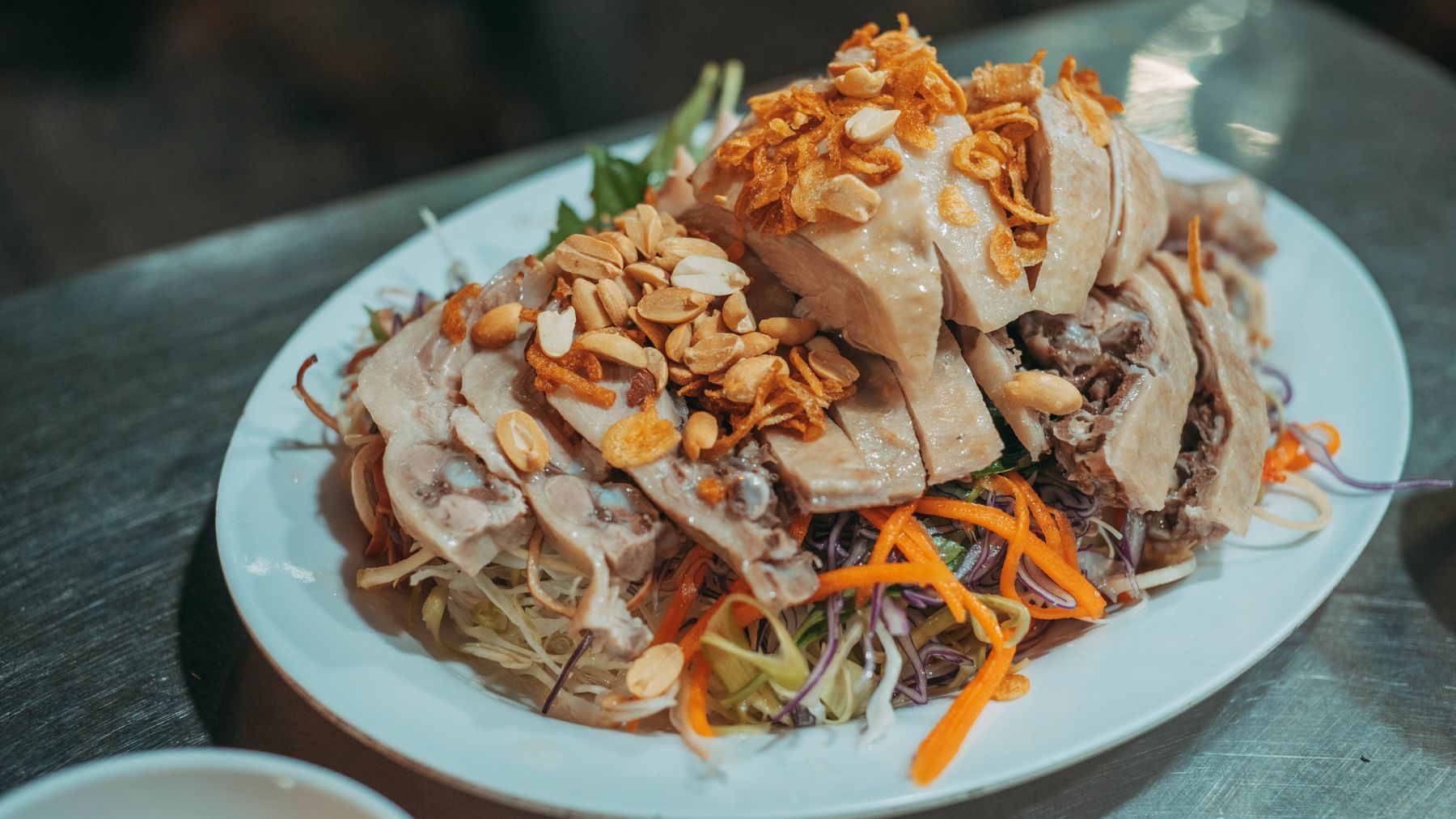
Photo by FOX ^.ᆽ.^= ∫ on Pexels
Where Shellfish Hides
Shellfish allergy is arguably the trickiest to manage in Vietnam because shrimp paste and dried shrimp are foundational flavor agents — invisible in the broth but present throughout.
- Mam tom (fermented shrimp paste): served alongside "bun bo hue" and used as a condiment in many dishes; also cooked into some broths
- "Bun rieu": the soup is built on crab paste and tomato — skip this one entirely
- "Banh canh" broths: vary by region; some are pork-based, some use shrimp stock
- "Com tam" (broken rice): the dish itself is usually pork-safe, but the nuoc cham dipping sauce is sometimes made with dried shrimp
- "Cha gio" (fried spring rolls): fillings often include minced shrimp
- Nuoc cham: Vietnam's universal table sauce is fish sauce-based (fish, not shellfish — but cross-check if your allergy extends to fish)
- Pho: northern beef pho is generally shellfish-free; southern pho shops sometimes add shrimp
Where Dairy Hides
Good news first: traditional Vietnamese cooking uses almost no dairy. The cuisine is historically dairy-light, and most street food is safe by default. The exceptions:
- Banh mi: some versions include butter spread on the baguette before assembly — ask specifically
- Vietnamese coffee ("ca phe sua da"): "sua" means condensed milk; order "ca phe den" (black) instead
- "Egg coffee": made with egg yolk and condensed milk — not suitable for dairy allergy
- Banh bong lan and Western-style cakes: anything sold at bakeries or cafes may contain butter and cream
- Hotel buffets and tourist restaurants: more likely to use butter in cooking than a street stall
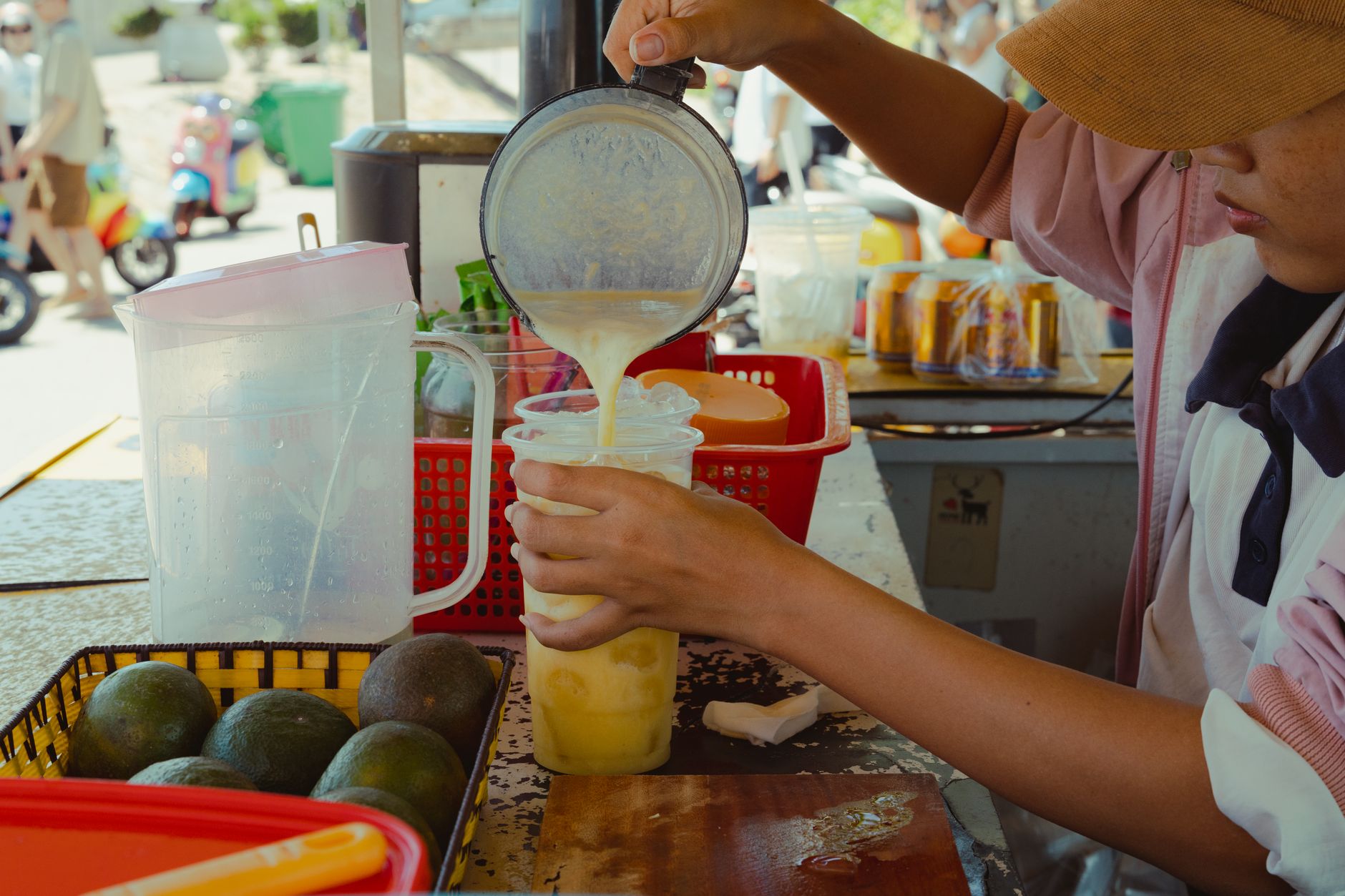
- Smoothies and fresh fruit drinks: occasionally blended with condensed milk; specify "khong sua" (no milk)

Photo by Nimit N on Pexels
How to Work With Street Vendors
A few practical strategies that actually help:
Go early. Stalls setting up for the morning rush are less harried than the lunchtime crunch. A vendor with five minutes to spare will read your card more carefully.
Point to the ingredient, not just the dish. If you can see peanuts or shrimp on the counter, point directly at them and shake your head. Physical communication beats translation gaps.
Ask about broth separately. "Nuoc dung co tom khong?" (Does the broth have shrimp?) is a single, answerable question.
Stick to dishes you can decode. "Pho" with plain beef broth, "banh mi" with just pork and vegetables, grilled meats without sauce — simpler dishes are lower risk. Heavily sauced or blended dishes are harder to interrogate.
Carry antihistamines and, if prescribed, an epinephrine auto-injector. Pharmacies in Hanoi and Saigon stock antihistamines widely (Loratadine, Cetirizine) for around 30,000–60,000 VND per blister pack. Auto-injectors are harder to source locally — bring your own.
Practical Notes
Higher-end restaurants and any place with an English menu will be significantly easier to navigate — staff are more likely to understand the distinction between preference and allergy. When in doubt, international hotel restaurants are the safest fallback. Apps like Google Translate's camera function work reasonably well for reading ingredient labels at supermarkets, which is useful if you are self-catering.
Last updated · May 29, 2026 · independently researched, never sponsored.