Ha Giang's food doesn't travel well. You won't find "men men" on a Hanoi menu, and that's exactly the point — the dishes that sustain people across the Dong Van Karst Plateau are bound to the land that produced them, sometimes literally.
Men Men — The Staple That Rice Can't Be
At elevations above 1,000 meters, wet rice paddies don't work. The karst terrain here is a puzzle of limestone rock and shallow soil pockets, where corn grows when almost nothing else will. That's why "men men" — steamed ground corn, usually twice-cooked for texture — is the daily staple across much of Ha Giang (하장 / 河江 / ハーザン) province, particularly in Dong Van and Meo Vac districts.
It's dense, faintly sweet, and slightly grainy in a way that takes getting used to. Locals eat it with whatever's available: foraged greens, dried chili, occasionally a bit of braised pork. In a Dong Van market-day setting, you'll see women carrying men men wrapped in cloth, eating it cold between transactions. Don't expect it to blow your mind on first taste — this is sustenance food, and it earns respect for that reason.
If you want to try it properly, walk into one of the small family kitchens near Dong Van Old Quarter market rather than the sit-down restaurants aimed at tour groups. Around 20,000–30,000 VND gets you a portion with a side dish.
Banh Tam Giac Mach — Buckwheat in Every Form
"Banh tam giac mach" — buckwheat cake — has become the photogenic face of Ha Giang food culture, partly because the buckwheat flower season (October to December) draws serious visitor numbers to Quan Ba, Yen Minh, and Dong Van. The cakes are dense, slightly bitter, and typically eaten with honey or condensed milk from roadside stalls.
What's less photographed but worth knowing: buckwheat here goes beyond the cakes. It shows up in noodles, in porridge, and increasingly in small-batch craft products sold at Dong Van market. The bitterness is real — buckwheat at this altitude has a sharper profile than the variety used in, say, Japanese soba — and that edge is part of what makes it interesting.
Buckwheat cake stalls cluster along Highway 4C between Quan Ba and Yen Minh. Expect to pay 10,000–15,000 VND per piece at roadside spots; packaged versions for 50,000–80,000 VND are common near Dong Van town if you want to take some back.
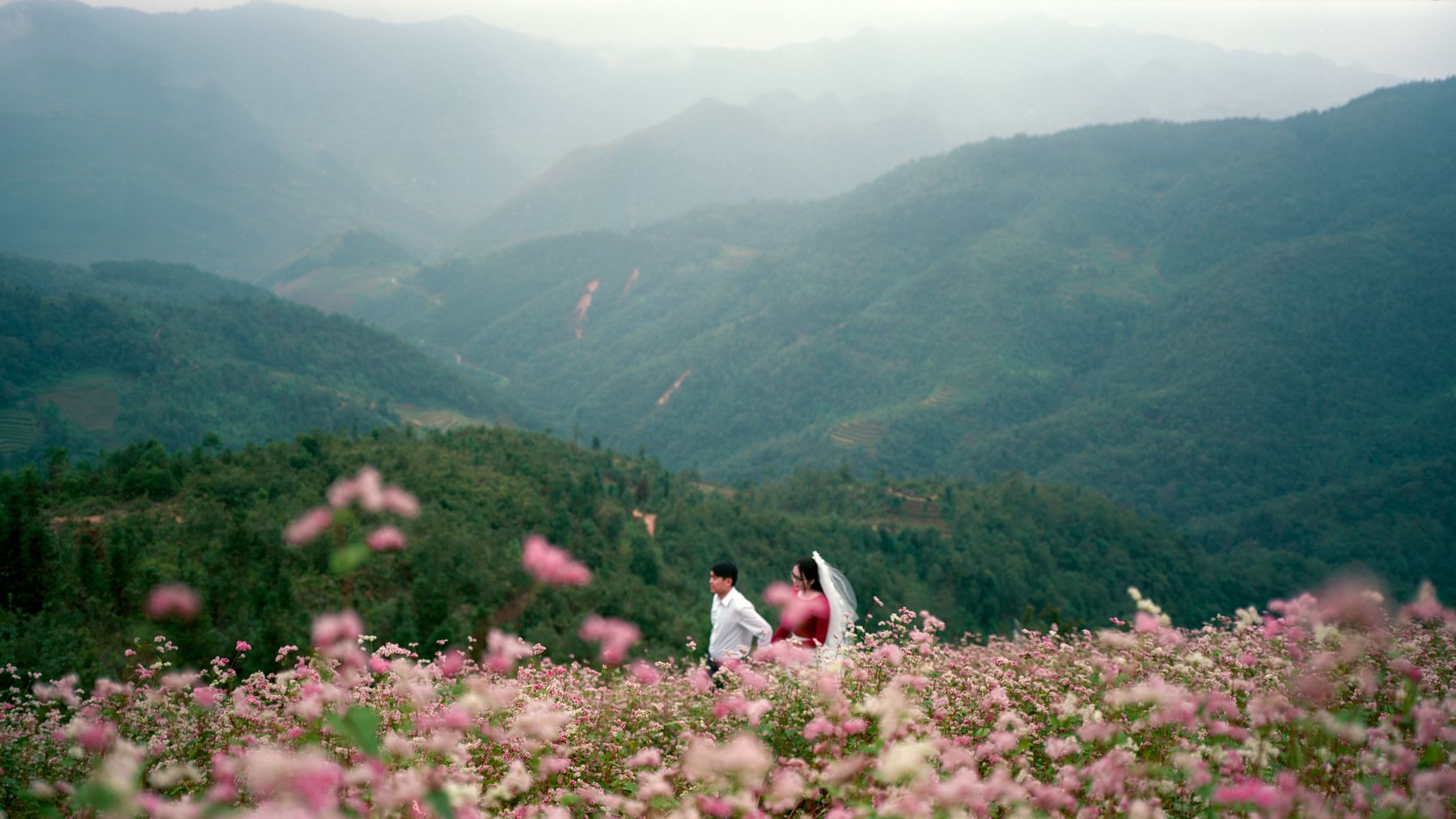
Photo by Q. Hưng Phạm on Pexels
Thang Co Dong Van — Offal Stew, Market-Day Version
"Thang co" is the dish that polarizes first-time visitors most sharply. A slow-cooked stew of horse meat and offal — traditionally including intestines, lungs, and blood — seasoned with mac khen pepper and a rotation of highland spices, it's been a H'mong market-day staple for generations. The name comes from the H'mong words for horse and pot.
Dong Van's Sunday market is the right place to eat it. The stew simmers in large communal pots from early morning; locals sit on low stools and eat from shared bowls, often alongside a cup of corn wine. The flavors are deep, mineral, and heavy with spice — mac khen pepper has a floral, slightly numbing quality that softens the iron note of the offal.
It's not for everyone, and that's fine. But if you're eating around Ha Giang seriously, skipping thang co because it sounds confronting means skipping the most socially embedded food tradition on the plateau. A bowl costs roughly 30,000–50,000 VND at market stalls.
Ruou Ngo Quan Ba — Corn Wine as Social Architecture
"Ruou ngo" — corn wine, distilled from fermented corn — is not a drink you approach for subtlety. Produced in small-batch stills across Quan Ba district and throughout the plateau, it runs between 30–45% alcohol and tastes like it means business: raw grain, faint sweetness, a long warm finish.
What matters more than the flavor profile is what ruou ngo does socially. On market days in Quan Ba, Yen Minh, or Meo Vac, it moves in ceramic cups between strangers. Refusing politely is possible; refusing bluntly is not great form. If you're eating thang co at a market stall, someone will likely pour you a cup unprompted.
Small bottles of locally distilled corn wine sell for 30,000–60,000 VND at market stalls. Commercial-label versions from Ha Giang town are more consistent but less interesting.
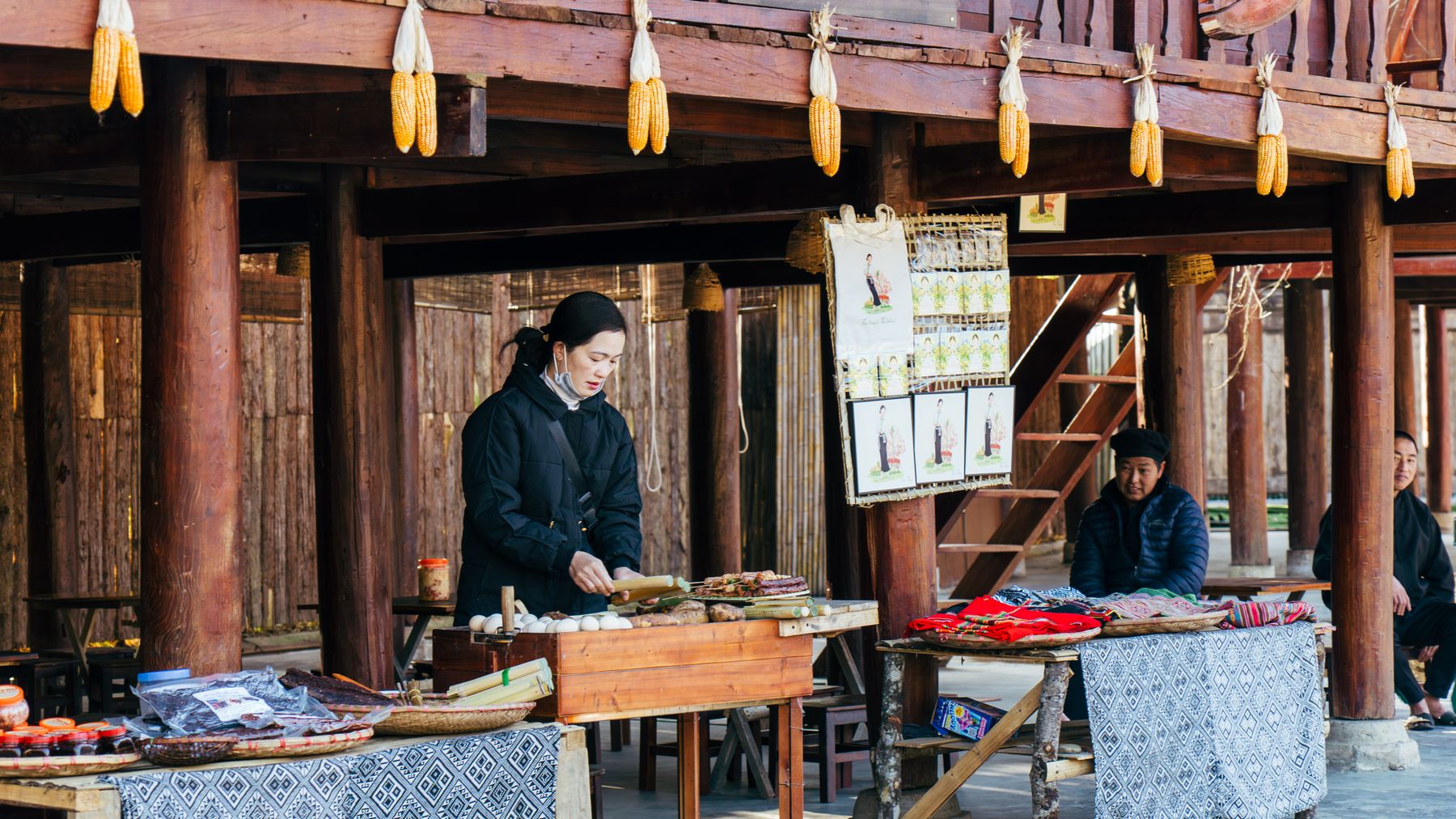
Photo by Gibson Chan on Pexels
A Note on Market Days
The food culture of the stone plateau is inseparable from the weekly market calendar. Dong Van holds its main market on Sundays; Meo Vac on Sundays; Yen Minh on Saturdays; Quan Ba on Saturdays. These aren't tourist markets — they're working trade gatherings where H'mong, Dao, Tay, and Lo Lo communities sell livestock, textiles, and produce. The food stalls that appear around the market perimeter — thang co pots, men men vendors, ruou ngo poured into whatever cup is available — exist to feed people who've walked two to four hours down from surrounding villages.
If your Ha Giang loop is timed right, you can hit two or three market days across the week. The food at these markets is the most direct encounter available with plateau cooking as it actually functions — not as a cultural performance, but as fuel and community.
Practical Notes
Most of the food described here is found at markets and family kitchens, not formal restaurants — bring cash in small denominations (5,000–20,000 VND notes) and a tolerance for pointing at things without knowing exactly what they are. Ha Giang town has a handful of sit-down restaurants that serve plateau dishes in a more accessible format if you want a transitional meal before heading into the loop; prices there run 60,000–120,000 VND per dish.
Last updated · May 26, 2026 · independently researched, never sponsored.