The northern frontier loop is popular for reasons: it's remote enough to feel real, close enough to Hanoi that you can do it in 10 days without flying, and the roads and homestays are genuinely good now. This itinerary assumes you start and end in Hanoi, move mostly overland, and want to eat well without losing your mind to tourist markups.
Day 1 — Hanoi: Arrival and Old Quarter
Arrive in Hanoi. Settle into the Old Quarter (Tran Hung Dao, Ma May, or Hang Ngang streets have reliable guesthouses in the 300,000–500,000 VND/night range). Eat "pho" at Pho Bat Dan (ground level, always full), then walk the lake at sunset.
For dinner, skip the tourist cafes and eat at Cha Ca La Vong—specialist "cha ca" (turmeric fish) on the street of the same name. It's 150,000 VND for a pot, feeds two, and tastes how it should. Sleep early; you drive tomorrow.
Costs: guesthouse 350,000 VND; pho (쌀국수 / 越南河粉 / フォー) 30,000 VND; cha ca 150,000 VND.
Day 2 — Hanoi to Mai Chau (160 km, 3.5 hours)
Hire a motorbike (check rental shops on Hang Bac; 150,000–200,000 VND/day for a semi-automatic Honda) or book a minivan through your guesthouse (800,000–1,000,000 VND for up to 4 people, driver included). Drive southwest to Mai Chau via the Hoa Lu Ninh Binh (닌빈 / 宁平 / ニンビン) region—a slower, emptier route than the main highway.
Stay in a Thai stilt house in Mai Chau village. Ban Lac is the main homestay zone; expect 250,000–350,000 VND for bed, breakfast, and dinner. Bring cash—ATMs are sparse. Spend the afternoon walking village trails and swimming in the river if the season allows.
Costs: fuel/transport 250,000 VND (motorbike) or included (minivan); homestay 300,000 VND.
Day 3 — Mai Chau to Sapa (250 km, 6–7 hours)
Early start. The route climbs steadily northeast through Thanh Hoa and Yen Bai provinces. Stop in Son La town for lunch—find a pho shop on the main street and eat beef pho for 40,000 VND. The last 80 km into Sapa are steep, winding, and slower than maps suggest; arrive by late afternoon.
Stay in Sapa town center (Ta Van, Cat Cat Road): guesthouses run 400,000–600,000 VND/night and often include breakfast. Eat "banh mi" and "ca phe sua da" (Vietnamese iced coffee) at a street stall for 50,000 VND total. Watch the mist roll in over the valley at dusk from a rooftop cafe.
Costs: fuel/transport 350,000 VND (motorbike) or minivan 1,200,000 VND; guesthouse 500,000 VND; food 80,000 VND.
Day 4 — Sapa Trekking Day
Hike in the surrounding hills. Book through your guesthouse the night before (guides cost 400,000–500,000 VND/day for a group of 3–4). The Cat Cat village loop (6 km, half-day) is close and steep; the Ta Phin loop (12 km, full day) reaches Red Dao villages. Bring water, sun cream, and sturdy shoes.
End the day with "bia hoi" (fresh draught beer) and grilled meat at a corner spot in town for 120,000 VND. Sleep well.
Costs: guide 400,000 VND (split among group); food/drink 150,000 VND.

Photo by Ahmet Yüksek ✪ on Pexels
Day 5 — Sapa to Ha Giang (180 km, 5–6 hours)
Continue northeast. The road is paved and scenic—you'll pass rice fields, limestone karst, and ethnic minority villages. Stop in Phuc Yen (midway) for lunch and stretch legs. Arrive in Ha Giang town by mid-afternoon.
Stay downtown or in the backpacker zone near the market (300,000–400,000 VND/night). Eat "banh cuon" (steamed rice rolls) at breakfast from a stall, and grilled fish and leafy greens at a local restaurant for dinner (100,000 VND).
Costs: fuel/transport 300,000 VND (motorbike); guesthouse 350,000 VND; food 90,000 VND.
Day 6 — Ha Giang Loop Day 1
The Ha Giang Loop is a 3-4 day scenic drive through the far northeast. If you have only 10 days total, pick one direction: go north to Dong Van Karst Plateau and Meo Vac, then return to Ha Giang (doable in a day by motorbike, slower by minivan).
Leave town early. Drive north 100 km to Dong Van town, stopping at Quan Ba (the Twin Mountains viewpoint) for photos. The road is paved and winds through Hmong villages. Stay overnight in Dong Van (guesthouse 250,000–300,000 VND). Eat local "com tam" (broken rice) or a simple pho for 35,000 VND.
Costs: fuel 150,000 VND; guesthouse 280,000 VND; food 60,000 VND.
Day 7 — Meo Vac Detour and Return to Ha Giang
Drive east from Dong Van to Meo Vac (50 km, high-altitude pass, spectacular views). The road is narrow but passable. Stop at Ma Pi Leng Pass for the vista. Return to Ha Giang the same day or split between Meo Vac and Dong Van depending on pace.
If returning to Ha Giang today, aim to arrive by evening. Eat "mi quang" (Quang-style noodles) for dinner (50,000 VND).
Costs: fuel 250,000 VND; food 85,000 VND.
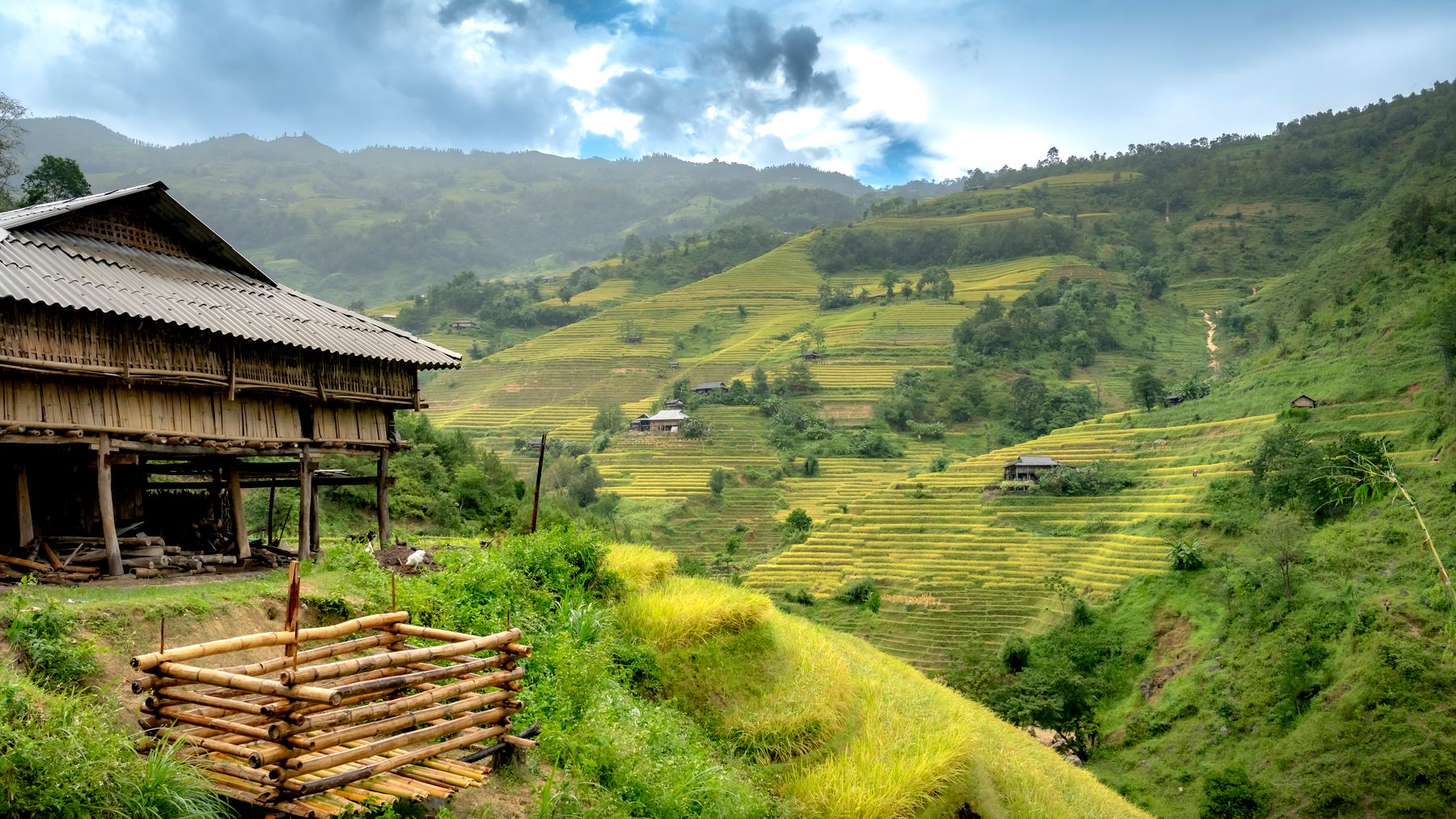
Photo by Quang Nguyen Vinh on Pexels
Day 8 — Ha Giang to Sapa (Return, 180 km, 5–6 hours)
Headback south to Sapa. It's a long drive; take breaks, stop for lunch in Phuc Yen. Arrive evening, check into the same guesthouse or a new one.
Relax, eat light ("goi cuon"—fresh rolls, 50,000 VND), and rest before the final push south.
Costs: fuel 300,000 VND; guesthouse 500,000 VND; food 80,000 VND.
Day 9 — Sapa to Hanoi (300 km, 7–8 hours)
Early start for the long drive back. Stop in Yen Bai for lunch. Arrive in Hanoi by evening. Resituate in the Old Quarter or pick a different neighborhood if you prefer—the Lakes area (Truc Bach Lake) is quieter.
Celebrate with a proper meal: "bun cha" (grilled pork and noodles) in the Hang Manh or Hang Dieu area, or a rooftop Vietnamese dinner (200,000–300,000 VND/person).
Costs: fuel/transport 350,000 VND; guesthouse 400,000 VND; food 250,000 VND.
Day 10 — Hanoi: Rest or Explore
Spend the final day wandering the Old Quarter, visiting the Temple of Literature or Tran Quoc Pagoda on the north shore of Hoan Kiem Lake, or taking a half-day street food tour (book through a guesthouse, 300,000–400,000 VND).
If you have a late flight, eat a leisurely "egg coffee" (ca phe trung) at a cafe on Hang Gai Street (40,000 VND), browse for souvenirs (non la—conical hats, are sold near Ben Thanh Market equivalents, and Dong Ho Painting prints are sold in the Old Quarter), and head to the airport.
Costs: guesthouse (if staying) 400,000 VND; food/activities 200,000 VND.
Frequently Asked Questions
How much does a typical day of food cost on the northern frontier loop?
Daily food costs stay low if you eat where locals eat. In Hanoi, pho at Pho Bat Dan runs 30,000 VND and a pot of cha ca at Cha Ca La Vong is 150,000 VND for two. On the road, beef pho in Son La costs 40,000 VND. In Sapa, a banh mi and iced coffee together come to 50,000 VND, and an evening of bia hoi and grilled meat runs 120,000 VND.
What is the cheapest way to get from Hanoi to Mai Chau?
A rented semi-automatic Honda motorbike from Hang Bac street costs 150,000–200,000 VND per day, with fuel adding roughly 250,000 VND for the 160 km southwest route via Hoa Lu. A guesthouse-booked minivan costs 800,000–1,000,000 VND for up to four people with a driver included, making it cheaper per person in a group. Either way, bring cash — ATMs are sparse once you leave Hanoi.
When should you book a trekking guide in Sapa to avoid missing out?
Book the night before through your guesthouse. Guides cost 400,000–500,000 VND per day split among a group of three or four. Two routes are available: the Cat Cat village loop at 6 km, suitable as a half-day option, and the Ta Phin loop at 12 km for a full day reaching Red Dao villages. Regardless of route, bring water, sun cream, and sturdy shoes.
Practical Notes
Total estimated cost (budget/moderate): 4,500,000–6,000,000 VND per person (~USD 180–240), excluding international flights. Costs vary by transport choice (private minivan is costlier than motorbike); splitting a minivan between 3–4 people lowers per-person expense.
Transport tips: Motorbike is fastest and cheapest but requires an International Driving Permit and comfort with winding mountain roads. Minivans are safer, slower, and more social. Book minivans through your guesthouse the night before; prices are fixed and include driver.
Money and timing: Bring a mix of cash and a Visa/Mastercard for Hanoi ATMs. Card payments are rare outside cities. Best season: September–November or March–May (clear skies, cool temps). Avoid Tet (lunar new year, January–February) and heavy rain months (June–August).
Language: "Xin chao" (hello), "cam on" (thank you), "bao nhieu tien?" (how much?). A pocket phrasebook or translation app helps. Older guesthouse owners speak French; younger ones often speak English.
Last updated · May 29, 2026 · independently researched, never sponsored.