Han Market sits at the center of Da Nang's downtown grid, a four-story concrete hall where vendors have been selling fabric, seafood, and bowls of noodles since the 1940s. Most tourists walk through the ground floor, buy a magnet, and leave. That's a mistake — the food section upstairs and along the interior corridors is one of the cheapest and most concentrated spots to eat central Vietnamese cooking in the city.
What the Market Actually Looks Like
The building occupies the block between Tran Phu and Bach Dang streets, about 300 meters from the Han River. Ground floor is fresh produce, dried goods, and the tourist-facing souvenir stalls near the entrance. The food stalls cluster on the mezzanine level and along the northern interior wall of the ground floor. Seating is plastic stools and shared tables. Expect noise, fans instead of air conditioning, and a rotating cast of vendors who've held the same spot for decades. Prices are fixed by the market authority — a bowl of noodles runs 35,000–55,000 VND depending on what you order.
Mi Quang
"Mi quang" is the dish Da Nang (다낭 / 岘港 / ダナン) is most serious about, and Han Market is a reliable place to eat it without hunting down a specialist shop. The noodles are wide, turmeric-yellow, and served with just enough broth to coat them — not submerged like pho. A standard bowl comes with shrimp, pork, half a hard-boiled quail egg, crushed peanuts, and a plate of herbs and rice crackers ("banh da") to crumble in. The crackers matter. Skipping them is like eating banh mi without the filling.
The stalls in the northern corridor serve the most consistent versions — look for the ones with the yellow noodle trays visible on the prep counter. One bowl is enough for a light lunch; order two if you've been walking.
Bun Cha Ca
"Bun cha ca" is a Da Nang invention that doesn't get enough attention outside the city. Thin rice vermicelli in a clear, slightly sweet fish broth, topped with fried fish cakes — "cha ca" — that are springy and faintly smoky. The fish cakes are made from mackerel or snakehead fish, ground and fried in a thin patty or pressed into cylinders. Some vendors add pork blood cake and fresh dill; some don't. Both versions are worth eating.
This is a breakfast dish by habit. The Han Market vendors serving it are busiest before 9am. Come after 10am and you may find the broth thinned out or the fish cakes sold down to the last few pieces. A bowl is 40,000–45,000 VND. The broth is light enough that you can finish a bowl and still have room for something else.

Photo by Quý Nguyễn on Pexels
Banh Trang Cuon Thit Heo
"Banh trang cuon thit heo" translates literally as rice paper rolls with pork, but the Da Nang version is more specific than that. Thin slices of boiled pork belly and shrimp are served with a stack of fresh rice paper rounds, a plate of herbs (perilla, lettuce, mint, sliced green banana), and a small bowl of "mam nem" — fermented anchovy dipping sauce cut with pineapple and crushed peanuts. You assemble each roll yourself at the table.
The mam nem is polarizing. It's pungent and funky in a way that fermented shrimp paste is not, and some visitors tap out after the first dip. Push through it. The sauce is the reason the dish works — the fat from the pork belly needs something that aggressive to cut it. Vendors at Han Market charge 60,000–80,000 VND for a shared plate, enough for two people as a snack or one person as a meal.
Other Things Worth Eating
If you're moving through quickly, the "banh xeo (반세오 / 越南煎饼 / バインセオ)" vendors near the south entrance make the central Vietnamese version: smaller than the southern crepe, crispier, filled with shrimp and bean sprouts, and eaten wrapped in mustard greens rather than lettuce. A portion of two or three crepes is 40,000 VND.
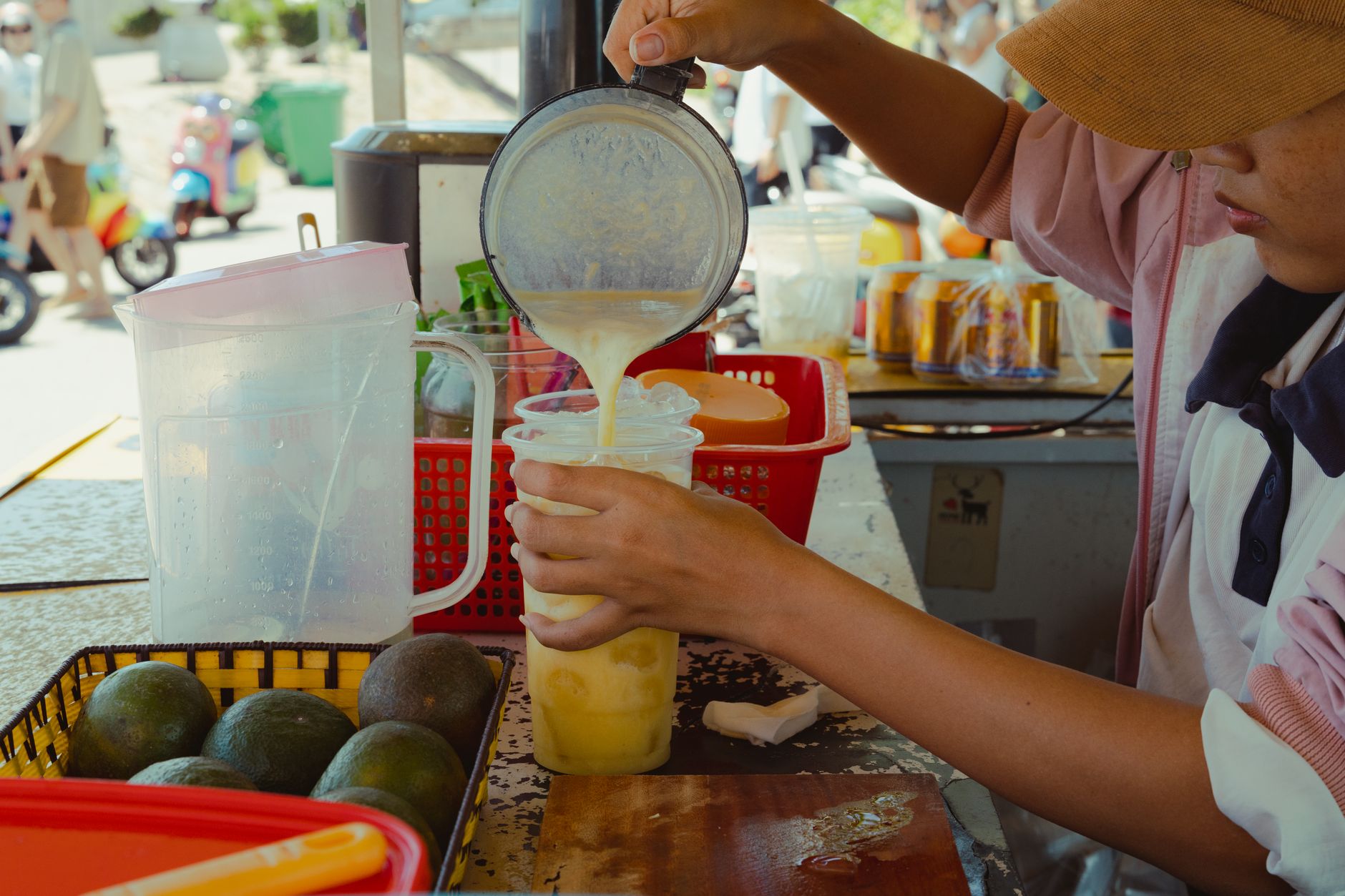
For drinks, a few stalls sell "ca phe sua da" — Vietnamese iced coffee with condensed milk — for 20,000 VND. It's not the best coffee in Da Nang, but it's cold and cheap, and the stalls open at 6am.
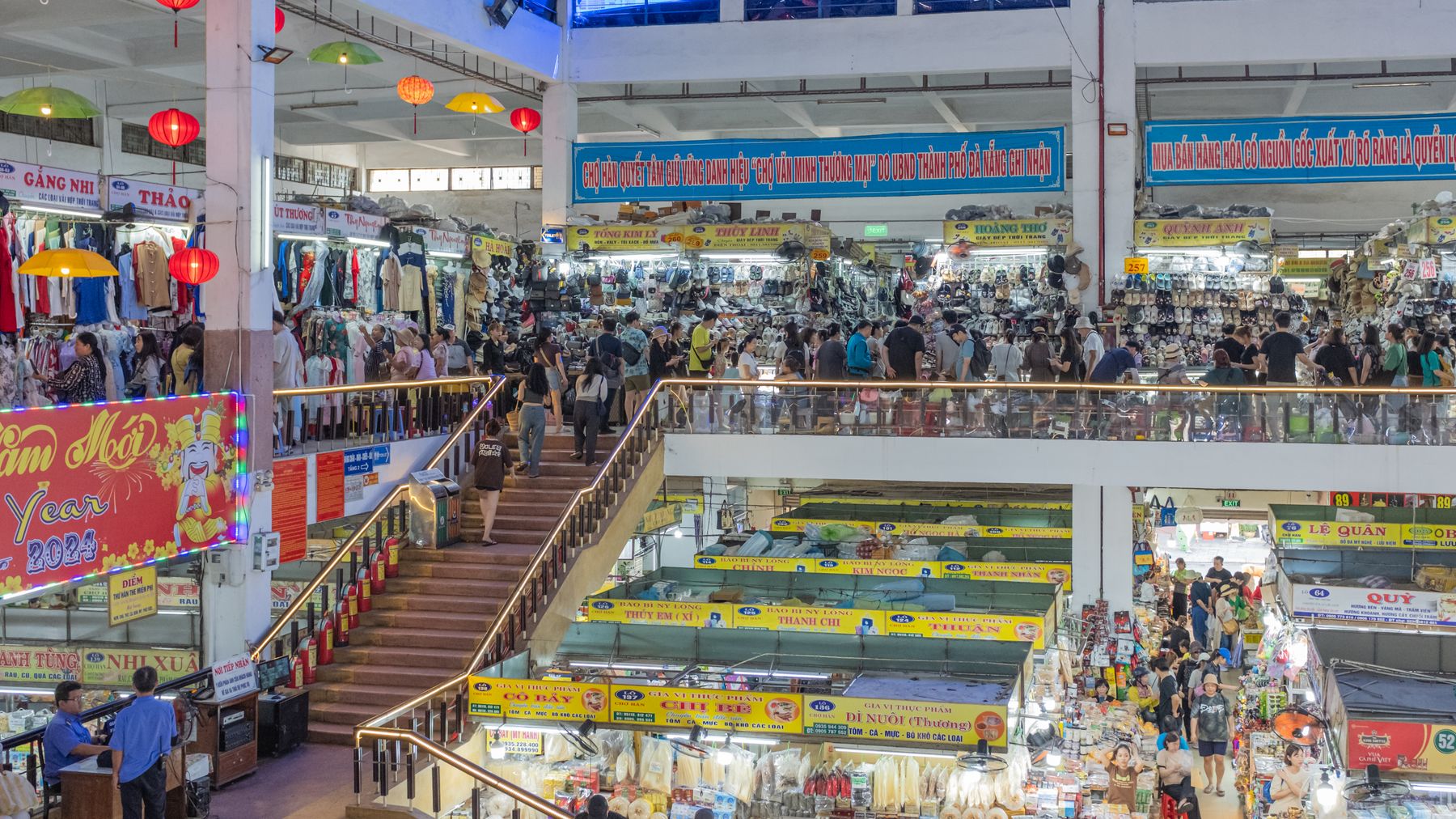
Photo by Kirandeep Singh Walia on Pexels
How to Navigate Without Getting Overcharged
Han Market has a mixed reputation with travelers, mostly because the souvenir section near the entrance runs on negotiation and the food section doesn't. Keep them separate in your head. At the food stalls, prices are posted or you can ask directly — "bao nhieu" (how much) before sitting down is always reasonable. Nobody will overcharge you for a bowl of mi quang. The tourist friction is limited to the fabric and souvenir vendors, which you can ignore entirely if you enter from the Bach Dang side and go straight to the food.
Bring small bills — 10,000 and 20,000 VND notes — since most vendors don't keep much change. The market opens around 6am and most food stalls wind down by 1–2pm. Come in the morning.
Practical Notes
Han Market is at 119 Tran Phu, central Da Nang, open daily from roughly 6am to 6pm (food stalls close earlier). It's walkable from most hotels along the Han River. If you're combining it with a broader day in the city, the market pairs naturally with a morning walk along Bach Dang before the heat sets in.
Last updated · May 29, 2026 · independently researched, never sponsored.